
Sponsored

Rural Charging Question

bhopkins

Well-Known Member
First Name
Bryan
Joined
Mar 15, 2022
Threads
13
Messages
242
Reaction score
377
Location
Saginaw, MI
Vehicles
R1T
At home, I have a Rivian charger on a 50A/220V circuit. No issues charging. Before the Rivian charger arrived, I used the mobile charger and plugged it into a 14-50 plug and everything worked fine.

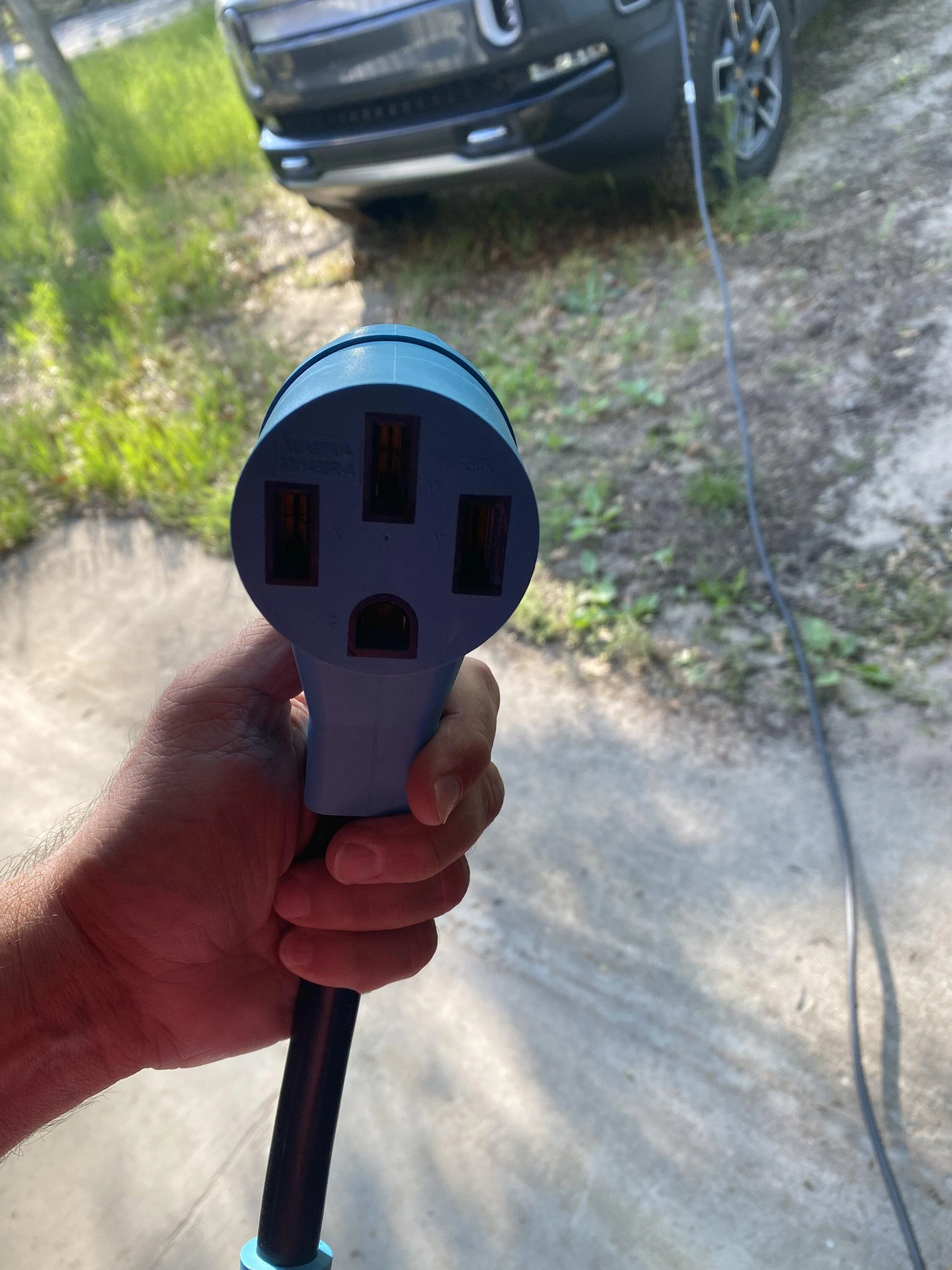
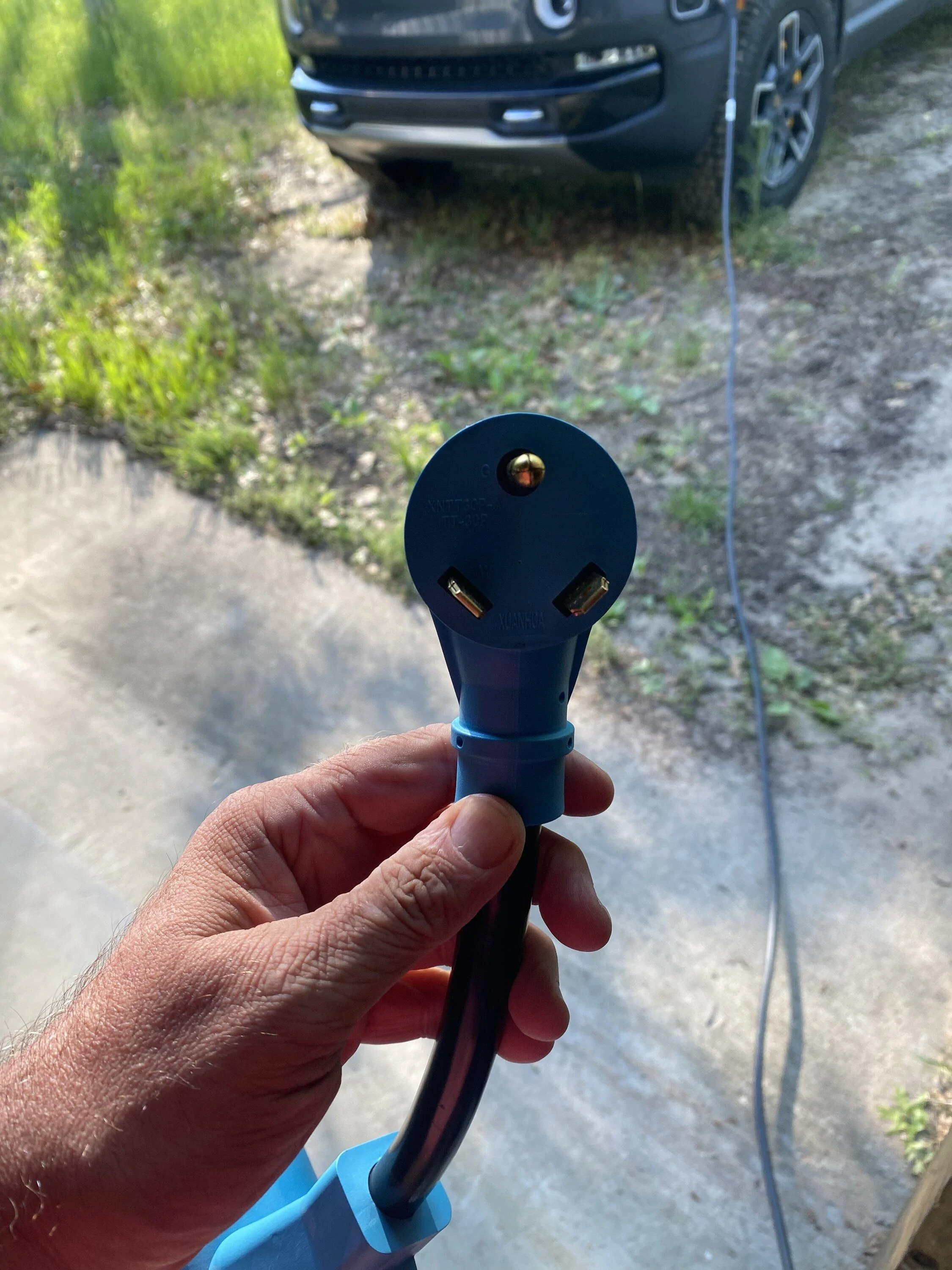
At my rural camping property, I’ve got a spare 14-30 plug. I thought great, with an adapter, I can use the mobile charger and charge up my R1T while relaxing. Thanks to Amazon, I got a 14-30 to 14-50 adapter. Unfortunately, when I connect the mobile charger to it, it does not light up. If I plug the mobile charger into a standard 110v plug, it lights up and very, ever so slowly charges the truck.

So, since the mobile charger works fine at home on a 14-50 plug and works fine at camp on a 110v plug, do we think the mobile charger is smart enough to be detecting that it has a 14-50 plug connected to it but it isn’t receiving anywhere near 50A nor 220V? Am I out of luck trying to use a 14-30 to 14-50 adapter? I did check that I’m getting power all the way to the mobile charger (read it off the mobile adapter’s prongs that plug into the 14-50 adapter end).
Rivian R1T R1S Rural Charging Question E2161B67-9A82-42E0-848E-91A776472457
Rivian R1T R1S Rural Charging Question FA90C34C-1767-4869-B89A-397AA085B528
Rivian R1T R1S Rural Charging Question F8FBD567-8A44-4FCE-A919-7812432CE5F2
Sponsored


Trekkie

Well-Known Member
First Name
Tom
Joined
Jun 3, 2021
Threads
15
Messages
360
Reaction score
584
Location
Wake Forest, NC
Vehicles
2021 ID.4, 2022 Polestar 2, 2023.5 Defender 110
Occupation
IT Nerd
it should just at a lower rate of charge. But otherwise it should work, though that is 120v/30A, and I don't think you can pull more than 15A on 120v normally.

I will say that some of those camp sites aren't the best electrically and can make the mobile charger angry. Back in the early days campgrounds were a great spot to stop and charge for a few hours @ 50A. while not fast charging, if you were in need it worked.

That lead to a lot of 'floating ground' problems. The charger would work, then go into fail mode. It was discovered that the wiring done at some campgrounds was, shall we say, less than optimal
 

SANZC02

Well-Known Member
First Name
Bob
Joined
Feb 11, 2021
Threads
50
Messages
7,411
Reaction score
12,703
Location
California
Vehicles
Tesla Model S, LE - R1S
Occupation
Retired
At home, I have a Rivian charger on a 50A/220V circuit. No issues charging. Before the Rivian charger arrived, I used the mobile charger and plugged it into a 14-50 plug and everything worked fine.

At my rural camping property, I’ve got a spare 14-30 plug. I thought great, with an adapter, I can use the mobile charger and charge up my R1T while relaxing. Thanks to Amazon, I got a 14-30 to 14-50 adapter. Unfortunately, when I connect the mobile charger to it, it does not light up. If I plug the mobile charger into a standard 110v plug, it lights up and very, ever so slowly charges the truck.

So, since the mobile charger works fine at home on a 14-50 plug and works fine at camp on a 110v plug, do we think the mobile charger is smart enough to be detecting that it has a 14-50 plug connected to it but it isn’t receiving anywhere near 50A nor 220V? Am I out of luck trying to use a 14-30 to 14-50 adapter? I did check that I’m getting power all the way to the mobile charger (read it off the mobile adapter’s prongs that plug into the 14-50 adapter end).
E2161B67-9A82-42E0-848E-91A776472457.jpeg
FA90C34C-1767-4869-B89A-397AA085B528.jpeg
F8FBD567-8A44-4FCE-A919-7812432CE5F2.jpeg
My guess is it is checking volts with the 14/50 plug on the charger and does not power up because it is not seeing 220 volts.

Can you add a 220 circuit there? It should work with a 220 30 amp circuit If you are limited on amps.
 
OP
OP
bhopkins

bhopkins

Well-Known Member
First Name
Bryan
Joined
Mar 15, 2022
Threads
13
Messages
242
Reaction score
377
Location
Saginaw, MI
Vehicles
R1T
My guess is it is checking volts with the 14/50 plug on the charger and does not power up because it is not seeing 220 volts.

Can you add a 220 circuit there? It should work with a 220 30 amp circuit If you are limited on amps.
That’s a good thought. I’d just need to mark the plug so I don’t forget that it is really at 220V and then have friends plug in a trailer and blow them up. :)

Of course, if I rewire, then I might as well put in a 14-50 plug on the 30A breaker. At least that way, it wouldn’t look like a regular trailer connection and I wouldn’t need the 14-30 to 14-50 adapter.

Would be curious if anyone else has tried to use an adapter and had the mobile charger “ignore” it.
 

Kunzene

Well-Known Member
First Name
Nathan
Joined
Mar 21, 2021
Threads
2
Messages
163
Reaction score
336
Location
Kentucky
Vehicles
2022 Rivian R1T, 2024 Kia EV9
Clubs
 

Sponsored

ajdelange

Well-Known Member
First Name
A. J.
Joined
Aug 1, 2019
Threads
9
Messages
2,883
Reaction score
2,319
Location
Virginia/Quebec
Vehicles
Tesla XLR+2019, Lexus, Landcruiser, R1T
Occupation
EE Retired
At my rural camping property, I’ve got a spare 14-30 plug. I thought great, with an adapter, I can use the mobile charger and charge up my R1T while relaxing. Thanks to Amazon, I got a 14-30 to 14-50 adapter. Unfortunately, when I connect the mobile charger to it, it does not light up. If I plug the mobile charger into a standard 110v plug, it lights up and very, ever so slowly charges the truck.
I'm not clear on what you actually have. The receptacle in your photo is a TT-30. That's a 30A 125V receptacle but, of course, I have no idea what it is wired to.

So, since the mobile charger works fine at home on a 14-50 plug and works fine at camp on a 110v plug, do we think the mobile charger is smart enough to be detecting that it has a 14-50 plug connected to it but it isn’t receiving anywhere near 50A nor 220V? Am I out of luck trying to use a 14-30 to 14-50 adapter? I did check that I’m getting power all the way to the mobile charger (read it off the mobile adapter’s prongs that plug into the 14-50 adapter end).
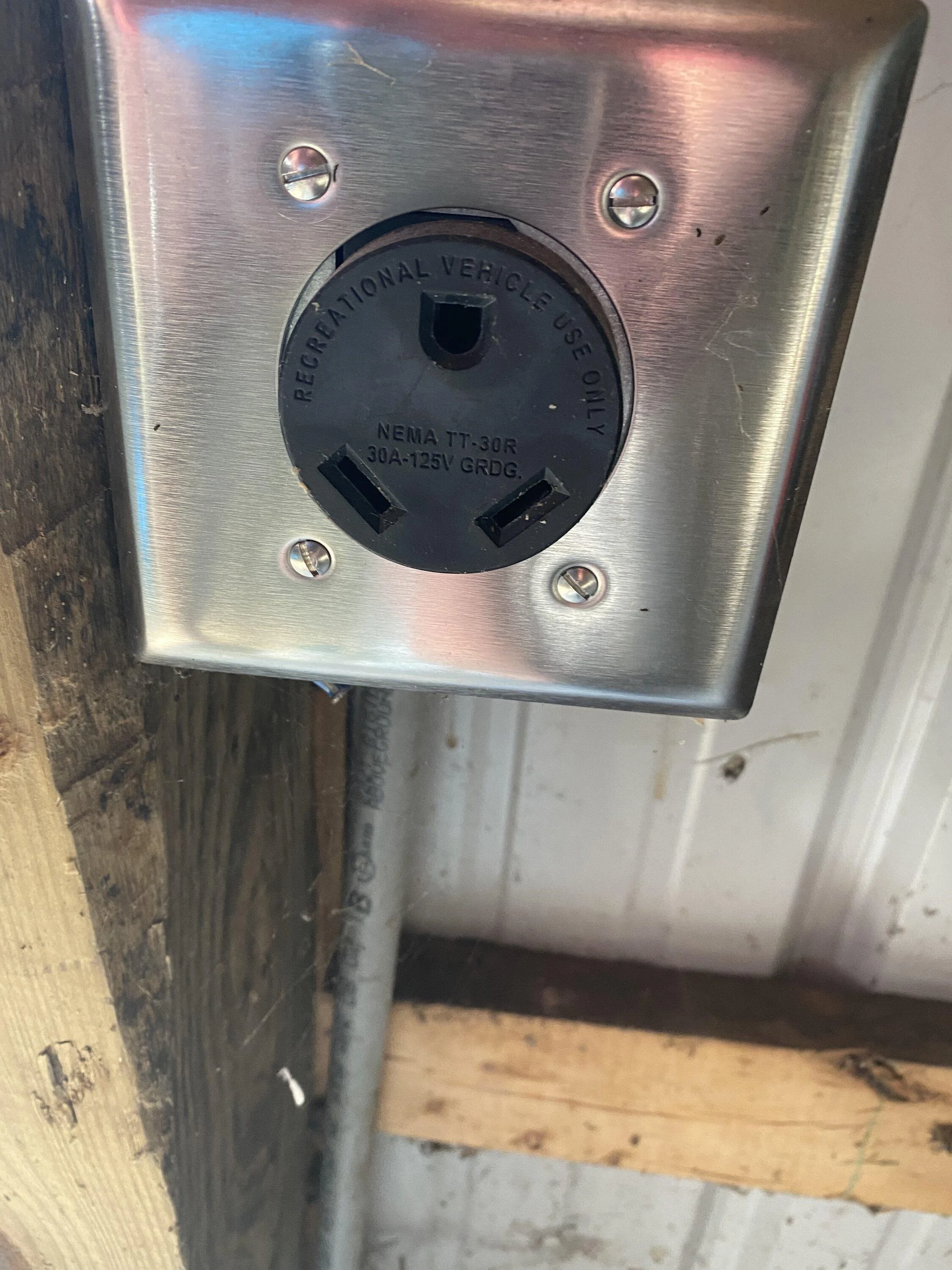
No. 5 above says that he was able to successfully charge his truck with a TT-30 to 14-50 adapter and you should be able to do so too provided that the receptacle shown is properly wired. At the 14-50 end you should see 120V between the two parallel blades and 120V between one of the parallel blades and the round pin -all assuming that the depicted receptacle is a properly wired TT-30.

Another thing to be aware of is that with the 14-50 adapter plugged into the mobile connector it will tell the truck it can take 32A which it can only do for a few minutes on a 30A breaker before the breaker pops. The truck should be set for 24 A max charge rate.
 

moondog417

Active Member
First Name
Scott
Joined
Nov 3, 2021
Threads
1
Messages
30
Reaction score
37
Location
Los Angeles
Vehicles
Model X, R1S
Occupation
Education
I'm not clear on what you actually have. The receptacle in your photo is a TT-30. That's a 30A 125V receptacle but, of course, I have no idea what it is wired to.
Agreed. You need to figure out what’s actually wired. Then replace with the proper receptacle. At that point, $200-$300 on Amazon will get you an EVSE specifically designed for that receptacle and expected power.

No fault of anyone here, but In general, I don’t understand everyone focusing on adapters from XYZ to 14-50 when EVSEs are so cheap now. Especially in a regular or semi permanent charging location
 

ajdelange

Well-Known Member
First Name
A. J.
Joined
Aug 1, 2019
Threads
9
Messages
2,883
Reaction score
2,319
Location
Virginia/Quebec
Vehicles
Tesla XLR+2019, Lexus, Landcruiser, R1T
Occupation
EE Retired
No fault of anyone here, but In general, I don’t understand everyone focusing on adapters from XYZ to 14-50 when EVSEs are so cheap now. Especially in a regular or semi permanent charging location
I don't think he's going to find and plug-in EVSE for a TT-30 but you never know.

An interesting possibility for him is based on the fact that he (probably) has a 30 A 120V circuit wired to that TT-30 which means a black wire, a white wire and a ground wire. If there is room in his panel he could take out the single pole 30A breaker and replace it with a dual pole then wire the white wire to one pole and the black wire to the other. At the other end he could then remove the TT-30 and replace it with a suitable 30A receptacle. A little red tape at either end and he now has a 30 A charging circuit for which he can find plug in EVSE on Amazon.
 
OP
OP
bhopkins

bhopkins

Well-Known Member
First Name
Bryan
Joined
Mar 15, 2022
Threads
13
Messages
242
Reaction score
377
Location
Saginaw, MI
Vehicles
R1T
Agreed. You need to figure out what’s actually wired. Then replace with the proper receptacle. At that point, $200-$300 on Amazon will get you an EVSE specifically designed for that receptacle and expected power.

No fault of anyone here, but In general, I don’t understand everyone focusing on adapters from XYZ to 14-50 when EVSEs are so cheap now. Especially in a regular or semi permanent charging location
I’m trying to maintain flexibility. This is camping property so I’m hopping to maintain the plug as a TT-30 for visitors to use when they pull their trailer up AND also be able to get some power off of it when it isn’t in use as a trailer plug. While I can make the round-trip from house to property, and there is a DCFC about 30 miles away, it would be nice to be able to get some charge while up here at a rate a bit faster than a 120V/15A will give.
 

Dark-Fx

Well-Known Member
First Name
Brian
Joined
Jul 15, 2020
Threads
148
Messages
13,536
Reaction score
27,314
Location
Michigan
Vehicles
R1T, R1S, Livewire One, Sierra EV, R1S
Occupation
Engineering
Clubs
 
The TT-30 adapter for an EVSE to work needs to land the neutral wire onto what would normally be a hot leg of the 14-50 receptacle instead of the neutral. A standard adapter for an RV doesn't do this because it's extremely abnormal.

Not every EVSE will work when wired this way, and you will have to make sure the car can limit to 24A or less on 120V since the car won't know that the advertised rate doesn't match what the circuit can provide.
 

Sponsored

ajdelange

Well-Known Member
First Name
A. J.
Joined
Aug 1, 2019
Threads
9
Messages
2,883
Reaction score
2,319
Location
Virginia/Quebec
Vehicles
Tesla XLR+2019, Lexus, Landcruiser, R1T
Occupation
EE Retired
I’m trying to maintain flexibility. This is camping property so I’m hopping to maintain the plug as a TT-30 for visitors to use when they pull their trailer up AND also be able to get some power off of it when it isn’t in use as a trailer plug.
This is still possible. The question is to which use do you want to give precedence. If it is supplying trailers then you sacrifice charging performance. If it is charging performance then you would have to make some changes. To just charge BEV you can get by with 2 wires and you have that but if you want to support TT-30 trailers then you would have to pull three wires (two hots plus neutral), install at 14-30R receptacle (or 14-50 - you have to do a new pull; might as well make it 40 or 50A) AND furnish a 14-30 or 14-50 to TT-30 adapter (Amazon).
 

ajdelange

Well-Known Member
First Name
A. J.
Joined
Aug 1, 2019
Threads
9
Messages
2,883
Reaction score
2,319
Location
Virginia/Quebec
Vehicles
Tesla XLR+2019, Lexus, Landcruiser, R1T
Occupation
EE Retired
The TT-30 adapter for an EVSE to work needs to land the neutral wire onto what would normally be a hot leg of the 14-50 receptacle instead of the neutral. A standard adapter for an RV doesn't do this because it's extremely abnormal.
There are two types of adapter for sale. For this use one needs to buy one, like the one linked, labeled "For Tesla or EV use, not RV use" and the other is not labeled or labeled "Not for EV use". In the former X goes to hot and Z to neutral. In the latter X and Z go to hot and W goes to neutral.

Not every EVSE will work when wired this way, and you will have to make sure the car can limit to 24A or less on 120V since the car won't know that the advertised rate doesn't match what the circuit can provide.
At the 14-50 end you should see 120V between the two parallel blades and 120V between one of the parallel blades and the round pin .
If the adapter provides those conditions most chargers should work
 

pc500

Well-Known Member
Joined
Jun 22, 2021
Threads
20
Messages
1,045
Reaction score
563
Location
US
Vehicles
dodge ram
I’m trying to maintain flexibility. This is camping property so I’m hopping to maintain the plug as a TT-30 for visitors to use when they pull their trailer up AND also be able to get some power off of it when it isn’t in use as a trailer plug. While I can make the round-trip from house to property, and there is a DCFC about 30 miles away, it would be nice to be able to get some charge while up here at a rate a bit faster than a 120V/15A will give.
If you can put in a 14-50, it'll keep the campers happy, and your Rivian happier.

14-50 -> TT-30 adapters are commodity and common place at any RV Store. Most campers have one, but feel free to tether one to your pedestal.
 
OP
OP
bhopkins

bhopkins

Well-Known Member
First Name
Bryan
Joined
Mar 15, 2022
Threads
13
Messages
242
Reaction score
377
Location
Saginaw, MI
Vehicles
R1T
I’ll have to check, but pretty sure I’m amp limited and can’t go up to 50 amps, and am pretty doubtful that the wiring run from the breaker box is up to standard for 50 amps. Not wanting to invest in a whole rewrite of the property if I can avoid it :)
 

ajdelange

Well-Known Member
First Name
A. J.
Joined
Aug 1, 2019
Threads
9
Messages
2,883
Reaction score
2,319
Location
Virginia/Quebec
Vehicles
Tesla XLR+2019, Lexus, Landcruiser, R1T
Occupation
EE Retired
I’ll have to check, but pretty sure I’m amp limited and can’t go up to 50 amps, and am pretty doubtful that the wiring run from the breaker box is up to standard for 50 amps. Not wanting to invest in a whole rewrite of the property if I can avoid it
Your wire size probably isn't big enough for 50A but it is big enough for 30 at least and maybe 40. Check. You can put a 14-50R on a 40 A circuit. You can certainly put a 14-30R on the wire you have (as it is rated, if all is proper for 30A). You would still need to pull the the third conductor though.
Sponsored


Top