Ralph
Well-Known Member
I agree with regard to the wheels. But IMO, resistance itself, likely not largest contributor to lower range when comparing the Rivian 20" vs 21" tire/wheel systems.It’s more the AT tires than the wheels themselves. If you put low rolling resistance tires on a set of 20s I guarantee you’ll see similar number to the 21s.
It's possible that there is a significant difference in the weight of the two sets of wheels by themselves with the smaller wheel weighing more. This seems unlikely to me with Rivians attention to detail.
But it is almost a certainty that the all-terrain (AT) tires weigh significantly more than street tires (less rubber and sidewall). One of the major advantages of the smaller wheels is to be able to have more sidewall. This allows air pressure to be reduced for additional traction when off road. Hence at least one reason for the on-board air-compressor.
Of course, AT tires also have more tread above the sidewall. In both cases, more rubber translates to more weight and that translates to more power under acceleration/deceleration. And yes the additional rubber, being more "squishy" has additional rolling resistance.
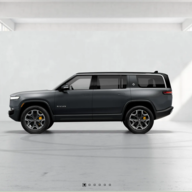
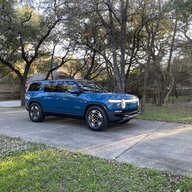
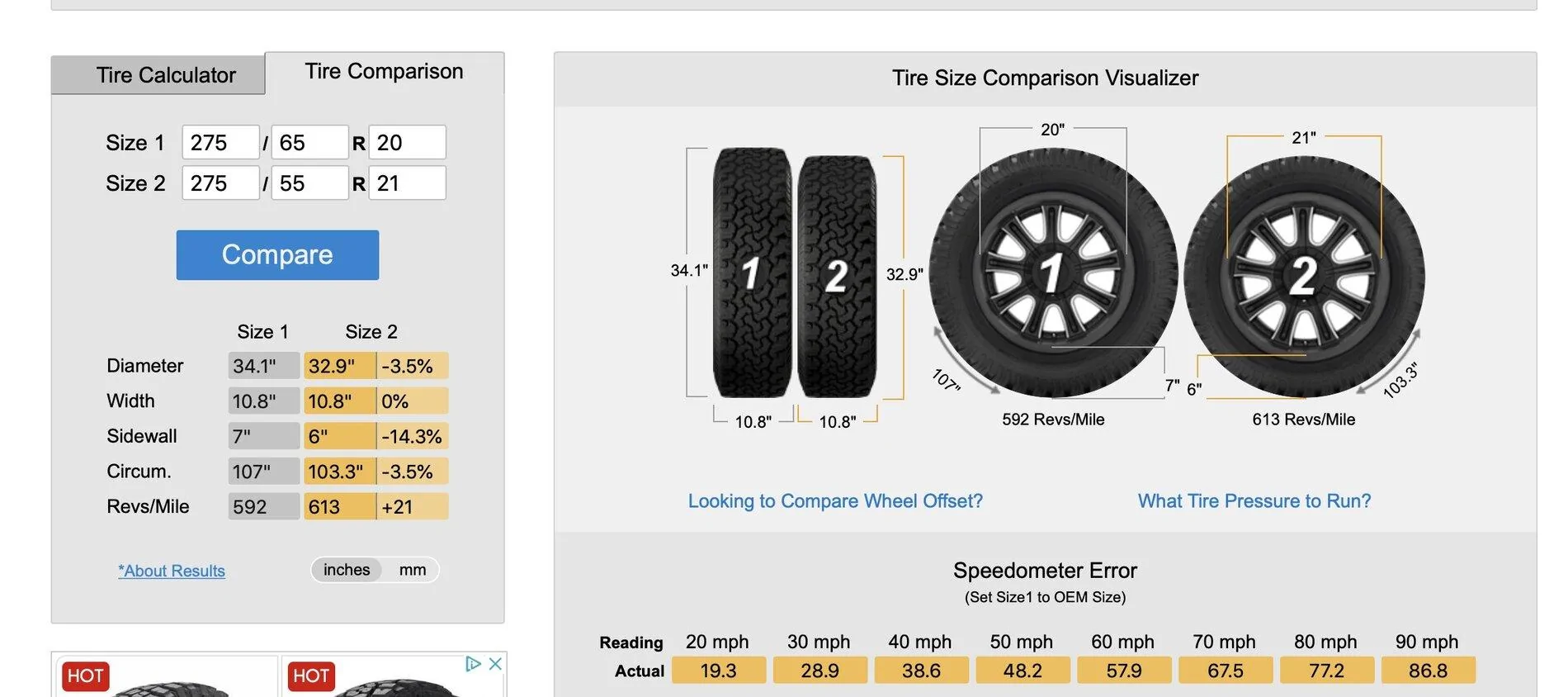
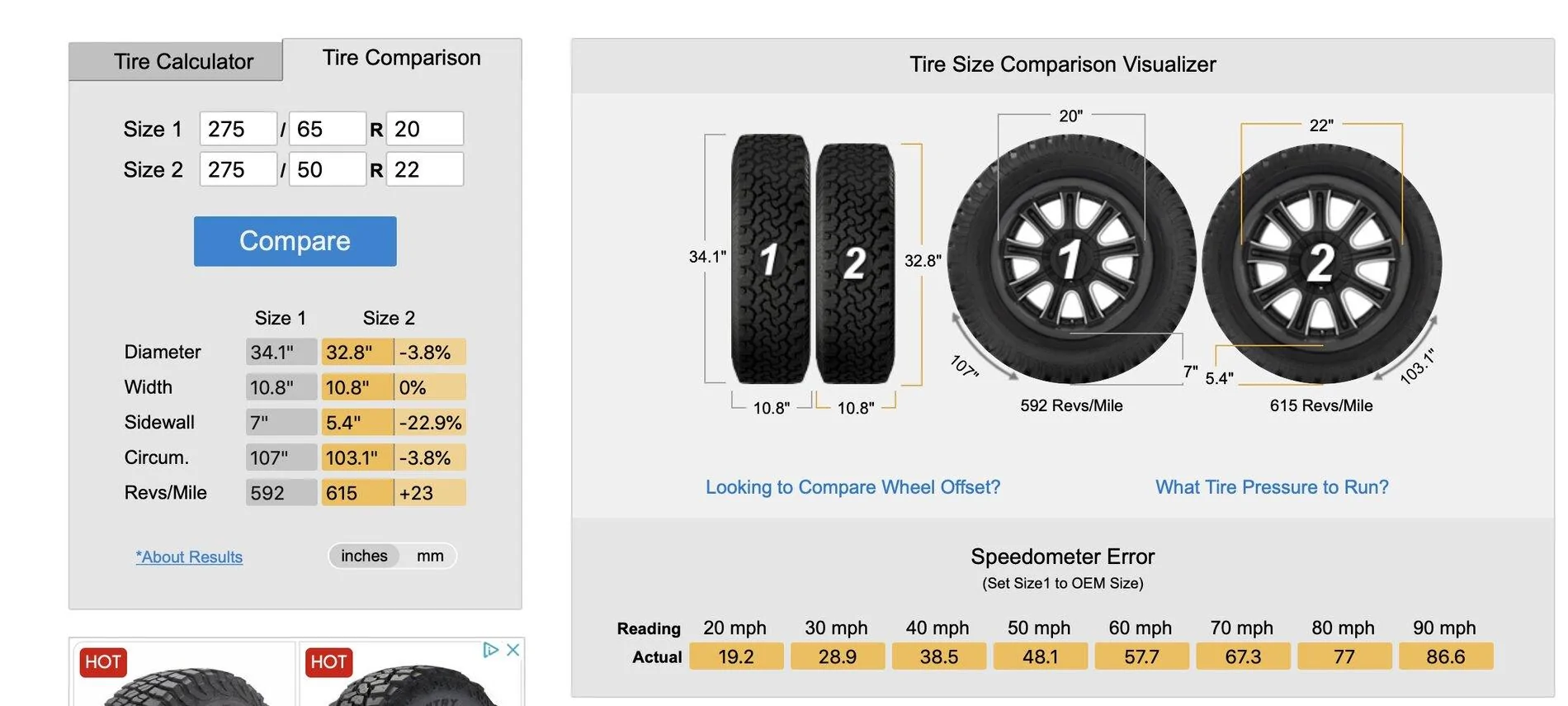
Another potential contributing factor comes to mind - circumference of the tire/wheel combo. The Rivian configurator appears to confirm that the smaller wheels are paired with taller sidewall tire. I don't believe it is known at this point that the 20" combo is either taller or shorter than the 21" combo. The 20 inch "appears" in the configurator to be taller, but this might be a illusion.
Depending on the exact spec of the tire, the all-terrain could either be slightly smaller (most likely) to save weight and energy, the same, or even taller in circumference (less likely) as the 21" tire.
Food for thought and speculation. We'll have facts "soon".
Sponsored