

Max
Well-Known Member
If R1 gear guard can see people and disable recording, it can enable noise in presence of people (or animals even though they are too smart to get hit at 18 mph).
Sponsored
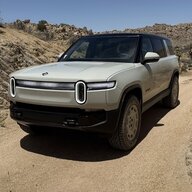
From what I read in FMSS 141 there is no provision for exceptions based upon a system which detects the presence of people.If R1 gear guard can see people and disable recording, it can enable noise in presence of people (or animals even though they are too smart to get hit at 18 mph).
OMG! OK, gonna have to try it tonight. That's crazy...my 3rd Tesla and I've never noticed the forward sound. For whatever reason, I've always liked the reverse sound...space ship-e. LOLThe forward noise is different tone than reverse, but should still be there and be just as loud. The forward noise sounds like gravelly/grinding gears.

I've always felt the law was written very poorly. I think the idea to provide protection for people who are visually impaired or mildly hard of hearing is a great idea. I've had many instances in my own neighborhood where it's clear the people did not hear me rolling up. But calling out specific types of vehicles is very obviously pressure from the oil industry. (As far as I know, this requirement is currently only for EVs & Hybrids. I could be wrong.)Most recent models of passenger ICE cars are quiet these days. Meanwhile, I always notice when a hybrid or BEV drives by, and it usually sounds quite loud. I wonder if the decibel regulation is super high, or if manufacturers are going above and beyond requirements.
Your though is spot on. The noise is loud pitched to notify those with visual impairments that something large is moving. Other factors also come in, the noise has to also be audible when there are crowds of people, windy, or rainy, and consider cyclists. If I am not mistaken, the NHTSA provides the options for those sounds, the manufacturers get to pick rather than make their own.I've always felt the law was written very poorly. I think the idea to provide protection for people who are visually impaired or mildly hard of hearing is a great idea. I've had many instances in my own neighborhood where it's clear the people did not hear me rolling up. But calling out specific types of vehicles is very obviously pressure from the oil industry. (As far as I know, this requirement is currently only for EVs & Hybrids. I could be wrong.)
The law should simply say, all vehicles (maybe over some weight—though there's an argument even golf carts should be included) must produce a sound of at least N decibels when traveling under 18 miles per hour, or something similar. This way, cars with auto-shut-off engines are required to have the same speaker setup, as would any future driving technologies that might be very quiet.
At the same time, I don't actually like the speaker sound, and I think it negates one of the best things about electrics, which is rolling to a stop with the windows down, and hearing absolutely nothing (except maybe some relatively quiet cooling fans due to possibly breaking a few laws on back country roads...). But I'm not smart enough to come up with a different solution that is also fool-proof enough and as effective.



I commented to NHTSA when the rule was still taking feedback prior to implementation. I suggested that since many vehicles could recognize nearby pedestrians, why not have them only make noise when pedestrians were nearby so as to not cause further noise pollution? I actually got called by a NHTSA representative who said that they had considered that, but felt from their research that visually impaired pedestrians use vehicle noise to spacially locate where a road is located and so even if not in the direct vicinity of a vehicle, EVs making noise would further enhance safety for visually impaired people.If R1 gear guard can see people and disable recording, it can enable noise in presence of people (or animals even though they are too smart to get hit at 18 mph).


