

SeaGeo
Well-Known Member
Using 2.4 mil/kwh should get you close based on the 290 mile range test and roughly adjusting down to 65mph.Any owners play with A Better Route Planner or similar website?
Sponsored
Using 2.4 mil/kwh should get you close based on the 290 mile range test and roughly adjusting down to 65mph.Any owners play with A Better Route Planner or similar website?

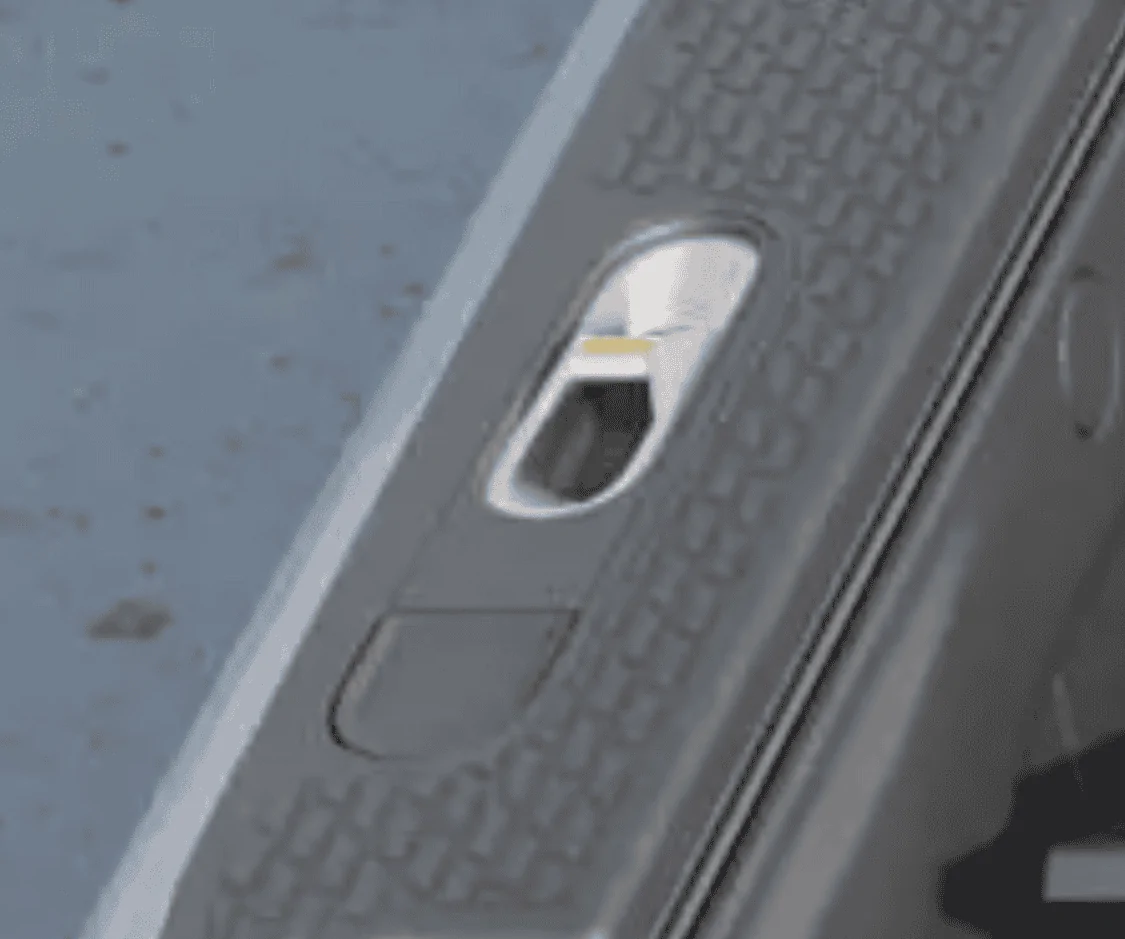
Yes there is.I think I read somewhere that Rivian applies a piece of PPF there and also on the Gear Tunnel door. Those who have taken delivery can comment on this.
I think I read somewhere that Rivian applies a piece of PPF there and also on the Gear Tunnel door. Those who have taken delivery can comment on this.
![Rivian R1T R1S Ask us Rivian R1T owners ANYTHING [AMA]! 20220403_191136](https://cdn.rivianforums.com/attachments/17/17981-589db9e735c8c39551883f8d8b95069a.webp)
![Rivian R1T R1S Ask us Rivian R1T owners ANYTHING [AMA]! 20220403_191317](https://cdn.rivianforums.com/attachments/17/17982-bf2d5161f2cba0ea289197396b2ae44a.webp)
Yes there is a hole. Unsure where it drains out of.Is there a hole in this? or water accumulates in it after the rain? If it drains, can you tell where water comes out of?

![Rivian R1T R1S Ask us Rivian R1T owners ANYTHING [AMA]! 20220403_191720](https://cdn.rivianforums.com/attachments/17/17983-d193c180ac525204dfc67bac71d829e7.jpg)
![Rivian R1T R1S Ask us Rivian R1T owners ANYTHING [AMA]! 20220403_191935](https://cdn.rivianforums.com/attachments/17/17984-c7f6a48a5c5f91d573809861544a1805.webp)

Thanks for taking the time to share these excellent photos and answering my question. It looks very robust and well designed. Since the button for the tunnel door is on top as well, I am sure they have thought of a good drainage that won't mess anything up. I will have to take a cup of water on a dry day and see where it comes out if I end up with R1T.Yes there is a hole. Unsure where it drains out of.

Hard to capture but you can see the slight sliver of blue paint.

this thread is way too long to read through. any new owners get any update or details on Rivian Membershp? does it start day one? if so, is it still free for a year? what benefits does it come with?
Charging at Network and Waypoint, off road assistance, unlimited LTE with hotspot...promise of more drive modes, capabilities, in-cabin contentthis thread is way too long to read through. any new owners get any update or details on Rivian Membershp? does it start day one? if so, is it still free for a year? what benefits does it come with?


That would be nice for some uses, but repeatedly pausing to measure would probably be obnoxious airing up all four tires back to highway spec (which I suspect is already going to be pretty time consuming unless they used an expensive high flow compressor). Should be pretty easy to just find a higher setpoint that shuts off reasonably close to desired end pressure.So the air compressor's "inflate to setpoint" stuff is practically useless. As soon as it detects it hit the setpoint it shuts off. Problem is the sensor is 20 feet from the end of the hose line, so the actual output pressure is no-where near the setpoint. I was hoping it would be able to do some sort of automatic pause-continue routine but it doesn't appear to.
I spent time working on a system that would do this well and I'll admit it's a pretty difficult task to accomplish, but not impossible with a simple microcontroller.
I would certainly hope (dare I say assume?) that they would do much better than that! Even our low tech Volvo drivers profiles include dash display layout, hot and cold starting temps for the cabin, driver and passenger seat heat/cool, steering wheel heat, as well as radio stations, HUD, suspension, acceleration.It's great they have at least that, but I hope they get more driving preferences and some of the UI adjustments mixed in there. Obviously the main driving modes can't switch automatically (or, at least, it should ask first), but I really like how much of the UI layout & driving profile is attached to each user on the Tesla. My wife and I drive quite a bit differently.
Unless you've got a wind tunnel to model whatever you made, I would avoid doing so. Rivian created those wells to force air into a curtain over the wheels and wheel wells, which is very important to improving aerodynamics and efficiency. I wouldn't be surprised if you saw a significant range penalty by altering that design.That is true. Mine had PPF in both areas. If I still had acess to a 3-D printer I would fashion a set of louvers for the vents behind the front wheels. I would make vanes to let the air through and yet deflect the crud downward. If anyone wants to play, make me a set.
If you have a calibrated restriction it's actually not super difficult. Sensor on both sides of the restriction and calculating the volume of air delivered based off of the amount of pressure drop across it. If your pressure starts at zero, one quick pulse to equalize pressure. Longer pulse to measure the change in pressure after X time (allows you to calculate the total volume of what you are delivering air to). At this point, you should be able to get within a few percent of your final desired pressure without needing to stop or pause again.That would be nice for some uses, but repeatedly pausing to measure would probably be obnoxious airing up all four tires back to highway spec (which I suspect is already going to be pretty time consuming unless they used an expensive high flow compressor). Should be pretty easy to just find a higher setpoint that shuts off reasonably close to desired end pressure.
I'm not sure I follow - it's the impulse pressure of an actively running compressor that throws off real time measurements and triggers the set pressure earlier than desired. The pressure drop across the hose should be relatively inconsequential.If you have a calibrated restriction it's actually not super difficult.
It's not. Depending on your flow rate it could easily be over a 50% difference, even a 20 foot hose like what the Rivian has. Especially if your hose has less restriction than earlier parts of the system.The pressure drop across the hose should be relatively inconsequential.


![Rivian R1T R1S Ask us Rivian R1T owners ANYTHING [AMA]! 4AF844A8-6DD3-4F7E-BE1D-382CC1988D04](https://cdn.rivianforums.com/attachments/18/18002-3c83111380b77ff8e58c64febf8eb2ca.webp)
![Rivian R1T R1S Ask us Rivian R1T owners ANYTHING [AMA]! B05A238C-2036-4F08-899B-A43CBA2E8A2A](https://cdn.rivianforums.com/attachments/18/18003-f8db413db55c2dfc6b576e90baa96d36.webp)
![Rivian R1T R1S Ask us Rivian R1T owners ANYTHING [AMA]! 11247F0D-AC6D-4139-9FD1-39A42CFDAD1B](https://cdn.rivianforums.com/attachments/18/18004-138909b7719b56ea8a1bef6aba784127.webp)
![Rivian R1T R1S Ask us Rivian R1T owners ANYTHING [AMA]! A439C2B3-831D-446E-8761-74FB4267C0C9](https://cdn.rivianforums.com/attachments/18/18005-1344e6c63b0761843aac2b464fa038e0.webp)


