RPG
Active Member
- First Name
- Bob
- Joined
- Jul 22, 2025
- Threads
- 5
- Messages
- 28
- Reaction score
- 49
- Location
- Northern Utah
- Vehicles
- R1T, Tesla Model Y
- Occupation
- Retired
- Thread starter
- #1
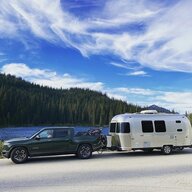
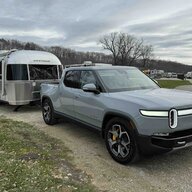
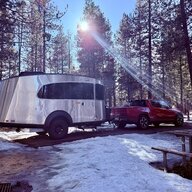
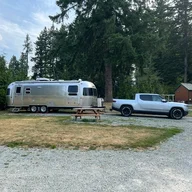
I recently completed a 2,000 mile trip in my Gen 2 Rivian R1T towing an Airstream Globetrotter 27FB (GVWR of 7,600 lbs). I use a BW Continuum weight distribution hitch. The trip was from northern Utah to northern Idaho to the Bellingham Washington area, and then looping back to Utah. Daytime temperatures were mostly in the upper 90s.
The towing experience was great, with plenty of power to climb long hills, smooth operation, and little noise. My general practice is to limit my speed to 65 mph when towing, but when traffic conditions demand, I will go up to the legal speed limit of 70 or 80 mph.
I am disappointed by how expensive on-the-road charging is. My total charging expense on this trip was $514.95. With my previous tow vehicle, a GMC Canyon diesel, this trip would have taken about $540 for fuel. The electric was a little cheaper than diesel, but only because I did about 40% of the charging for free, at RV parks.
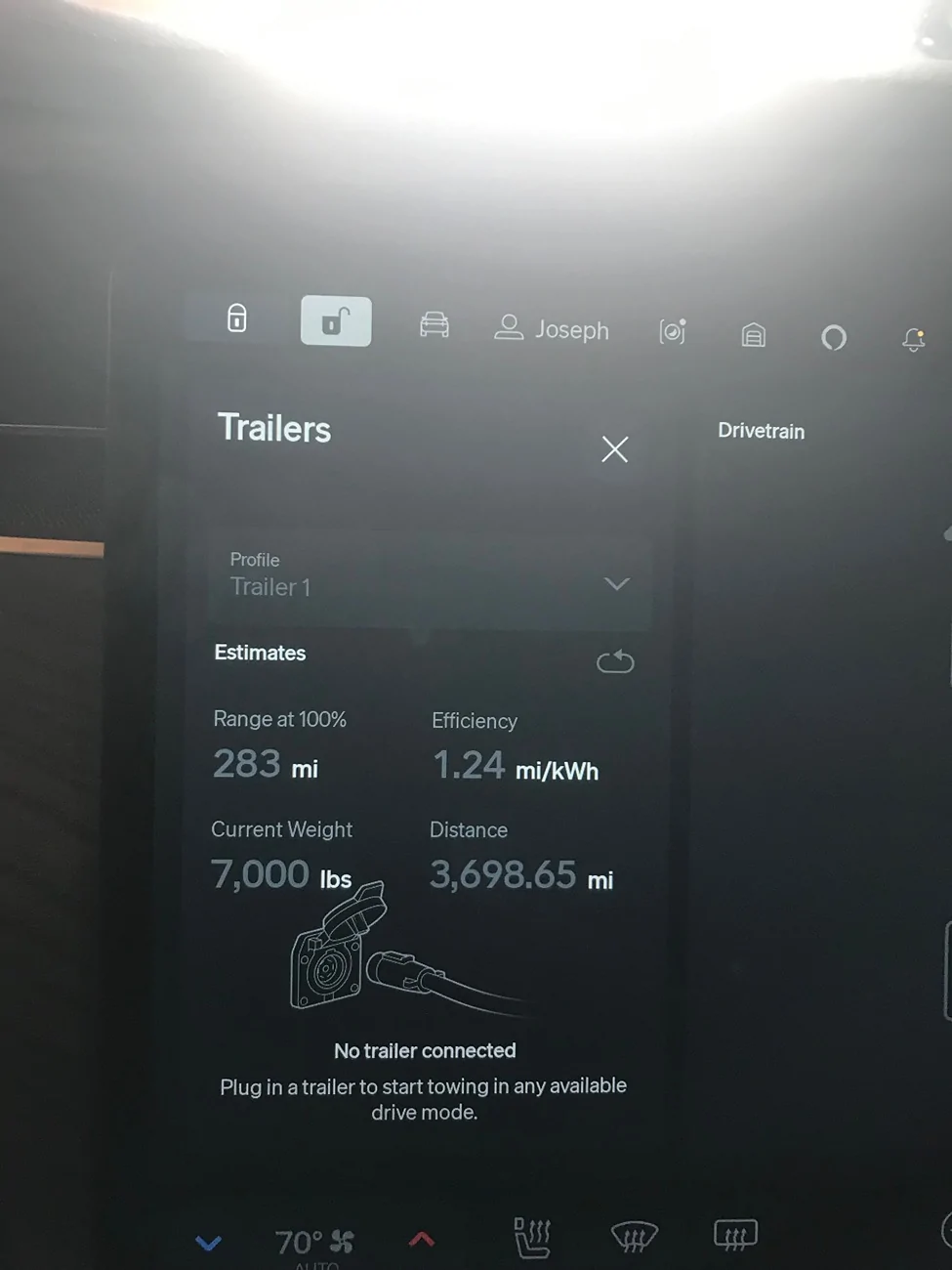
When towing, I have averaged 1.17 miles/kWh. At an average on-the-road electricity cost of $0.50/kWh, the electric towing cost is $0.425 per mile. This compares poorly with a diesel towing fuel cost of $0.267 per mile. Of course, when I charge the Rivian at home, the cost goes way down to $0.080 per mile.
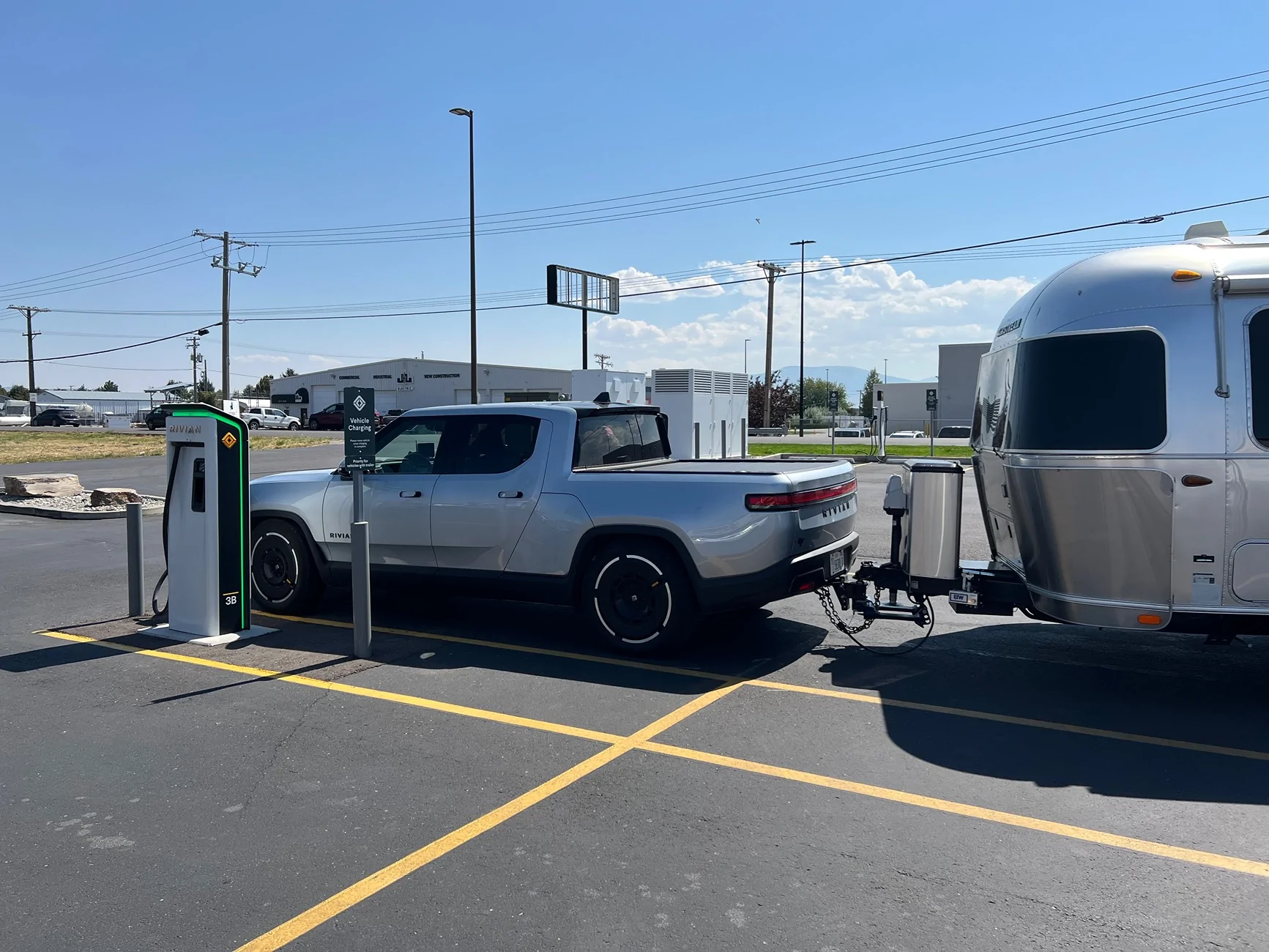
On this trip, on-the-road charging costs ranged from a low of $0.39/kWh (at a 50 kW ChargePoint) to a high of $0.56/kWh (at Electrify America). I charged at eleven fast chargers: seven Tesla Superchargers, one Rivian Adventure Network, two Electrify America, and one ChargePoint. I was able to keep the trailer connected at six chargers. Three of the chargers had a special space designed for trailers. At others there was enough space where I could maneuver into an end charger without blocking the other chargers or traffic lanes. But at five chargers I had to find a nearby space to drop the trailer, and then charge like any other car.
Our travel is leisurely. Most driving days on this trip were between 150 and 250 miles long. We stopped in the middle of the day for an hour to charge and have lunch. The longest day was 322 miles, with two charging stops of about an hour each, taking 7 hours and 5 minutes elapsed time.
The longest leg on this trip was 144.7 miles, with a net elevation drop of 2527 feet. I started with the battery at 100%, and got to the charger with 15%. The lowest battery level was 9%, at the end of a 117.9 mile drive with 946 feet of net climb. I found the on-board nav system to be fairly accurate at predicting the battery level for arrival at the next charge stop. The prediction would usually only change by a few percent during the drive. I would watch it to make sure I could reach the next charge stop.
During charging, the nav system would tell me when I had enough charge to continue. However, when I had to disconnect the trailer to charge, it would make this prediction without the trailer. I had to determine the correct charge limit myself.
Towing a travel trailer with the Rivian is a bit of an adventure. The driving experience is smooth and pleasant. You get to take nice relaxing breaks every hour or two. Finding charging stations where you need them can be a challenge. There are no noxious combustion fumes or engine noise.

The towing experience was great, with plenty of power to climb long hills, smooth operation, and little noise. My general practice is to limit my speed to 65 mph when towing, but when traffic conditions demand, I will go up to the legal speed limit of 70 or 80 mph.
I am disappointed by how expensive on-the-road charging is. My total charging expense on this trip was $514.95. With my previous tow vehicle, a GMC Canyon diesel, this trip would have taken about $540 for fuel. The electric was a little cheaper than diesel, but only because I did about 40% of the charging for free, at RV parks.
When towing, I have averaged 1.17 miles/kWh. At an average on-the-road electricity cost of $0.50/kWh, the electric towing cost is $0.425 per mile. This compares poorly with a diesel towing fuel cost of $0.267 per mile. Of course, when I charge the Rivian at home, the cost goes way down to $0.080 per mile.
On this trip, on-the-road charging costs ranged from a low of $0.39/kWh (at a 50 kW ChargePoint) to a high of $0.56/kWh (at Electrify America). I charged at eleven fast chargers: seven Tesla Superchargers, one Rivian Adventure Network, two Electrify America, and one ChargePoint. I was able to keep the trailer connected at six chargers. Three of the chargers had a special space designed for trailers. At others there was enough space where I could maneuver into an end charger without blocking the other chargers or traffic lanes. But at five chargers I had to find a nearby space to drop the trailer, and then charge like any other car.
Our travel is leisurely. Most driving days on this trip were between 150 and 250 miles long. We stopped in the middle of the day for an hour to charge and have lunch. The longest day was 322 miles, with two charging stops of about an hour each, taking 7 hours and 5 minutes elapsed time.
The longest leg on this trip was 144.7 miles, with a net elevation drop of 2527 feet. I started with the battery at 100%, and got to the charger with 15%. The lowest battery level was 9%, at the end of a 117.9 mile drive with 946 feet of net climb. I found the on-board nav system to be fairly accurate at predicting the battery level for arrival at the next charge stop. The prediction would usually only change by a few percent during the drive. I would watch it to make sure I could reach the next charge stop.
During charging, the nav system would tell me when I had enough charge to continue. However, when I had to disconnect the trailer to charge, it would make this prediction without the trailer. I had to determine the correct charge limit myself.
Towing a travel trailer with the Rivian is a bit of an adventure. The driving experience is smooth and pleasant. You get to take nice relaxing breaks every hour or two. Finding charging stations where you need them can be a challenge. There are no noxious combustion fumes or engine noise.
Sponsored