
MaskedRacerX
Well-Known Member
- First Name
- DT
- Joined
- Nov 27, 2022
- Threads
- 3
- Messages
- 405
- Reaction score
- 675
- Location
- Vilano Beach, FL
- Vehicles
- '24 BMW iX50 / '24 Jeep Wrangler 4xe
- Occupation
- Software Dev / Architect / Product Designer
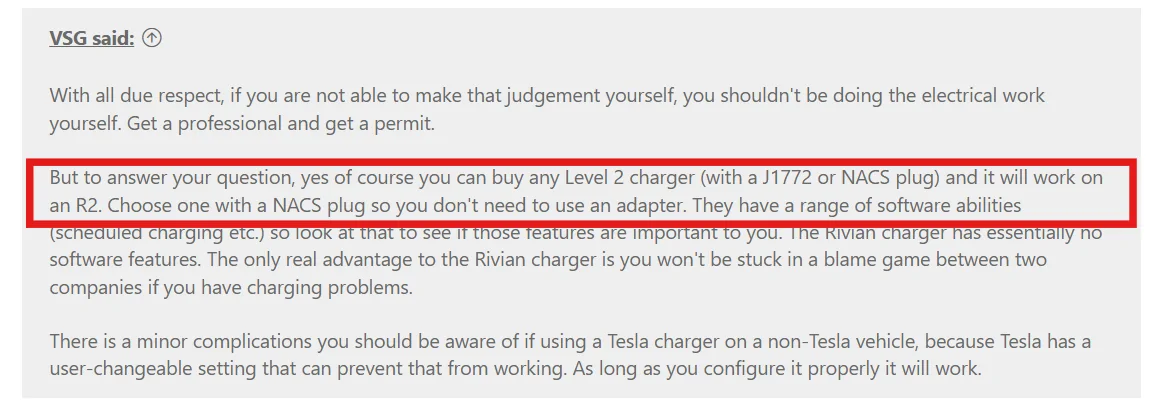
That's all negotiated by the vehicle, for example we have a 40 amp charger on a 50 amp circuit and if I plug in to the Wrangler it has a maximum charging capacity of 32 amps it just charges at 32 amps where the BMW IX charges at the full 40 amps.Does the specific charger software control setting charge level caps like not going above 80% day to day or is that controlled by the vehicle? I've never owned an electric vehicle of any kind so this is maybe an easy answer for anyone with more knowledge than me.
Also EV chargers run at continuous load so they charge at 80% of the circuit spec, so a 50a circuit allows for 40a, a 30a circuit (like a dryer plug, which you can also use) runs at 24a.
Most vehicles have all sorts of scheduling and whatnot as well, So after having had a smart charger, I'm back to preferring a simple "dumb" charger.
And for some additional really esoteric EV info

That box that hangs on the wall in your garage is technically not a charger it's called an EVSE. It's basically a smart switch from your AC power. The charger is on board the vehicle and rated at a specific amperage. The EV batteries are expecting to get DC power so the charger on board the car converts the AC from your EVSE (aka "charger"), to DC at a specified rate.
Commercial chargers are actually DC power (DCFC), so they bypass the onboard AC to DC charger and go directly into the batteries at a much higher rate.
Sponsored
Last edited: