

ksurfier
Well-Known Member
There appear to be a lot of Gen1 peeps here thinking the same math will apply to the R2, it will not…seriously, what’s everyone in her smoking?
Sponsored
Just a friendly reminder that weight isn't a meaningful contribution to range when considering speed/aerodynamics (wind).It’s kind of a physics problem. A bigger battery takes up more space and weighs more, so then you have to have a bigger vehicle to fit the pack and carry around said weight. Too heavy of a battery can really alter the driving dynamics as well.
I’m sure they’ll redesign the R1T at some point and include a structural battery pack and 4695 cells, like the R2. Not to mention, battery chemistries, their energy density, and components like capacitors will continue to develop and evolve.
It's as relevant as the the model S/model 3 comparison when they first were on the road together.There appear to be a lot of Gen1 peeps here thinking the same math will apply to the R2, it will not…seriously, what’s everyone in her smoking?
WHAT??? Newton is standing up and shaking his fists.Just a friendly reminder that weight isn't a meaningful contribution to range when considering speed/aerodynamics (wind).
In otherwords, an extra 500lbs means very little compared to an extra 5mph of speed.
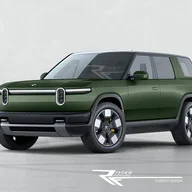
I think you wrote a lot of words here but ended up just agreeing with the poster you quoted lol. Don't read too much into things. Aerodynamic drag is key at highway speeds and not weight, we all agree. This thread is about highway speeds, as it is titled.WHAT??? Newton is standing up and shaking his fists.
Now granted, they never imagined probably objects where aerodynamic drag were a factor that could be measured against energy expenditure (they CERTAINLY didn’t have that too other than subjective or how much OATS the horse ate before and after). They probably did do some measurements with water and weights and balances, and possibly pressure and power, but it wasn’t anything to use like we have today.
One really would have to caveat this statement that “weight isn’t a meaningful contribution to range..” to say more like AT SPEED, like >50mph, the impact of aerodynamice drag has a greater impact on EV performance and energy expenditure than an additional 500lb weight does. That would be true. Although I would add that with EV and regenerative braking ability, the additional WEIGHT that needs to be moved yields a near recovery of 70-80% of the impact of the weight on the other side - decelerating - so it’s not a complete waste as with an ICE vehicle where the additional energy to move that weight is just lost forever.
But at speeds <~ 50 mph, the WEIGHT has a much bigger impact on EV Performance than the drag ever does. And this when the driving is mostly stop and go, so City <35, highways with stop and go traffic. Although similar to the above point with EV regenerative braking the ability to recover a lot of the extra energy needed to move the higher weight is recoverable. EV tend to have much better performance at speeds <50mph,
So to summarize.. at speeds < ~50mph, rolling resistance is the dominant force impact EV efficiency and range and
>!50, aerodynamic drag, and speed becomes the dominant force.
I could literally drive my TM3 550 miles at 30mph, but can ONLY get ~ 280-300 at 70mph.
Wow. That’s pretty terrible. Implies 2.6miles per kwh with mixed driving.The wait is over:
20” A/Ts
80% to 22% covering 131 miles @78 mph and 78 degrees F. This implies a max 100% range of ~230 miles in a mixed format…for the highway only portion this suggests 2.55 MPK at 78 mph.
so not likely to drive much over 200 miles if traveling at high speeds, maybe can squeeze out 250 miles if 45-60 mph…

A fairly efficient brick shaped car with relatively high ground clearance and off-pavement oriented tires is terrible compared to what?!Wow. That’s pretty terrible. Implies 2.6miles per kwh with mixed driving.
It's not bad for a SUV... my Jeep with a similar shape gets 2m/kWh in electric mode, probably even less over 65mph.Wow. That’s pretty terrible. Implies 2.6miles per kwh with mixed driving.
I thought the opposite.Wow. That’s pretty terrible. Implies 2.6miles per kwh with mixed driving.
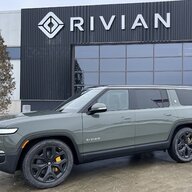
2.6 m/kWh at almost 80 mph is not bad, especially not knowing what wind conditions and elevation are. That is 385 watts per mile, I’ve had times in my Model S where around 80 I get 375-380 watts per mile. Consumption really goes up when going past 70.Wow. That’s pretty terrible. Implies 2.6miles per kwh with mixed driving.
I think it actually implies that Rivian sized it to the exact same specs as the Gen1, they decreased battery 45% and the efficiency is increased 45%, so end result is Gen 1 and R2 can both travel ~200 miles at ~75 mph, with usable range (80-10% SOC) being 150 miles (2 hours driving, then 25 min recharge)Wow. That’s pretty terrible. Implies 2.6miles per kwh with mixed driving.


