TheWombat
New Member
- Thread starter
- #1
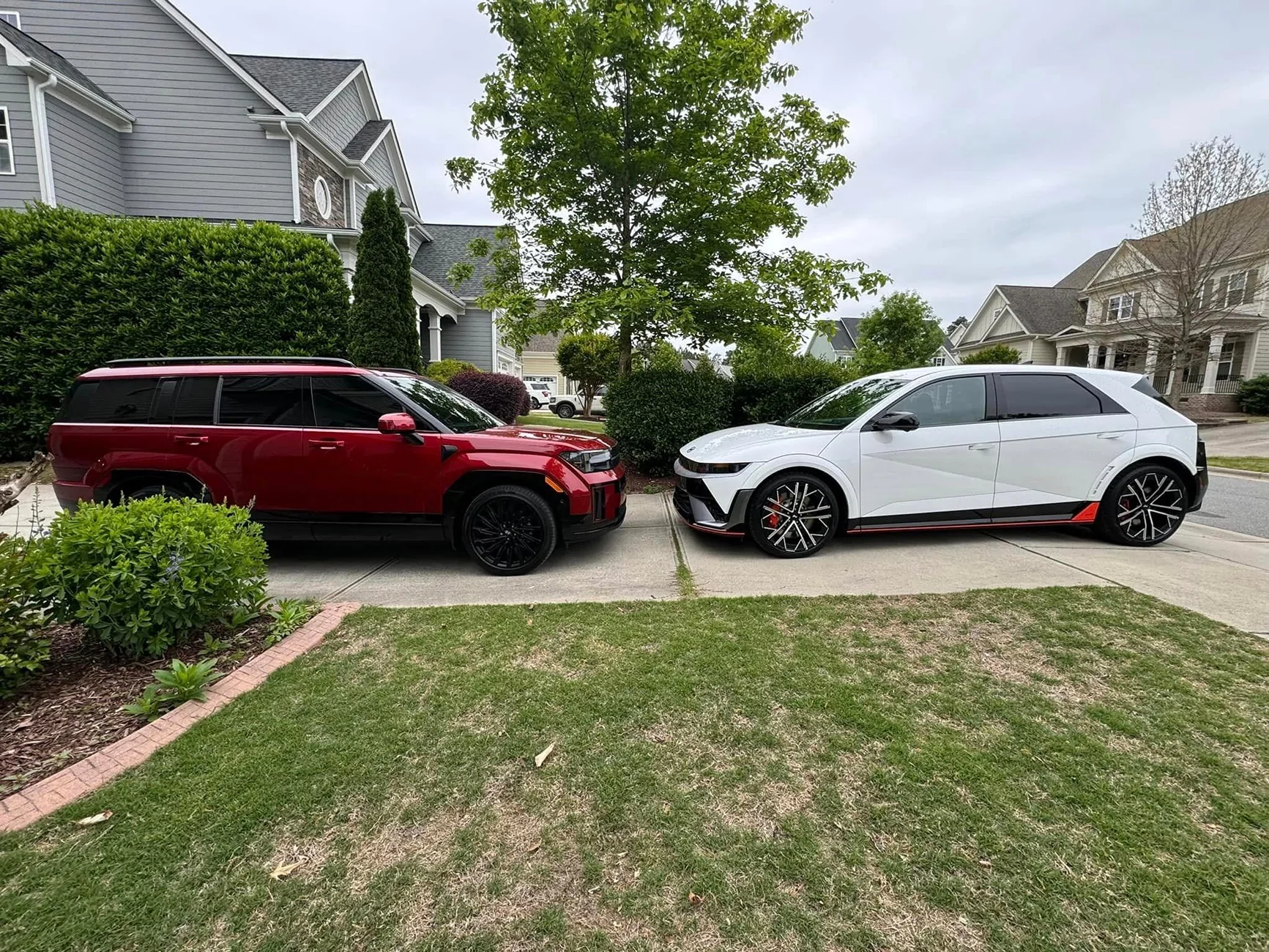
For the last two years, our household has had a slightly unusual but very useful Hyundai setup: I owned an Ioniq 5N and a Santa Fe, while my partner also owned a Santa Fe.
The Ioniq 5N was my first EV. Before buying it, I had test-driven a Tesla Model 3, Model Y, Kia EV6, and standard Ioniq 5. I was originally leaning toward the EV6, but then Hyundai announced the Ioniq 5N, and that pretty much ended the discussion. I had never previously owned, or even seriously considered, a Hyundai or Kia product, but the Ioniq 5N was the catalyst. It has been a genuinely brilliant and hugely entertaining car.
The reason for having both the Ioniq 5N and Santa Fe was fairly practical. I used the Ioniq 5N as my daily driver for roughly nine months of the year, then spent about three months in the mountains during ski season, where the Santa Fe made more sense. We also have two kids and a Weimaraner, so there are definitely times when the Santa Fe’s extra space is useful, although the Ioniq 5N is larger and more practical than it looks from the outside.
My partner drives around 25,000 miles per year, mostly school/kids runs and local driving rather than long-distance trips. I had wanted to switch her to an EV for some time, but she prefers a higher seating position. The standard Ioniq 5 felt too low for her, and she definitely was not interested in the bucket seats, extra buttons, and general “performance car theatre” of the Ioniq 5N.
I had been watching the Rivian R2 closely and placed two deposits. When my Ioniq 5N lease ended at the end of April, I returned it, which I now slightly regret. The original plan was either to get a new 2026 Ioniq 5N and keep my Santa Fe, or get a Rivian R2 to replace both my Ioniq 5N and Santa Fe.
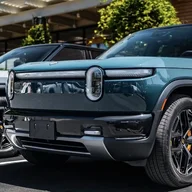
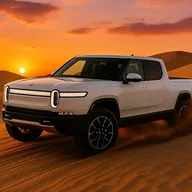
Whether by fate or chance, the 2026 Ioniq 5Ns have been delayed, and in the meantime I have been able to test-drive the R2 twice, as well as a tri-motor R1S. After those drives, we have decided to go ahead with two Rivian R2 Performance Launch Packages, replacing the Ioniq 5N/Santa Fe combination and my partner’s Santa Fe.
On paper, the Ioniq 5N and R2 Performance are surprisingly close in some ways:
Range was never much of an issue for me with the Ioniq 5N. In two years, I only used a DC fast charger five times, all within the first couple of weeks of ownership while waiting for my Level 2 charger to be installed. After that, home charging covered nearly everything, especially since we had the Santa Fe available for longer trips.
That said, the R2 impressed me more than I expected. It is not an Ioniq 5N dynamically, and anyone expecting that will be disappointed. But that is probably the wrong comparison. The better comparison for my use case is not “Ioniq 5N vs R2,” but rather “Ioniq 5N plus Santa Fe vs R2.”
Looked at that way, the R2 makes a lot of sense. It gives me a good portion of the fun and performance of the Ioniq 5N while also covering much of the practicality we used the Santa Fe for. It feels quick, agile, nicely packaged, and more SUV-like without becoming enormous. It also gives my partner the higher seating position she wants while finally moving her high-mileage local driving into an EV.
There are things we will miss from the Santa Fe. It has slightly more useful trunk space in some situations, rear cargo-area air vents that are very helpful for the dog, and a third row of seats, although we have probably only used that third row two or three times in two years. So there is a little bit of compromise, but for us it looks like a very reasonable trade.
Another factor is Rivian’s software-first approach. Hyundai has built an amazing car in the Ioniq 5N, but Rivian appears far more active in improving the ownership experience over time through meaningful software updates. That matters, especially when buying into a newer platform. Although I expect it will take us a bit of time to get used to the software centered approach of Rivian vs the blend of physical buttons/software on the Hyundai.
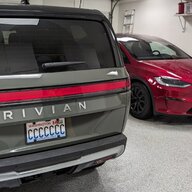
As an aside, I also drove the tri-motor R1S. I liked the higher seating position, and the extra size would certainly be useful at times for one of our cars. However, the additional weight was very obvious from behind the wheel. I could see myself considering an R1S in the future, particularly a future Gen 3 version, if Rivian moved the charge port to the rear-left side, carried across the latest R2 updates, and offered a simpler semi-active traditional suspension option rather than air suspension. I understand why air suspension exists on the R1S, but personally I do not need the extra complexity or long-term cost exposure.
Overall, well done to Rivian. The R2 seems to hit a very interesting sweet spot: compact enough to live with easily, large enough to be genuinely practical, quick enough to be fun, and efficient enough to make sense as a daily EV.
We are looking forward to taking delivery of our Borealis and Forest Green R2 Performance Launch Packages in the next few months, and saying farewell to our Hyundais.

The Ioniq 5N was my first EV. Before buying it, I had test-driven a Tesla Model 3, Model Y, Kia EV6, and standard Ioniq 5. I was originally leaning toward the EV6, but then Hyundai announced the Ioniq 5N, and that pretty much ended the discussion. I had never previously owned, or even seriously considered, a Hyundai or Kia product, but the Ioniq 5N was the catalyst. It has been a genuinely brilliant and hugely entertaining car.
The reason for having both the Ioniq 5N and Santa Fe was fairly practical. I used the Ioniq 5N as my daily driver for roughly nine months of the year, then spent about three months in the mountains during ski season, where the Santa Fe made more sense. We also have two kids and a Weimaraner, so there are definitely times when the Santa Fe’s extra space is useful, although the Ioniq 5N is larger and more practical than it looks from the outside.
My partner drives around 25,000 miles per year, mostly school/kids runs and local driving rather than long-distance trips. I had wanted to switch her to an EV for some time, but she prefers a higher seating position. The standard Ioniq 5 felt too low for her, and she definitely was not interested in the bucket seats, extra buttons, and general “performance car theatre” of the Ioniq 5N.
I had been watching the Rivian R2 closely and placed two deposits. When my Ioniq 5N lease ended at the end of April, I returned it, which I now slightly regret. The original plan was either to get a new 2026 Ioniq 5N and keep my Santa Fe, or get a Rivian R2 to replace both my Ioniq 5N and Santa Fe.
Whether by fate or chance, the 2026 Ioniq 5Ns have been delayed, and in the meantime I have been able to test-drive the R2 twice, as well as a tri-motor R1S. After those drives, we have decided to go ahead with two Rivian R2 Performance Launch Packages, replacing the Ioniq 5N/Santa Fe combination and my partner’s Santa Fe.
On paper, the Ioniq 5N and R2 Performance are surprisingly close in some ways:
- Power: 641 hp / 568 lb-ft torque vs 656hp / 609 lb-ft torque
- Acceleration: 0-60 3.0 seconds vs 3.6 seconds
- Battery: 84 kWh vs 88 kWh
- Range: 220 miles vs 330 miles
- Length: 185.6" vs 185.9"
- Height: 62.4" vs 66.9"
- Cargo: 59 cu-ft vs 79 cu-ft
Range was never much of an issue for me with the Ioniq 5N. In two years, I only used a DC fast charger five times, all within the first couple of weeks of ownership while waiting for my Level 2 charger to be installed. After that, home charging covered nearly everything, especially since we had the Santa Fe available for longer trips.
That said, the R2 impressed me more than I expected. It is not an Ioniq 5N dynamically, and anyone expecting that will be disappointed. But that is probably the wrong comparison. The better comparison for my use case is not “Ioniq 5N vs R2,” but rather “Ioniq 5N plus Santa Fe vs R2.”
Looked at that way, the R2 makes a lot of sense. It gives me a good portion of the fun and performance of the Ioniq 5N while also covering much of the practicality we used the Santa Fe for. It feels quick, agile, nicely packaged, and more SUV-like without becoming enormous. It also gives my partner the higher seating position she wants while finally moving her high-mileage local driving into an EV.
There are things we will miss from the Santa Fe. It has slightly more useful trunk space in some situations, rear cargo-area air vents that are very helpful for the dog, and a third row of seats, although we have probably only used that third row two or three times in two years. So there is a little bit of compromise, but for us it looks like a very reasonable trade.
Another factor is Rivian’s software-first approach. Hyundai has built an amazing car in the Ioniq 5N, but Rivian appears far more active in improving the ownership experience over time through meaningful software updates. That matters, especially when buying into a newer platform. Although I expect it will take us a bit of time to get used to the software centered approach of Rivian vs the blend of physical buttons/software on the Hyundai.
As an aside, I also drove the tri-motor R1S. I liked the higher seating position, and the extra size would certainly be useful at times for one of our cars. However, the additional weight was very obvious from behind the wheel. I could see myself considering an R1S in the future, particularly a future Gen 3 version, if Rivian moved the charge port to the rear-left side, carried across the latest R2 updates, and offered a simpler semi-active traditional suspension option rather than air suspension. I understand why air suspension exists on the R1S, but personally I do not need the extra complexity or long-term cost exposure.
Overall, well done to Rivian. The R2 seems to hit a very interesting sweet spot: compact enough to live with easily, large enough to be genuinely practical, quick enough to be fun, and efficient enough to make sense as a daily EV.
We are looking forward to taking delivery of our Borealis and Forest Green R2 Performance Launch Packages in the next few months, and saying farewell to our Hyundais.
Sponsored