
Sponsored
mikehmb
Well-Known Member
- First Name
- Mike
- Joined
- Jan 12, 2022
- Threads
- 154
- Messages
- 2,303
- Reaction score
- 5,225
- Location
- SF Bay Area
- Vehicles
- My name is Mike, and I have a (car) problem
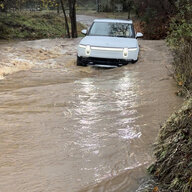
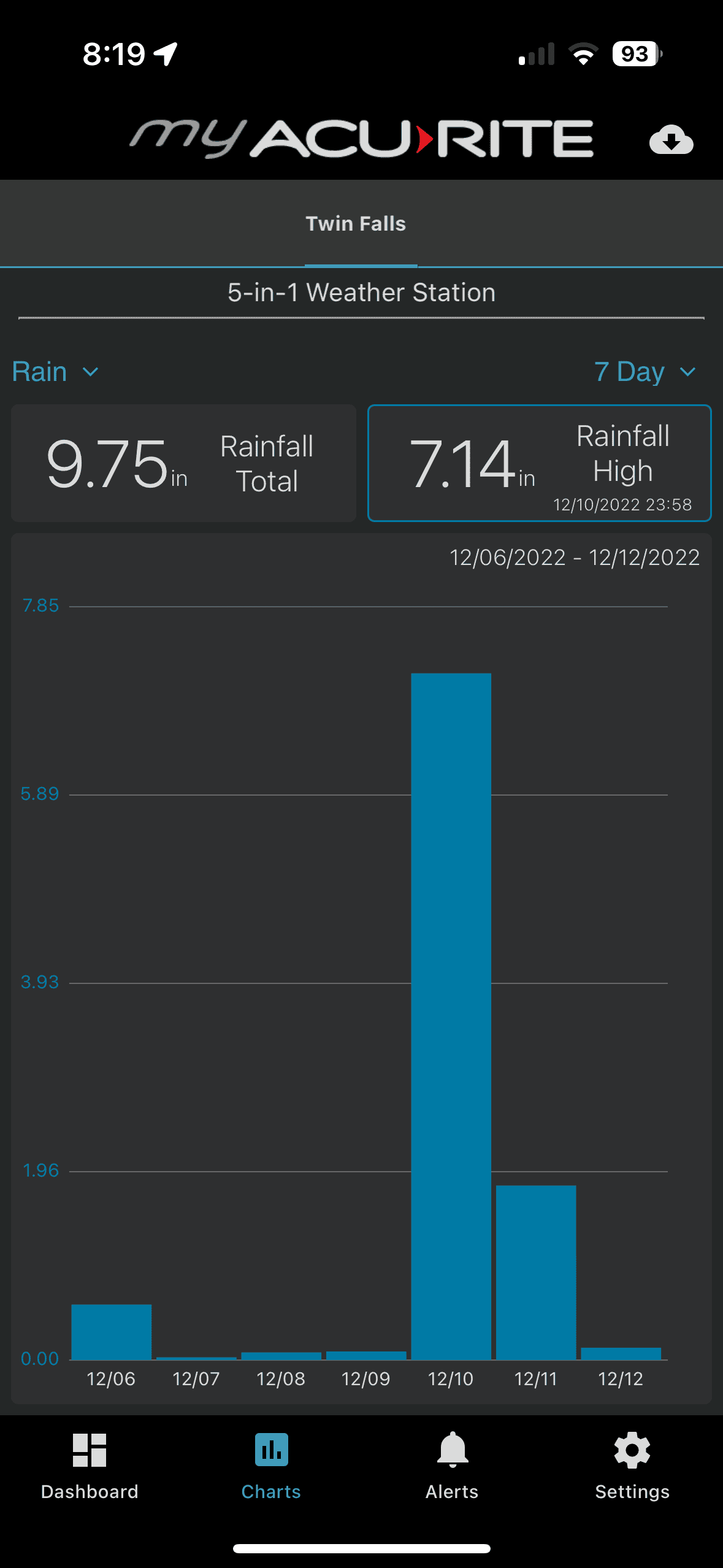
Wow. We got 3” here in HMB. Where is this?
moosehead
Well-Known Member
- Joined
- Sep 16, 2021
- Threads
- 64
- Messages
- 2,092
- Reaction score
- 4,594
- Location
- Denver, CO
- Vehicles
- ‘22 Ioniq 5, ‘78 Jeep Wagoneer
Water crossings with flow are ballzy! Nice work.
aw113sgte
Well-Known Member
Far too often people and vehicles are swept downstream when water goes over roads like this. Moving water is incredibly powerful, it can also erode the road bed very quickly leading to section of the road missing you don't know about. There is a reason for the saying "turn around don't drown". Here is just one of many examples, had that rail not caught the vehicle there's a good chance that person would be dead.
Last edited:
Sponsored
EBEG
Well-Known Member
I grew up in the Phoenix area where there are many dry creek beds that only fill when it rains. There is always some dude in a lifted F250 being rescued by a helicopter after his attempted creek crossing got sideways. Mother Nature is more powerful than most of us give her credit.
jerseyff
Well-Known Member
- First Name
- Darren
- Joined
- Aug 3, 2020
- Threads
- 17
- Messages
- 737
- Reaction score
- 986
- Location
- McDonald, TN
- Vehicles
- R1T; Model 3 Highland
- Occupation
- IT
This is why first responders always have calls to go on!

iansriv
Well-Known Member
Looks cool. How do you know or did you know the depth before you went in? I like these videos but always wonder if the people wading through knew how deep it was. I have invented a drone that hovers above the water and gives back depth and flow speed/strength reading. I am also making this all up.

Donald Stanfield
Well-Known Member
I came here to ask how the dude knew that was safe. From the other comments it seems he didn’t. That made a super cool video but it was as dangerous as I initially thought.
I don’t know whether or not to congratulate the OP or admonish them to not do that.
I don’t know whether or not to congratulate the OP or admonish them to not do that.
Sponsored

domoplaytime
Well-Known Member
Wasn't there a thread somewhere about dedicated flood tires instead of 20" ATs? Sorry I hope I don't turn this into yet another Flood Mode discussion.
Singletracker
Well-Known Member
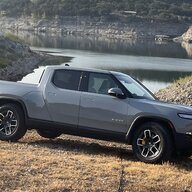
Sometimes that 7000+ lbs. can come in handy. Same crossing in a 5000 lbs or less vehicle may have ended a lot worse.
Tucker74
Well-Known Member
- First Name
- Tucker
- Joined
- Sep 20, 2022
- Threads
- 17
- Messages
- 410
- Reaction score
- 510
- Location
- Austin, TX
- Vehicles
- 2023 R1T
- Occupation
- Engineer
The reality is creek crossings can be relatively safe if you understand the conditions and behavior of your vehicle. I live in central Texas, where we too have a multitude of creek rescues during sudden flash flooding. Because of this low water crossings all have flood gauges, which I didn’t see in the OP video but can still be safe if you know the road and area. The majority of people needing rescued don’t understand their vehicle or how it will behave, with most stalling due to submerging their intake. The result is “turn around don’t drown” campaigns, which do save a lot of people who honestly should not be crossing low water crossings.
Having said all that, proper technique does afford you the ability to cross moving water and a 7500lb vehicle that does not have an intake certainly helps. It’s all knowing the risk and preparation … which from the video angle across the stream we can assume was understood by the driver.
Having said all that, proper technique does afford you the ability to cross moving water and a 7500lb vehicle that does not have an intake certainly helps. It’s all knowing the risk and preparation … which from the video angle across the stream we can assume was understood by the driver.
AARivian48
Well-Known Member
- First Name
- Alaa
- Joined
- Oct 17, 2022
- Threads
- 3
- Messages
- 100
- Reaction score
- 65
- Location
- Knoxville, TN
- Vehicles
- Forest Green R1T Adv. / BM / 20 AT
- Occupation
- management
much respect to you and your truck

AllInev
Well-Known Member
- Joined
- Nov 22, 2021
- Threads
- 37
- Messages
- 1,267
- Reaction score
- 2,120
- Location
- Oakland, CA
- Vehicles
- Prius V, 2022 R1T
Yep, "not a good idea" was kind wording.I'm glad this worked out, but it wasn't a good idea.
Sponsored
Similar threads

- Replies
- 245
- Views
- 49,431


- Replies
- 138
- Views
- 99,885


- Replies
- 0
- Views
- 436

- Replies
- 11
- Views
- 6,026
