
clockwork crane
Well-Known Member
- Joined
- Aug 25, 2022
- Threads
- 4
- Messages
- 73
- Reaction score
- 106
- Location
- San Francisco Bay Area
- Vehicles
- Rivian R1T
- Thread starter
- #1
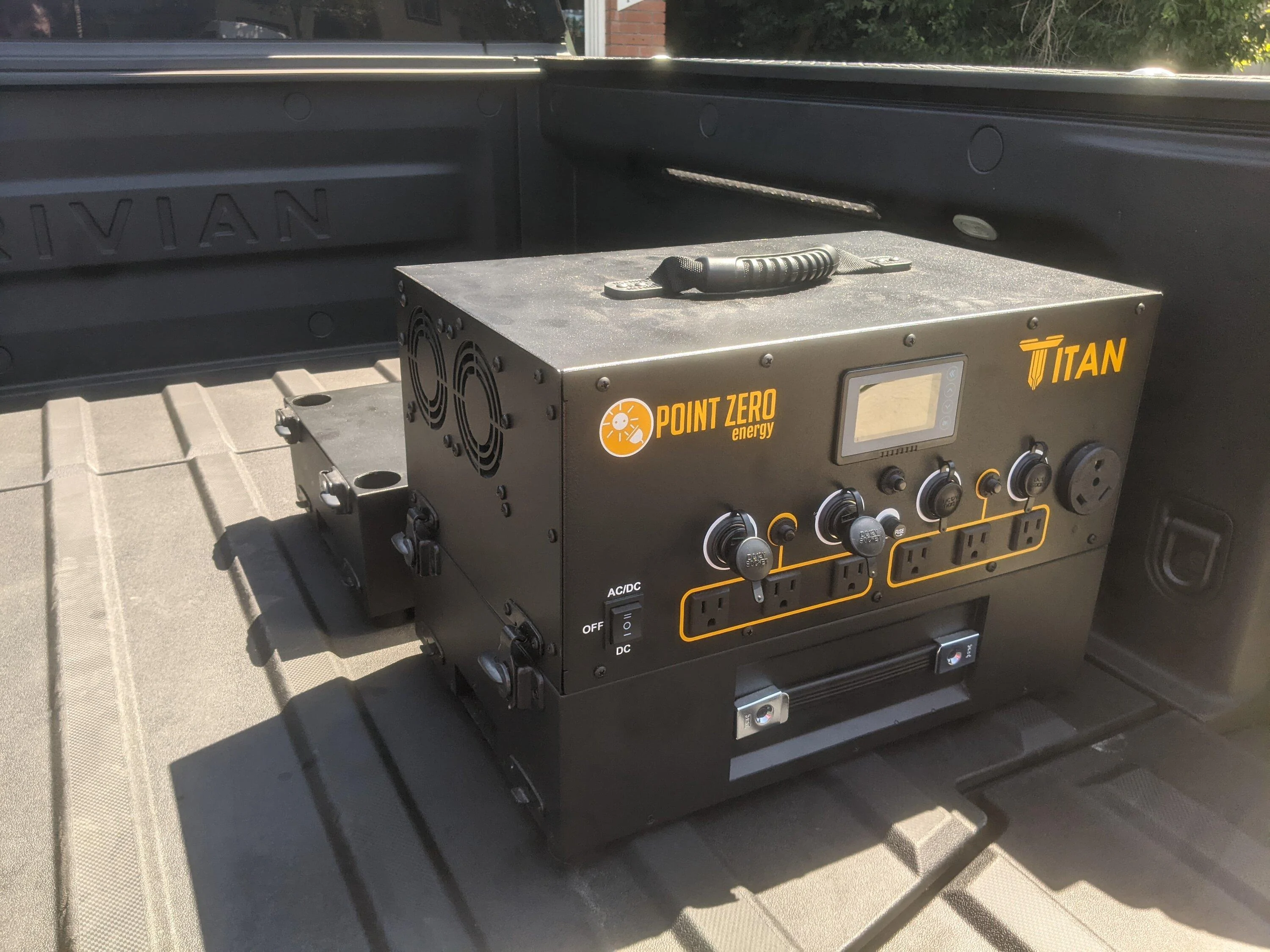
Inspired by a recent thread by kizamybute' about using an EcoFlow Delta Max in a Rivian to boost its power output, I decided to try putting my PointZero Titan into the gear tunnel and the bed to see how well it fits.
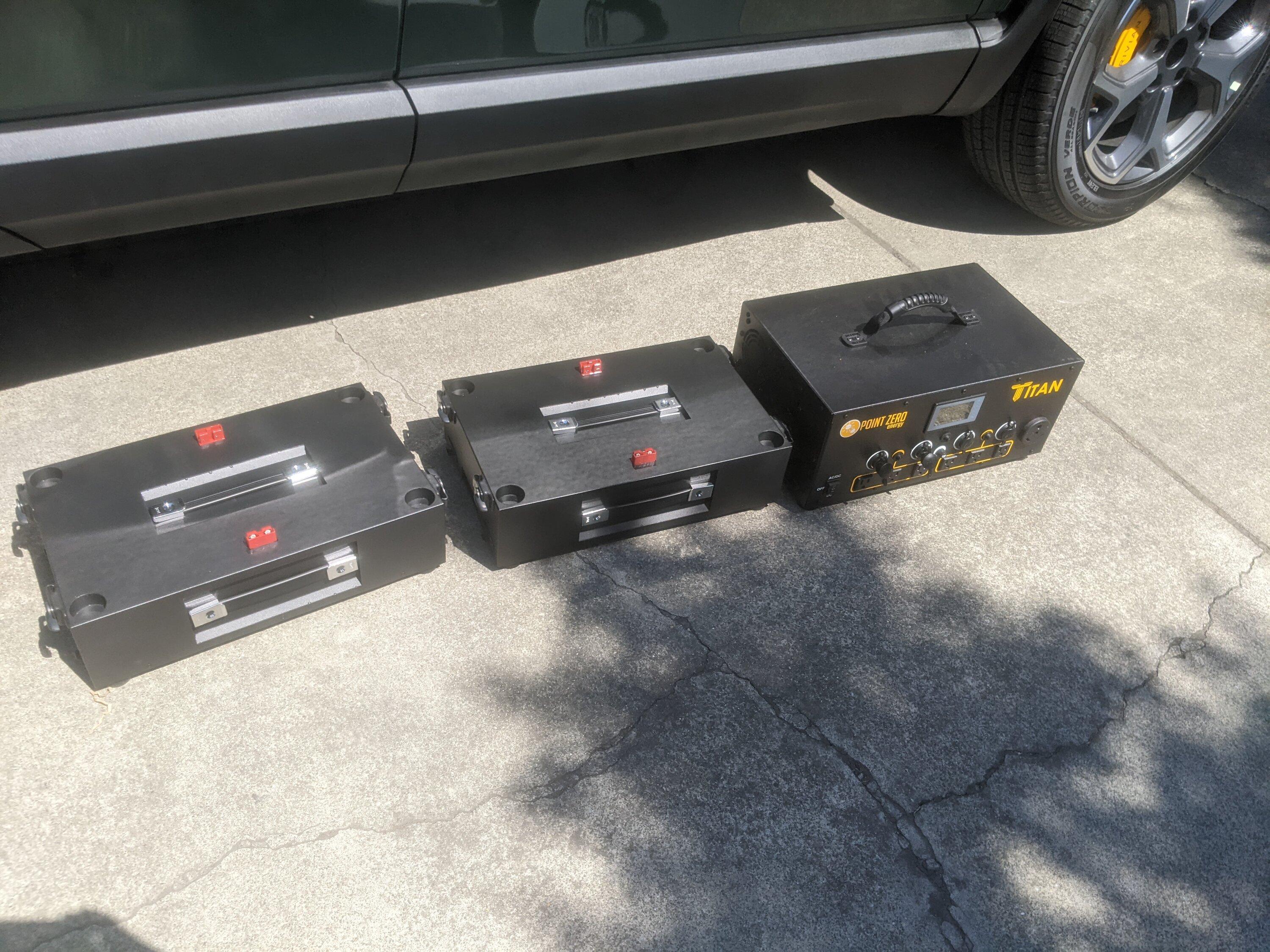
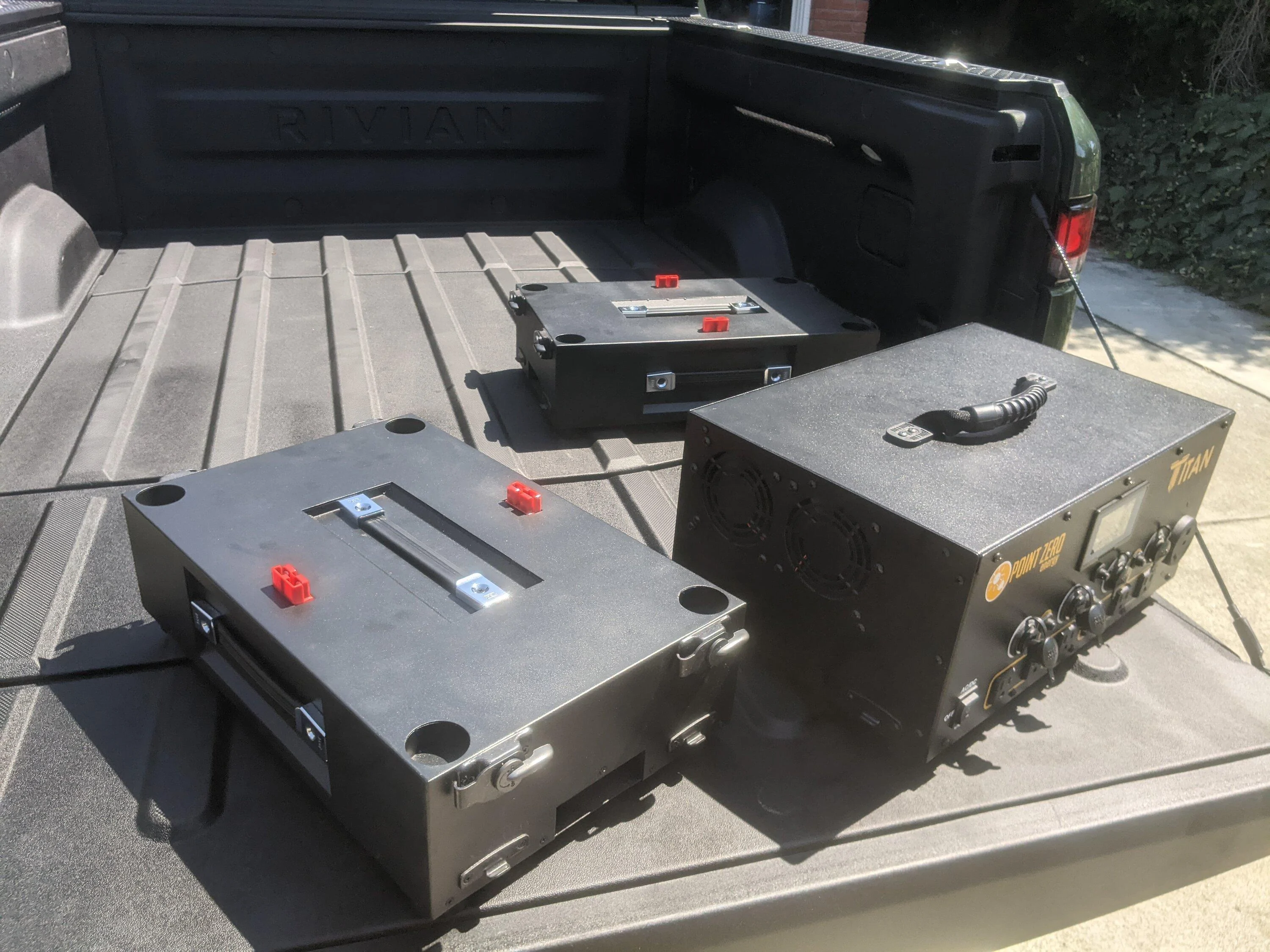
The Titan is a modular solar generator with a top inverter module (which contains all of the components except the battery storage, 32lbs) that sits on detachable battery plates (2 kWh each, NMC chemistry, 35lbs). It has 3000W continuous / 6000W surge output, 2000W MPPT solar charging input, and 1450W AC charger input with offboard chargers.
I bought it with the intention to power an RV, since it has a TT30 (30A, 120V) plug, which most other solar generators don't, and the 3000W continuous is important for that use case (particularly for powering an air conditioner).
Gear tunnel:
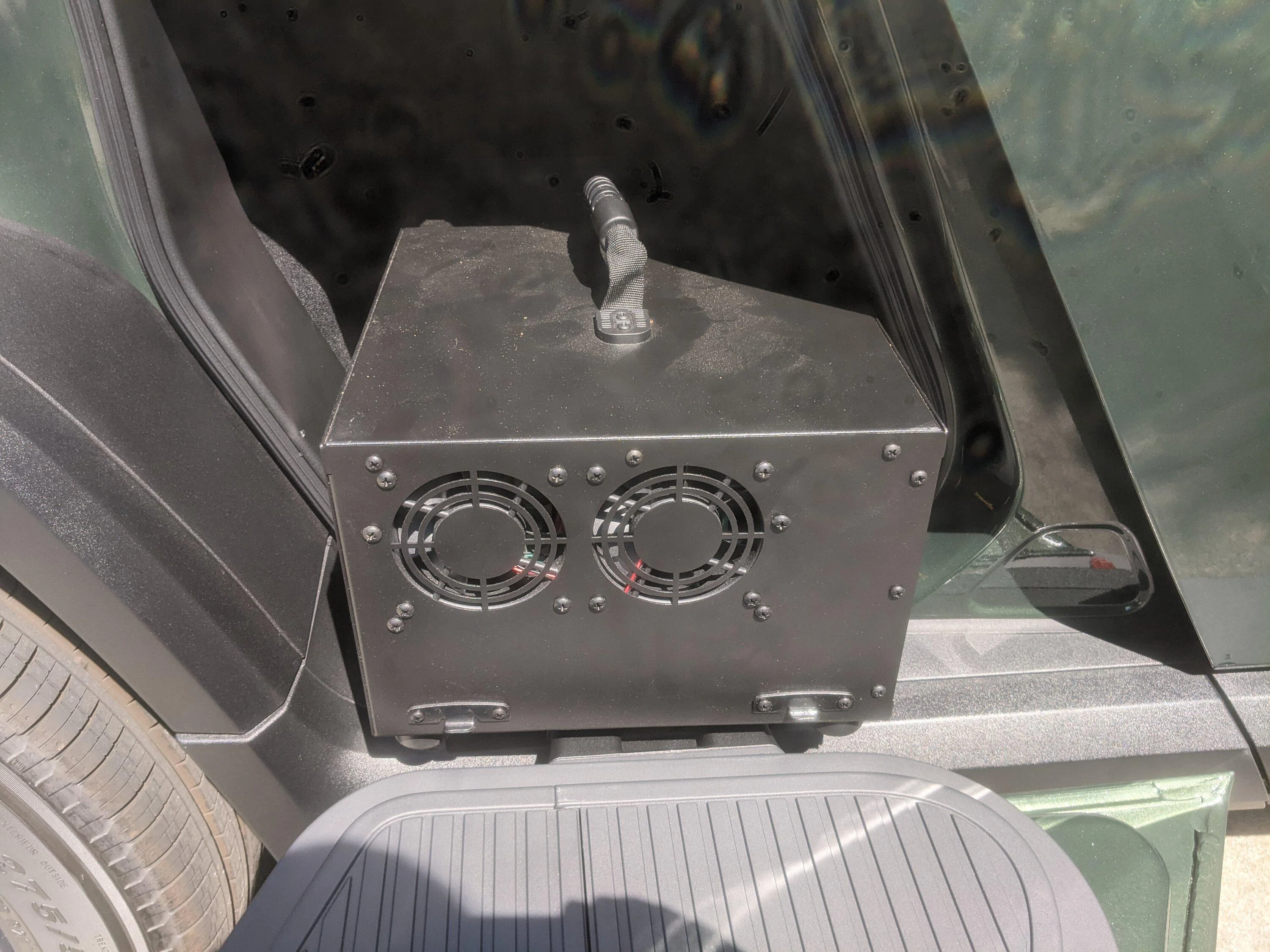
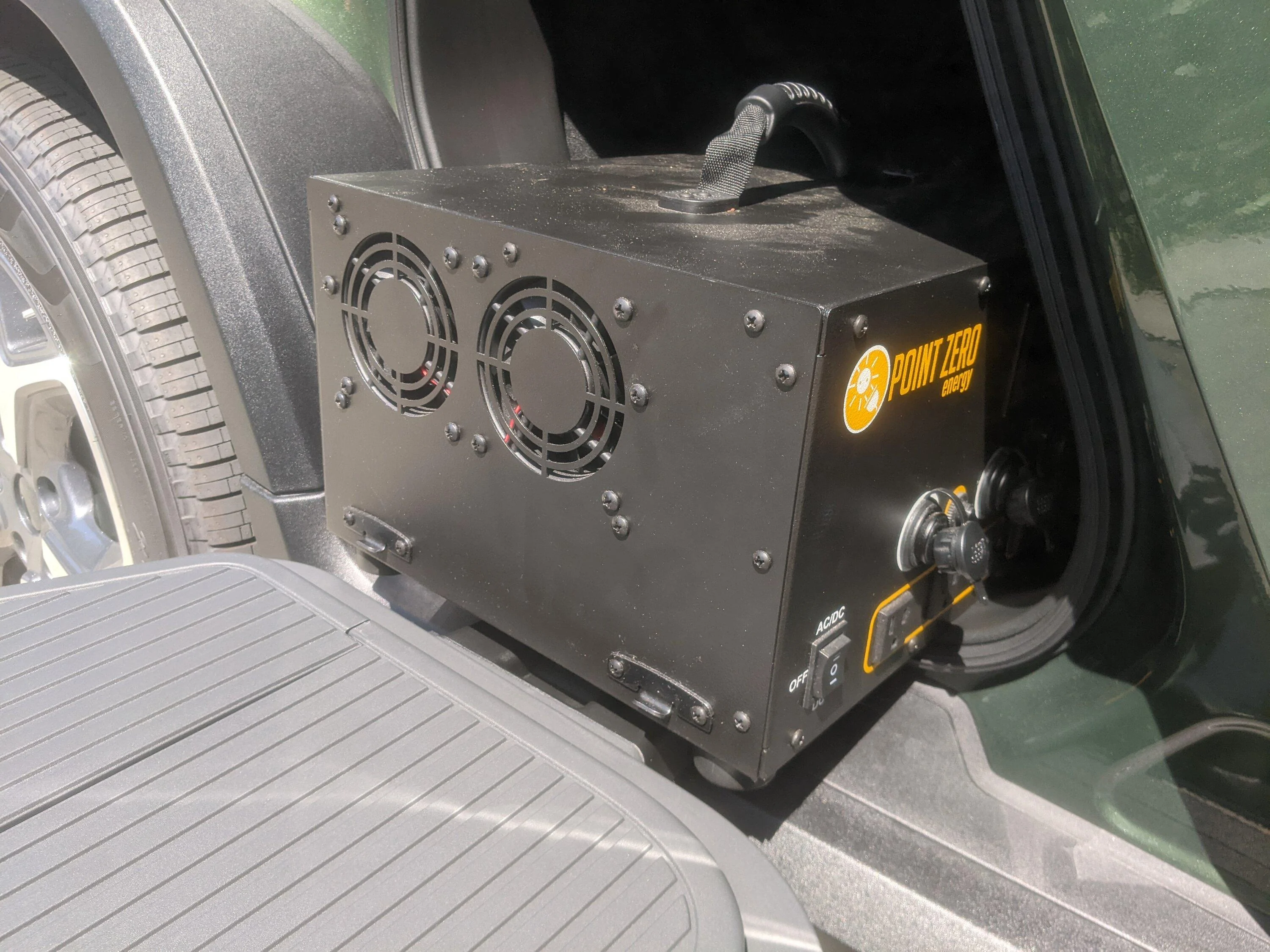
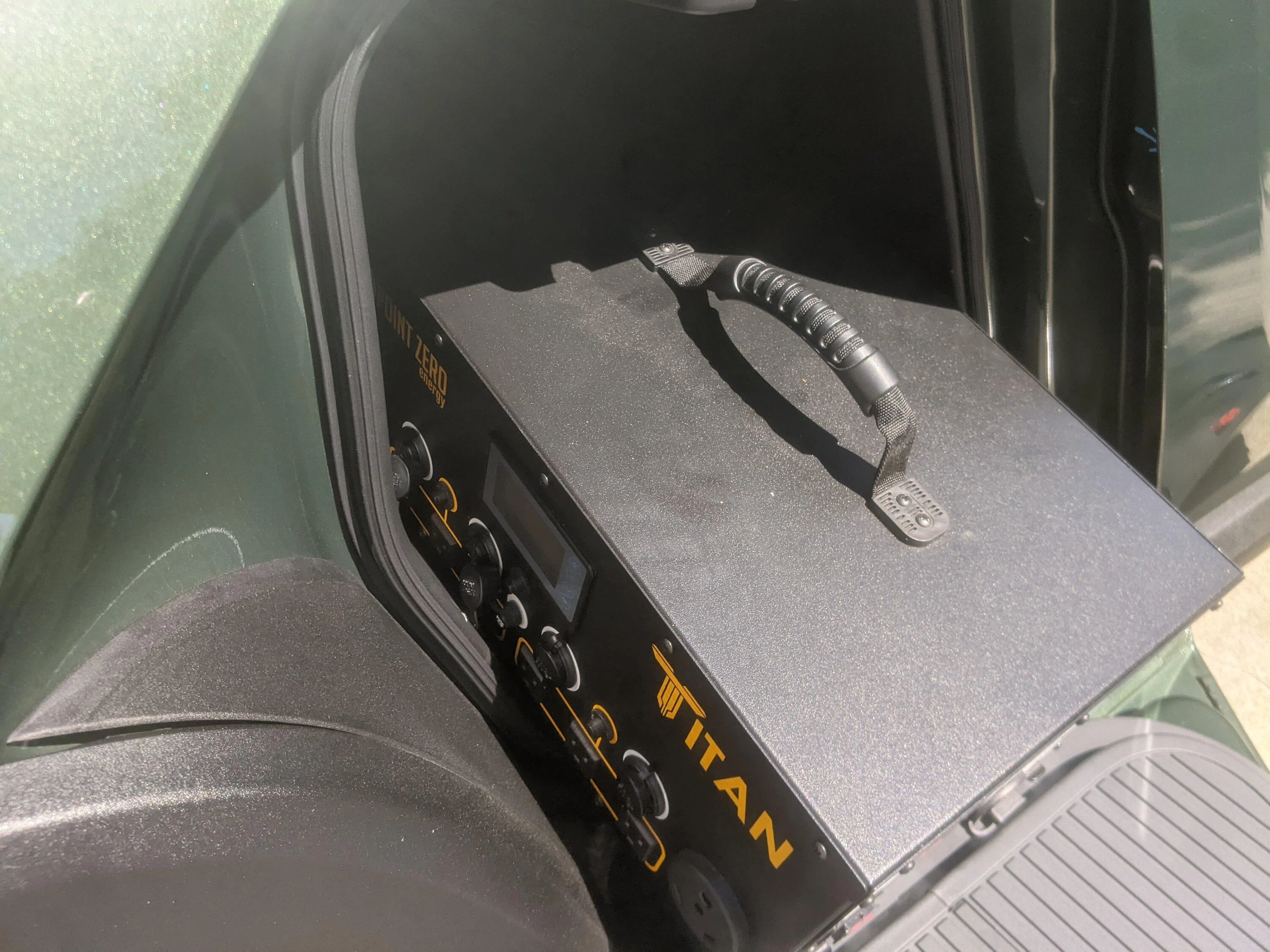
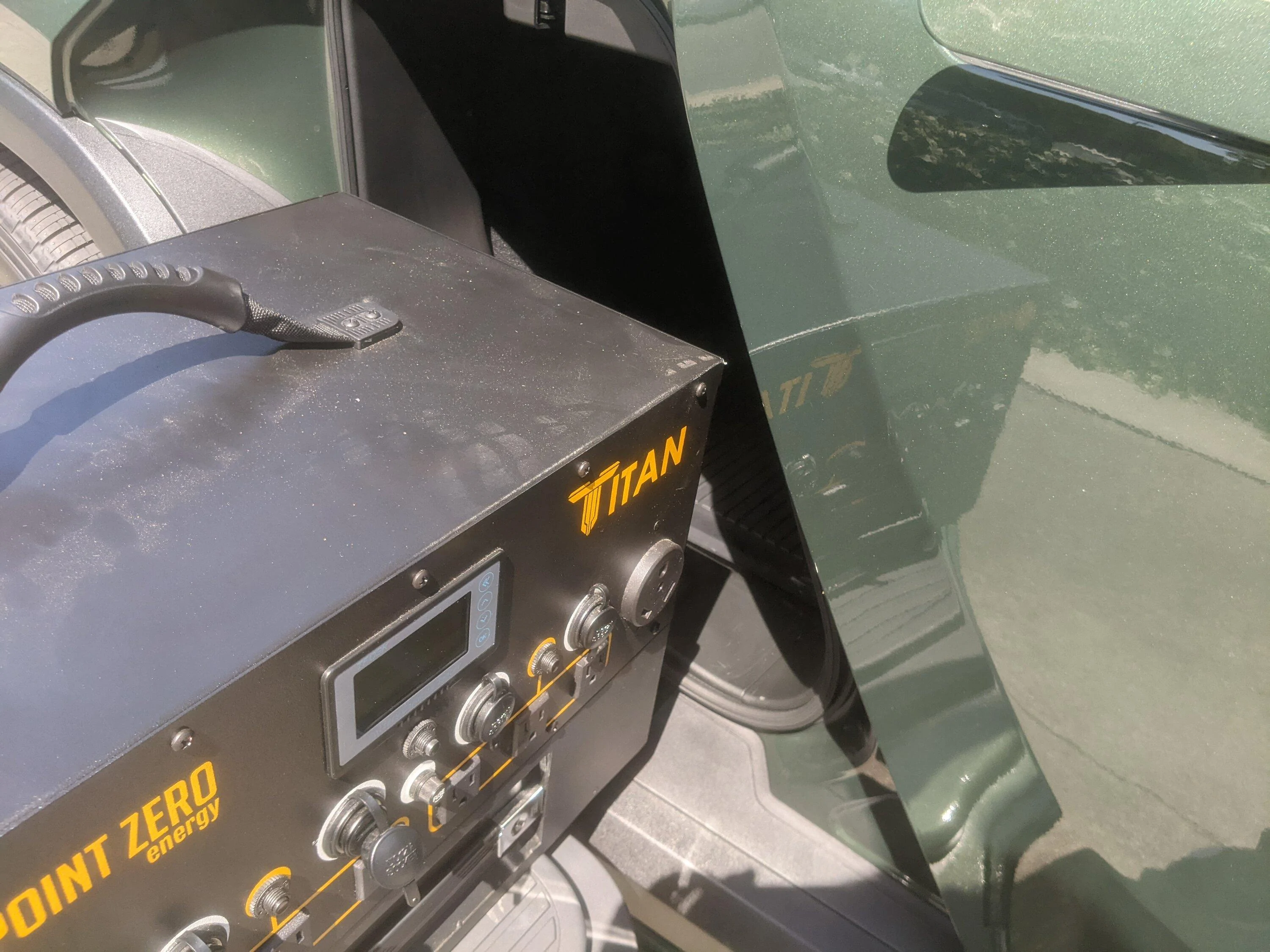
The inverter module just barely fits, but it fits, and it slides in pretty easily with the big handle to steer it. The battery plates are the same size, so they also fit, though they are a bit heavier and harder to manipulate with the smaller strap handle. The problem is that manipulating the top module into the gear tunnel to drop it onto a battery plate and connect it up is a huge pain, made worse by the fact that the latches are side-mounted, so I would need to reach around very awkwardly to latch the opposite ones, or crawl into the gear tunnel, or reach into the passthrough from the back seat.
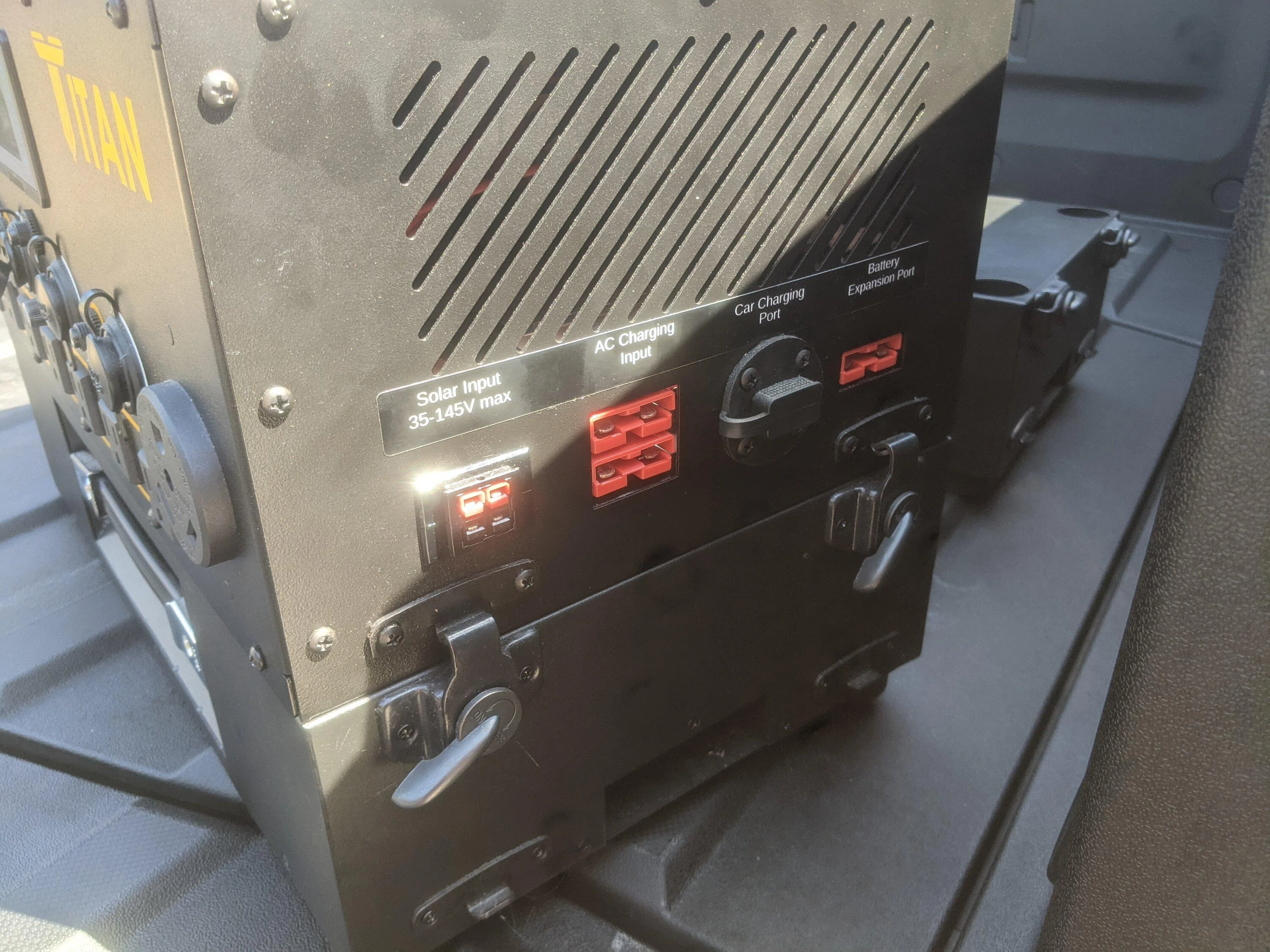
The Titan has a battery expansion port so you can connect batteries to it with cables and Anderson plugs instead of stacking them. In theory I could lay out the battery plates in the gear tunnel and use the cables to connect them. But that also requires fishing around in the gear tunnel, and it would waste a lot of space.
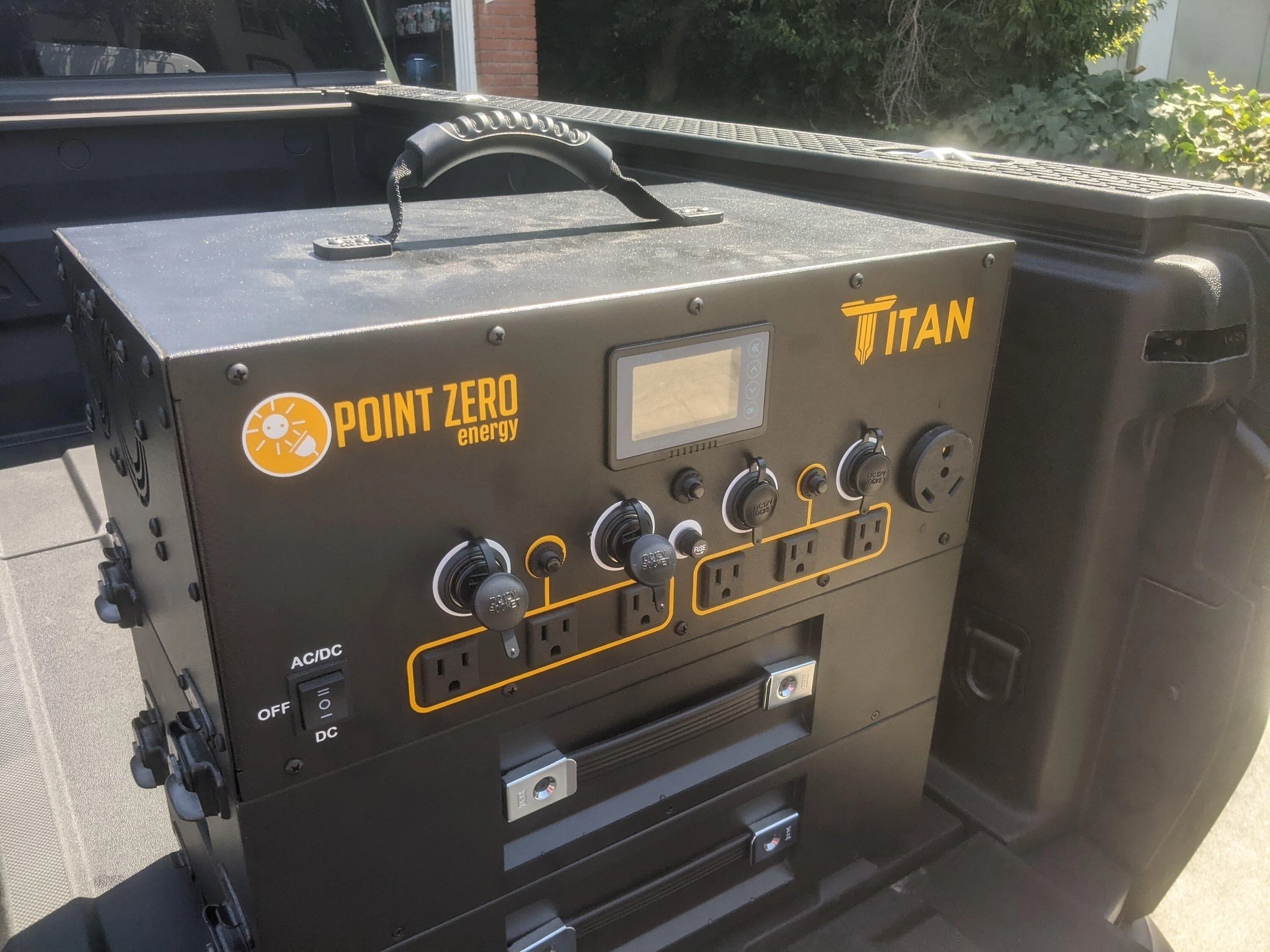
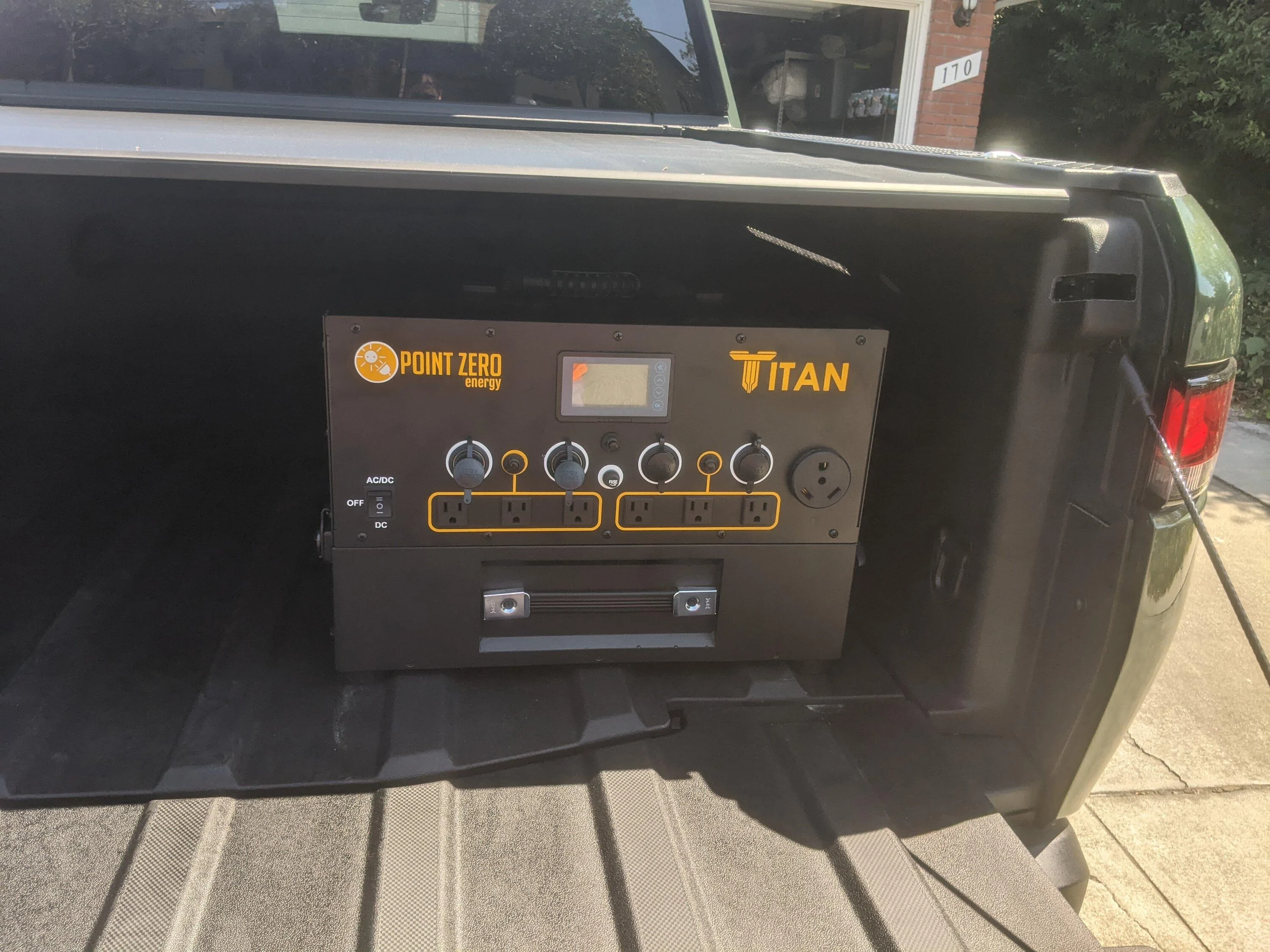
One other problem: since the outbound power sockets are all on the front of the unit, there's not very much clearance to access them while it's in the gear tunnel, since they are all facing the gear tunnel wall. You could make it work with right-angle plugs, but it's not great for visibility, especially for looking at the front display.
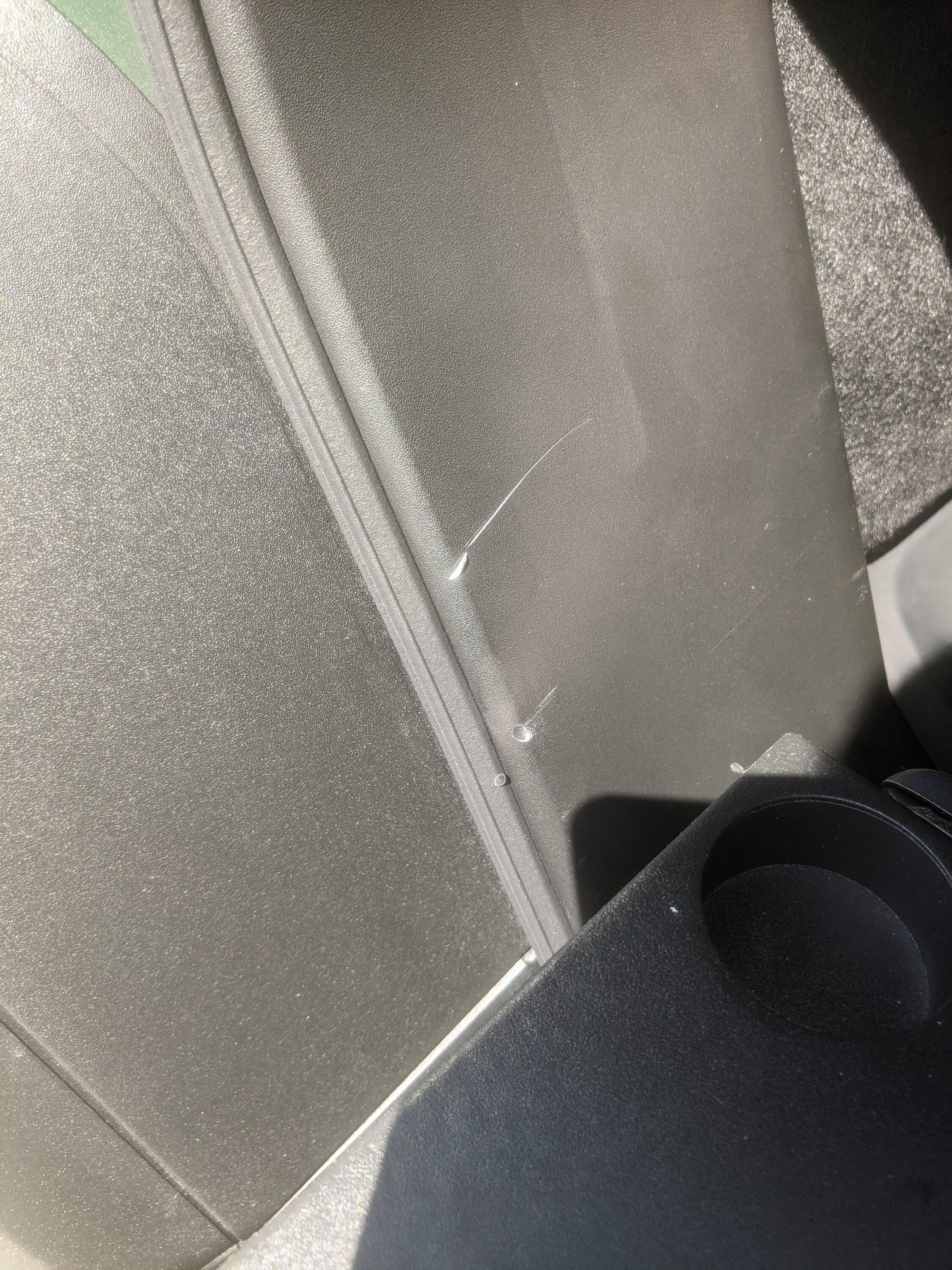
And also, the components have sharp corners, and dug a couple of scratches into the gear tunnel entrance while I was moving them.
Verdict: doesn't really work.
Truck bed:
The inverter module fits just fine, and the rubber feet have enough traction to keep it from moving around, but not so much that it's difficult to slide. Similarly for the battery plates.
With the tonneau cover open, I can stack as many batteries as I want. But I can only stack one battery plate with the tonneau closed; it's just slightly too tall to fit with two battery plates in the stack. Like before, I could use the battery expansion port on the side of the unit to hook up the extra battery (and maybe even a stack of 2 batteries, but I'm not sure how the voltage restrictions would work). If the tonneau cover is closed but the tailgate is open, it's easy to access the front of the unit to plug and unplug loads, and it's not difficult to lay out the AC chargers to connect or disconnect them from the 120V outlets in the truck bed, all while the unit and its connections are protected from the rain and have sufficient airflow to keep the inverter cool.
Verdict: Works fine for stacking 2 kWh, theoretically would work for 4 kWh or more.
[Edit:
Store in RV:
There's a third option here, which is to store the Titan in the RV I'm trying to power, rather than in the truck itself. This is probably a good idea anyway since it reduces the impact on the truck's payload. But I wanted to experiment with a few other options just to figure out if they would work.]
Overall impressions:
I like the specs on the Titan, but in terms of overall dimensions and layout and ergonomics, I feel like it's not quite the right tool for this job. I think the EcoFlow units, or some of the other modular solar generators, might work better. In particular I think that a unit that can daisy-chain batteries with cables instead of stacking makes a lot more sense for the gear tunnel and the truck bed.
I'd also prefer a built-in AC charger, and the units with built-in J1772 support make way more sense for an electric vehicle.


The Titan is a modular solar generator with a top inverter module (which contains all of the components except the battery storage, 32lbs) that sits on detachable battery plates (2 kWh each, NMC chemistry, 35lbs). It has 3000W continuous / 6000W surge output, 2000W MPPT solar charging input, and 1450W AC charger input with offboard chargers.
I bought it with the intention to power an RV, since it has a TT30 (30A, 120V) plug, which most other solar generators don't, and the 3000W continuous is important for that use case (particularly for powering an air conditioner).
Gear tunnel:
The inverter module just barely fits, but it fits, and it slides in pretty easily with the big handle to steer it. The battery plates are the same size, so they also fit, though they are a bit heavier and harder to manipulate with the smaller strap handle. The problem is that manipulating the top module into the gear tunnel to drop it onto a battery plate and connect it up is a huge pain, made worse by the fact that the latches are side-mounted, so I would need to reach around very awkwardly to latch the opposite ones, or crawl into the gear tunnel, or reach into the passthrough from the back seat.
The Titan has a battery expansion port so you can connect batteries to it with cables and Anderson plugs instead of stacking them. In theory I could lay out the battery plates in the gear tunnel and use the cables to connect them. But that also requires fishing around in the gear tunnel, and it would waste a lot of space.
One other problem: since the outbound power sockets are all on the front of the unit, there's not very much clearance to access them while it's in the gear tunnel, since they are all facing the gear tunnel wall. You could make it work with right-angle plugs, but it's not great for visibility, especially for looking at the front display.
And also, the components have sharp corners, and dug a couple of scratches into the gear tunnel entrance while I was moving them.
Verdict: doesn't really work.
Truck bed:
The inverter module fits just fine, and the rubber feet have enough traction to keep it from moving around, but not so much that it's difficult to slide. Similarly for the battery plates.
With the tonneau cover open, I can stack as many batteries as I want. But I can only stack one battery plate with the tonneau closed; it's just slightly too tall to fit with two battery plates in the stack. Like before, I could use the battery expansion port on the side of the unit to hook up the extra battery (and maybe even a stack of 2 batteries, but I'm not sure how the voltage restrictions would work). If the tonneau cover is closed but the tailgate is open, it's easy to access the front of the unit to plug and unplug loads, and it's not difficult to lay out the AC chargers to connect or disconnect them from the 120V outlets in the truck bed, all while the unit and its connections are protected from the rain and have sufficient airflow to keep the inverter cool.
Verdict: Works fine for stacking 2 kWh, theoretically would work for 4 kWh or more.
[Edit:
Store in RV:
There's a third option here, which is to store the Titan in the RV I'm trying to power, rather than in the truck itself. This is probably a good idea anyway since it reduces the impact on the truck's payload. But I wanted to experiment with a few other options just to figure out if they would work.]
Overall impressions:
I like the specs on the Titan, but in terms of overall dimensions and layout and ergonomics, I feel like it's not quite the right tool for this job. I think the EcoFlow units, or some of the other modular solar generators, might work better. In particular I think that a unit that can daisy-chain batteries with cables instead of stacking makes a lot more sense for the gear tunnel and the truck bed.
I'd also prefer a built-in AC charger, and the units with built-in J1772 support make way more sense for an electric vehicle.
Sponsored
Last edited: