Sponsored

Poor efficiency on R1S?

andisimose

Well-Known Member
First Name
Andy
Joined
Oct 4, 2021
Threads
10
Messages
185
Reaction score
221
Location
Southern VA
Vehicles
VW Atlas
Clubs
 
What exactly is this procedure supposed to accomplish?
No idea. Someone mentioned it in one of the weedwhacker sound threads and it seems to work for me
Sponsored


Si.LE.R1S

Well-Known Member
First Name
Chad
Joined
Mar 31, 2023
Threads
10
Messages
156
Reaction score
243
Location
Las Vegas
Vehicles
ā€˜23 R1S Launch Edition, ā€˜20 eTron Chronos Edition
Clubs
 
No idea. Someone mentioned it in one of the weedwhacker sound threads and it seems to work for me
Saw that post as well. Power cycling the AC shuts down the weed whacker. I’ve seen my efficiency go from 1.7 to 2.2 as soon as the compressor calms down. Sounds silly, but it works.

If I then switch the AC back on, turn off Auto, and just titrate up the AC the efficiency holds so long as I don’t poke the compressor bear again.

It is strange to have to actively manage the compressor like this, but it gets me through the Vegas heat and seems to maintain efficiency.

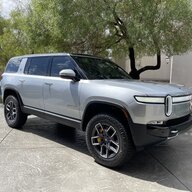
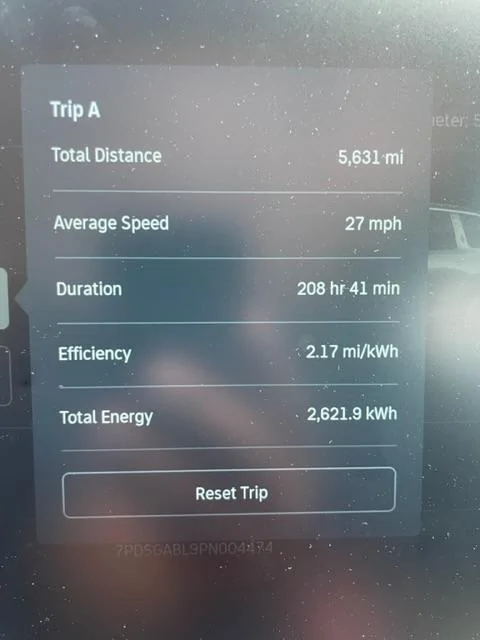
I’m currently at 5600 miles with efficiency of 2.17 mi/kW (292 range) for the life of the vehicle (R1S with 22ā€), driving blended AP and sport, as well as conserve for two short interstate road trips.

Rivian R1T R1S Poor efficiency on R1S? IMG_3513
 

rpmtexas

Well-Known Member
Joined
Feb 18, 2022
Threads
7
Messages
101
Reaction score
62
Location
TX
Vehicles
Audi Q5 Diesel with Lift Kit, Jeep Grand Cherokee
Saw that post as well. Power cycling the AC shuts down the weed whacker. I’ve seen my efficiency go from 1.7 to 2.2 as soon as the compressor calms down. Sounds silly, but it works.

If I then switch the AC back on, turn off Auto, and just titrate up the AC the efficiency holds so long as I don’t poke the compressor bear again.

It is strange to have to actively manage the compressor like this, but it gets me through the Vegas heat and seems to maintain efficiency.

I’m currently at 5600 miles with efficiency of 2.17 mi/kW (292 range) for the life of the vehicle (R1S with 22ā€), driving blended AP and sport, as well as conserve for two short interstate road trips.

IMG_3513.jpeg
None of this makes sense! ? I have always believed that quickly turning on and off electric motors is a bad idea, and the fact that it causes something to shut down reinforces this conclusion in my head. Also, I don’t see how causing something to shut down can help the AC system. Noise reduction makes sense but don’t see how it can help with cooling. I think maybe the cooling system (or some part of it) just can’t handle its job in Texas in the summer.
 

Zoidz

Well-Known Member
First Name
Gil
Joined
Feb 28, 2021
Threads
226
Messages
5,190
Reaction score
11,692
Location
PA
Vehicles
23 R1S Adv, Avalanche, BMWs-X3,330cic,K1200RS bike
Occupation
Engineer
None of this makes sense! ? I have always believed that quickly turning on and off electric motors is a bad idea, and the fact that it causes something to shut down reinforces this conclusion in my head. Also, I don’t see how causing something to shut down can help the AC system. Noise reduction makes sense but don’t see how it can help with cooling. I think maybe the cooling system (or some part of it) just can’t handle its job in Texas in the summer.
Quickly turning motors on and off repeatedly and quickly (many times per minute) is not good, but what's described here is not going to be an issue. What this appears to be doing is "resetting" the AC controls from a startup routine to a steady state routine or something like that.

Rivian's AC system is many time more complex than an ICE and is controlled by program logic, so it's plausible that a power cycle causing it to perform differently. This would/should have no effect if it was an ICE AC system, they are pretty much electromechanical control, not logic.
 

izgoy

Well-Known Member
Joined
Jun 5, 2023
Threads
6
Messages
289
Reaction score
252
Location
USA
Vehicles
ID.4 Model Y
Honestly this feels a little counterintuitive to me in the sense that if you were doing stop and go (after the "warmup period") that it would actually be beneficial - due to the added regen vs just holding a set speed for the same amount of time. But I guess in practice it's not that simple...

I really did believe that short, stop and go, was the bread and butter for an EV - where it's absolutely worst case for ICE. I guess it's just "better" relatively, but it's also a challenge for EVs
Regen is a much less efficient way to expend energy than free rolling. Regen is more efficient compared to ICE vehicles in the stop-and-go traffic, but it's significantly less efficient than rolling at a steady speed.

I think what you may be referring to is Toyota Prius achieving the best fuel efficiency in the stop-and-go traffic, which is true. However, Toyota Prius is not an EV, so when it's not in the stop-and-go traffic, it functions as a mile hybrid, while when in the stop-and-go traffic, it functions as an EV; hence its fuel efficiency is best in the stop-and-go traffic compared to its ICE efficiency on the highway.
 
Last edited:

Sponsored

izgoy

Well-Known Member
Joined
Jun 5, 2023
Threads
6
Messages
289
Reaction score
252
Location
USA
Vehicles
ID.4 Model Y
I've been arguing the efficiency of the ID.4 on the vwidtalk forum and got banned because I questioned the unrealistic reports of the around-town efficiency that ID.4 fanbois were reporting. While the fanbois were reporting mid 4 miles per kwh, my average around-town in the ID.4 has been 3.2 - 3.3 miles per kWh for over a year now in all four seasons in Georgia.

I've noticed that the best efficiency that I can achieve in the AWD ID.4 is at about 45 - 50 mph, which is not what people mean when they talk about "around-town" driving. Around-town driving involves constant stop-and-go, stops signs, red lights, round-abouts, etc. However, the parts of the suburbs that I live around do have roads with prolonged road stretches allowing no stopping and the speeds in the 45 - 50 mph range, which brings the efficiency to the mid-to-upper 3 miles / kWh in the AWD ID.4.

If you are able to take roads with the speed limit of 55 mph and no stop signs / red lights for miles on end, you will be getting the best efficiency in the R1S. I wouldn't be surprised if you could reach upper 2 miles / kWh and perhaps even 3 miles / kWh. But the steady speed higher than 60 mph or the stop-and-go traffic around town would immediately bring down the efficiency.

Back during the oil crisis of the 1970s, the Federal Government mandated highway speeds of 55 mph because even with ICE vehicles, the speed range of 50 - 55 mph provides the best fuel efficiency. I've heard that the EPA still tests vehicles at 55 mph, so the EPA ranges reported for EVs are tested in the most favorable conditions with the best-achievable efficiency.

Obviously, there is a category of R1 owners who live in areas with four-lane highways where it's very realistic to drive 55 mph for prolonged periods of time. But a lot of EV owners live in cities and travel on interstate highways, with neither driving mode allowing for a steady speed in the 50-60 mph range. So, the real-world EV efficiency will vary significantly based on where one drives the EV. If one commutes to work for 45 miles going at a steady speed of 55 mph, then the person's average R1S efficiency in summer time will be in the upper 2 miles/kWh, but this is the best-case scenario unachievable for most drivers in the US.
 
Last edited:

JayinNJ

Well-Known Member
First Name
Jason
Joined
Aug 19, 2021
Threads
3
Messages
285
Reaction score
217
Location
NJ
Vehicles
Tesla Model 3, R1S LE Canyon Red
So having just taken ownership a bit earlier this month, I'm a little worried about the efficiency I'm seeing vs the numbers other seem to throw out here pretty regularly. But specifically, this is "around town" driving that I'm more concerned about, I have the 22s so I know things will be slightly lower, but I figured that would be a bigger issue at highway speeds not 30-40mph stop and go (lots of regen opportunity).

So I'm seeing a lot of 1.7-1.8kWh/mi - or even lower at times. Rarely am I at 2.0 or more. In fact almost never aside from a few downhill stretches on a recent short road trip.

Part of me has a suspicion that some of this is just due to rides being pretty short and perhaps climate control sapping range (running hard at the start, and then being able to taper off once the cabin is at temp). So maybe I'm just always seeing the "worst" case because I'm not driving long enough for things to normalize.

But it's not that hot here now and I'm coming out of a garage with cabin temps of 78-82 at worst the last few days... so I feel like any workload put on HVAC is minimal (cabin temps set to 73-74, and cooling seats off).

I'm also not driving aggressively at all. No room for that on busy Chicago streets anyway, just driving normally, easy start/stop.is this normal? 1.6-1.7kWh/mi seems more off than I'd expect - again maybe not at highway speeds vs the 21s, but specifically at lower speeds with far more regen - which I assumed would be the sweet spot for an EV.

Thoughts? Thanks!
1.6kwH/mi is better than 2 kwH/mile
 

Sponsored

downranger12

Well-Known Member
First Name
Kent
Joined
Jun 22, 2020
Threads
0
Messages
139
Reaction score
110
Location
Dubuque Iowa
Vehicles
2012 Nissan Frontier Pro 4x, 2018 Toyota Prius
Occupation
retired optometrist
So having just taken ownership a bit earlier this month, I'm a little worried about the efficiency I'm seeing vs the numbers other seem to throw out here pretty regularly. But specifically, this is "around town" driving that I'm more concerned about, I have the 22s so I know things will be slightly lower, but I figured that would be a bigger issue at highway speeds not 30-40mph stop and go (lots of regen opportunity).

So I'm seeing a lot of 1.7-1.8kWh/mi - or even lower at times. Rarely am I at 2.0 or more. In fact almost never aside from a few downhill stretches on a recent short road trip.

Part of me has a suspicion that some of this is just due to rides being pretty short and perhaps climate control sapping range (running hard at the start, and then being able to taper off once the cabin is at temp). So maybe I'm just always seeing the "worst" case because I'm not driving long enough for things to normalize.

But it's not that hot here now and I'm coming out of a garage with cabin temps of 78-82 at worst the last few days... so I feel like any workload put on HVAC is minimal (cabin temps set to 73-74, and cooling seats off).

I'm also not driving aggressively at all. No room for that on busy Chicago streets anyway, just driving normally, easy start/stop.is this normal? 1.6-1.7kWh/mi seems more off than I'd expect - again maybe not at highway speeds vs the 21s, but specifically at lower speeds with far more regen - which I assumed would be the sweet spot for an EV.

Thoughts? Thanks!
By going to conserve, low, stiff, you will gain 20 percent efficiency and you will like the ride.
 

WorldComposting

Well-Known Member
Joined
Oct 27, 2022
Threads
4
Messages
299
Reaction score
283
Location
Maryland
Website
www.worldcomposting.com
Vehicles
Rivian R1S, Subaru Ascent
Occupation
Project Manager
Clubs
 
For those comparing R1T to R1S remember the R1S has more cabin space to cool than the R1T so it has to run harder to cool down that space. I have 21" wheels and find I'll be below 2 mi/kwh at the start then after 5-10 minutes of driving I'll be up above that no matter highway or city unless the vehicle is really hot (haven't tested in cold).

I can't speak to the efficiency of the A/C unit but I think it works pretty well except maybe the noise.
 

McRat

Well-Known Member
Joined
Nov 7, 2020
Threads
6
Messages
100
Reaction score
150
Location
California
Vehicles
'22 R1T, MXLR+, 2xVolts, MC's
Occupation
Tinkerer
So having just taken ownership a bit earlier this month, I'm a little worried about the efficiency I'm seeing vs the numbers other seem to throw out here pretty regularly. But specifically, this is "around town" driving that I'm more concerned about, I have the 22s so I know things will be slightly lower, but I figured that would be a bigger issue at highway speeds not 30-40mph stop and go (lots of regen opportunity).

So I'm seeing a lot of 1.7-1.8kWh/mi - or even lower at times. Rarely am I at 2.0 or more. In fact almost never aside from a few downhill stretches on a recent short road trip.

Part of me has a suspicion that some of this is just due to rides being pretty short and perhaps climate control sapping range (running hard at the start, and then being able to taper off once the cabin is at temp). So maybe I'm just always seeing the "worst" case because I'm not driving long enough for things to normalize.

But it's not that hot here now and I'm coming out of a garage with cabin temps of 78-82 at worst the last few days... so I feel like any workload put on HVAC is minimal (cabin temps set to 73-74, and cooling seats off).

I'm also not driving aggressively at all. No room for that on busy Chicago streets anyway, just driving normally, easy start/stop.is this normal? 1.6-1.7kWh/mi seems more off than I'd expect - again maybe not at highway speeds vs the 21s, but specifically at lower speeds with far more regen - which I assumed would be the sweet spot for an EV.

Thoughts? Thanks!
I've been driving EVs for >90% of my miles since 2012, and have bought 7 of them so far for both home and work. I can exceed the EPA on most EVs made. You are fortunate that you bought an EV that can easily reach EPA range.

This is my 0.02c's, if someone disagrees that is OK, I'm not an expert, but I'm pretty good.

Input data:
  • Your EV weighs 7,068 lb UNLADEN. That is heavy for any passenger vehicle, and increases rolling resistance.
  • Speed increases aero resistance by the square. Aero resistance is the biggest losses.
  • The fewer electric motors that are running, the lower the driveline losses.
  • Smooth driving is not only safer, it is often faster, and always more efficient.
Assessment:
  • Lower curb weight and lower tire rolling resistance is desirable.
  • Lower driving speed trades the value of YOUR time for range. Lower aero drag is better.
  • Some EVs like Rivian and Tesla allow you to shut off the rear motor(s), which improves efficiency.
  • As following distance increases, efficiency increases. Ditto for early braking for stops, and mild accel from stops.
Action:
  • Do not carry unnecessary weight, lightweight spare (if any), unneeded accessories, snow chains in summer, should be stored in garage. Run the tires at the cold max (measured in morning) pressure to reduce rolling resistance.
  • Your driving speed is up to you. It depends on what your time is worth, and what range is necessary. Keeping to no more than 5 mph over the posted limit my default. Removing roof racks, traveling in LOWEST suspension setting, leaving hitch cover and wheel covers on, windows up, will reduce your aero.
  • Run in Conserve-Lowest, (rotate your tires every ~5000mi to get good tire life in Conserve), will increase your driveline efficiency by running only the front motor(s). Switch as necessary while driving if you need more passing power.
  • Set your Adaptive Cruise Control to the longest setting and relax. Slow early for stops, accelerate like a gas car from a stop.
But never discount the value of your time and of your comfort. It is more important than range most trips. Rivians are a blast to drive, don't make it a chore.

Enjoy! Pic is 4 Rivian engineers I met while supermoto riding.
Rivian R1T R1S Poor efficiency on R1S? 287852697_7742261512458425_9217275923812129615_n
 

rpmtexas

Well-Known Member
Joined
Feb 18, 2022
Threads
7
Messages
101
Reaction score
62
Location
TX
Vehicles
Audi Q5 Diesel with Lift Kit, Jeep Grand Cherokee
Quickly turning motors on and off repeatedly and quickly (many times per minute) is not good, but what's described here is not going to be an issue. What this appears to be doing is "resetting" the AC controls from a startup routine to a steady state routine or something like that.

Rivian's AC system is many time more complex than an ICE and is controlled by program logic, so it's plausible that a power cycle causing it to perform differently. This would/should have no effect if it was an ICE AC system, they are pretty much electromechanical control, not logic.
How do you know there is logic involved in the AC system? The system tear down and review I watched (Munro) indicated the AC system was a simple one like used in an ICE vehicle (not saying this is correct ?). Also, assuming the AC system has a complex, intentional design, it seems very unlikely that turning it on and off to make some component shut down would actually make it work better (and if it does that this is an advisable long term use). Otherwise, why wouldn’t that just be how the system operates? Thanks!
 

NY_Rob

Well-Known Member
First Name
Rob
Joined
Feb 9, 2022
Threads
23
Messages
5,396
Reaction score
7,970
Location
long island
Vehicles
Model 3 LR AWD, BMW i3 REX, 2024 Rubicon 4xe
Occupation
IT
So having just taken ownership a bit earlier this month, I'm a little worried about the efficiency...
Part of me has a suspicion that some of this is just due to rides being pretty short..
The 135kWh battery in the R1 vehicles is huge at 1,755 lbs... it takes some time to get that much mass up or down to ideal/efficient internal operating temps. Until you hit that ideal internal operating temp.. you will not get peak operating efficiency results. I can see this when I take short trips in my R1T as the mi/kWh number is well below the 2mi/kWh line for the first 15-20min, but after that time it starts exceeding 2mi/kWh most of the remaining drive.

Take your R1S for an extended drive and then look at the real-time efficiency graph.

FWIW- our i3 has a tiny little 33kWh battery which gets up or down to ideal temp in under 5min of driving just because of it's relatively low mass of 550 lbs.
Sponsored

 
Last edited:


Top