
Sponsored

beatle
Well-Known Member
- Joined
- Jun 20, 2024
- Threads
- 17
- Messages
- 1,148
- Reaction score
- 1,563
- Location
- Springfield, VA
- Vehicles
- '23 R1T PDM Max, '97/'25 Miatas, '19 Monkey
- Occupation
- IT
It's really hard to beat The Tesla universal wall connectors. They can be daisy chained on the same circuit and share the available current.
I know that requires you to sell your current EVSE, but they're a solid option and may save money over a second circuit install.
I know that requires you to sell your current EVSE, but they're a solid option and may save money over a second circuit install.
dradam
Well-Known Member
I bought a used ChargePoint over eBay. Its maximum is only 32 A, but I don’t even charge it 32 A at home because I just don’t need to. For 150 bucks it was the deal in the century. Already installed and working nicely. Just had to have the original owner close his account. Just be aware that for set up, you must have Wi-Fi access to the charger.
Last edited:
HaveBlue
Well-Known Member
I just installed a 14-50 as it doesn't get much use and it cost about $100 in parts plus what I had left over.
Have you considered making a charger available for public use? You can charge per kWh with an Autel.
Have you considered making a charger available for public use? You can charge per kWh with an Autel.
SANZC02
Well-Known Member
- First Name
- Bob
- Joined
- Feb 11, 2021
- Threads
- 50
- Messages
- 7,424
- Reaction score
- 12,718
- Location
- California
- Vehicles
- Tesla Model S, LE - R1S
- Occupation
- Retired
I am using this Emporia at both houses, have had one for 3 years and the other for 2 years with no issues. Works great on my R1S and Tesla, very well rated, can plug in to 14/50 NEMA for up to 40 AMPs or hard wired for up to 48 AMPs.I’m looking for a wall charger for my second home that delivers the same if not better performance as the more expensive OEM version.
Sponsored

Count Orlok
Well-Known Member
- Joined
- May 17, 2022
- Threads
- 185
- Messages
- 2,557
- Reaction score
- 5,333
- Location
- Wisconsin & New Mexico
- Vehicles
- 2022 R1S/ 2024 INEOS Grenadier/ 1969 Ford / etc.
- Occupation
- retired
get an 80 amp L2 charger on a 100 amp circuit or go home.
beatle
Well-Known Member
- Joined
- Jun 20, 2024
- Threads
- 17
- Messages
- 1,148
- Reaction score
- 1,563
- Location
- Springfield, VA
- Vehicles
- '23 R1T PDM Max, '97/'25 Miatas, '19 Monkey
- Occupation
- IT
I also installed a 14-50 to charge, but that was several years ago, before the NEC required a GFCI breaker. GFCI breakers are expensive, about $100 more than a non-GFCI breaker. Wire is also more expensive for a 14-50 vs. a hardwired EVSE since you need 3 conductors on the receptacle. I needed 50 feet of wire, and 6/3 is about $1/foot more expensive than 6/2. Plus, an inexpensive outlet can melt (mine did), and an industrial receptacle is another $50-$80 more. That's still cheaper than most EVSEs, but the price gap for a hardwired EVSE vs. receptacle is now pretty narrow.I just installed a 14-50 as it doesn't get much use and it cost about $100 in parts plus what I had left over.
I think for occasional use, an outlet makes the most sense, but I would not recommend going the receptacle route for everyday charging. For rare use I'd probably do a 6-30 or even a 6-20. I use a 6-20 in a family garage and it gets the job done. Gotta at least be 240v!
... and then watch your truck charge at 48A since that's its maximum. Very few EVs support 80A charging. Wire and a breaker to support a 100A circuit are expensive, and wire that size is a real hassle to work with. In addition, not every homes' panel will support an additional load of that size.get an 80 amp L2 charger on a 100 amp circuit or go home.
Count Orlok
Well-Known Member
- Joined
- May 17, 2022
- Threads
- 185
- Messages
- 2,557
- Reaction score
- 5,333
- Location
- Wisconsin & New Mexico
- Vehicles
- 2022 R1S/ 2024 INEOS Grenadier/ 1969 Ford / etc.
- Occupation
- retired
future proofing.... and then watch your truck charge at 48A since that's its maximum. Very few EVs support 80A charging. Wire and a breaker to support a 100A circuit are expensive, and wire that size is a real hassle to work with. In addition, not every homes' panel will support an additional load of that size.
dradam
Well-Known Member
For a second home with far less use I was happy to keep it at 32 A or less. The 8AWG is easy to work with ( 4 ft run) no need for costly gfci with the hardwired chargepoint and cheap enough that if one day I need more power -no guilt about upgrading.
Not a fan of plugs when hardwired is an option.
Not a fan of plugs when hardwired is an option.
HaveBlue
Well-Known Member
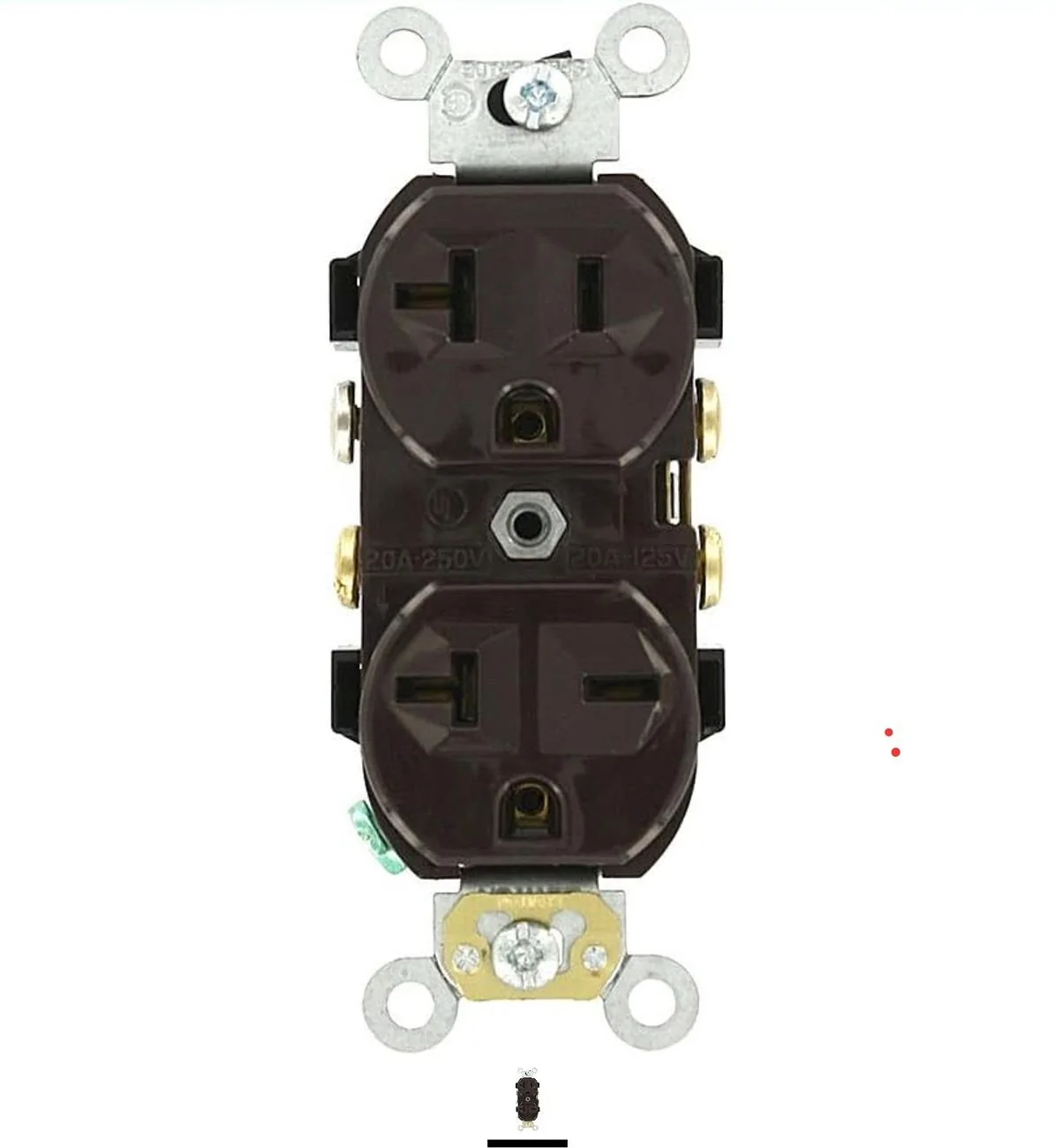
I also have a 5-20 6-20 combo outlet in my driveway to run a stick welder and whatever else. Makes for handy backup 240v and also supports 5-15 and 6-15 plugs.

Sponsored

Electrified Outdoors
Well-Known Member
- First Name
- Ken
- Joined
- Jan 30, 2023
- Threads
- 63
- Messages
- 3,683
- Reaction score
- 3,980
- Location
- Mount Airy, Maryland
- Website
- EVoutdoors.org
- Vehicles
- 2024 Rivian R1S Quad, 2024 Silverado EV RST First Edition
- Occupation
- Real Estate
Universal wall connector from Tesla. I have it as well as my other EV charging hardware linked on my site.
The Tesla UWC will give you the ability to charge any EV and it will also be future proof as more EVs switch over to the NACS J3400 plug and away from J1772.
Also like was said you can expand the setup later on with power sharing with up to six chargers in total without requiring a service upgrade. For example at my place I only have 200 amp service but I have two wall connectors. Each can charge at the full 48 amps or if they are both charging they split the total allocation of 60 amps (30 each).
https://www.electrifiedoutdoors.com/ev-charging
The Tesla UWC will give you the ability to charge any EV and it will also be future proof as more EVs switch over to the NACS J3400 plug and away from J1772.
Also like was said you can expand the setup later on with power sharing with up to six chargers in total without requiring a service upgrade. For example at my place I only have 200 amp service but I have two wall connectors. Each can charge at the full 48 amps or if they are both charging they split the total allocation of 60 amps (30 each).
https://www.electrifiedoutdoors.com/ev-charging
- First Name
- Marcus
- Joined
- Sep 14, 2021
- Threads
- 0
- Messages
- 732
- Reaction score
- 629
- Location
- Bellingham, WA
- Vehicles
- Cybertruck DM, F-150, Suzuki DR650
- Occupation
- Tester
- Banned
- #12
That's the way to go, multiple EVs sharing the same breaker in an intelligent manner. And everything is hardwired with no janky plugs and outlets to wear out and corrode/oxidize.Universal wall connector from Tesla. I have it as well as my other EV charging hardware linked on my site.
The Tesla UWC will give you the ability to charge any EV and it will also be future proof as more EVs switch over to the NACS J3400 plug and away from J1772.
Also like was said you can expand the setup later on with power sharing with up to six chargers in total without requiring a service upgrade. For example at my place I only have 200 amp service but I have two wall connectors. Each can charge at the full 48 amps or if they are both charging they split the total allocation of 60 amps (30 each).
https://www.electrifiedoutdoors.com/ev-charging
MartinW
Member
- First Name
- Martin
- Joined
- Jul 16, 2023
- Threads
- 1
- Messages
- 8
- Reaction score
- 3
- Location
- Grand County
- Vehicles
- R1S
- Occupation
- None
I have a Rivian wall charger at one home and a ChargePoint at the other. Both are hardwired on 70 Amp circuits and charge at the same rate of about 25 miles per hour.
However, I have issues with scheduling. Electric service is provisioned by different companies, each with their own Time of Use billing schedule. One has low rates from 7 PM to 1 PM and the other from 10 PM to 5 PM. My R1S does not recognize two locations. I've tried setting the charging schedule from 10 PM to 1 PM but that doesn't work either.
I'm not sure there would be a scheduling problem if I had Rivian chargers in both locations. If anyone has insight on scheduling charging at two locations I'd welcome suggestions.
However, I have issues with scheduling. Electric service is provisioned by different companies, each with their own Time of Use billing schedule. One has low rates from 7 PM to 1 PM and the other from 10 PM to 5 PM. My R1S does not recognize two locations. I've tried setting the charging schedule from 10 PM to 1 PM but that doesn't work either.
I'm not sure there would be a scheduling problem if I had Rivian chargers in both locations. If anyone has insight on scheduling charging at two locations I'd welcome suggestions.
suprteck
Well-Known Member
- First Name
- Anthony
- Joined
- Dec 20, 2022
- Threads
- 7
- Messages
- 187
- Reaction score
- 118
- Location
- California
- Vehicles
- Tesla Model 3, Rivian R1T
- Occupation
- Mechanic
Tesla universal wall connector works great

SwampNut
Well-Known Member
As long as they have the same power capability, they are all the same. This is a time when it makes no sense to spend more money. Buy whatever is cheap on Amazon or eBay with decent reviews. I got a free Rivian charger otherwise I may have done just that. And for four years, I used the mobile charger with the Tesla, on a 30a outlet. Do you really need more? For my Zero I have a dirt cheap $100 eBay unit, works perfectly, and also does the Rivian fine.
Sponsored
Similar threads

- Replies
- 5
- Views
- 616
- Replies
- 11
- Views
- 850


- Replies
- 31
- Views
- 2,259