Sponsored

EVs Mooch Off, Do Not Pay Fair Share for Road Usage

ThirteenElectrics

Banned
Well-Known Member
Joined
Jul 4, 2024
Threads
29
Messages
452
Reaction score
510
Location
USA
Vehicles
R1S, R1T, XC40 Recharge
*points to sign* ALL VEHICLE OWNERS ARE SUBSIDIZED, NONE BEAR THE FULL COST OF ROAD MAINTENANCE
Almost all all adults in the U.S. have cars. The US has almost 300 million vehicles. If they are subsidized, exactly who is paying to subsidize them? Billionaires and bicycle commuters? All five of them?
Sponsored


SPITmadFIRE

Well-Known Member
Joined
Jul 27, 2021
Threads
10
Messages
842
Reaction score
1,388
Location
CA
Vehicles
2024 R1S PDM Max Pack 20" AT
Almost all all adults in the U.S. have cars. The US has almost 300 million vehicles. If they are subsidized, exactly who is paying to subsidize them? Billionaires and bicycle commuters? All five of them?
I understand the need for coping mechanisms like sass and sarcasm when you're confronted with information that challenges your worldview, but you're pretty naive if you think you actually pay your fair share. You have never and will never pay your fair share for owning and operating your vehicle on public roads. If you add up all of the gas taxes and registration and use taxes and every other use tax that contributes to the maintenance of our roads, chances are it wouldn't even equate to half of the real cost depending on your state. This doesn't account for negative externalities like pollution, deteriorated public health, or excess deaths.

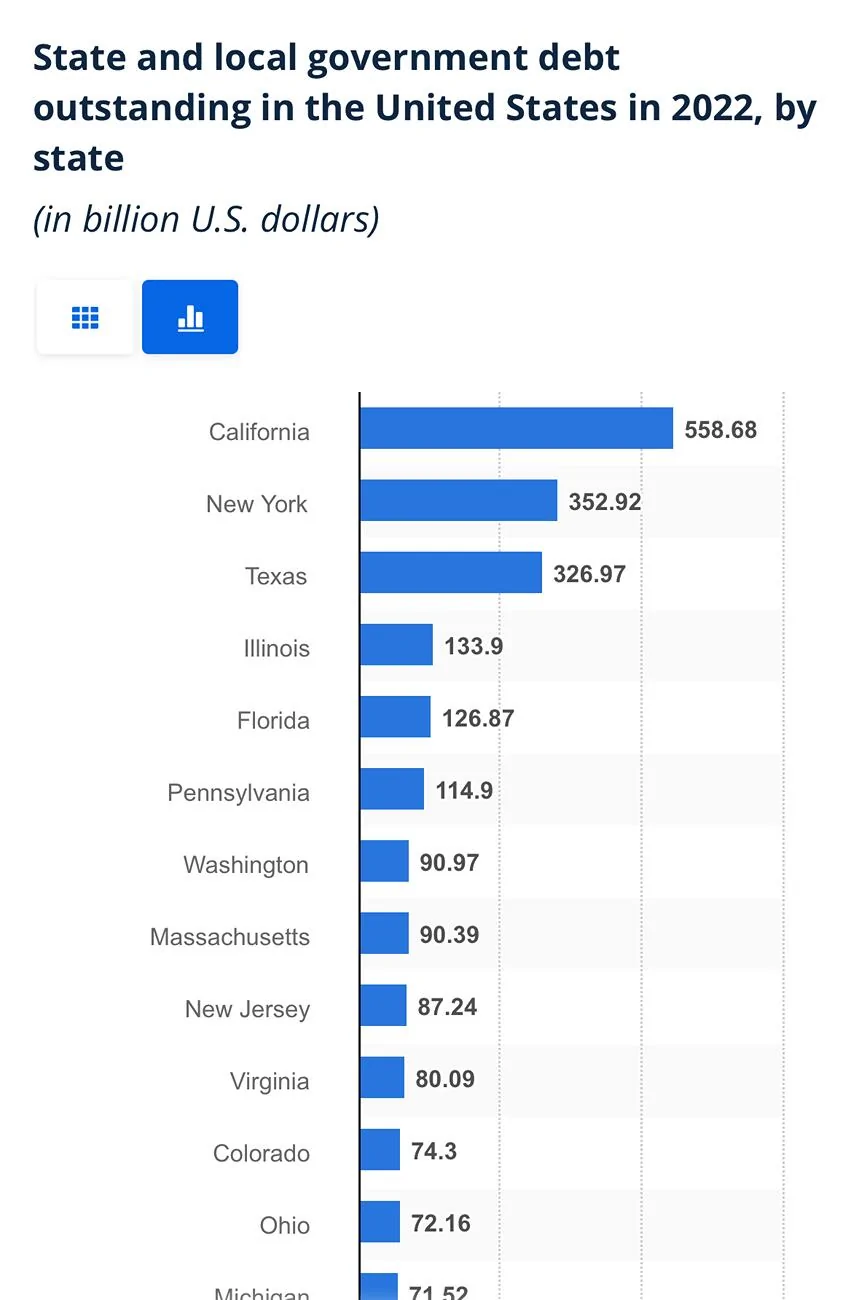
Who's footing the rest of the bill you ask? Future generations. Your free parking and semi-annual fresh pavement and one-more-carpool-lane is a gift you've given yourself at the expense of your children and grandchildren and great-grandchildren without their consent.

Rivian R1T R1S EVs Mooch Off, Do Not Pay Fair Share for Road Usage 1734166857494-da


There's an incredible amount of data showing that the costs of our built environment, specifically that which caters to personal vehicles, is literally bankrupting us. I encourage you to read up on the matter if you're genuinely interested; you can reach for books like Megan Kimble's "City Limits", or Chuck Marohn's "Strong Towns", or classics like Jane Jacob's "The Death and Life of Great American Cities" which shows we've known about this issue for decades already and blissfully ignore it by building suburb after suburb.
 

lefkonj

Well-Known Member
First Name
Jeff
Joined
Feb 6, 2021
Threads
37
Messages
1,446
Reaction score
2,595
Location
New Jersey
Vehicles
Gen2 R1S Tri, I4-m50
Clubs
 
I agree. The concept is fine, but the devil is in the details. Charging every Rivian owner the same registration fee, at least that portion related to a road tax, is not equitable. If I drive my Rivian 8,000 miles per year and pay the same road tax registration fee as somebody who drives 25,000 miles per year, where’s the fairness in that? Why should my cost to use the roads be more per mile than that high mileage driver. That’s why I think the road tax portion of an EV registration fee should be based on miles driven per year. The person who uses the roads more should pay more. A gasoline tax is more equitable. With an ICEV the more you drive, the more gas you have to buy, the more tax you pay.

In my state, whenever I register my cars, I have to note the odometer reading. Presumably, this information could be used to adjust registration fees. Maybe, in the first year of EV ownership, a flat fee would be charged to all. In subsequent years, a driver’s registration fee would be adjusted, based on miles driven in the previous year. That 25K mile driver would get an additional fee tacked on in the second year. The very low mileage driver would get a credit from the base fee. Anyway, just a thought. I realize implementation may be easier said than done. However, whatever the system, it should be, at least, reasonably fair. Just saying you own an EV so we are going to stick you with some random, universal tax, that may have no correlation, whatsoever, to one’s actual road usage, doesn’t seem right. IMHO.
In NJ our major roads are toll roads, and you pay fees every 'X" miles. The gas tax is just a second form of income. Doing it by mileage sounds great but then you have to get vehicles every year, which once again in NJ we do every 3-4 years so that would be a major change.
 

Donald Stanfield

Well-Known Member
First Name
Donald
Joined
Jul 31, 2022
Threads
59
Messages
8,307
Reaction score
16,656
Location
USA
Vehicles
2025 R1S Tri Ascend, 2024 i4 M50
Occupation
Stuff and things
I understand the need for coping mechanisms like sass and sarcasm when you're confronted with information that challenges your worldview, but you're pretty naive if you think you actually pay your fair share. You have never and will never pay your fair share for owning and operating your vehicle on public roads. If you add up all of the gas taxes and registration and use taxes and every other use tax that contributes to the maintenance of our roads, chances are it wouldn't even equate to half of the real cost depending on your state. This doesn't account for negative externalities like pollution, deteriorated public health, or excess deaths.

Who's footing the rest of the bill you ask? Future generations. Your free parking and semi-annual fresh pavement and one-more-carpool-lane is a gift you've given yourself at the expense of your children and grandchildren and great-grandchildren without their consent.

1734166857494-da.jpg


There's an incredible amount of data showing that the costs of our built environment, specifically that which caters to personal vehicles, is literally bankrupting us. I encourage you to read up on the matter if you're genuinely interested; you can reach for books like Megan Kimble's "City Limits", or Chuck Marohn's "Strong Towns", or classics like Jane Jacob's "The Death and Life of Great American Cities" which shows we've known about this issue for decades already and blissfully ignore it by building suburb after suburb.
Speak for your state. TN has NO DEBT due to roads.
 

Supratachophobia

Well-Known Member
Joined
Apr 8, 2023
Threads
9
Messages
1,780
Reaction score
2,122
Location
Ohio
Vehicles
S
Clubs
 
Axle weight is the single largest contributor to road degradation. Our trucks have an ~20% increase in Axle weight in your example. This excess damage is observable and measurable.

Yes, commercial vehicle traffic is the largest contributor to the damage, but it's ignorant to claim that our vehicles don't cause more damage than lighter vehicles.
Road damage is not linear in the real world.

Heavy tractor trailers sitting in traffic on hot days cause divots that a normal passenger vehicle (including ours) just wouldn't cause. And chipping due to snow removal starts degradation in specific areas that only get worse over time.

No, even at 8k lbs, we aren't the problem.
 

Sponsored

Donald Stanfield

Well-Known Member
First Name
Donald
Joined
Jul 31, 2022
Threads
59
Messages
8,307
Reaction score
16,656
Location
USA
Vehicles
2025 R1S Tri Ascend, 2024 i4 M50
Occupation
Stuff and things
Road damage is not linear in the real world.

Heavy tractor trailers sitting in traffic on hot days cause divots that a normal passenger vehicle (including ours) just wouldn't cause. And chipping due to snow removal starts degradation in specific areas that only get worse over time.

No, even at 8k lbs, we aren't the problem.
Correct. We are 8K lbs, and a fully loaded tractor-trailer is 80k pounds.
 

Der

Well-Known Member
First Name
Darrell
Joined
Feb 25, 2024
Threads
9
Messages
88
Reaction score
82
Location
Brookhaven, GA
Vehicles
Rivian R1T
Occupation
Retired
It’s 200 here too. I don’t complain too much though because it’s an expensive car and I’d feel like a dick whining about 200 bucks a year to drive what I want.
Exactly. It’s not a good look (or read/listen)
 

Yossarian

Well-Known Member
Joined
Oct 20, 2020
Threads
45
Messages
934
Reaction score
922
Location
SE Pennsylvania
Vehicles
R1T,Telluride, Wee-Strom, Lynskey Cooper
The EV fee in PA is $200 for 2025 and increases to $250 in 2026. I think this is reasonable, though since my R1T accumulates only a few thousand miles each year, it's likely more than I pay in the fuel taxes for my Telluride which accumulates about the same number of miles. The fee is also much more tolerable than the $380 initially proposed.

The new fee, paid at vehicle registration/renewal, replaces the alternative fuel tax, which was supposed to be paid monthly and was mileage-based. Most EV owners in the Commonwealth were unaware of the AFT, and it was so cumbersome to deal with that even those who know about it rarely bothered since enforcement was essentially non-existent.

According to a white paper from EV Hub, 45 states levy some kind of EV tax or fee and 28 of those levy at least two on EV's. The paper goes on to state that in 36 states, the amount exceeds the level on ICE vehicles, with EV drivers in 16 states paying an "EV Penalty" of $150 or more.

Executive Summary
Electric vehicle (EV) drivers are subject to a wide array of fees intended to mimic motor fuel taxes, including registration fees and charging taxes. At public charging stations, EV drivers may also pay sales taxes or an equivalent along with a tax on the electricity used. These taxes are stackable and EV drivers face an inequity when compared to drivers of gasoline-powered vehicles.

We find that 45 states collect at least one tax or fee, 28 states collect at least two taxes or fees, and three states collect at least three taxes and fees.
In assessing the accumulation of taxes on EVs and charging, we calculated an “EV Penalty” – the total amount of EV-specific taxes and fees an EV driver who charges their vehicle at public Direct Current Fast Chargers (DCFCs) pays in a single calendar year in comparison to a gasoline vehicle driver. Our results show that EV drivers in 36 states, including the District of Columbia, pay more in taxes than drivers of gasoline-powered vehicles. Of these 36 states, 16 pay more than a $150 EV penalty.

The taxes end-users pay at public EV charging stations are not transparent and tax policy has not kept pace with rapid EV adoption. As a result, EV drivers are unfairly taxed in comparison to gasoline-powered vehicle drivers in most states at present.
 

Der

Well-Known Member
First Name
Darrell
Joined
Feb 25, 2024
Threads
9
Messages
88
Reaction score
82
Location
Brookhaven, GA
Vehicles
Rivian R1T
Occupation
Retired
Let me fix it into facts as there is no myth here.
  1. EVs do not pay gasoline taxes as they don't use gasoline.
  2. Some jurisdictions charge owners of EV passenger vehicles more to register than a comparable ICE and/or Hybrid passenger vehicles.
  3. In some jurisdictions registering an EV is a free pass to use HOV lanes
In my case this free pass in GA saves me at least 1 hour a day if not 2. Multiply it by my work rate and I would pay 10X-50X (yes 50X is ~$13K) the current EV up charge to get unrestricted HOV lane access. The more they charge, the less people in HOV (Other EV registrants) in my way and time is infinitely more valuable than money for me.
Free? I beg to differ. There’s a set fee
Let me fix it into facts as there is no myth here.
  1. EVs do not pay gasoline taxes as they don't use gasoline.
  2. Some jurisdictions charge owners of EV passenger vehicles more to register than a comparable ICE and/or Hybrid passenger vehicles.
  3. In some jurisdictions registering an EV is a free pass to use HOV lanes
In my case this free pass in GA saves me at least 1 hour a day if not 2. Multiply it by my work rate and I would pay 10X-50X (yes 50X is ~$13K) the current EV up charge to get unrestricted HOV lane access. The more they charge, the less people in HOV (Other EV registrants) in my way and time is infinitely more valuable than money for me.
 

Der

Well-Known Member
First Name
Darrell
Joined
Feb 25, 2024
Threads
9
Messages
88
Reaction score
82
Location
Brookhaven, GA
Vehicles
Rivian R1T
Occupation
Retired
Let me fix it into facts as there is no myth here.
  1. EVs do not pay gasoline taxes as they don't use gasoline.
  2. Some jurisdictions charge owners of EV passenger vehicles more to register than a comparable ICE and/or Hybrid passenger vehicles.
  3. In some jurisdictions registering an EV is a free pass to use HOV lanes
In my case this free pass in GA saves me at least 1 hour a day if not 2. Multiply it by my work rate and I would pay 10X-50X (yes 50X is ~$13K) the current EV up charge to get unrestricted HOV lane access. The more they charge, the less people in HOV (Other EV registrants) in my way and time is infinitely more valuable than money for me.
It is not free. The AFV (alternative fuel vehicle) tag designation is an extra $60 per year. Not an unfair fee IMO, but I elect to take a pass.
 

Sponsored

SRO

Well-Known Member
First Name
Steve
Joined
Mar 21, 2023
Threads
3
Messages
299
Reaction score
142
Location
Carson City nv
Vehicles
R1T
Occupation
retired
The caveat is that not ALL states and municipalities charge higher fees... yet. The fact is that our increased weight causes more damage, so we should be required to more than the average ICE vehicle. We should all be charged an annual fee based on weight and miles driven.
The damage done to highways by cars and trucks is negligible. It takes about 5000 vehicles to equate to one tractor trailer rig based in ESALs ( equivalent single axle loads). ESALS are how DOTs design new pavement sections and predict pavement rehab scenarios. Semi rigs account for almost all highway degradation. You can tell that the highways with the most semis need rehab sooner and the pavement depth is greater.
 

TJM

Well-Known Member
First Name
Tom
Joined
Jul 29, 2020
Threads
3
Messages
63
Reaction score
78
Location
Santa Fe, NM
Vehicles
2024 R1S
Occupation
Retired
The EV fee in PA is $200 for 2025 and increases to $250 in 2026. I think this is reasonable, though since my R1T accumulates only a few thousand miles each year, it's likely more than I pay in the fuel taxes for my Telluride which accumulates about the same number of miles. The fee is also much more tolerable than the $380 initially proposed.

The new fee, paid at vehicle registration/renewal, replaces the alternative fuel tax, which was supposed to be paid monthly and was mileage-based. Most EV owners in the Commonwealth were unaware of the AFT, and it was so cumbersome to deal with that even those who know about it rarely bothered since enforcement was essentially non-existent.

According to a white paper from EV Hub, 45 states levy some kind of EV tax or fee and 28 of those levy at least two on EV's. The paper goes on to state that in 36 states, the amount exceeds the level on ICE vehicles, with EV drivers in 16 states paying an "EV Penalty" of $150 or more.

Executive Summary
Electric vehicle (EV) drivers are subject to a wide array of fees intended to mimic motor fuel taxes, including registration fees and charging taxes. At public charging stations, EV drivers may also pay sales taxes or an equivalent along with a tax on the electricity used. These taxes are stackable and EV drivers face an inequity when compared to drivers of gasoline-powered vehicles.

We find that 45 states collect at least one tax or fee, 28 states collect at least two taxes or fees, and three states collect at least three taxes and fees.
In assessing the accumulation of taxes on EVs and charging, we calculated an “EV Penalty” – the total amount of EV-specific taxes and fees an EV driver who charges their vehicle at public Direct Current Fast Chargers (DCFCs) pays in a single calendar year in comparison to a gasoline vehicle driver. Our results show that EV drivers in 36 states, including the District of Columbia, pay more in taxes than drivers of gasoline-powered vehicles. Of these 36 states, 16 pay more than a $150 EV penalty.

The taxes end-users pay at public EV charging stations are not transparent and tax policy has not kept pace with rapid EV adoption. As a result, EV drivers are unfairly taxed in comparison to gasoline-powered vehicle drivers in most states at present.
“tax policy has not kept pace with rapid EV adoption” - such is the nature of setting tax policy, basing rates on historical data; similar to Road and Highway configuration, speed limits and safety factors. Accidents happen, changes occur. The evolution of EVs and tax policies should both be interesting and, hopefully, created with much public input.
 

shicks

Member
First Name
Steve
Joined
Jan 12, 2024
Threads
0
Messages
20
Reaction score
10
Location
Park City, UT
Vehicles
R1T
Occupation
Landscaping
Clubs
 
I agree. The concept is fine, but the devil is in the details. Charging every Rivian owner the same registration fee, at least that portion related to a road tax, is not equitable. If I drive my Rivian 8,000 miles per year and pay the same road tax registration fee as somebody who drives 25,000 miles per year, where’s the fairness in that? Why should my cost to use the roads be more per mile than that high mileage driver. That’s why I think the road tax portion of an EV registration fee should be based on miles driven per year. The person who uses the roads more should pay more. A gasoline tax is more equitable. With an ICEV the more you drive, the more gas you have to buy, the more tax you pay.

In my state, whenever I register my cars, I have to note the odometer reading. Presumably, this information could be used to adjust registration fees. Maybe, in the first year of EV ownership, a flat fee would be charged to all. In subsequent years, a driver’s registration fee would be adjusted, based on miles driven in the previous year. That 25K mile driver would get an additional fee tacked on in the second year. The very low mileage driver would get a credit from the base fee. Anyway, just a thought. I realize implementation may be easier said than done. However, whatever the system, it should be, at least, reasonably fair. Just saying you own an EV so we are going to stick you with some random, universal tax, that may have no correlation, whatsoever, to one’s actual road usage, doesn’t seem right. IMHO.
Totally agree and this is the point of the original post. I think most of us EV buyers consider ourselves early adopters and see this as the future, hence there's a need to get this right. Reporting the odometer to your local DMV seems the most obvious, but there are little problems like road trips across state lines. About 5k of the 40k miles I drove last year were driving to Seattle and socal. Sure, we should add the tax at the ev charging stations, but then we should be able to subtract from the local tax. It may seem like small beans and not worth my time, but I don't want to contribute to misallocation of government money.
 

godfodder0901

Well-Known Member
First Name
Jared
Joined
Mar 12, 2019
Threads
27
Messages
5,749
Reaction score
10,138
Location
Washington
Vehicles
2022 Rivian R1T LE
The damage done to highways by cars and trucks is negligible. It takes about 5000 vehicles to equate to one tractor trailer rig based in ESALs ( equivalent single axle loads). ESALS are how DOTs design new pavement sections and predict pavement rehab scenarios. Semi rigs account for almost all highway degradation. You can tell that the highways with the most semis need rehab sooner and the pavement depth is greater.
I've never contended that EVs cause the most damage, only that we cause more than regular, non-commercial, ICE vehicles.


Top