slillie
Well-Known Member
- Thread starter
- #1
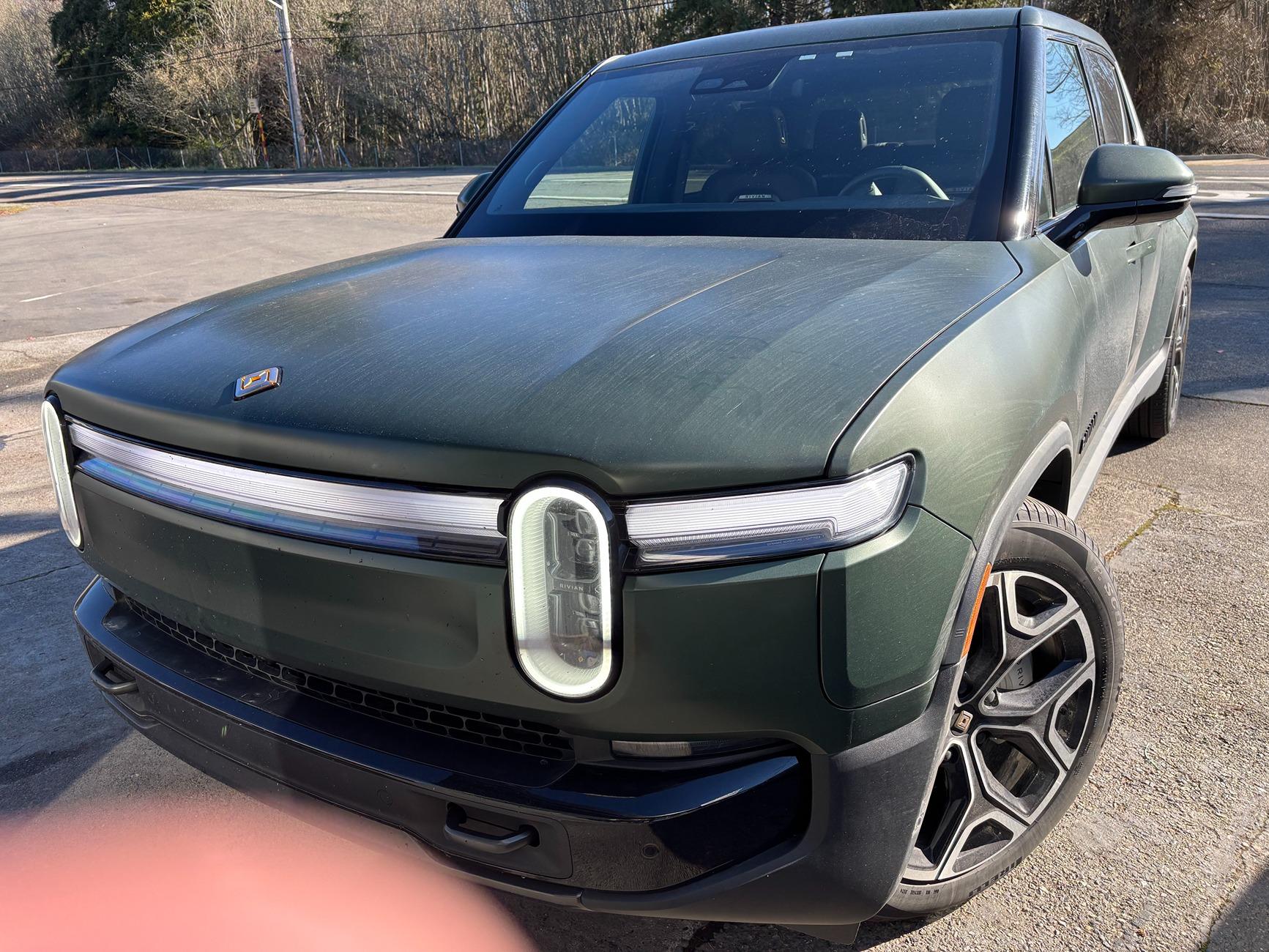
In late December we took delivery of our new (2025) R1T, Dual motor max-pack (Sarge).
My Wife and I had been planning a two-week road trip to hit as many ski areas as possible, so this was going to be a "proof-of-concept" roadtrip to see how well Sarge would perform.
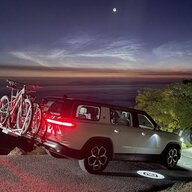
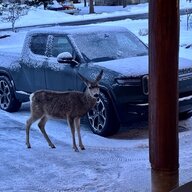
Our routing took us from Seattle to Schweitzer ski resort in Idaho, Heber City, Utah, where we skied Dear Valley, Sundance, and Canyons ski resort in Park City. Note: My profile picture is of our arrival in Heber City. Apparantly it drew the attention of several four-legged observors. On the drive home to Seattle, we stopped at Sun Valley, another "first" for us.
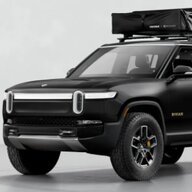
Prior to our departure I did splurge on getting Sarge wrapped (PPF) in a mat finish. I think it was an investment well spent because of the protection it provided from all the chemicals that are sprayed on the Winter snow-covered roads.
All told we put over 2,500 miles on our Riv.
Here are my takeaways, notes, suggestions, and lessons learned:
1: “Sarge” operated flawlessly the entire trip with no issues whatsoever. I drove in “All Purpose” mode 99.5% of the time, even on snow covered roads. The one time I lost a bit of traction in “All Purpose” mode Sarge notified me that it was automatically switching to 4-wheel drive traction mode. I didn’t even know that was a “thing.”
2: Bring a bottle of Windex and a rag. The sensors and cameras can/will get covered up with road grime, especially on snow covered/plowed roads. I really became dependent on the adaptive cruise control and autopilot assist system. If you don’t keep the sensors/camera lenses clean, you will lose those features right when you need them the most.
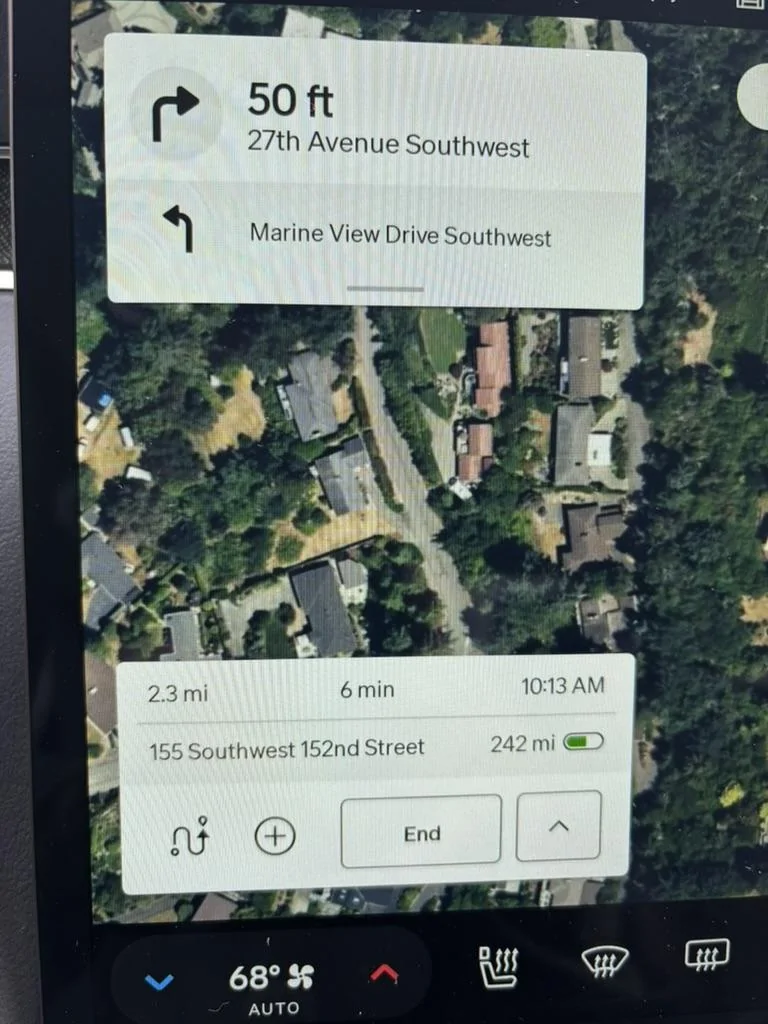
3. If you want accurate range calculations, always have your destination set in the Nav display. I found that the predicted mileage remaining (bottom left of center nav display) at your destination/charging stop was extremely accurate IF I drove the speed limit. There are a lot of factors that go into the calculation for miles remaining at the next stop display (Temp, wind speed, incline, speed limit, etc.). These factors alone make the monthly Rivian subscription worth it.
3a. While driving on a long leg, worry less about the SOC and concentrate more on the center display of miles at next stop. If those miles start decreasing or the charge bar turns yellow, slow down and the numbers will start reversing.
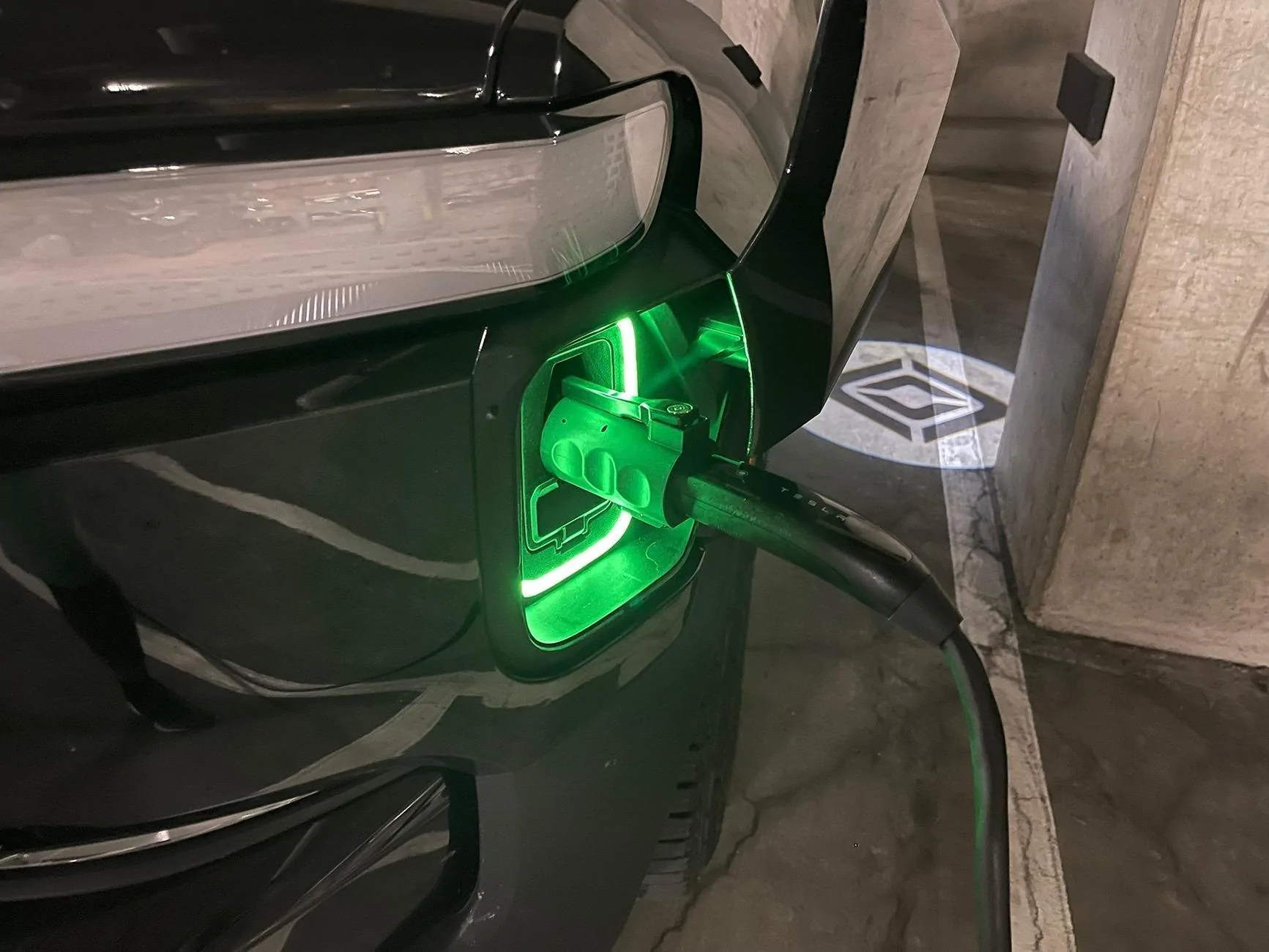
4. I signed up for the $11.99 per month Tesla charging membership. It was well worth it. The charging rate was around $0.30/kw at Tesla Superchargers. Other chargers were usually double that rate. Now that I am home I’ve cancelled the membership until my next roadtrip.
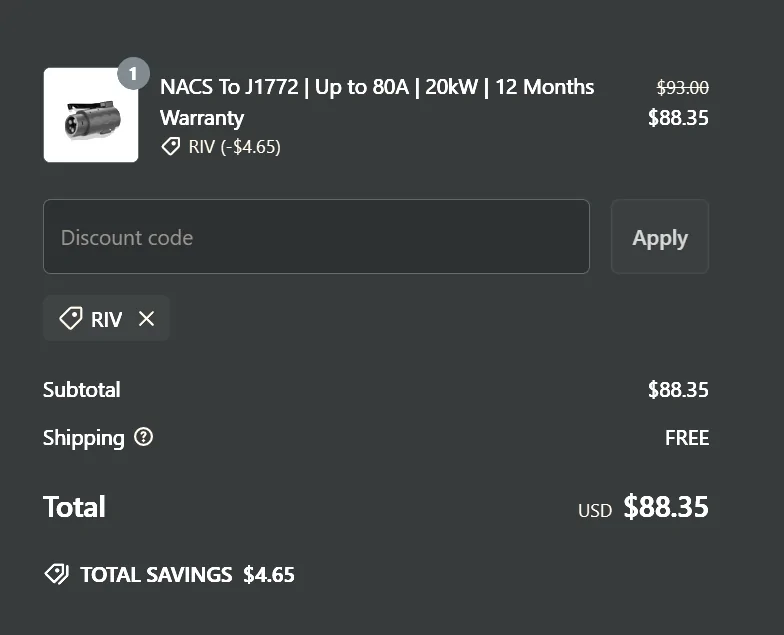
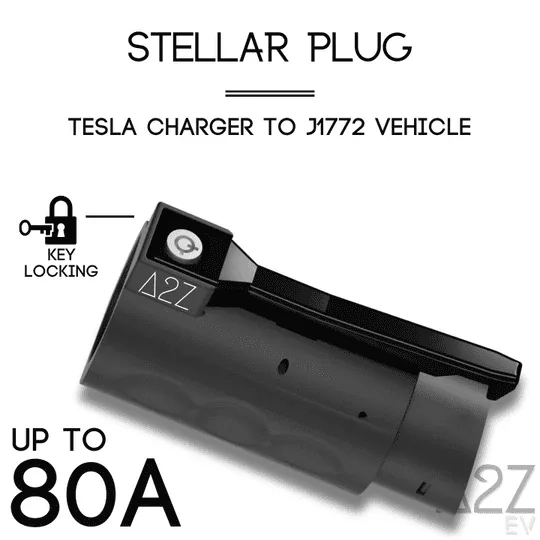
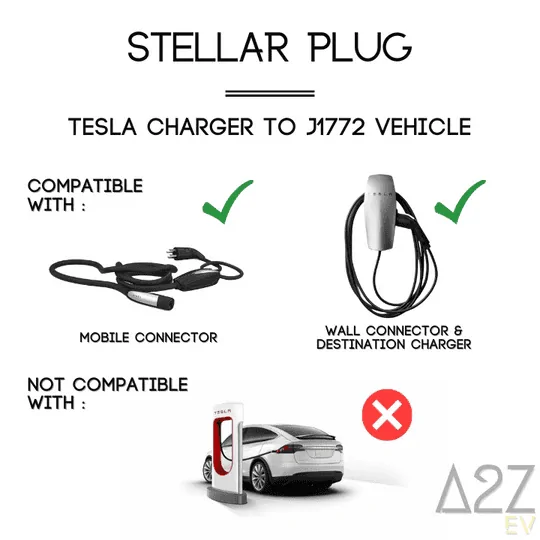
5. If you have a Tesla Level 2 charger at home (sold my model 3), bring your home NACS to CCS adapter. We stayed two nights at Sun Valley resort. They had a FREE Tesla level 2 charger in the parking lot. Without my home adapter with me I couldn’t take advantage of the free energy.
6. Next time I will also bring my non-hardwired level 2 charger and stash it under the back seat. We stayed with a friend for several days in Utah. He had a 50 amp welding socket in his garage. A simple plug adapter from Home Depot and I could have used my lvl 2 charger. Instead, I had to use the 120 Volt “trickle” charger that came with the vehicle. It would provide about 25 miles charge per night, just enough to get to the ski mountain and back every day. With no commercial chargers within a 20 mile radius, the trickle charger “saved our bacon.”
Well that’s about it. If I come up with any more tidbits of wisdom from the trip, I’ll pass them along.


My Wife and I had been planning a two-week road trip to hit as many ski areas as possible, so this was going to be a "proof-of-concept" roadtrip to see how well Sarge would perform.
Our routing took us from Seattle to Schweitzer ski resort in Idaho, Heber City, Utah, where we skied Dear Valley, Sundance, and Canyons ski resort in Park City. Note: My profile picture is of our arrival in Heber City. Apparantly it drew the attention of several four-legged observors. On the drive home to Seattle, we stopped at Sun Valley, another "first" for us.
Prior to our departure I did splurge on getting Sarge wrapped (PPF) in a mat finish. I think it was an investment well spent because of the protection it provided from all the chemicals that are sprayed on the Winter snow-covered roads.
All told we put over 2,500 miles on our Riv.
Here are my takeaways, notes, suggestions, and lessons learned:
1: “Sarge” operated flawlessly the entire trip with no issues whatsoever. I drove in “All Purpose” mode 99.5% of the time, even on snow covered roads. The one time I lost a bit of traction in “All Purpose” mode Sarge notified me that it was automatically switching to 4-wheel drive traction mode. I didn’t even know that was a “thing.”
2: Bring a bottle of Windex and a rag. The sensors and cameras can/will get covered up with road grime, especially on snow covered/plowed roads. I really became dependent on the adaptive cruise control and autopilot assist system. If you don’t keep the sensors/camera lenses clean, you will lose those features right when you need them the most.
3. If you want accurate range calculations, always have your destination set in the Nav display. I found that the predicted mileage remaining (bottom left of center nav display) at your destination/charging stop was extremely accurate IF I drove the speed limit. There are a lot of factors that go into the calculation for miles remaining at the next stop display (Temp, wind speed, incline, speed limit, etc.). These factors alone make the monthly Rivian subscription worth it.
3a. While driving on a long leg, worry less about the SOC and concentrate more on the center display of miles at next stop. If those miles start decreasing or the charge bar turns yellow, slow down and the numbers will start reversing.
4. I signed up for the $11.99 per month Tesla charging membership. It was well worth it. The charging rate was around $0.30/kw at Tesla Superchargers. Other chargers were usually double that rate. Now that I am home I’ve cancelled the membership until my next roadtrip.
5. If you have a Tesla Level 2 charger at home (sold my model 3), bring your home NACS to CCS adapter. We stayed two nights at Sun Valley resort. They had a FREE Tesla level 2 charger in the parking lot. Without my home adapter with me I couldn’t take advantage of the free energy.
6. Next time I will also bring my non-hardwired level 2 charger and stash it under the back seat. We stayed with a friend for several days in Utah. He had a 50 amp welding socket in his garage. A simple plug adapter from Home Depot and I could have used my lvl 2 charger. Instead, I had to use the 120 Volt “trickle” charger that came with the vehicle. It would provide about 25 miles charge per night, just enough to get to the ski mountain and back every day. With no commercial chargers within a 20 mile radius, the trickle charger “saved our bacon.”
Well that’s about it. If I come up with any more tidbits of wisdom from the trip, I’ll pass them along.
Sponsored
Last edited: