
Sponsored
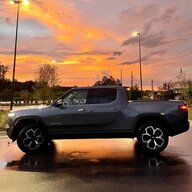
R2 has Lidar!!!! First look at windshield notch location on R2 (with R2D2 wrap)
- Thread starter AirplaneDr
- Start date
- Watchers 24
AlphaSnowbordergirl
Well-Known Member
You can think of it as sonar. Sonar works by sending out sound waves which bounce back when they hit something. Due to the way the sound wave comes back, you can measure distance, and velocity of the object. It is how bats see at night. LiDar however, uses lasers instead of sound. It sends out a bunch of little lasers in all directions and reads what is bounced back to create an image. If one light beam takes longer to reflect back than another, then it is farther away. Having thousands of these dots going out at one time, you can create a 3D image of the world. Because it is creating its own lasers, it can be in complete darkness and still create an image of the world around it.Just so I don't have to resort to AI, can someone tell what the big deal about LiDAR is?
Imagine you're talking to your grandmother.
The benefit of this is if it is raining, foggy, a dark night with no street lights, or perhaps something that might fool the naked eye (say a wild e coyote paining of a road continuing on when in reality its a painted wall) a camera may have difficulties in determining what's in front of it, but lidar will not. It can tell if there is a solid object or not.
There is a game called lidar.exe where you use a lidar to see your surroundings. I coulding find 8bitryan's playthrough, so I just grabbed a random youtuber, but it shows how lidar works.
Is Someone There!? Lidar.exe - YouTube
You'll see in the video, the more he scans the more you see an acutal image made up of little dots of where the lasers reflected back. But you can get what you need in the first 3 minutes of the playthrough. If he curses, I apologize. I only watched the beginning but I know a lot of game youtubers tend to curse.
Last edited:

Virtio
Well-Known Member
- First Name
- Steve
- Joined
- Apr 4, 2022
- Threads
- 7
- Messages
- 163
- Reaction score
- 228
- Location
- Santa Cruz Mountains
- Vehicles
- Rivian R1S
- Occupation
- Engineer
I hope it's user installable and self calibrating. I hate to think about the 1000's of early R2 buyers who get an early R2 without the LiDAR module having to make an appointment to get the module installed when available.
Mellowyellow
Well-Known Member
How would you retrofit it? Different roofs? Or everyone has a roof with a notch in it? Some notches are just empty?
Dark-Fx
Well-Known Member
Sawzall.How would you retrofit it? Different roofs? Or everyone has a roof with a notch in it? Some notches are just empty?
Or more likely, every R2 has the space for the lidar, but the ones without it installed just have a different roof applique.
Sponsored

macb00kemdanno
Well-Known Member
- First Name
- Brandon
- Joined
- Feb 19, 2024
- Threads
- 6
- Messages
- 298
- Reaction score
- 740
- Location
- Garner, NC
- Vehicles
- 2024 Tesla Model 3 Long Range Dual Motor, 2023 Tesla Model Y Long Range
A critical piece of safety hardware retrofitted after purchase? Sounds like a liability nightmare.I hope it's user installable and self calibrating. I hate to think about the 1000's of early R2 buyers who get an early R2 without the LiDAR module having to make an appointment to get the module installed when available.

CrazyOne
Well-Known Member
For every LIDAR pixel (there are a lot fewer than a typical camera sensor), it gives you the image and distance.Just so I don't have to resort to AI, can someone tell what the big deal about LiDAR is?
Imagine you're talking to your grandmother.
A normal Camera gives image, but not distance, so it needs to be interpreted aka guessed. Radar gives an exact distance, but has a hard time distinguishing a soda can from a Nissan Altima
 . Normal systems attempt to fuse the two, but it's a hard problem(sensor fusion).
Example lidar benefit: It will never mistake two separated tail lights on some motorcycles for a distant car. Distance + image gives you a much more exact estimate of the size of an object. You know the exact size and distance.
I put my R1 reservation after Elon trash talked Lidar and RJ said that R1 will have Lidar.
Gen(R3)Xer
Well-Known Member
I think they’ll end up delaying everything until late 2026. It makes the most logical sense.I don't know how Rivian is going to ship R2's without the lidar for the first half of the year. Who would buy a debut R2 knowing it will be shit before it's a year old?
Dave Cundiff
Well-Known Member
- First Name
- Dave
- Joined
- Feb 28, 2024
- Threads
- 4
- Messages
- 1,169
- Reaction score
- 1,581
- Location
- Pacific County, Washington
- Vehicles
- '23 R1S (DM,Max); '23 R1T (QM,Lg); '23 Chevy Bolt
Personal viewpoint/opinion:
I look forward to LIDAR, which should decrease the amount/intensity of human supervision for BOTH safety features such as automated emergency braking AND increasingly autonomous driving..
However, I would very much consider taking delivery of R2 (with the help of rewards that will start expiring in October 2026) with or without LIDAR.
The Gen 1-2 configuration has cameras, radar, and a fair amount of computing power. Even a pre-LIDAR R2 would be much more capable than that. I expect that will be a step up from Gen 1 R1, and a BIG step up from our Bolts.
Sometimes "good enough" really is good enough.
Best to all!
I look forward to LIDAR, which should decrease the amount/intensity of human supervision for BOTH safety features such as automated emergency braking AND increasingly autonomous driving..
However, I would very much consider taking delivery of R2 (with the help of rewards that will start expiring in October 2026) with or without LIDAR.
The Gen 1-2 configuration has cameras, radar, and a fair amount of computing power. Even a pre-LIDAR R2 would be much more capable than that. I expect that will be a step up from Gen 1 R1, and a BIG step up from our Bolts.
Sometimes "good enough" really is good enough.
Best to all!
elektrode
Well-Known Member
Yeah we bailed on our EX90 reservation after they revealed that they promised to replace the computers and would have lidar later. To be fair, our experience with R1T Gen1 taught us to not bank on future promises. My wife doesn’t wanna deal with any of that shiz.Think Volvo EX90 with the lidar fiasco.
R2 late preorder, so who knows. It’s all a bit confusing.
Sponsored
DuoRivians
Well-Known Member
- Joined
- Dec 30, 2022
- Threads
- 257
- Messages
- 3,808
- Reaction score
- 9,067
- Location
- California
- Vehicles
- R1T, R1S
I’m curious of the discrepancy between Waymo having 360 degree lidar versus Rivian having only front lidar.
Both claim to seek Level 4 driving (Waymo already there).
So does Level 4 require 360 lidar?
Both claim to seek Level 4 driving (Waymo already there).
So does Level 4 require 360 lidar?

thrill
Well-Known Member
- First Name
- billy
- Joined
- Jan 14, 2020
- Threads
- 24
- Messages
- 901
- Reaction score
- 1,738
- Location
- South Carolina
- Vehicles
- i3s, (r1t)
No.I’m curious of the discrepancy between Waymo having 360 degree lidar versus Rivian having only front lidar.
Both claim to seek Level 4 driving (Waymo already there).
So does Level 4 require 360 lidar?
LIDAR is “just” a different type of sensor with its own strengths and limitations. Traditionally it was quite expensive and so the more cost advantageous approach was to use it to map entire roads for high resolution maps, meaning pointing in every direction and storing those results. Since that was also the hardware available, it was also used for real-time driving, as done with Waymo (I’ve read Waymo vehicles have as much as $50K worth of self-driving toys onboard).. With it being much cheaper now, it’s more effective to just have it pointing in the direction that high resolution can make a noticeable difference in quality, that is, straight ahead. No one generally really cares about measuring the realtime distance to something behind you or beside you (unless perhaps you were doing autonomous racing), but being able to precisely identify objects and determining vectors allows you to make a plan on the best way to proceed towards a destination, seeing as it’s usually fine to come to a safe stop and make a human take over for most applications.
DuoRivians
Well-Known Member
- Joined
- Dec 30, 2022
- Threads
- 257
- Messages
- 3,808
- Reaction score
- 9,067
- Location
- California
- Vehicles
- R1T, R1S
There can be bikes in blind spots at night, parking in unmarked lanes/hard to visually see curbs, changing lanes in less visually clear situations, and such that are around the vehicle. For a car to be truly Level 4 (not level 3), I would imagine the car has to know about them in great detail. Level 4 also requires rare human intervention.No.
LIDAR is “just” a different type of sensor with its own strengths and limitations. Traditionally it was quite expensive and so the more cost advantageous approach was to use it to map entire roads for high resolution maps, meaning pointing in every direction and storing those results. Since that was also the hardware available, it was also used for real-time driving, as done with Waymo (I’ve read Waymo vehicles have as much as $50K worth of self-driving toys onboard).. With it being much cheaper now, it’s more effective to just have it pointing in the direction that high resolution can make a noticeable difference in quality, that is, straight ahead. No one generally really cares about measuring the realtime distance to something behind you or beside you (unless perhaps you were doing autonomous racing), but being able to precisely identify objects and determining vectors allows you to make a plan on the best way to proceed towards a destination, seeing as it’s usually fine to come to a safe stop and make a human take over for most applications.
My question has nothing to do with the cost of components. It has to do with what’s sufficient information necessary to capture by the car for real Level 4 driving
Last edited:
Dark-Fx
Well-Known Member
Lidar is more about low light high speed situations IMO. Corner radars and camera are going to pick up anything that might be in the way at lower speeds off to the side or rear, as the dangers are much closer and don't need the same level of resolution.There can be bikes in blind spots at night, parking in unmarked lanes/hard to visually see curbs, changing lanes in less visually clear situations, and such that are around the vehicle. For a car to be truly Level 4 (not level 3), I would imagine the car has to know about them in great detail. Level 4 also requires rare human intervention.
My question has nothing to do with the cost of components. It has to do with what’s sufficient information necessary to capture by the car for real Level 4 driving
DuoRivians
Well-Known Member
- Joined
- Dec 30, 2022
- Threads
- 257
- Messages
- 3,808
- Reaction score
- 9,067
- Location
- California
- Vehicles
- R1T, R1S
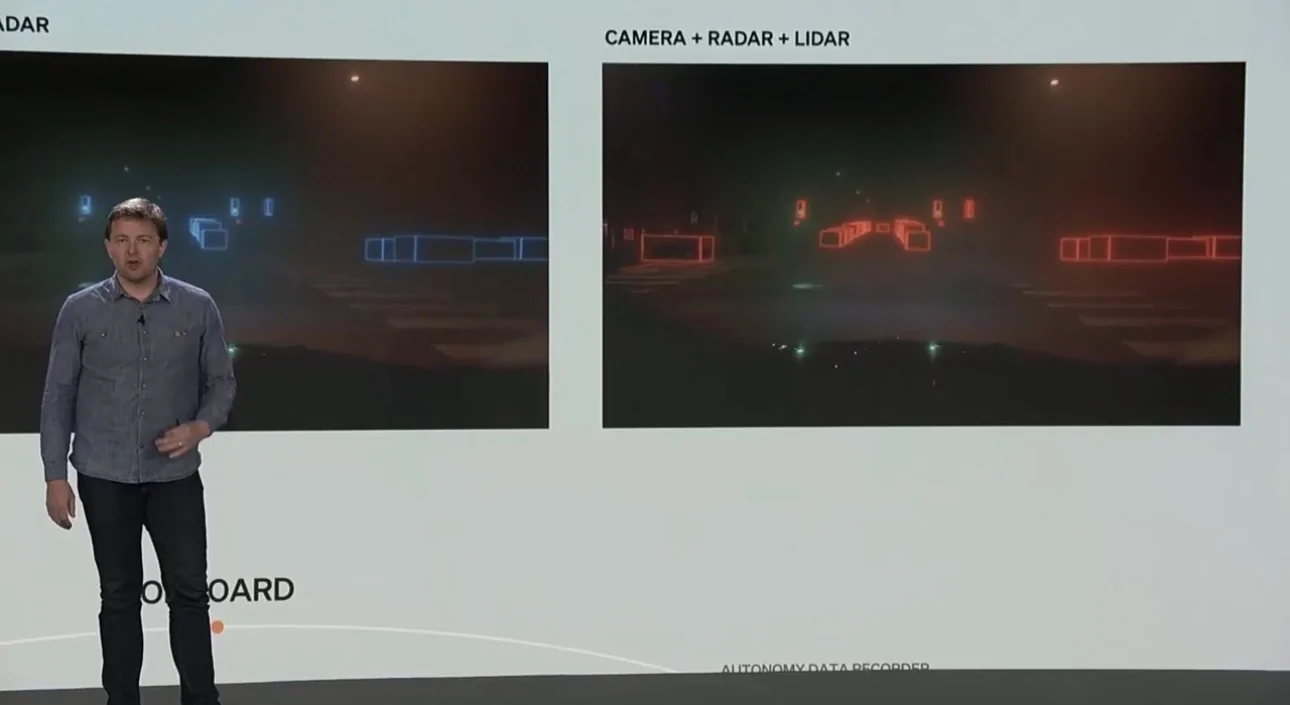
I dunno. Rivian’s demo in the presentation yesterday showed the importance of lidar data, even in what seems low speed driving.Lidar is more about low light high speed situations IMO. Corner radars and camera are going to pick up anything that might be in the way at lower speeds off to the side or rear, as the dangers are much closer and don't need the same level of resolution.
Philbin says lidar is part of the “trinity” of data that provides greater perception and depth to the environment around the car.
I can see front lidar only being plenty sufficient for Level 3 driving. But Level 4 seems like a higher standard, which Rivian seems to claim they can do with just front lidar. Whereas Waymo says it needs 360 lidar.
It seems like either Rivian is overpromising or Waymo is being too cautious
Sponsored
Similar threads

- Replies
- 22
- Views
- 3,954

- Replies
- 193
- Views
- 14,290

- Replies
- 21
- Views
- 3,404


- Replies
- 1,027
- Views
- 127,667