Sponsored

What do you think of these 10-year real-world cost comparisons?

Ndbigblue

Member
First Name
Nicole
Joined
Sep 9, 2023
Threads
4
Messages
8
Reaction score
7
Location
Santa Cruz
Vehicles
RT1
Occupation
Teacher
Below is a 10-year real-world cost comparison for:


  • 2026 Ford Escape Plug-in Hybrid (PHEV) — purchase price $37,000
  • 2022 Rivian R1T Quad-motor — purchase price $68,000

I included: CA registration, tires, 12V batteries, energy (charging + gas), insurance, and a general maintenance/repair bucket.


Assumptions (so the math is comparable)

  • Miles driven: 12,000 miles/year (120,000 miles in 10 years)
  • Electricity: $0.48/kWh
  • Gas: $4.40/gal
  • Charging losses: +10% (wall-to-battery losses)
  • Escape PHEV split: 70% electric miles / 30% gas miles (typical if you charge often; I also show a quick sensitivity below)
  • CA registration estimate model: base DMV fees + VLF depreciation schedule through year 10 (see citations)

Energy efficiency used (EPA/FuelEconomy.gov):


  • Escape PHEV: 33 kWh/100 mi (electric) + 40 mpg (gas mode)
  • Rivian R1T Quad: 48 kWh/100 mi

10-year totals (cash outlay, not subtracting resale value)
Cost summary

Category (10 years)
Escape PHEV​
Rivian R1T Quad​
Purchase price
$37,000​
$68,000​
Energy (electric + gas)
$18,600
$30,400
CA registration (est.)
$3,395
$7,611
Tires (replacements only)
$1,820
$4,950
12V batteries
$500
$3,500 (per your $700/2 yrs assumption)
Maintenance/repairs (general)
$6,000
$3,000
Insurance (est.)
$23,090
$36,000
10-year total
≈ $90,401
≈ $153,474

Difference (Rivian – Escape): ≈ $63,073 more over 10 years.


What drove the difference
1) Energy cost at $0.48/kWh is brutal for EVs

  • Escape (with 70% EV miles): 30,492 kWh + 900 gallons over 10 years → **$18.6k**
  • Rivian: 63,360 kWh over 10 years → **$30.4k**

(That’s using the EPA kWh/100mi values above and adding 10% charging losses.)


Sensitivity (Escape PHEV electric-mile share):


  • If Escape is only 50% electric / 50% gas, energy cost rises to about $20.8k
  • If Escape is 90% electric, energy cost falls to about $16.4k
2) California registration is materially higher on the Rivian

I modeled CA renewal as:


  • Registration fee $73 + CHP fee $34
  • Transportation Improvement Fee (TIF) based on market value ($198 for ~$37k, $231 for $60k+)
  • Vehicle License Fee (VLF) = 0.65% of market value, depreciated each year
  • Rivian weight fee (pickup/commercial): I assumed 7,001–8,000 lb unladen$257/year

That combination is why the Rivian’s 10-year registration estimate lands roughly $4.2k higher than the Escape.

3) Tires are meaningfully more expensive on the Rivian (and usually wear faster)

To keep it grounded, I used Tire Rack “per tire / set of 4” pricing examples:


  • Escape-size example (225/60R18): CrossClimate2 shows $227.99 per tire / $911.96 per set of 4
  • Rivian-size example (275/65R20): Michelin Defender LTX M/S2 shows $358.99 per tire

Replacement counts assumed:


  • Escape: 2 replacement sets over 120k miles (original set lasts ~45k; replacements at ~45k and ~90k)
  • Rivian: 3 replacement sets (original ~30k; replacements at ~30k, ~60k, ~90k)

(If you drive the Rivian hard or tow, tire life can be worse, which pushes Rivian costs up further.)

4) Maintenance/repairs bucket

  • Ford Escape: RepairPal lists $600 average annual repair/maintenance cost
  • Rivian: ConsumerAffairs cites owners averaging about $300/year

I treated those as a general “maintenance/repairs” bucket separate from the explicit tires + 12V line items (real life will have some overlap depending on what you count as “maintenance”).

5) Insurance (big uncertainty, but Rivian typically higher)

Insurance varies wildly by ZIP, driver profile, and coverage. For a usable “real-world” placeholder:


  • Escape: I used $2,309/year (roughly “typical CA full coverage” level referenced by insurers/news roundups)
  • Rivian: I used $3,600/year to reflect higher repair/parts costs and higher vehicle value; published Rivian model premiums commonly come in higher than mainstream crossovers.

If you want, give me your ZIP code + rough driver profile (clean record? comp/collision deductibles?) and I’ll tighten this with current CA-specific quote averages.


Bottom line

At your energy prices ($0.48/kWh, $4.40/gal) and equal miles, the Escape PHEV is dramatically cheaper over 10 years, mainly because:


  • Rivian uses a lot of electricity per mile (and your electricity is expensive),
  • CA fees (especially weight fee + higher VLF/TIF) are higher,
  • Tires and 12V battery replacement are costlier,
  • Insurance tends to run
Sponsored
 

SANZC02

Well-Known Member
First Name
Bob
Joined
Feb 11, 2021
Threads
50
Messages
7,403
Reaction score
12,692
Location
California
Vehicles
Tesla Model S, LE - R1S
Occupation
Retired
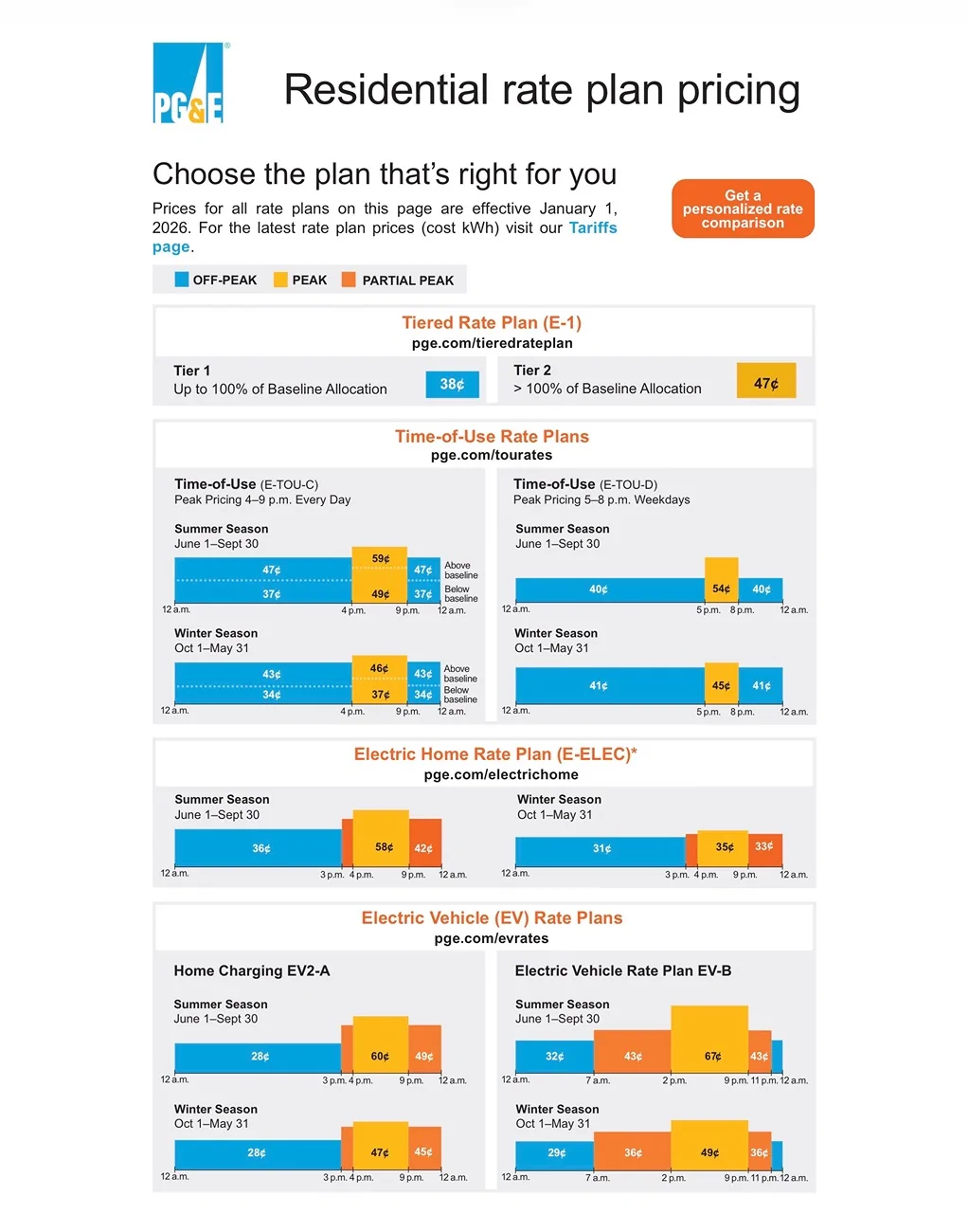
Your kWh rate of 48 cents seems high unless you plan on DCFC charging.

PG&E should have lower rates than SCE and over night my SCE rate is 24 cents a kWh.

Iasume you do not have solar but my solar covers the bulk of my charging.
 

RickRivian

Well-Known Member
Joined
Dec 16, 2025
Threads
0
Messages
48
Reaction score
45
Location
SE MI
Vehicles
'22 Lightning ER Lariat,'22 Mach-E Premium 4X
Your electricity cost is wacked. I know some parts of CA are wacked (as far as electricity costs, not a political commentary), but most people in the US pay under 20 cents per kWh.

But your analysis is FUBAR. A Ford Escape is not even AWD, isn't an SUV, can't seat the same number of people, etc., etc. You would need to compare to a similar vehicle for this to have any meaning at all.
 

Sponsored

tbinmd

Well-Known Member
Joined
May 3, 2025
Threads
1
Messages
150
Reaction score
168
Location
MD
Vehicles
R1T Dual Max
apples and oranges. might as well compare to a GT3RS.
 

Doug

Well-Known Member
First Name
Doug
Joined
Jul 7, 2021
Threads
7
Messages
258
Reaction score
332
Location
Jackson, Minnesota
Vehicles
2021 Toyota Highlander Hybrid, 2002 Ford
Occupation
Business Owner
A couple comparisons missed in this exercise is 0-60 times. Fun factor of ability to off road in the Rivian. Confidence level in a snowstorm or heavy rainstorm driving a Rivian or an Escape. The comfort of the ride. Having a truck verses sorta suv. The many drive modes and ride heights. The over the air updates. The cool factor of driving a Rivian. Not sure Ford carries the same cool factor. I could go on. Not the same class of vehicle. I personally would not buy an escape verses a Rivian just to save a few dollars. I do not think saving money was the driving force of buying a Rivian. Although comparing a R1T to a Ford Raptor in 10 years of cost might be interesting.
 

Cycliste

Well-Known Member
First Name
Scott
Joined
Jul 7, 2023
Threads
11
Messages
1,191
Reaction score
1,671
Location
Solano County, California
Vehicles
2023 R1T/20AT Brights, BMC TMR01/SRAM AXS/454 NSW
Occupation
Amateur aero weenie
Clubs
 
Your kWh rate of 48 cents seems high unless you plan on DCFC charging.

PG&E should have lower rates than SCE and over night my SCE rate is 24 cents a kWh.

Iasume you do not have solar but my solar covers the bulk of my charging.
Rivian R1T R1S What do you think of these 10-year real-world cost comparisons? IMG_2530
 

Time2Roll

Well-Known Member
Joined
Jul 10, 2025
Threads
2
Messages
771
Reaction score
662
Location
SoCal
Vehicles
2026 R1S Quad - 2001 F150
Where is the F150 or Silverado?

Some worry about the cost of everything and ignore the value.
 

Doug

Well-Known Member
First Name
Doug
Joined
Jul 7, 2021
Threads
7
Messages
258
Reaction score
332
Location
Jackson, Minnesota
Vehicles
2021 Toyota Highlander Hybrid, 2002 Ford
Occupation
Business Owner
A Ford Raptor R is somewhat comparable to a quad R1T for price. The Rivian is quicker by a full second in 0-60 has a little more ground clearance I believe in offroad mode. The Ford gets 12 miles to a gallon so after 50,000 miles that is $12,500 at $3 a gallon. I pay 12 cents a KW for electricity so $2500 charging at home and $2150 for fast charging on road trips for the same 50,000 miles. I figured an 80/20 split for charging at home verses away and .45Kw for fast charging. I figured tires and maintenance would be a wash between the two. With a similar Truck Rivian is completive and even cheaper and quieter and quicker.
 

Sponsored

godfodder0901

Well-Known Member
First Name
Jared
Joined
Mar 12, 2019
Threads
27
Messages
5,749
Reaction score
10,139
Location
Washington
Vehicles
2022 Rivian R1T LE
Below is a 10-year real-world cost comparison for:


  • 2026 Ford Escape Plug-in Hybrid (PHEV) — purchase price $37,000
  • 2022 Rivian R1T Quad-motor — purchase price $68,000

I included: CA registration, tires, 12V batteries, energy (charging + gas), insurance, and a general maintenance/repair bucket.


Assumptions (so the math is comparable)

  • Miles driven: 12,000 miles/year (120,000 miles in 10 years)
  • Electricity: $0.48/kWh
  • Gas: $4.40/gal
  • Charging losses: +10% (wall-to-battery losses)
  • Escape PHEV split: 70% electric miles / 30% gas miles (typical if you charge often; I also show a quick sensitivity below)
  • CA registration estimate model: base DMV fees + VLF depreciation schedule through year 10 (see citations)

Energy efficiency used (EPA/FuelEconomy.gov):


  • Escape PHEV: 33 kWh/100 mi (electric) + 40 mpg (gas mode)
  • Rivian R1T Quad: 48 kWh/100 mi

10-year totals (cash outlay, not subtracting resale value)
Cost summary

Category (10 years)
Escape PHEV​
Rivian R1T Quad​
Purchase price
$37,000​
$68,000​
Energy (electric + gas)
$18,600
$30,400
CA registration (est.)
$3,395
$7,611
Tires (replacements only)
$1,820
$4,950
12V batteries
$500
$3,500 (per your $700/2 yrs assumption)
Maintenance/repairs (general)
$6,000
$3,000
Insurance (est.)
$23,090
$36,000
10-year total
≈ $90,401
≈ $153,474

Difference (Rivian – Escape): ≈ $63,073 more over 10 years.


What drove the difference
1) Energy cost at $0.48/kWh is brutal for EVs

  • Escape (with 70% EV miles): 30,492 kWh + 900 gallons over 10 years → **$18.6k**
  • Rivian: 63,360 kWh over 10 years → **$30.4k**

(That’s using the EPA kWh/100mi values above and adding 10% charging losses.)


Sensitivity (Escape PHEV electric-mile share):


  • If Escape is only 50% electric / 50% gas, energy cost rises to about $20.8k
  • If Escape is 90% electric, energy cost falls to about $16.4k
2) California registration is materially higher on the Rivian

I modeled CA renewal as:


  • Registration fee $73 + CHP fee $34
  • Transportation Improvement Fee (TIF) based on market value ($198 for ~$37k, $231 for $60k+)
  • Vehicle License Fee (VLF) = 0.65% of market value, depreciated each year
  • Rivian weight fee (pickup/commercial): I assumed 7,001–8,000 lb unladen$257/year

That combination is why the Rivian’s 10-year registration estimate lands roughly $4.2k higher than the Escape.

3) Tires are meaningfully more expensive on the Rivian (and usually wear faster)

To keep it grounded, I used Tire Rack “per tire / set of 4” pricing examples:


  • Escape-size example (225/60R18): CrossClimate2 shows $227.99 per tire / $911.96 per set of 4
  • Rivian-size example (275/65R20): Michelin Defender LTX M/S2 shows $358.99 per tire

Replacement counts assumed:


  • Escape: 2 replacement sets over 120k miles (original set lasts ~45k; replacements at ~45k and ~90k)
  • Rivian: 3 replacement sets (original ~30k; replacements at ~30k, ~60k, ~90k)

(If you drive the Rivian hard or tow, tire life can be worse, which pushes Rivian costs up further.)

4) Maintenance/repairs bucket

  • Ford Escape: RepairPal lists $600 average annual repair/maintenance cost
  • Rivian: ConsumerAffairs cites owners averaging about $300/year

I treated those as a general “maintenance/repairs” bucket separate from the explicit tires + 12V line items (real life will have some overlap depending on what you count as “maintenance”).

5) Insurance (big uncertainty, but Rivian typically higher)

Insurance varies wildly by ZIP, driver profile, and coverage. For a usable “real-world” placeholder:


  • Escape: I used $2,309/year (roughly “typical CA full coverage” level referenced by insurers/news roundups)
  • Rivian: I used $3,600/year to reflect higher repair/parts costs and higher vehicle value; published Rivian model premiums commonly come in higher than mainstream crossovers.

If you want, give me your ZIP code + rough driver profile (clean record? comp/collision deductibles?) and I’ll tighten this with current CA-specific quote averages.


Bottom line

At your energy prices ($0.48/kWh, $4.40/gal) and equal miles, the Escape PHEV is dramatically cheaper over 10 years, mainly because:


  • Rivian uses a lot of electricity per mile (and your electricity is expensive),
  • CA fees (especially weight fee + higher VLF/TIF) are higher,
  • Tires and 12V battery replacement are costlier,
  • Insurance tends to run
Stop just asking AI some random question and blindly posting the bullshit answer with no human validation. All AI really does is tell you the next statistically likely word... It does not think or verify it's results EVEN IF IT TELLS YOU IT DOES. DO YOUR OWN RESEARCH AND VALIDATION!
 
Last edited:

Throwdown

Well-Known Member
Joined
Mar 14, 2023
Threads
0
Messages
422
Reaction score
487
Location
Colorado
Vehicles
R1t launch edition#2650
Occupation
Technician
Damn the fact that they arent an apples to apples comparison, he left out that the plug in hybrid is a turd all the way around, and a ford to boot. Ford trucks are ok, but anything else especially late model is hot garbage
 

Killer95Stang

Well-Known Member
First Name
Dan
Joined
Dec 7, 2021
Threads
68
Messages
1,532
Reaction score
3,037
Location
Sunny Socal
Vehicles
Mustang, Falcon, F150, Flex and Explorer
Occupation
Engineer
I mean, if you are perfectly content driving grandma's Ford escape, why even bother considering a Rivian? I'm on the fence right now on buying another car I don't really need, because I like how it drives (Lucid Air Touring), but I would never compare it to Toyota Corolla.

And to the other guy comparing it to the Raptor R... I'd take the Raptor R any day........ I've been in both and even with it being a little slower... maybe an inch of clearance less... I'd still take it.
 

CharonPDX

Well-Known Member
First Name
Charon
Joined
Jul 12, 2021
Threads
31
Messages
2,497
Reaction score
4,171
Location
Cascadia
Vehicles
'22 R1T LE, '16 Model S, '19 Arcimoto FUV
Occupation
InfoSec Geek
Clubs
 
Did you double check the LLM's math? It's probably faulty.

There's also the dichotomy of using public DC pricing. If you're going to assume 70% electric, 30% gas for the PHEV, you should assume favorable home pricing 70% of the time on the BEV. (And for that matter, probably also for the electric usage of the PHEV.)

And you're not comparing like for like. The Escape is more the R2's market, not the R1. Why not compare to a Prius Prime while you're at it?

An R1T Quad-Motor is closer to an F-150 Raptor in capability, or a Ranger in size. (Ranger PHEV to be closest to your Escape comparison, but the Ranger PHEV isn't available in the US.)
 

CharonPDX

Well-Known Member
First Name
Charon
Joined
Jul 12, 2021
Threads
31
Messages
2,497
Reaction score
4,171
Location
Cascadia
Vehicles
'22 R1T LE, '16 Model S, '19 Arcimoto FUV
Occupation
InfoSec Geek
Clubs
 
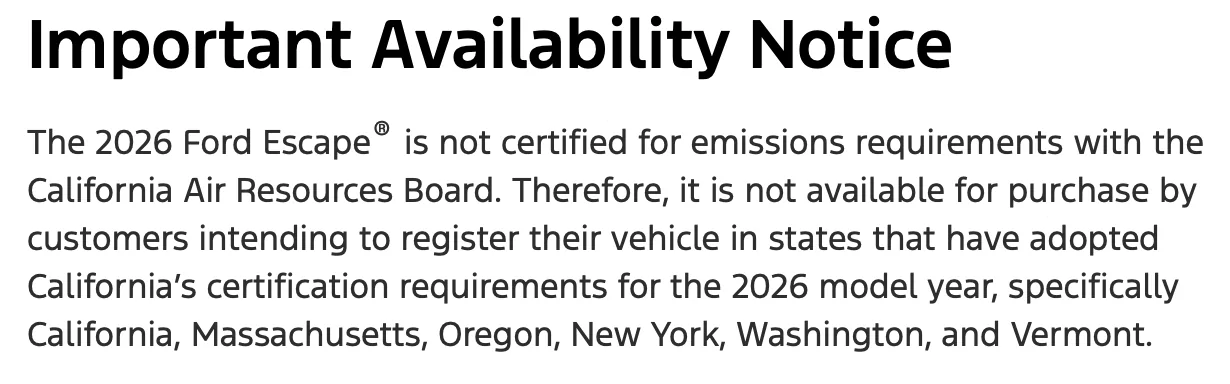
By the way…. You are comparing to a 2026 Escape, and saying in California:

Rivian R1T R1S What do you think of these 10-year real-world cost comparisons? Screenshot 2026-02-22 at 5.24.32 PM
Sponsored


Top