gj_washington
Well-Known Member
- Thread starter
- #1
I have been overall very happy with my Rivian R1T and the way it is supported. Unfortunately I cannot say the same for the Rivian Wall Charger. I am sharing my experience so far in the hope that (a) Rivian is listening and (b) others considering the Rivian wall charger are suitably informed.
I installed the wall charger at around the same time as I took delivery of the Rivian in July 2022 using the direct-wired approach with a newly laid copper 60A capacity line and a matching breaker.
The installation and first six months of use of the Rivian Wall charger was flawless. I got consistent 11kw charging as specified. In March/April, I started seeing intermittent halts in the charging progress. This became extremely annoying when I had a long trip planned in the morning for which I would plug in the previous evening only to discover just before leaving that the charging had stopped at a level much below my target. It wasn't clear to me (and still isn't) if this was the result of a software update to the charger, to the truck or degradation of the charger cable.
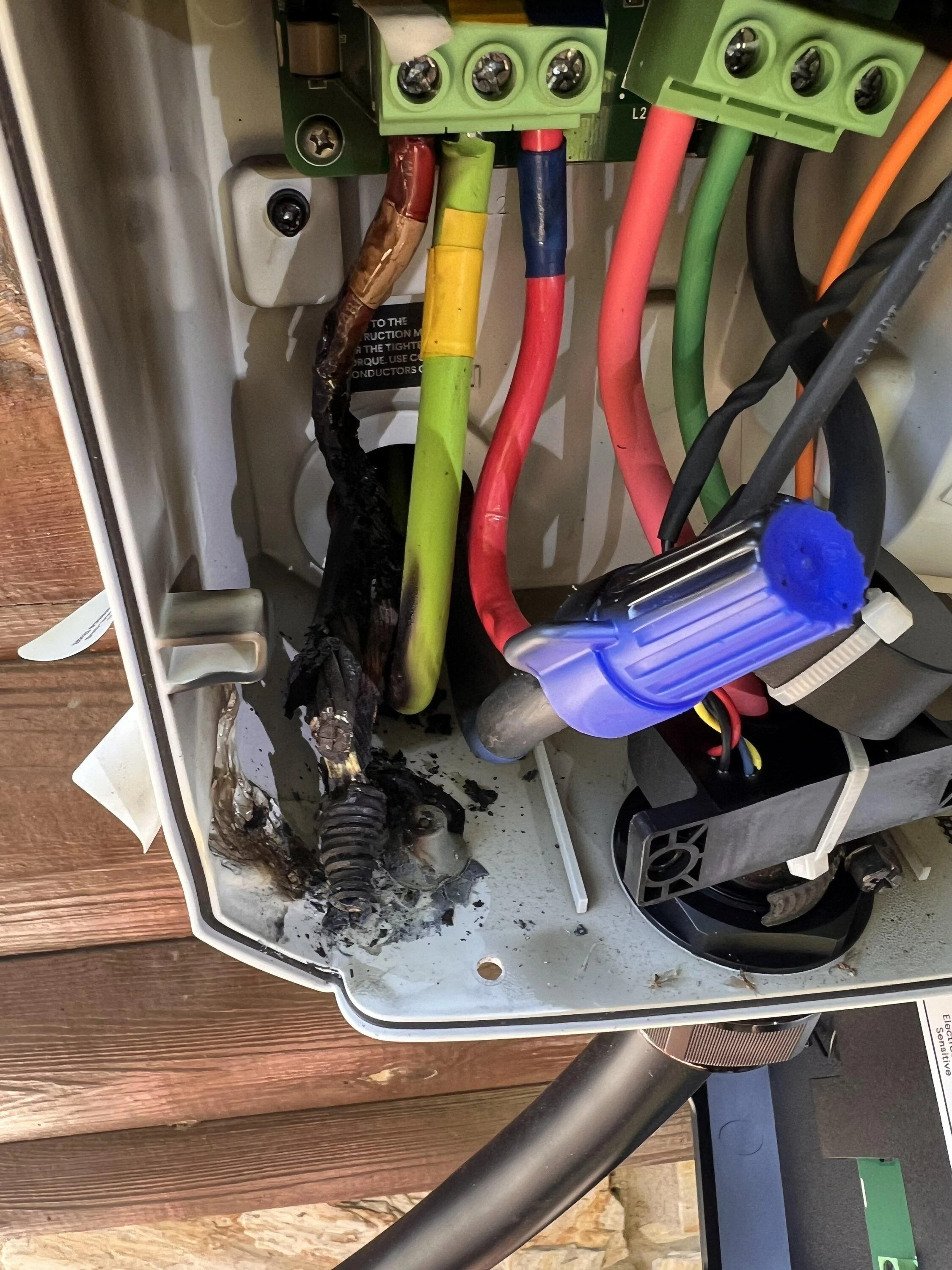
My support calls to Rivian went unanswered for a while with promises to report the case to the wall charger team. I was asked to submit photographs of my wall charger installation.
I got an email after much delay saying that "
After reviewing the media you sent over, it appears that aluminum conductors were used in place of the copper that is required per the installation guide. We kindly ask that you work with your electrician to get the wall charger rewired with copper as soon as possible."
Except, this assertion is false as the electrician had used Copper, not Aluminum.
Finally in the July software update, Rivian truck software introduced a feature to lower the charging rate if the plug got too hot. This was a helpful mitigation as it reduced the severity of the problem to one where the overall charging time was just expanded as opposed to being unbounded. Indeed, the charging sessions after this update always ramp up to 11kw and then ramp down settling at something closer to 7kw with a warning on the display "Charging - slower due to warm plug".

This solves part of the mystery and I appreciate the 'fix' in the July update. However, it seems pretty clear to me that the Wall charger I have is not behaving to specification (48A, 11KW) and Rivian is dancing around to avoid admitting this.
In a recent support communication from the "Home Charging Team" the message is that what I am seeing is "normal behavior" and should no longer be an issue when the outside temperatures start to cool down.
As another datapoint, I have charged multiple times at a Chargepoint Wall charger and always got a consistent 9Kw (not 11kw because the Chargepoint is plugged into a NEMA 14-50 and not direct wired).
In summary, my perspective so far is that:
(a) Rivian Wall Charger is not a reliable option for those looking for the fastest home charging rate.
(b) Rivian Wall Charger support is not the same level as Rivian R1 support.
I installed the wall charger at around the same time as I took delivery of the Rivian in July 2022 using the direct-wired approach with a newly laid copper 60A capacity line and a matching breaker.
The installation and first six months of use of the Rivian Wall charger was flawless. I got consistent 11kw charging as specified. In March/April, I started seeing intermittent halts in the charging progress. This became extremely annoying when I had a long trip planned in the morning for which I would plug in the previous evening only to discover just before leaving that the charging had stopped at a level much below my target. It wasn't clear to me (and still isn't) if this was the result of a software update to the charger, to the truck or degradation of the charger cable.
My support calls to Rivian went unanswered for a while with promises to report the case to the wall charger team. I was asked to submit photographs of my wall charger installation.
I got an email after much delay saying that "
After reviewing the media you sent over, it appears that aluminum conductors were used in place of the copper that is required per the installation guide. We kindly ask that you work with your electrician to get the wall charger rewired with copper as soon as possible."
Except, this assertion is false as the electrician had used Copper, not Aluminum.
Finally in the July software update, Rivian truck software introduced a feature to lower the charging rate if the plug got too hot. This was a helpful mitigation as it reduced the severity of the problem to one where the overall charging time was just expanded as opposed to being unbounded. Indeed, the charging sessions after this update always ramp up to 11kw and then ramp down settling at something closer to 7kw with a warning on the display "Charging - slower due to warm plug".
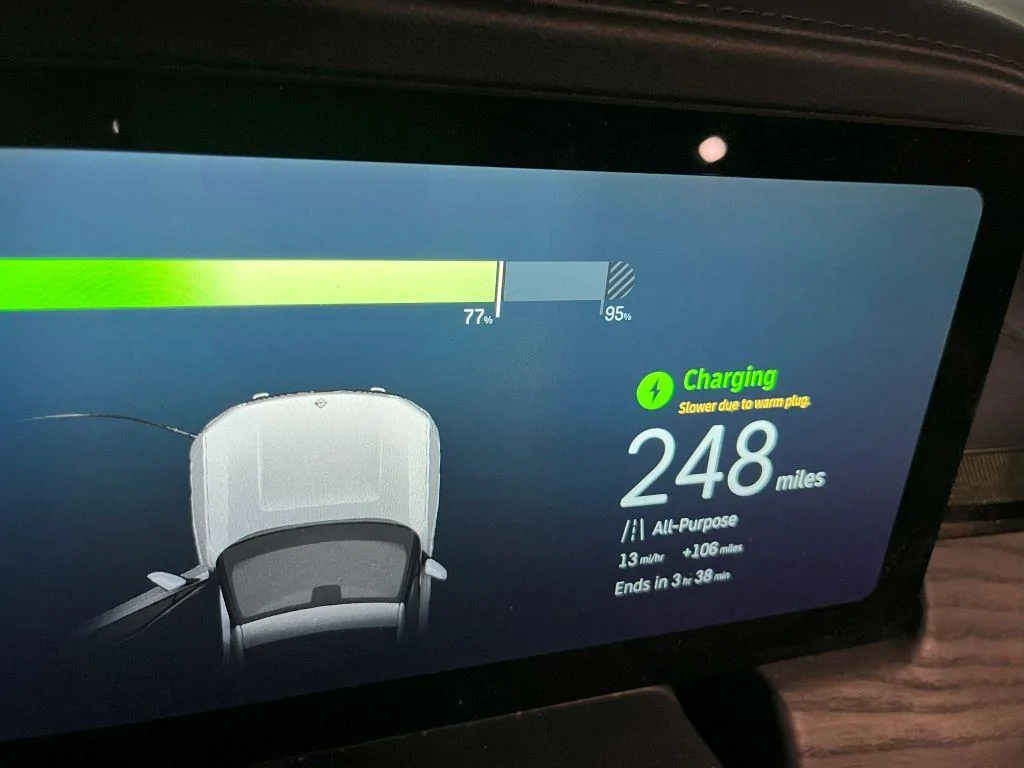
This solves part of the mystery and I appreciate the 'fix' in the July update. However, it seems pretty clear to me that the Wall charger I have is not behaving to specification (48A, 11KW) and Rivian is dancing around to avoid admitting this.
In a recent support communication from the "Home Charging Team" the message is that what I am seeing is "normal behavior" and should no longer be an issue when the outside temperatures start to cool down.
As another datapoint, I have charged multiple times at a Chargepoint Wall charger and always got a consistent 9Kw (not 11kw because the Chargepoint is plugged into a NEMA 14-50 and not direct wired).
In summary, my perspective so far is that:
(a) Rivian Wall Charger is not a reliable option for those looking for the fastest home charging rate.
(b) Rivian Wall Charger support is not the same level as Rivian R1 support.
Sponsored