DuoRivians
Well-Known Member
- Joined
- Dec 30, 2022
- Threads
- 257
- Messages
- 3,808
- Reaction score
- 9,067
- Location
- California
- Vehicles
- R1T, R1S
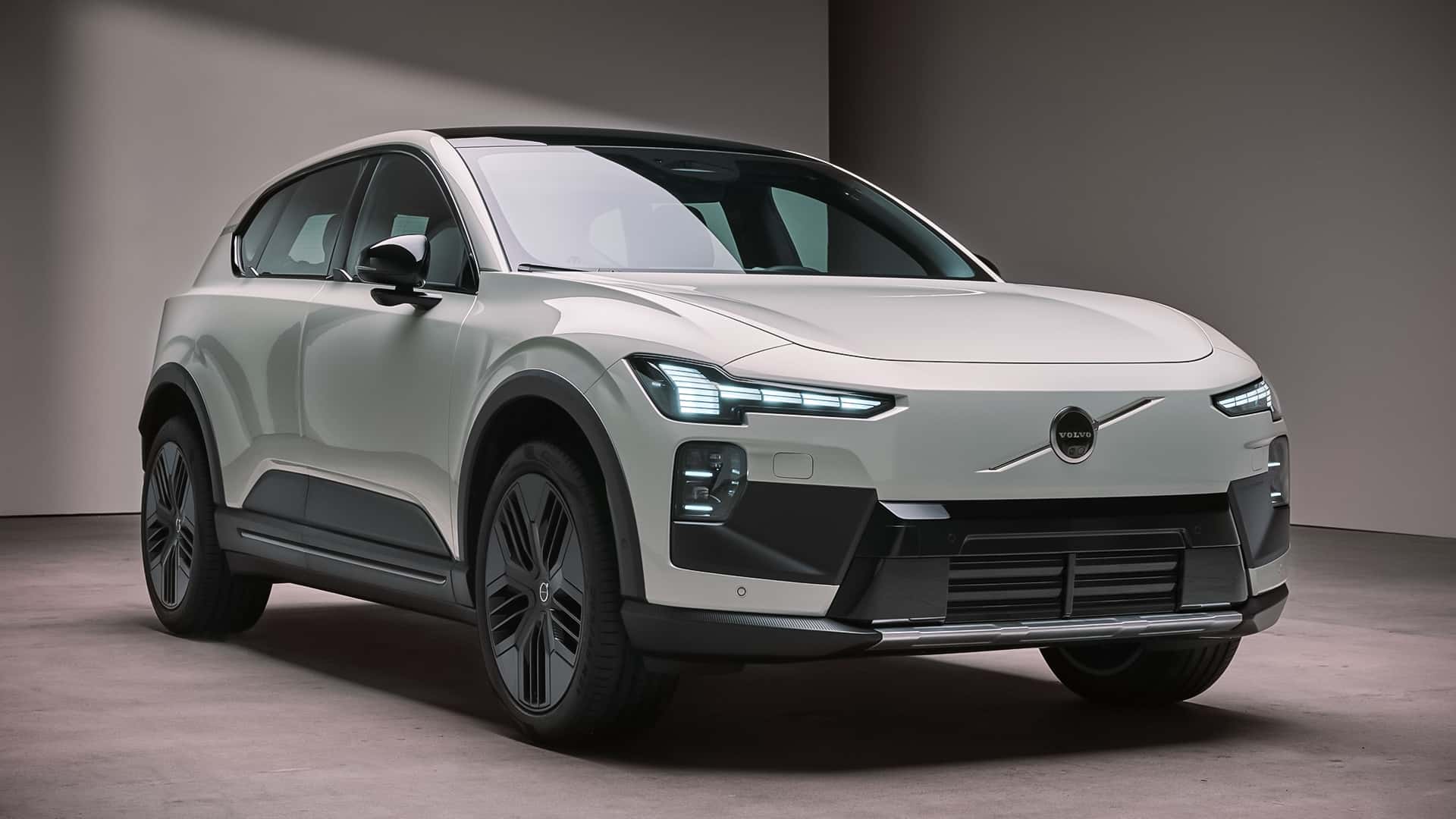
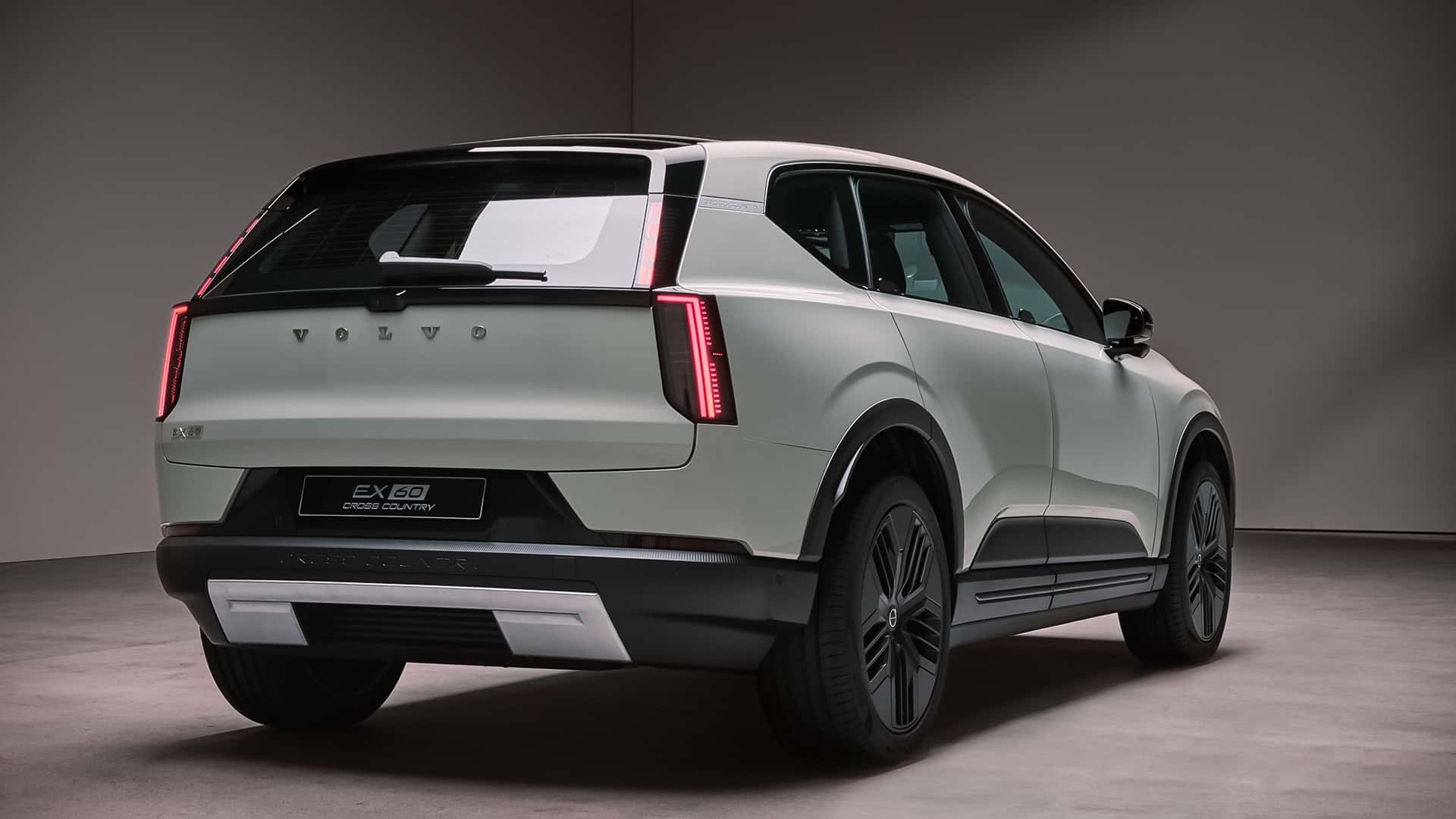
Liking it! This should be its own threadLooks like they have an off-roadish "Cross Country" version



Sponsored
Liking it! This should be its own threadLooks like they have an off-roadish "Cross Country" version
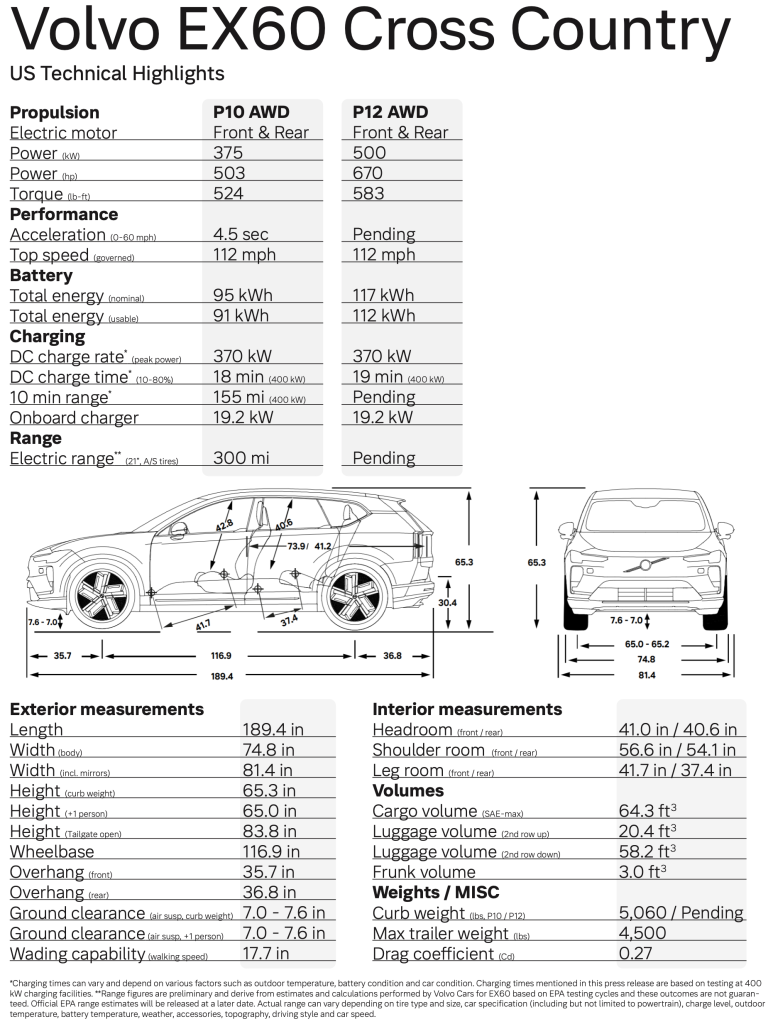
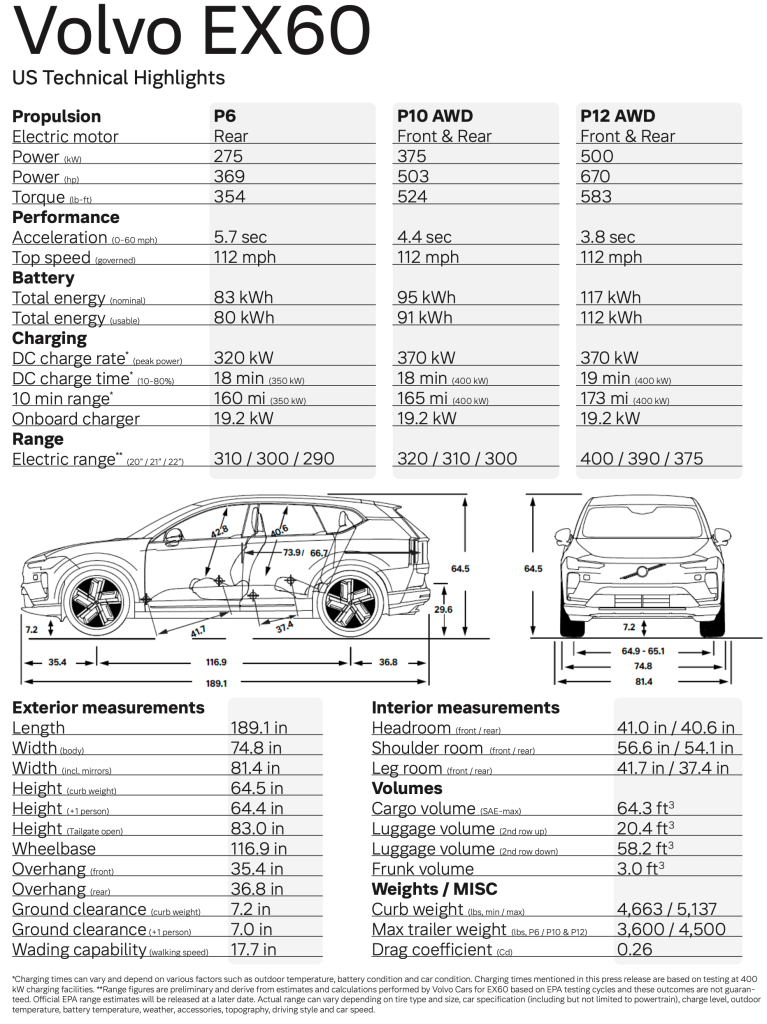
3.57 mi/kWh? It seems very optimistic to me.Here are the specs, including for Cross Country version.

Yes 370 (worried about R2 competitiveness on this!)Is this new EX60 800v architecture? 370 kilowatt max charging speed, I would assume so.
Yeah, if they're already building validation vehicles it's not like the specs are likely to change on the production vehicles.I wish RJ would release the R2 specs already.
Of course it is a bad decision to charge the same as an arguably more premium brand and offer 80 miles LESS range. BMW will be offering a 300 or so mile range 40 model with the specs out in a few months and the price will then be in the kid tonight $50k range. The Volvo looks better but needed to be cheaper especially with an inferior range. I get the point on LFP batteries but for those who go occasional long distances having your car charged up in the morning with 400 miles ready to go is better than being limited to 320.No foot-shot at all. If it's LFP, I'll take it happily for other reasons. I don't need even 300 miles of range and rear wheel drive would have been fine as well. What the BMW offers is superfluous for my/some needs but they are limited to NMC batteries only, so Volvo>BMW for now. Let's see what the R2 final specs turn out to be.
I don't get why offering a choice of ranges (they offer three levels) is not the most consumer-driven solution. The extra range at the BMW base price just means I can wait another few days before plugging in to my garage charger one night....not much of a benefit. If the highest range is needed, it's available. At these general prices, a few grand one way or the other is a small variance to get the car you need.Of course it is a bad decision to charge the same as an arguably more premium brand and offer 80 miles LESS range. BMW will be offering a 300 or so mile range 40 model with the specs out in a few months and the price will then be in the kid tonight $50k range. The Volvo looks better but needed to be cheaper especially with an inferior range. I get the point on LFP batteries but for those who go occasional long distances having your car charged up in the morning with 400 miles ready to go is better than being limited to 320.
Sounds good but then an AI overview of the iX3 states this for what it is worth :This is more comprehensive and inclusive of new technologies to cope with NMC possible thermal runaway (yes, I know, rare, but potentially unmanageable) than I've seen anywhere else. They are using high temperature containment materials that others have not included (so far, from what I've learned). Also, the monitoring and warning (likely in the app as well as in the instrument cluster). This could change my mind if LFP doesn't get offered:
(Question to Google AI) What has volvo done about battery thermal runaway in the EX60?
Volvo has addressed potential battery thermal runaway in the
Volvo EX60 through an integrated safety approach that includes advanced software monitoring, an efficient liquid cooling system, and structural battery design features.
Software and Monitoring
Sophisticated software is central to Volvo's thermal management strategy, providing continuous monitoring and predictive capabilities.
- Advanced Battery Management System (BMS): The EX60's self-developed BMS meets high functional safety standards (ISO ASIL-D) and uses sensors to monitor individual cell health and temperature, allowing for early detection of abnormalities or an impending short circuit.
- Predictive Algorithms: In-house and collaborative software (developed with Breathe Battery Technologies) constantly adjusts power intake and thermal management to keep the battery in its ideal operating temperature range, effectively preventing temperature spikes before they escalate.
- Over-the-Air (OTA) Updates: The vehicle can receive regular software updates, ensuring the battery management systems are continuously optimized with the latest safety strategies.
Hardware and Design
The physical design of the battery pack and the vehicle's structure work to manage heat effectively and compartmentalize any potential incidents.
- Liquid Cooling System: The EX60 is equipped with a liquid-cooled battery pack that uses a mixture of glycol and water to absorb and dissipate heat away from the battery cells, which improves thermal management and safety.
- Cell-to-Body Integration: The battery cells are integrated directly into the vehicle's structure on the new SPA3 platform, improving thermal stability and efficiency by removing less efficient modules.
- High-Temperature Barriers and Containment: Within the battery pack, high-temperature barriers and other containment features are used to compartmentalize thermal incidents, preventing the heat from spreading to adjacent cells or the passenger cabin.
Pressure Relief Valve: A downward-facing pressure relief valve is incorporated into the design to swiftly release energy in extreme situations, further maximizing passenger safety.
(Question to Google AI)Does the EX600 warn of battery thermal runaway?
Yes, the Volvo EX60 includes
warning systems and advanced monitoring software designed to detect potential battery issues, including signs of thermal events.
Dashboard Warnings: Like most Volvo models, the EX60 features a dashboard warning light and messages that alert the driver to general battery faults or charging system problems.
- Overheating Notifications: If the system detects the battery is overheating or has a problem, a specific warning message will appear on the driver's display.
- Predictive Monitoring: The car's sophisticated Battery Management System (BMS) continuously monitors cell health and temperature. It is designed to use predictive algorithms and an around-the-clock early warning system to detect abnormalities or an impending short circuit before a major event occurs.
- Containment/Mitigation: In the rare event a thermal incident does start, physical design features like high-temperature barriers and a downward-facing pressure relief valve are intended to contain and manage the event to protect the cabin and provide time for emergency services to respond.
- These systems aim to give the driver an early warning so they can take appropriate action, such as contacting a workshop or stopping the vehicle safely.
....or backing it out of the garage!
Rivian...what's your plan?
They are offering a series of ranges. Essentially 300 and 400 miles vs 310, 320 and 400 miles in the Volvo. Not sure what you are trying about when both vehicles by 2027 will offer very similar ranges. My point was the price, if you are paying $60k then one vehicle having 80 miles more range has an advantage with most consumers all things being equal (of course they are not since looks, brand perception etc are subjective).I don't get why offering a choice of ranges (they offer three levels) is not the most consumer-driven solution. The extra range at the BMW base price just means I can wait another few days before plugging in to my garage charger one night....not much of a benefit. If the highest range is needed, it's available. At these general prices, a few grand one way or the other is a small variance to get the car you need.
Yes, it is well described. When I asked the engineer at CES specifically about high temperature containment of battery cells, he said they did not do that for this vehicle. He said their emphasis was on preventing issues, but they did not include the same actions as Volvo to respond/cope if a thermal runaway was imminent.Sounds good but then an AI overview of the iX3 states this for what it is worth :
Yes, the BMW iX3, like other advanced BMW EVs, incorporates sophisticated thermal management with advanced cooling systems, effective insulation, and a heat pump for efficient high-temperature management, ensuring battery and cabin stability, though specific "high-temperature barriers" aren't detailed as separate components but as integrated thermal engineering. These systems prevent overheating, keeping performance optimal and protecting the battery, crucial for maintaining range and longevity in hot conditions.
Out of interest how many runaway thermal events happen in BEVs nowadays?Yes, it is well described. When I asked the engineer at CES specifically about high temperature containment of battery cells, he said they did not do that for this vehicle. He said their emphasis was on preventing issues, but they did not include the same actions as Volvo to respond/cope if a thermal runaway was imminent.