mkhuffman
Well-Known Member
- Thread starter
- #1
I am not a fan of the glass roof. I love opening roofs because you can, well, open them. But as a driver sitting in the driver seat, a glass roof does nothing for me except make me hotter or colder. And my wife hates it because she doesn’t like sun shining on her face.
The easy solution to reduce sun exposure is a simple roof cover, like this one from Hanshow:

https://www.hansshow.com/products/rivian-r1t-glass-roof-sunshades?variant=45676072599764
That is the one I have. It works great except it billows when the windows are open. I do wish it would be more stable in that situation, but other than that, it works really well. However, it is not insulated.
To get a real benefit, insulating the roof is key. Reflective surfaces are great for reflecting heat, but do you want to reflect out the sun in the winter when that extra heat can help warm the cabin? No. But reflecting out the sun in the summer would be good.
In the end, I decided that cold temperate efficiency is more important to me than warm weather efficiency. And Rivian already does a good job with the glass roof regarding warm weather performance. I can turn on the shade, and it blocks the heat pretty well. Cold temperatures kill range and heating the cabin is one of the big reasons.
To retain as much heat as possible, a reflective surface faced into the cabin is best. Even better would be an insulated shiny surface. You can get sheets of that kind of thing from Home Depot, but mounting them to the glass is a challenge. And it will be ugly. I do care somewhat about the appearance inside my truck.
I have used this before to wrap ducts:

Frost King E/O 1 ft. X 1/8 in. x 15 ft. Self-Stick Foam/Foil Duct Insulation FV516 - The Home Depot
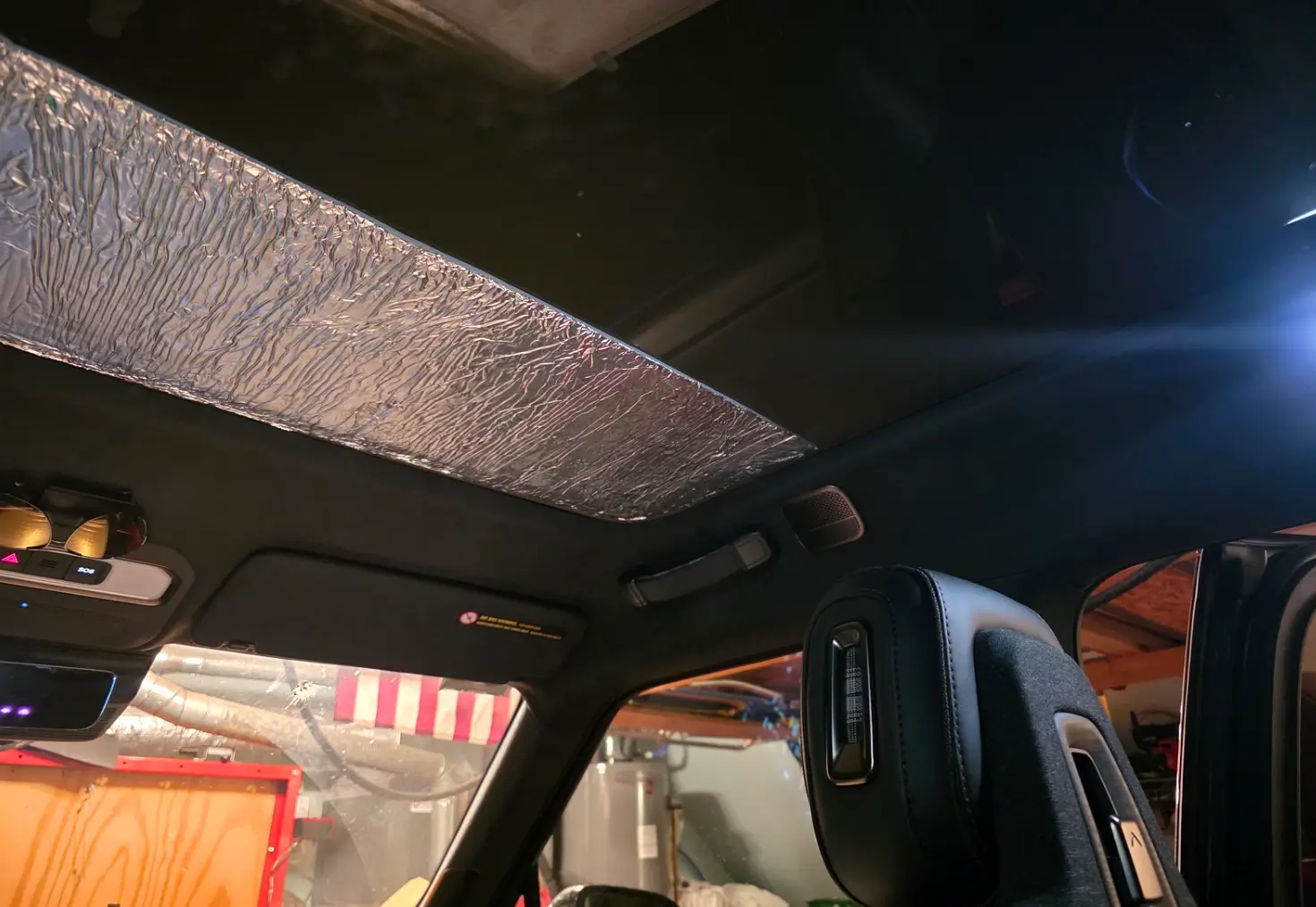
It is self adhesive, so it is easy to put on. And the foam side that sticks to the glass will absorb sunlight, hopefully not blocking too much of the heat in the winter. The other side is reflective, and should really help reflect the heat back into the cabin in the winter.
I put a strip on the glass as a test, and then covered it up with the Hanshow glass roof sunshade. I left it like that all summer and up until last night, so I could do measurements on how it performs in the summer and winter.
Here is what one strip looks like:

In the summer, I turned on the roof for extra sun blocking. In the winter, I turned off the roof to let in as much sun as possible.
In the summer I was very surprised to measure a significant difference in temperature where the insulated wrap was applied. On average, on hot days the insulated glass was 8 degrees cooler than the non-insulated glass. Amazing.


To be clear, when measuring those temperatures, I had been running the climate control so the interior was being cooled and with the full heat of the summer sun shining down on the roof. The temperature difference between the insulated and non-insulated roof was almost the same if the air conditioner was not running. That is because the cabin gets very hot in the summer, and tends to equalize.
In the winter, I have seen a similar temperature difference. The insulated side is on average 8 degrees warmer than the non-insulated side.


The cold weather measurement method above:
The temperature of the outside of the truck when I did the above measurements was around 23 degrees.

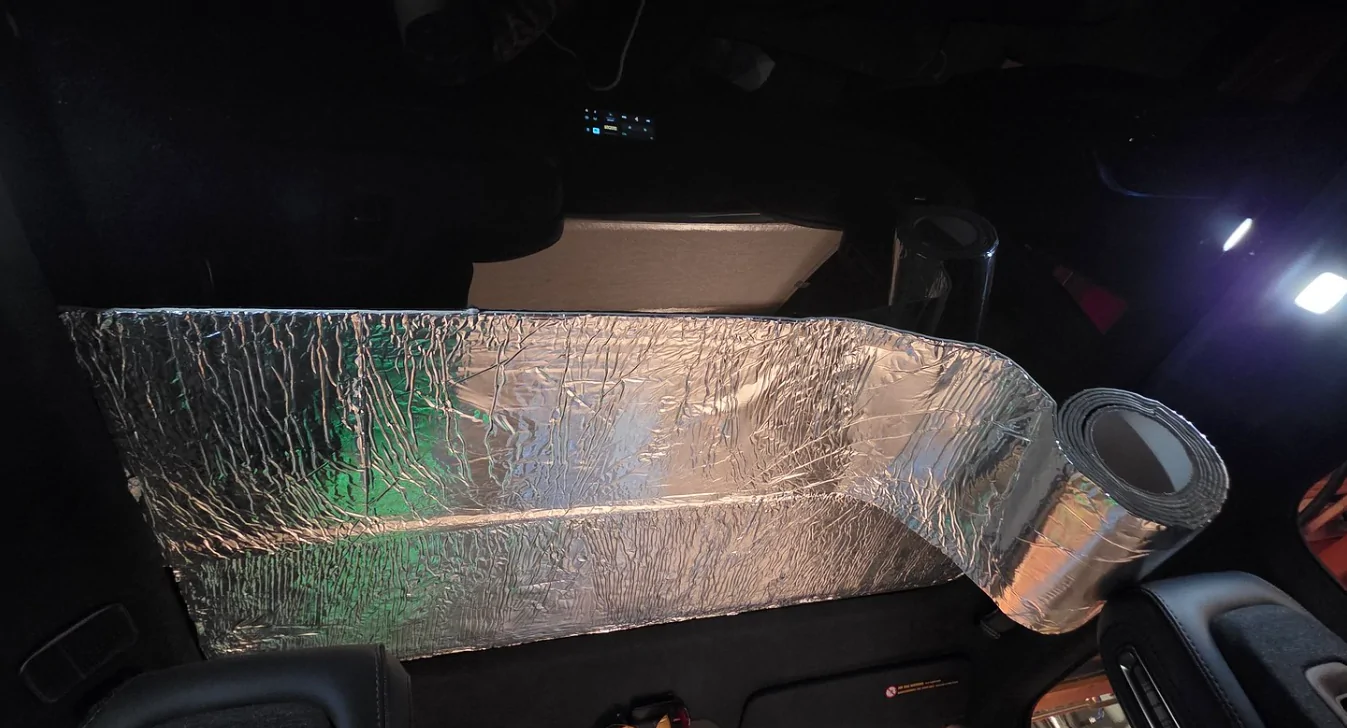
Last night I finished insulating the roof entirely. It is cold, and I want to get the full benefit of the insulated roof.
By the way, I am considering putting another layer on. It would be very easy to do. The roll linked above is enough to put one layer on the roof.
Here are the installation pictures:

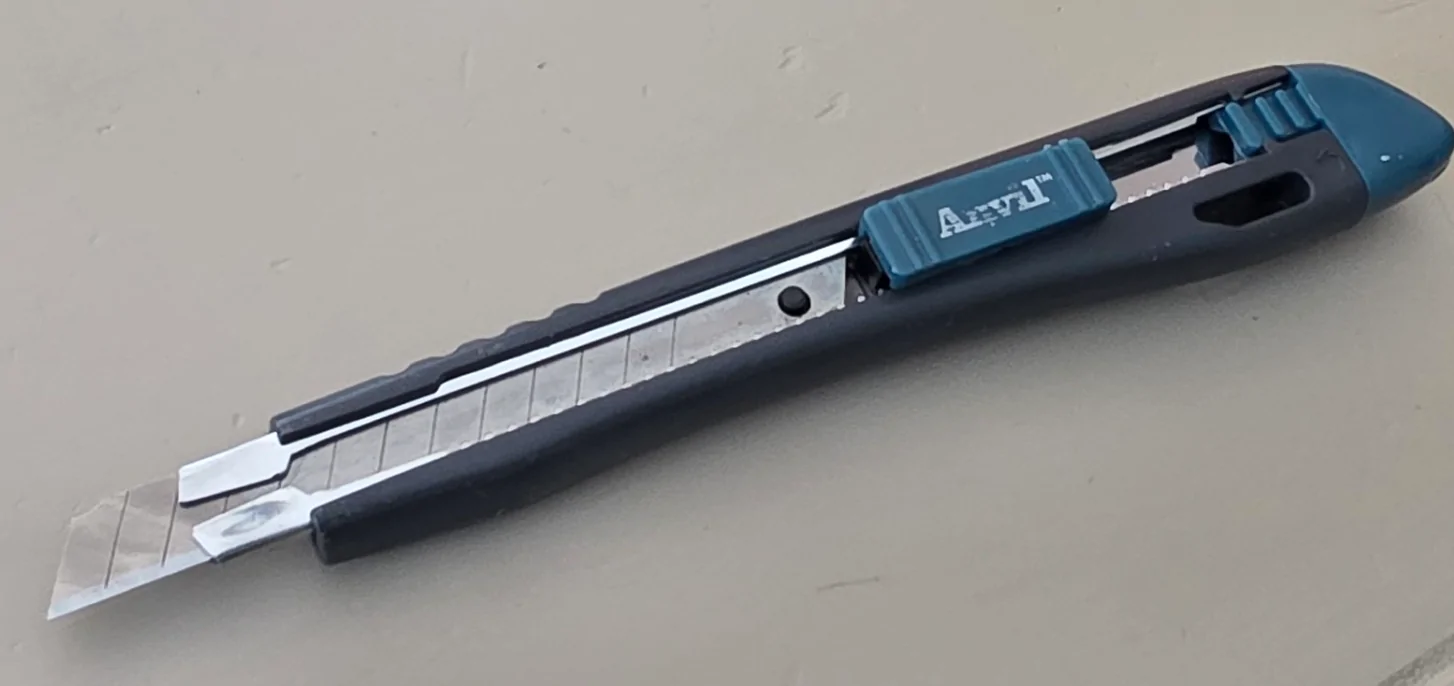
Use a utility knife like the one below.

Push the wrap up into the edges and use the utility knife to cut it to size (along the yellow line shown below).

The final insulated roof:

Covered with the roof shade:

The easy solution to reduce sun exposure is a simple roof cover, like this one from Hanshow:
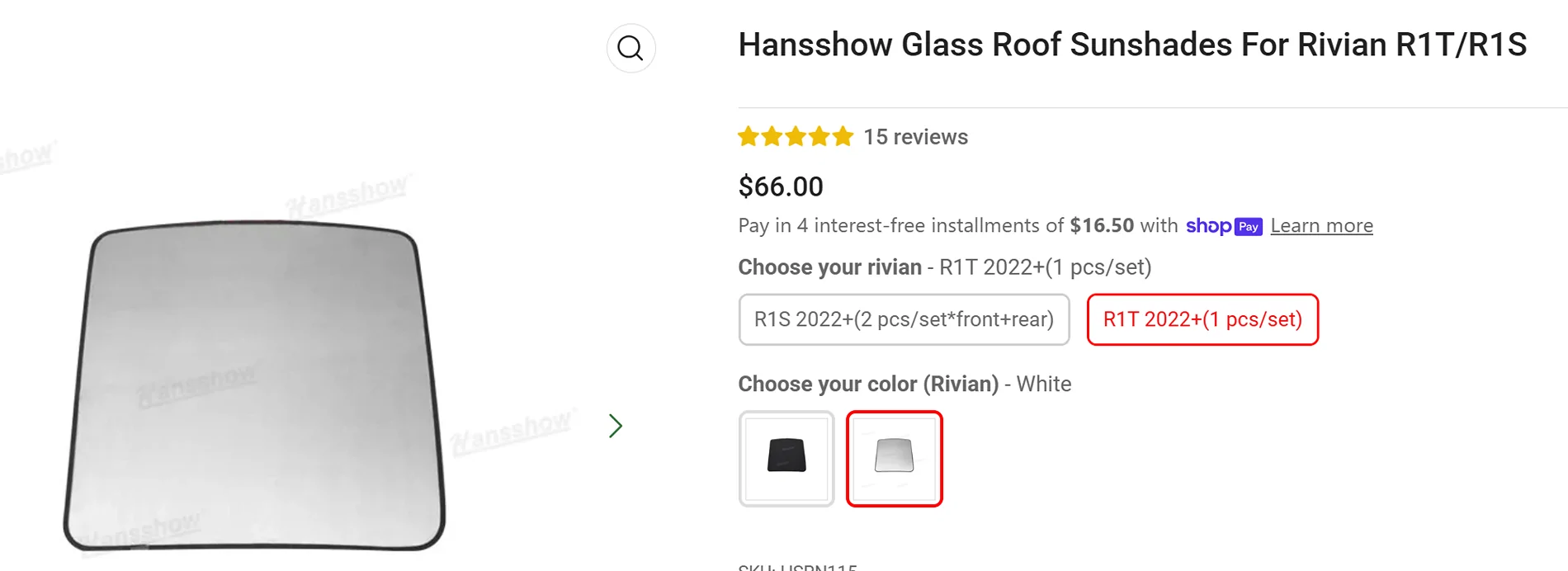
https://www.hansshow.com/products/rivian-r1t-glass-roof-sunshades?variant=45676072599764
That is the one I have. It works great except it billows when the windows are open. I do wish it would be more stable in that situation, but other than that, it works really well. However, it is not insulated.
To get a real benefit, insulating the roof is key. Reflective surfaces are great for reflecting heat, but do you want to reflect out the sun in the winter when that extra heat can help warm the cabin? No. But reflecting out the sun in the summer would be good.
In the end, I decided that cold temperate efficiency is more important to me than warm weather efficiency. And Rivian already does a good job with the glass roof regarding warm weather performance. I can turn on the shade, and it blocks the heat pretty well. Cold temperatures kill range and heating the cabin is one of the big reasons.
To retain as much heat as possible, a reflective surface faced into the cabin is best. Even better would be an insulated shiny surface. You can get sheets of that kind of thing from Home Depot, but mounting them to the glass is a challenge. And it will be ugly. I do care somewhat about the appearance inside my truck.
I have used this before to wrap ducts:
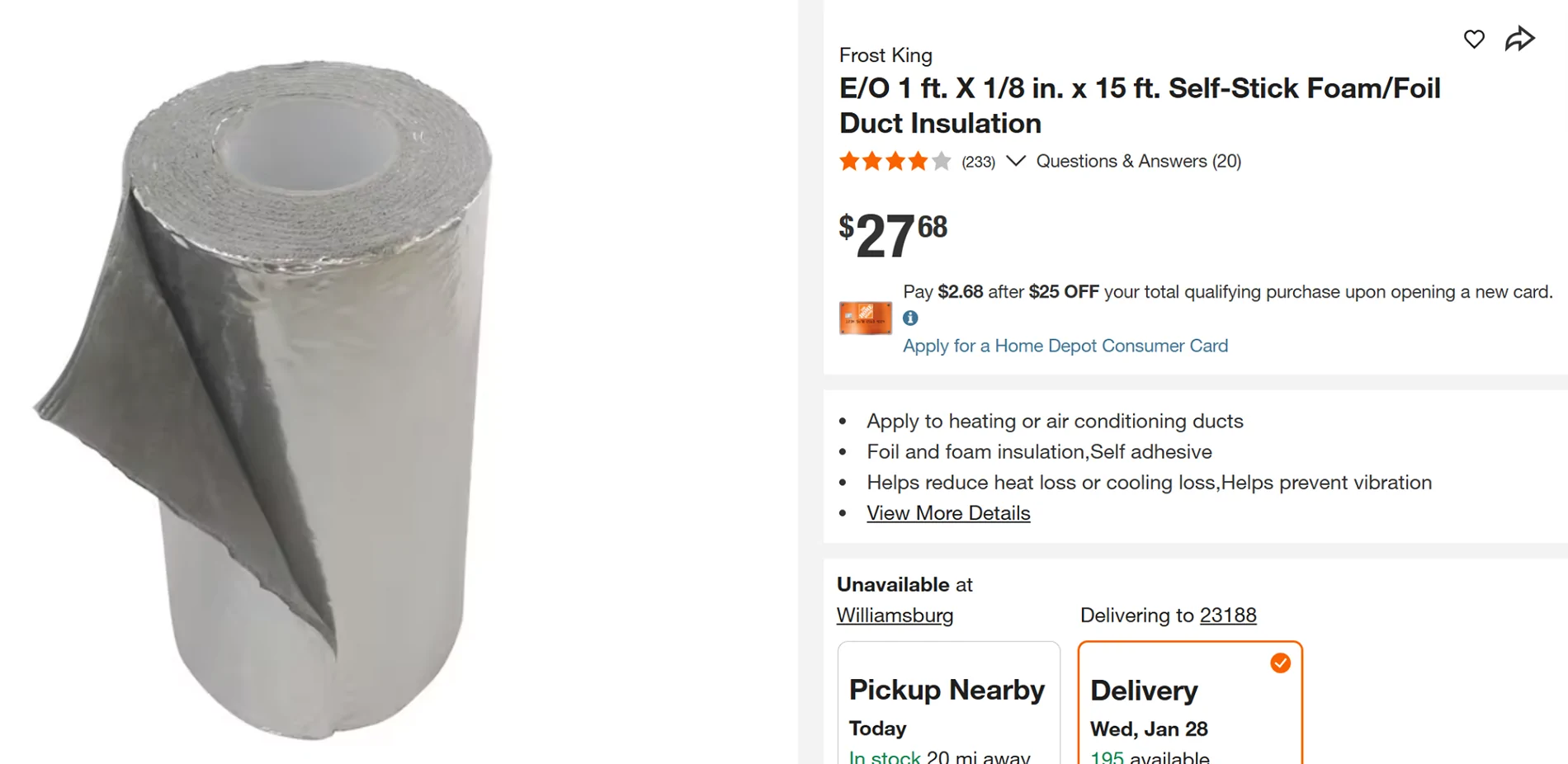
Frost King E/O 1 ft. X 1/8 in. x 15 ft. Self-Stick Foam/Foil Duct Insulation FV516 - The Home Depot
It is self adhesive, so it is easy to put on. And the foam side that sticks to the glass will absorb sunlight, hopefully not blocking too much of the heat in the winter. The other side is reflective, and should really help reflect the heat back into the cabin in the winter.
I put a strip on the glass as a test, and then covered it up with the Hanshow glass roof sunshade. I left it like that all summer and up until last night, so I could do measurements on how it performs in the summer and winter.
Here is what one strip looks like:
In the summer, I turned on the roof for extra sun blocking. In the winter, I turned off the roof to let in as much sun as possible.
In the summer I was very surprised to measure a significant difference in temperature where the insulated wrap was applied. On average, on hot days the insulated glass was 8 degrees cooler than the non-insulated glass. Amazing.
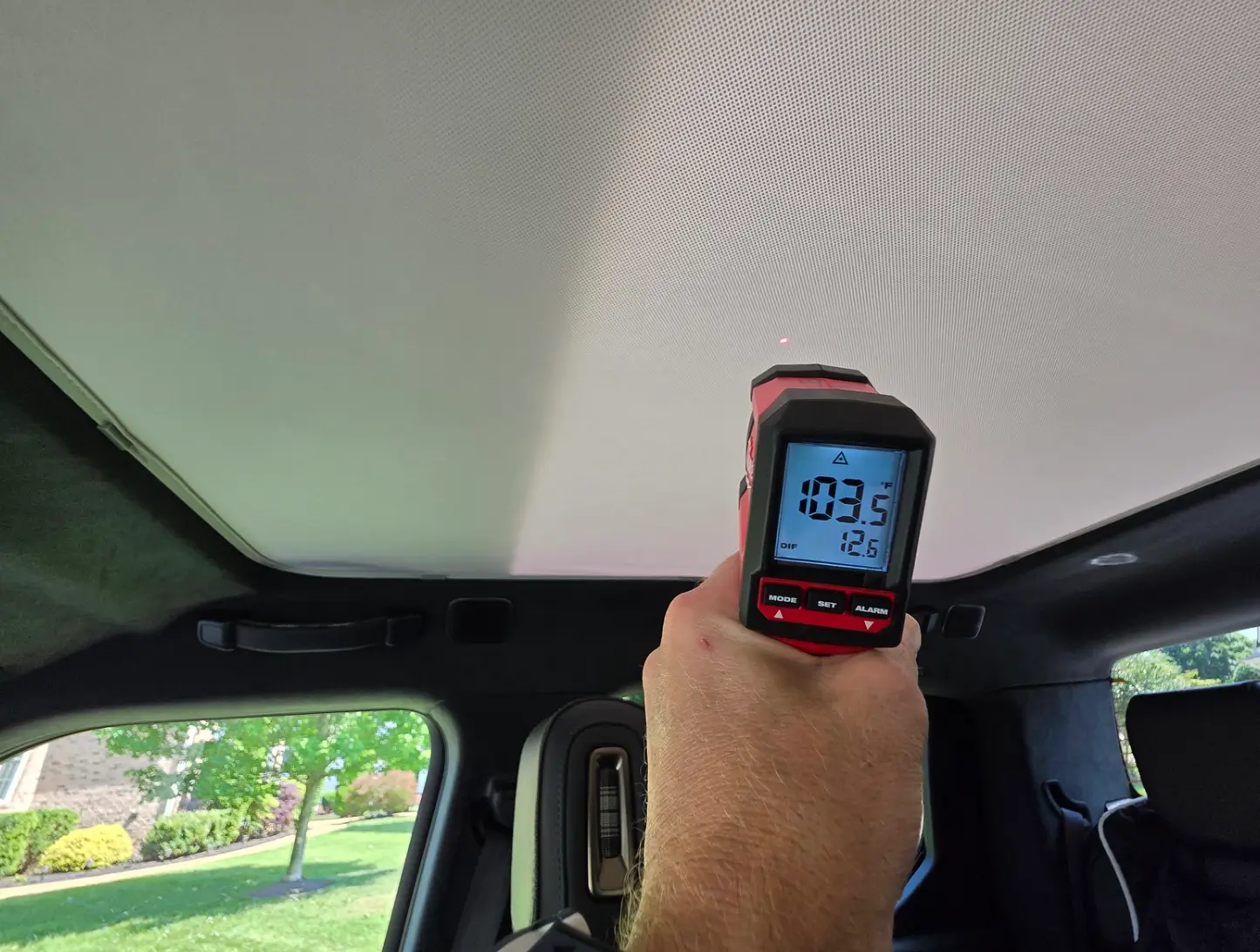
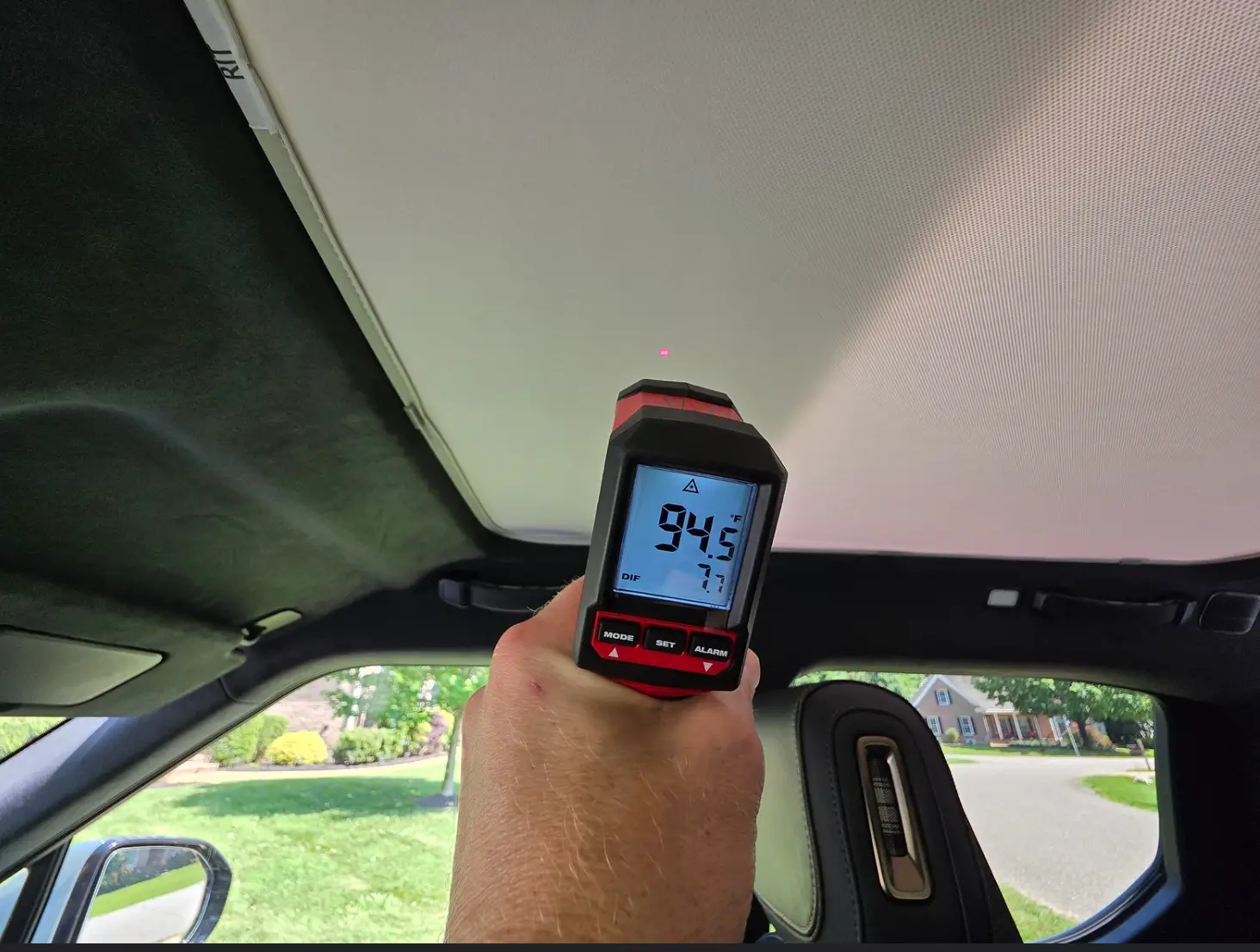
To be clear, when measuring those temperatures, I had been running the climate control so the interior was being cooled and with the full heat of the summer sun shining down on the roof. The temperature difference between the insulated and non-insulated roof was almost the same if the air conditioner was not running. That is because the cabin gets very hot in the summer, and tends to equalize.
In the winter, I have seen a similar temperature difference. The insulated side is on average 8 degrees warmer than the non-insulated side.
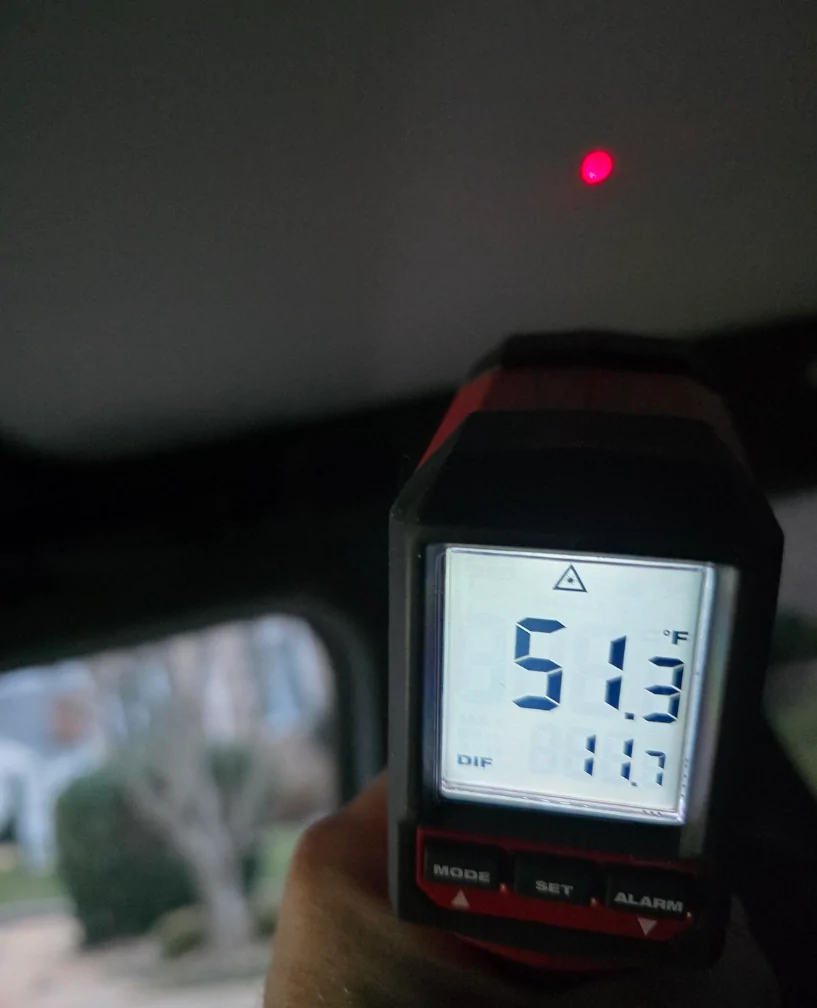
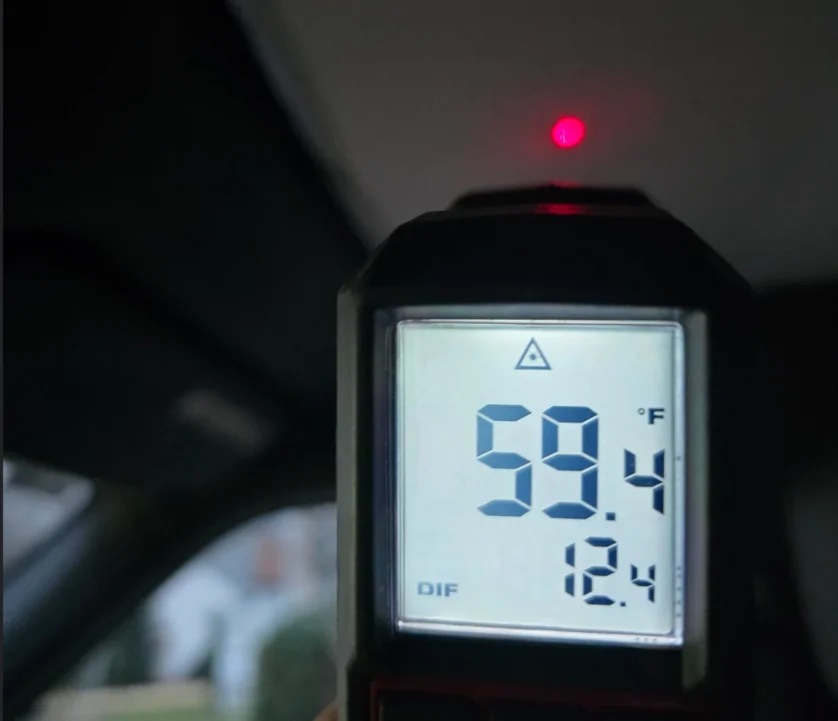
The cold weather measurement method above:
- Heat the cabin to 70 degrees.
- Turn off climate control.
- Drive for about five minutes.
- Park and take measurements.
The temperature of the outside of the truck when I did the above measurements was around 23 degrees.
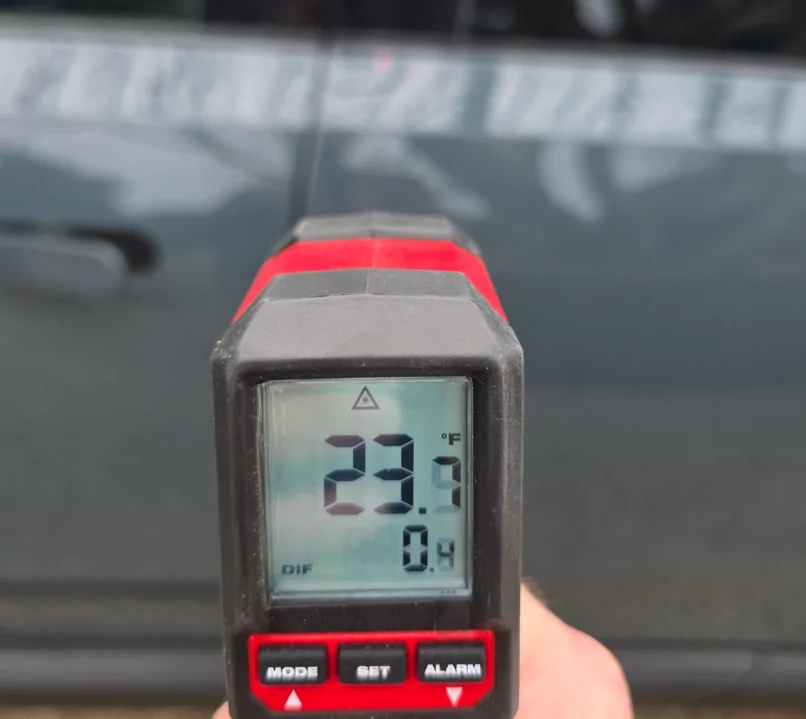
Last night I finished insulating the roof entirely. It is cold, and I want to get the full benefit of the insulated roof.
By the way, I am considering putting another layer on. It would be very easy to do. The roll linked above is enough to put one layer on the roof.
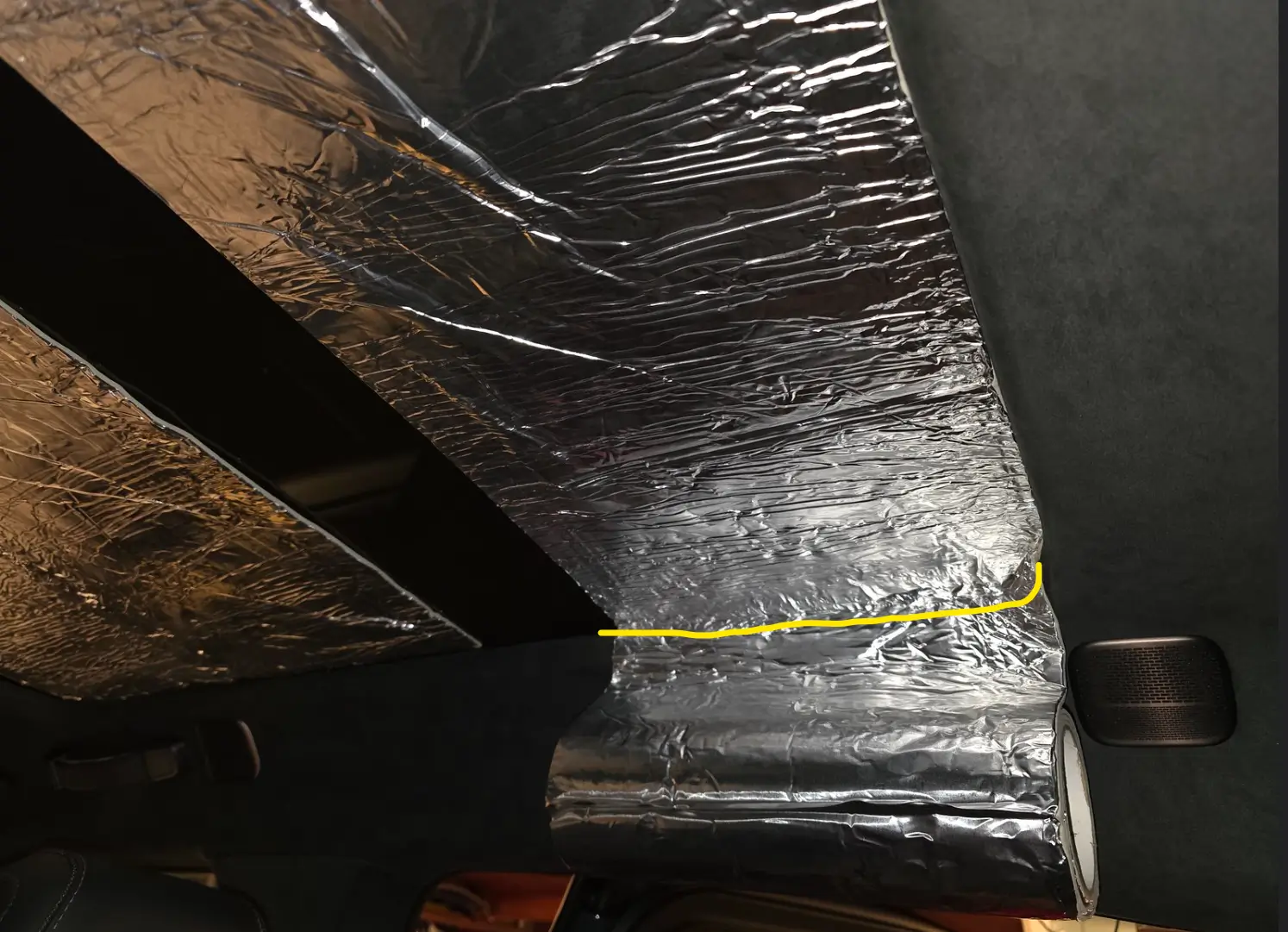
Here are the installation pictures:
Use a utility knife like the one below.
Push the wrap up into the edges and use the utility knife to cut it to size (along the yellow line shown below).
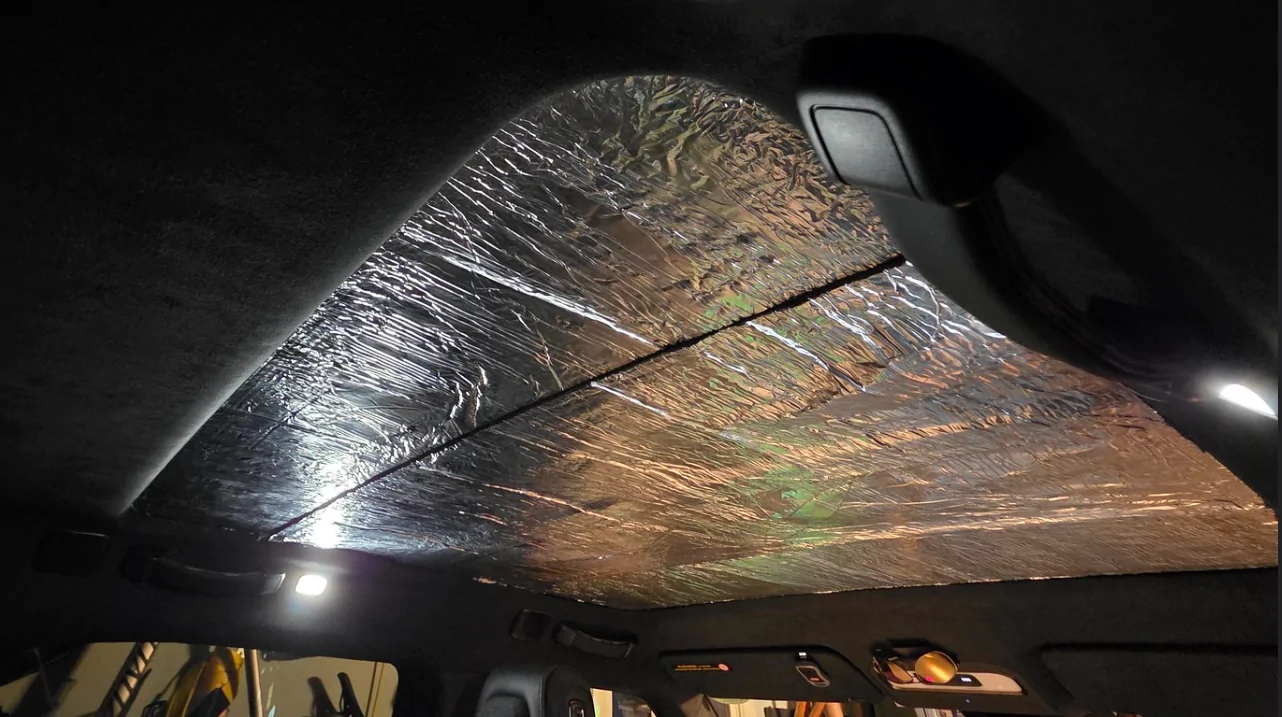
The final insulated roof:
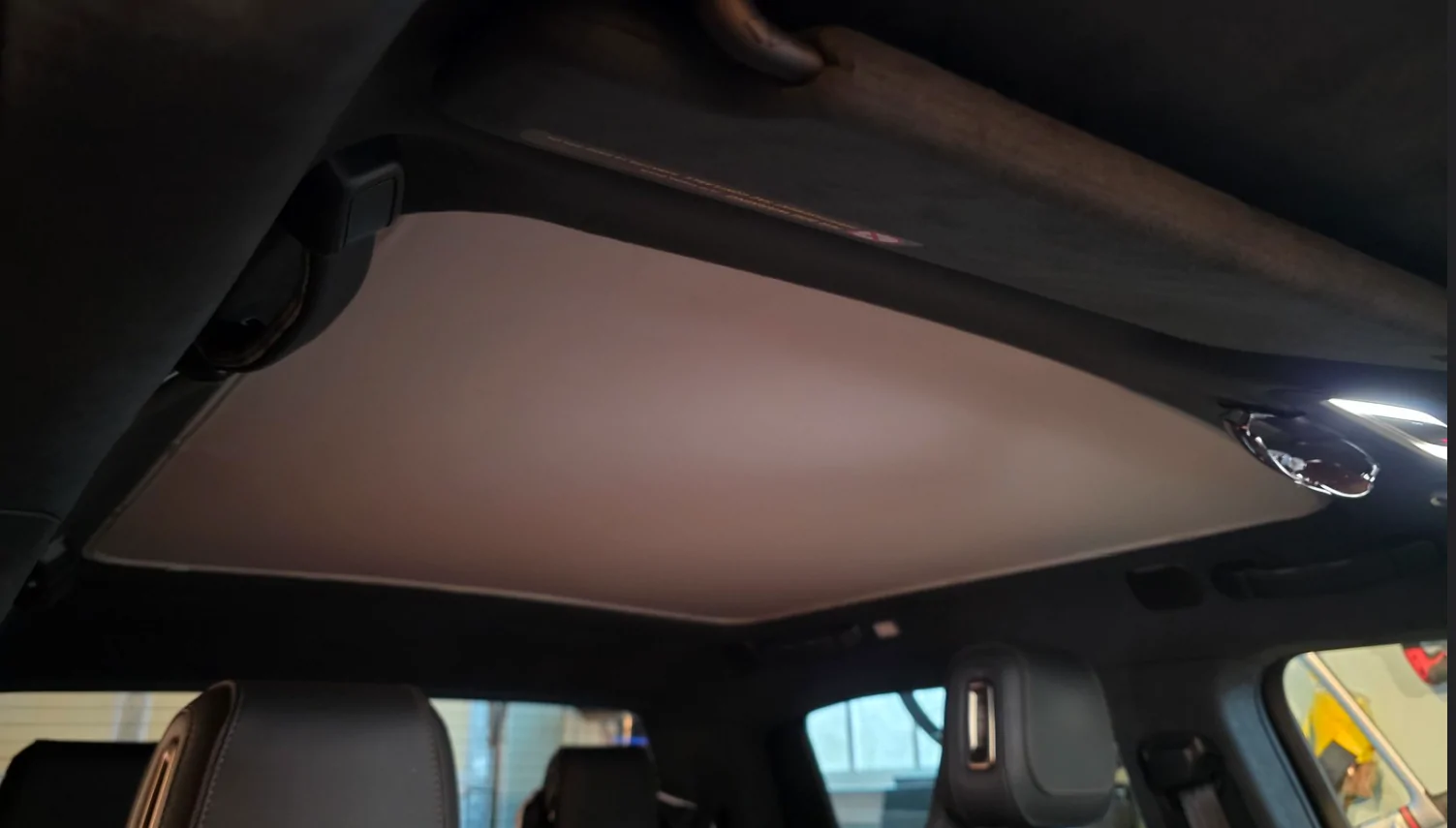
Covered with the roof shade:
Sponsored
 Nice work.