
Outpost
New Member
- Thread starter
- #1
Mojave Road Trip Report (Some pics attached!)
2025 Rivian R1S Tri-Motor
22” Wheels • Pirelli Scorpion XTM A/T Elect
⸻
Summary
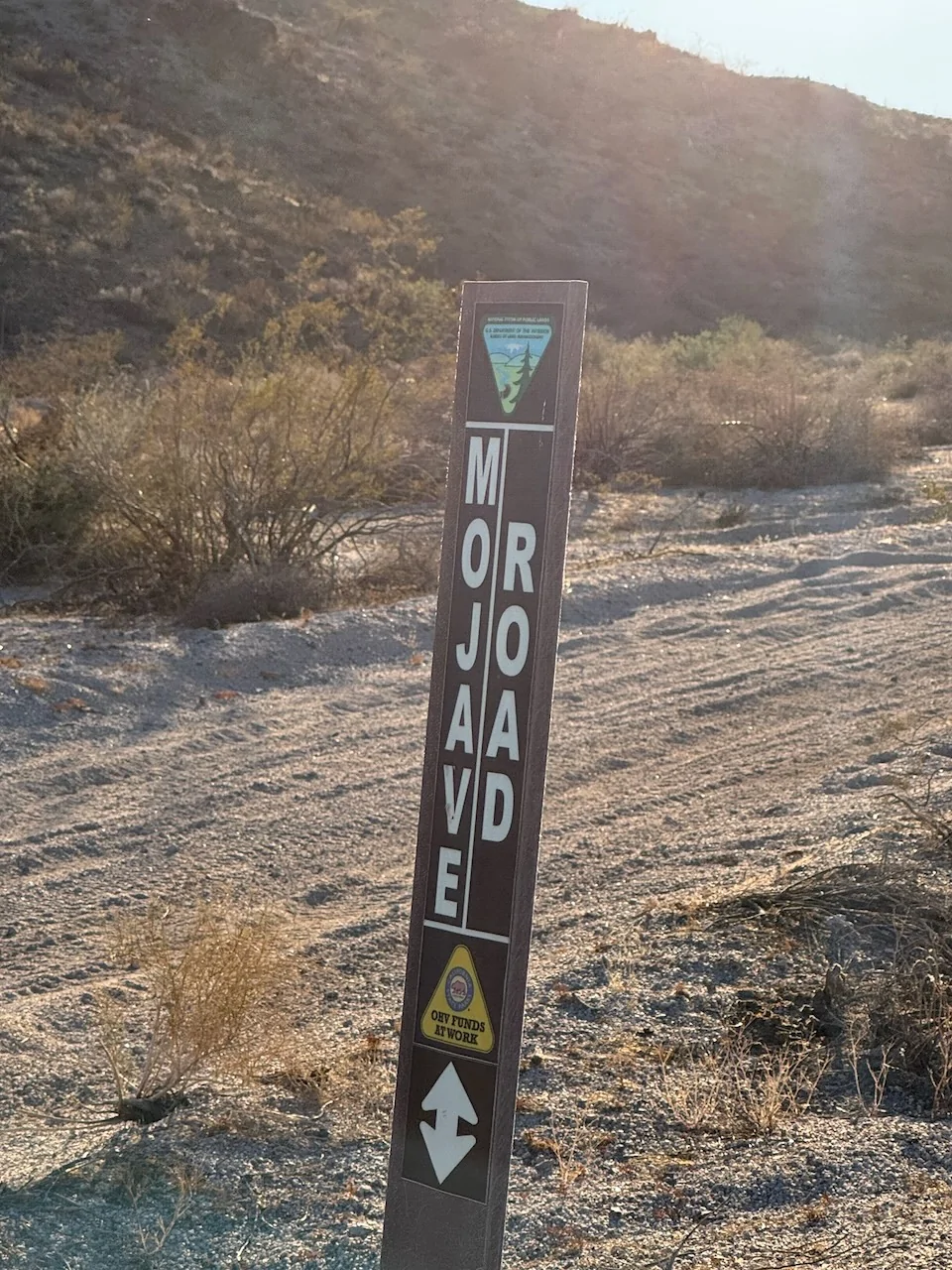
The Mojave Road is about 150 miles of historic overland trail stretching from the Colorado River valley to just east of Barstow, California. Originally established by Native Americans and later used by explorers and settlers, it remains one of the most accessible and rewarding desert crossings in the Mojave.
We drove it east to west over four days and three nights in late October. Overall efficiency for the trip came out to about 1.5 mi/kWh, covering everything from sandy washes to rocky climbs and fast, open stretches.
⸻
Day 1 — Laughlin to First Pass
We started in Laughlin, Nevada, charging at a Tesla Supercharger about ten miles north of the trailhead. My goal was a full 100%, but after holding at 99% for fifteen minutes, I called it good and headed for the dirt.
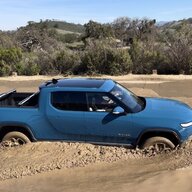
We hit the Mojave Road around 4 p.m., which left just enough daylight to make some progress. The trail started with pushing through sandy washes, punctuated by short rocky climbs. In the washes, I could really open it up, only to slow quickly for rock gardens that came out of nowhere. After about an hour of driving, we camped on a small rise at the top of the first pass.
⸻
Day 2 — Paiute Springs to Marl Springs
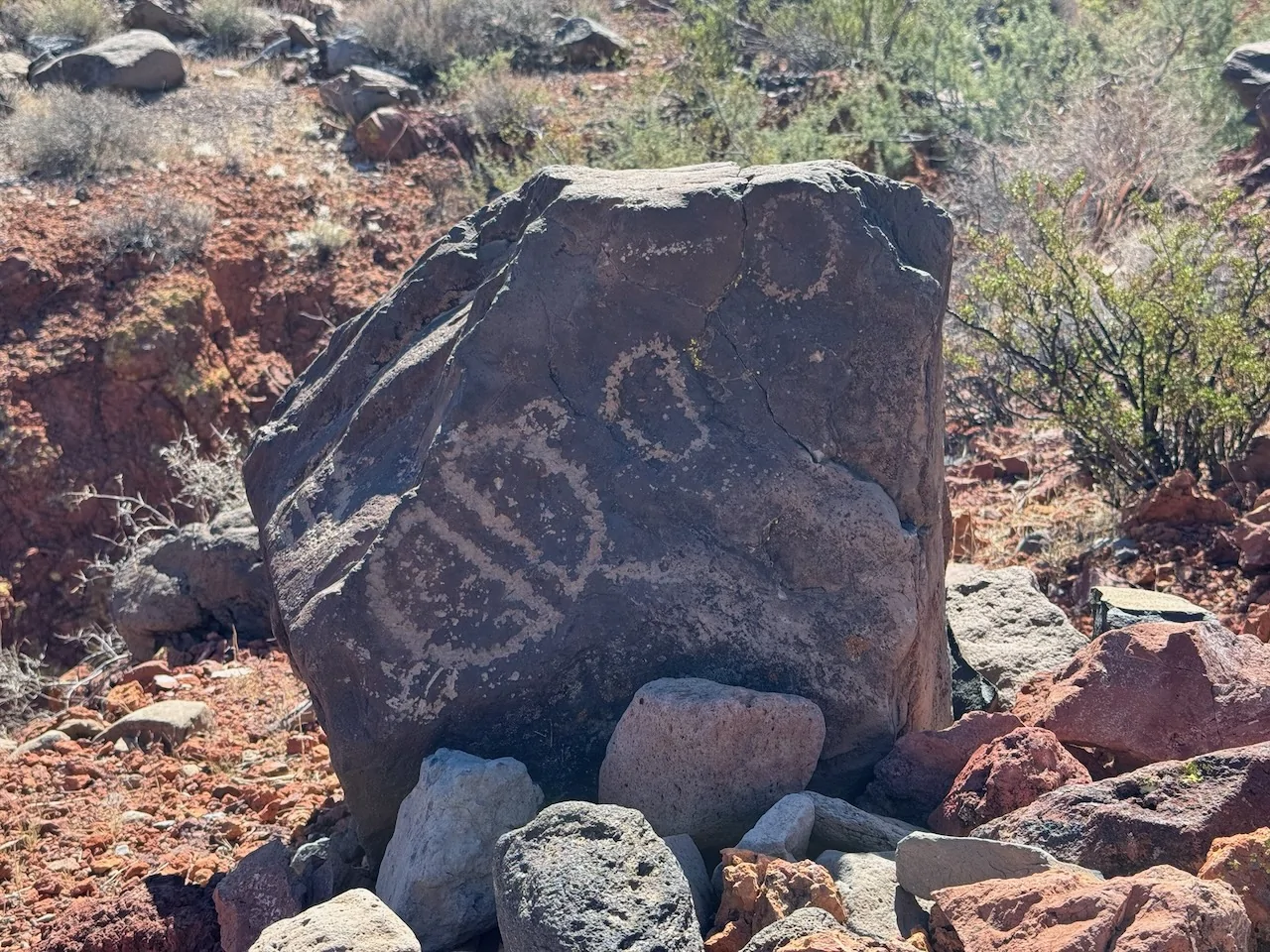
This section began with a slow, rocky side trip up to Paiute Spring and the ruins of the old fort. It was one of the rougher parts of the route and where I was especially glad to have solid tires.
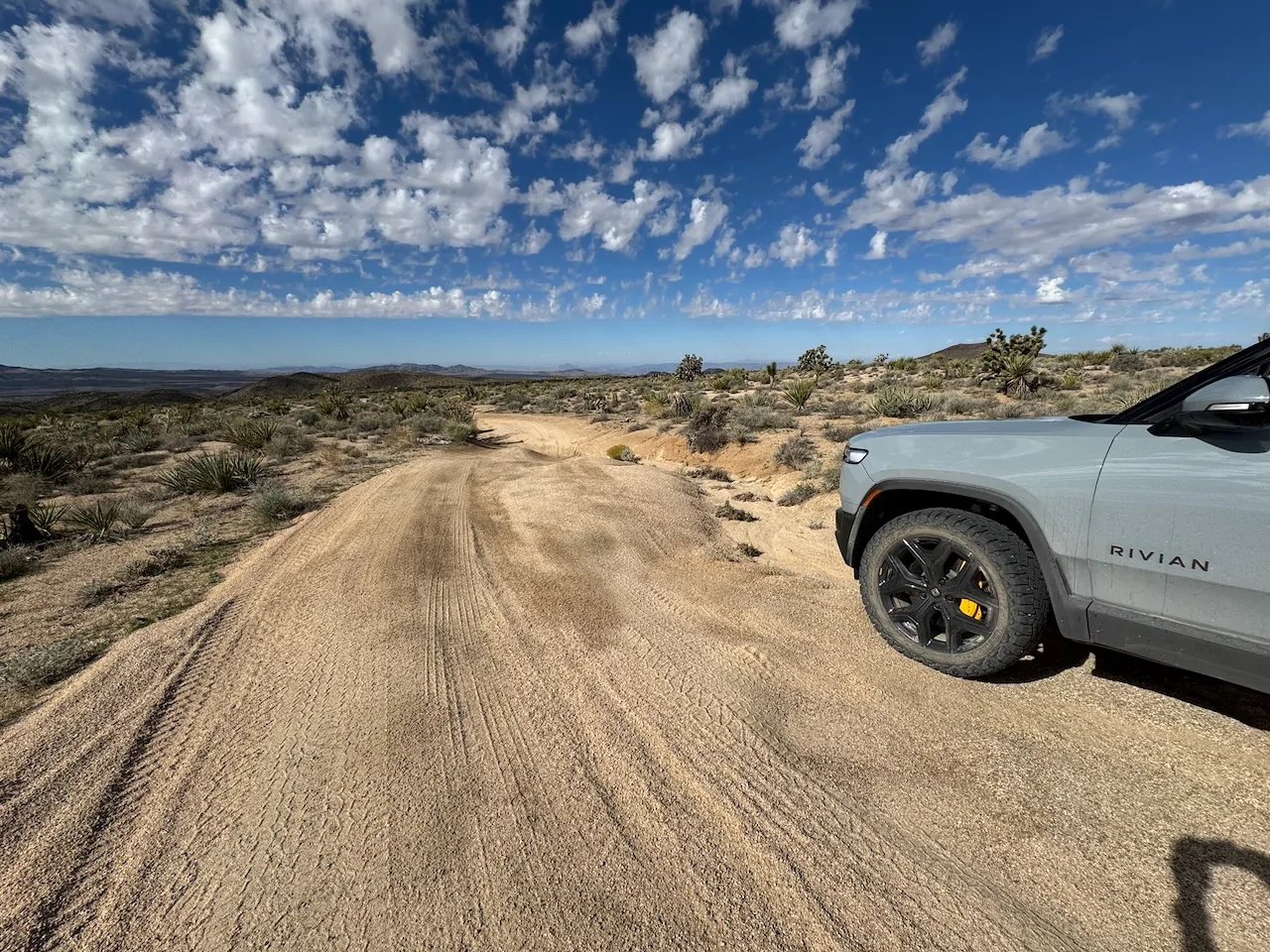
After returning to the main road, we climbed up toward the old corral and pass, with several fun rocky sections that needed careful tire placement. Beyond that, the terrain opened up into what felt like miles of Joshua tree forest with soft but not deep sand—a chance to make good time at higher speed. We camped that night near Marl Springs.
⸻
Day 3 — Marl Springs to Afton Canyon Area
We left Marl Springs and made the usual stop at the Mojave Road Mailbox, then continued west. The morning’s drive covered a lot of varied terrain—mostly manageable—but the character changed dramatically as we pushed up the Mojave River wash toward Afton Canyon. The sand grew deeper and looser, and it became clear this section would burn through energy fast.
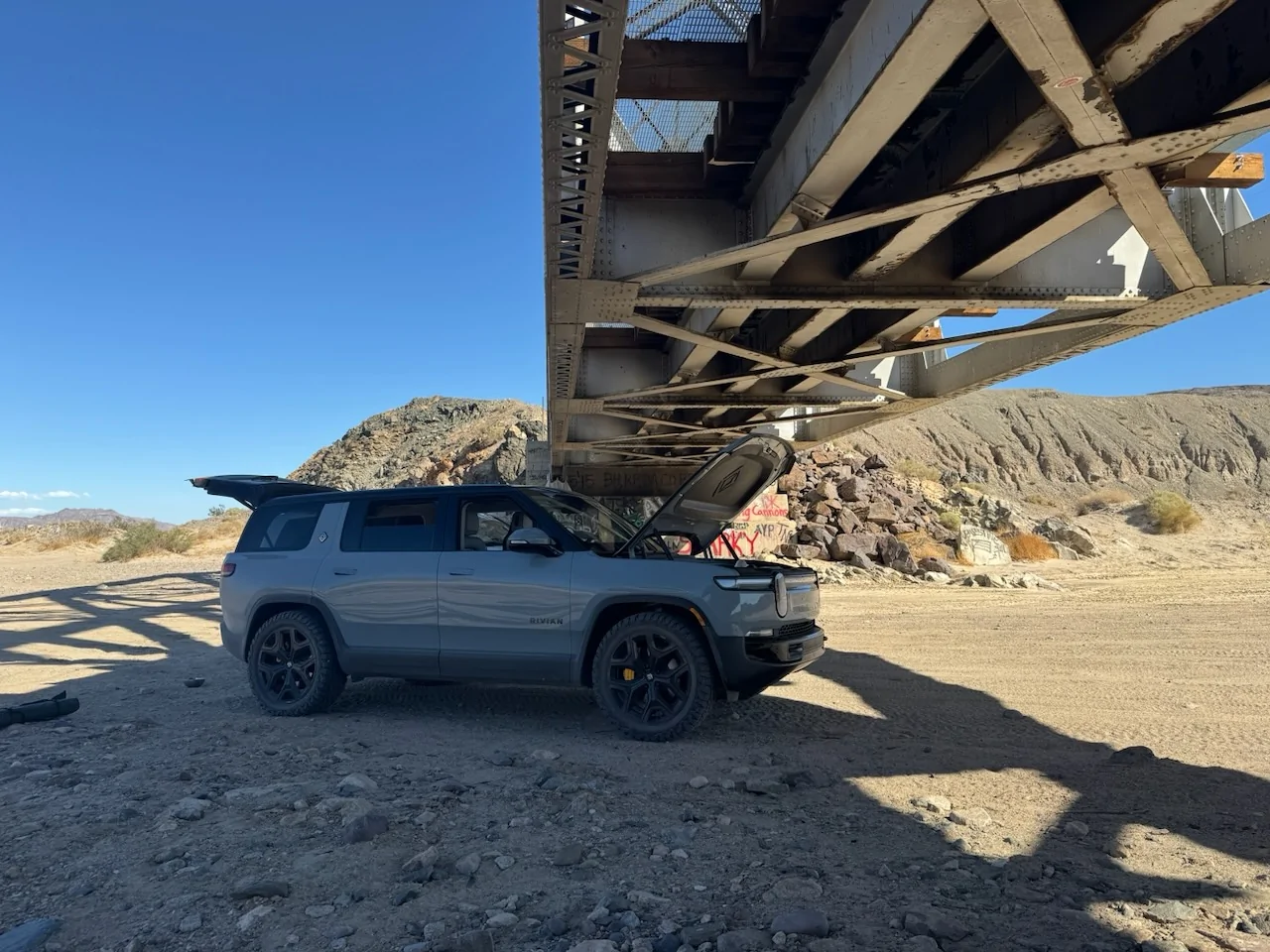
By late afternoon, we found a camp in the wash east of Afton Canyon. I decided to skip recharging in Baker to see if we could finish the trail on what we had left. The battery was at 11%, so I leveled the truck, enabled Camp Mode, and shut down everything unnecessary.
⸻
Day 4 — Mojave River to Yermo
We broke camp early and continued west through Afton Canyon, one of the most scenic and demanding parts of the route. The sandy climbs out of the canyon took a lot of power, but traction was solid, and the truck handled it without issue. By mid-morning we hit pavement, officially finishing the Mojave Road. Fourteen miles later, we rolled into the Yermo Supercharger with a few percent left.
⸻
Vehicle Performance
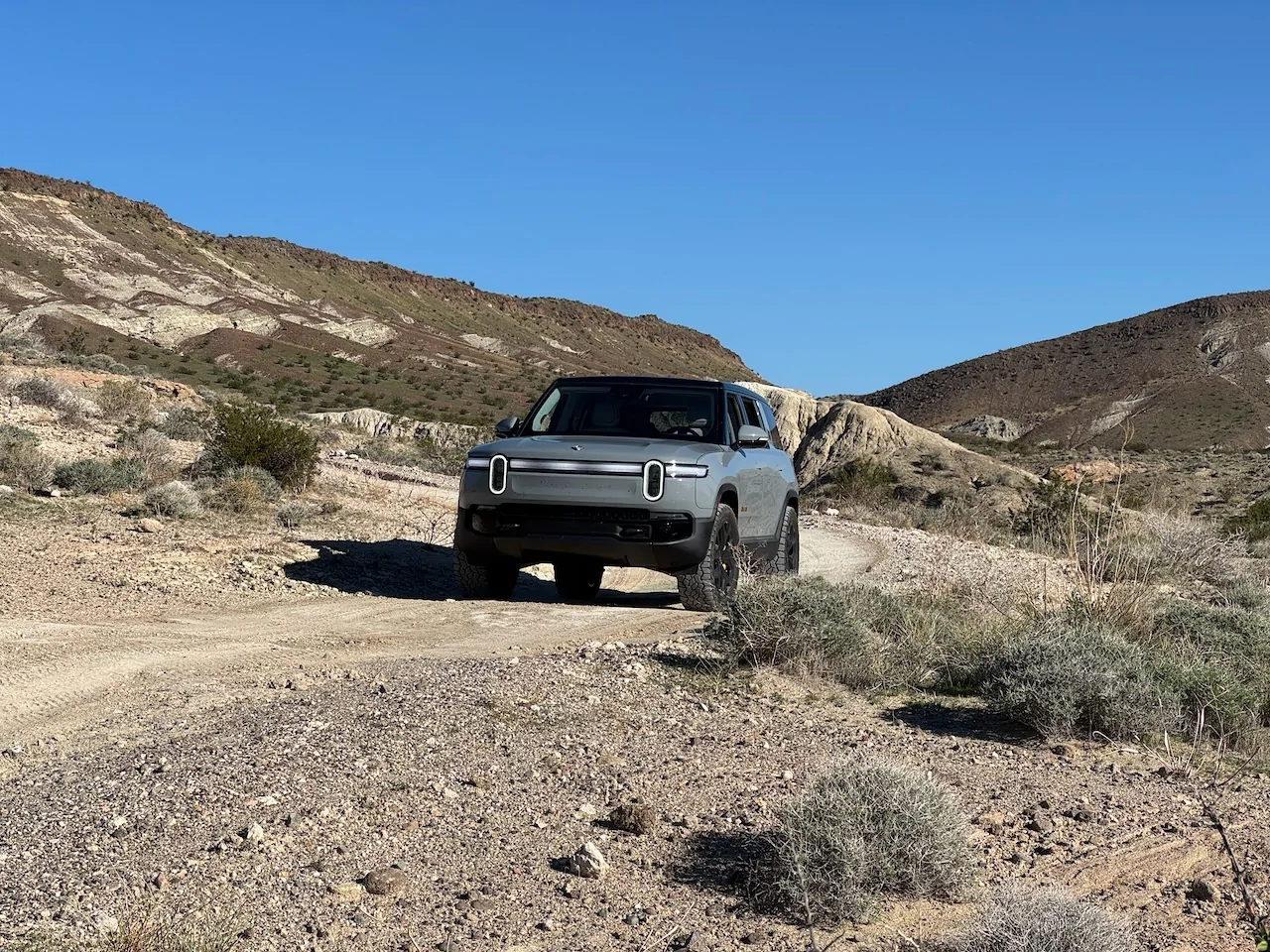
The R1S performed extremely well. The Pirelli Scorpion XTM A/T Elects were a great choice—quiet on the hardpack, secure on rock, and dependable in sand. Even with 22” wheels, ride comfort was good, and the truck’s suspension absorbed washboard sections with ease.
I only aired down briefly in the softest sand near the Mojave River. Otherwise, the truck stayed in standard ride height the entire trip. Power delivery was smooth and predictable, and ground clearance was never a concern.
⸻
Trip Analysis
After the trip, I reviewed the energy data using my app Outpost. Overall efficiency averaged around 1.5 mi/kWh, though the numbers varied widely depending on terrain and surface.
One section climbing Afton Canyon Road stood out, dropping to about 0.7 mi/kWh due to the steep, sandy grade.
I’m not going to lie, I was a bit nervous sleeping that last night with just a bit of range left. This was my first time doing the trail so I didn’t know how the rest of it would be.
⸻
Final Thoughts
The Mojave Road is a true mixed-terrain test—long, remote, and unpredictable in all the right ways. The R1S handled it without complaint, combining power, stability, and comfort over four days of very different driving conditions.
Camp mode options are awesome. Leveling the vehicle, was stellar. Not using any AC to converve range wasn’t ideal, but the weather wasn’t too bad.


2025 Rivian R1S Tri-Motor
22” Wheels • Pirelli Scorpion XTM A/T Elect
⸻
Summary
The Mojave Road is about 150 miles of historic overland trail stretching from the Colorado River valley to just east of Barstow, California. Originally established by Native Americans and later used by explorers and settlers, it remains one of the most accessible and rewarding desert crossings in the Mojave.
We drove it east to west over four days and three nights in late October. Overall efficiency for the trip came out to about 1.5 mi/kWh, covering everything from sandy washes to rocky climbs and fast, open stretches.
⸻
Day 1 — Laughlin to First Pass
We started in Laughlin, Nevada, charging at a Tesla Supercharger about ten miles north of the trailhead. My goal was a full 100%, but after holding at 99% for fifteen minutes, I called it good and headed for the dirt.
We hit the Mojave Road around 4 p.m., which left just enough daylight to make some progress. The trail started with pushing through sandy washes, punctuated by short rocky climbs. In the washes, I could really open it up, only to slow quickly for rock gardens that came out of nowhere. After about an hour of driving, we camped on a small rise at the top of the first pass.
⸻
Day 2 — Paiute Springs to Marl Springs
This section began with a slow, rocky side trip up to Paiute Spring and the ruins of the old fort. It was one of the rougher parts of the route and where I was especially glad to have solid tires.
After returning to the main road, we climbed up toward the old corral and pass, with several fun rocky sections that needed careful tire placement. Beyond that, the terrain opened up into what felt like miles of Joshua tree forest with soft but not deep sand—a chance to make good time at higher speed. We camped that night near Marl Springs.
⸻
Day 3 — Marl Springs to Afton Canyon Area
We left Marl Springs and made the usual stop at the Mojave Road Mailbox, then continued west. The morning’s drive covered a lot of varied terrain—mostly manageable—but the character changed dramatically as we pushed up the Mojave River wash toward Afton Canyon. The sand grew deeper and looser, and it became clear this section would burn through energy fast.
By late afternoon, we found a camp in the wash east of Afton Canyon. I decided to skip recharging in Baker to see if we could finish the trail on what we had left. The battery was at 11%, so I leveled the truck, enabled Camp Mode, and shut down everything unnecessary.
⸻
Day 4 — Mojave River to Yermo
We broke camp early and continued west through Afton Canyon, one of the most scenic and demanding parts of the route. The sandy climbs out of the canyon took a lot of power, but traction was solid, and the truck handled it without issue. By mid-morning we hit pavement, officially finishing the Mojave Road. Fourteen miles later, we rolled into the Yermo Supercharger with a few percent left.
⸻
Vehicle Performance
The R1S performed extremely well. The Pirelli Scorpion XTM A/T Elects were a great choice—quiet on the hardpack, secure on rock, and dependable in sand. Even with 22” wheels, ride comfort was good, and the truck’s suspension absorbed washboard sections with ease.
I only aired down briefly in the softest sand near the Mojave River. Otherwise, the truck stayed in standard ride height the entire trip. Power delivery was smooth and predictable, and ground clearance was never a concern.
⸻
Trip Analysis
After the trip, I reviewed the energy data using my app Outpost. Overall efficiency averaged around 1.5 mi/kWh, though the numbers varied widely depending on terrain and surface.
One section climbing Afton Canyon Road stood out, dropping to about 0.7 mi/kWh due to the steep, sandy grade.
I’m not going to lie, I was a bit nervous sleeping that last night with just a bit of range left. This was my first time doing the trail so I didn’t know how the rest of it would be.
⸻
Final Thoughts
The Mojave Road is a true mixed-terrain test—long, remote, and unpredictable in all the right ways. The R1S handled it without complaint, combining power, stability, and comfort over four days of very different driving conditions.
Camp mode options are awesome. Leveling the vehicle, was stellar. Not using any AC to converve range wasn’t ideal, but the weather wasn’t too bad.
Sponsored