Sponsored

Am I the only one who thinks anything less than 400mi of range is legacy at this point?

Gen(R3)Xer

Well-Known Member
Joined
Mar 10, 2024
Threads
37
Messages
1,239
Reaction score
1,171
Location
Ohio
Vehicles
Leasing Model 3 until R3X comes out, but now I have an R2 reservation as well.
Perhaps, which is why I will reserve my decision until after the Scout is released and we see what tech it has.

I live in the US, so unless the tech is available here, it is irrelevant what China or Europe has developed. They could have cold fusion powered hover cars, but if our administration blocks that, I have no choice anyway.
Yep, our gov has become even more backward and slow and doesn’t seem to want to compete with emerging technologies, unless it makes it easier for them to manipulate/distrct the public. We used to be competitive. Now we’re just good at wasting money and blocking advancements for the general public in favor of overspending on the military and making the surveillance state a reality.
Sponsored


Engi_Nerd

Well-Known Member
Joined
Jul 21, 2021
Threads
6
Messages
248
Reaction score
487
Location
Western NY
Vehicles
Model Y LR, Alfa Romeo Giulia
IMO, manufacturers offering new products with big range are doing so as a carrot because their software, OTA and connectivity architecture, and dealer experience are still pretty crap. Yes, you're going to get an extra 30-45 minutes of winter driving in an IX3 or equivalent Volvo, but those cars are still years behind offering features at scale that Rivian is doing today and that Tesla has been doing for a long time. Using the "10 times per year" RJ mentioned, you're only saving a few hours annually by having a huge pack with high C charging. Compare that with how regularly you use dog mode, or sentry mode, or get improved ADAS performance and new OTA features for free, etc. I would be incredibly surprised if BMW gives customers anything free of charge, much less does so years down the road.
 
Last edited:

UnsungZero_OldTimeAdMan

Well-Known Member
First Name
Barnum
Joined
Mar 20, 2023
Threads
66
Messages
8,561
Reaction score
11,758
Location
SoCal
Vehicles
'23 GW Quad-Large R1T "Ghost"
Occupation
Advertising Circus
IMO, manufacturers offering new products with big range are doing so as a carrot because their software, OTA and connectivity architecture, and dealer experience are still pretty crap. Yes, you're going to get an extra 30-45 minutes of winter driving in an IX3 or equivalent Volvo, but those cars are still years behind offering features at scale that Rivian is doing today and that Tesla has been doing for a long time. Using the "10 times per year" RJ mentioned, you're only saving a few hours annually by having a huge pack with high C charging. Compare that with how regularly you use dog mode, or sentry mode, or get improved ADAS performance and new OTA features for free, etc. I would be incredibly surprised if BMW gives customers anything free of charge, much less doing so years down the road.
And on older DCFC chargers, like V3 Superchargers with 250 kW max, it'd just take longer (than the marketing) to charge. BMW is touting their iX3 can charge at 400 kW. Missing from the marketing is what percentage of DCFC sites in the US are capable of delivering 400 kW. Plus, they are claiming 10-80% in 21 minutes at that ideal 400 kW rate. That's what? 10-20 minute time saving compared to a typical 400V "competition"? Doesn't seem like a game changer to me unless you drive long distances daily or almost daily. It's just an incremental step forward in obtainable tech.
 

getut

Active Member
Joined
Mar 14, 2026
Threads
2
Messages
40
Reaction score
39
Location
NC, USA, Earth
Vehicles
equinox ev and hyundai santa cruz, shopping rivian
Another thing I have not seen mentioned here as an argument for a larger battery and longer range is that some of us are going to be using our vehicle as the backup generator for our homes. I live in an area with poor power and are literally the 2nd the last house on a long snaking leg through another companies territory, so when we do lose power, even for something minor, it can be out for 3-4 days before we get priority and can be out for much longer when the issues are more widespread. So my wish of minimum REAL world 400+ mile range includes that plan to use the truck as a home backup solution. Have already kind of done with my equinox with just inverters. But my truck will be replacing an older truck, an even older truck and 1 gas and 1 diesel generator.
 

Sponsored

Kaiju

Well-Known Member
Joined
Aug 18, 2024
Threads
2
Messages
136
Reaction score
254
Location
Texas
Vehicles
R1T
You must have missed my closing statement:
"There are certainly other contributing factors to these equations, but this illustrates the benefit of 800 volt is BIG."


The math clearly indicates that the less heat is produced, allowing more charging to take place before hitting any thermal limitation.

Having studied this in detail several years ago, I'm quite familiar with the various electrical architectures of 800v designs. Some designs charge in series, others rearrange electrically to charge submodules in parallel. There's plenty of data online that documents the charging curves of 400v vs 800v. You gain much more than a few minutes as you stated in your earlier post. Say what you want, but you can't deny charging curves and the fact that manufacturers are moving to 800 volt to get faster charging to satisfy consumer expectations. They would not be doing that to gain "3-5 Minutes" as you stated.

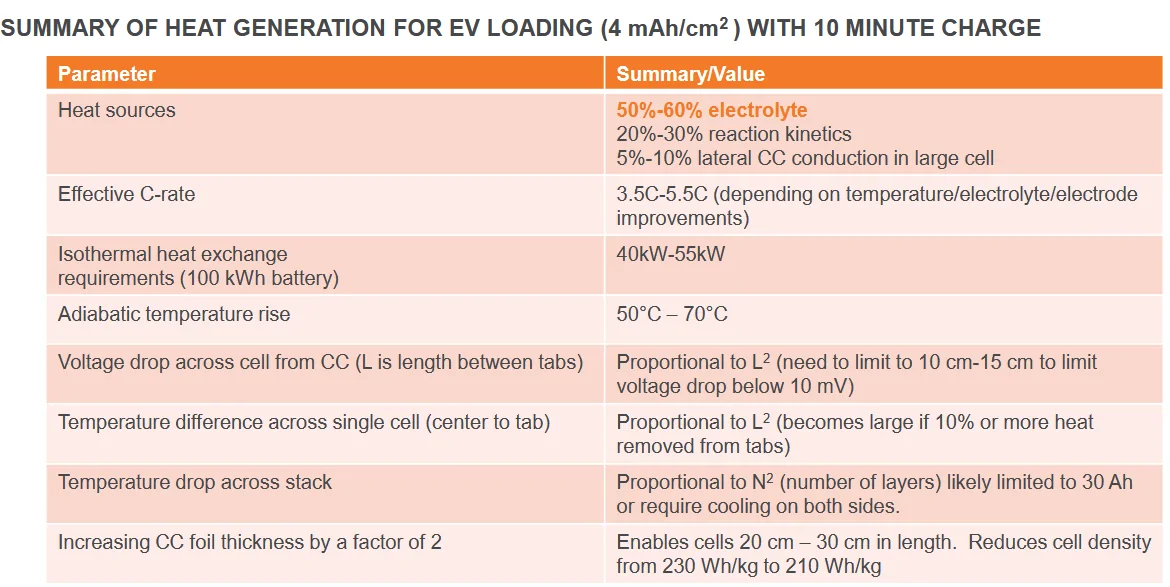
If you like, you can also deny the facts presented in this article (and many others) that provides the summary below, and the charging curve below. I won't be responding to any more challenges to the well documented facts in this thread.
If it makes any difference to you I found another article that flatly says that a well tuned 400V system with better thermals can beat an 800V system that peaks rapidly. Your mileage may vary I guess. I take some issue with the math since you can't have your cake and eat it too with 800V. You can't charge higher rates and still have half the current. By that graph you posted it's about 83% of the same peak current, though I also know that there are 400V systems that charge at higher peak rates than 175kW and there is definitely data out there for less than 30% SOC. I'm a little curious as to your source and if it's including 400V systems from the same era as the 800V systems, or even batteries with the same thermal design.

In theory pulling the same current for half the time (for the same kWh input) is still less total heat even if it means pro-800V talking points are taking liberties with the material savings aspect, but the key point I argue is this one:

Rivian R1T R1S Am I the only one who thinks anything less than 400mi of range is legacy at this point? 1773897259613-5i


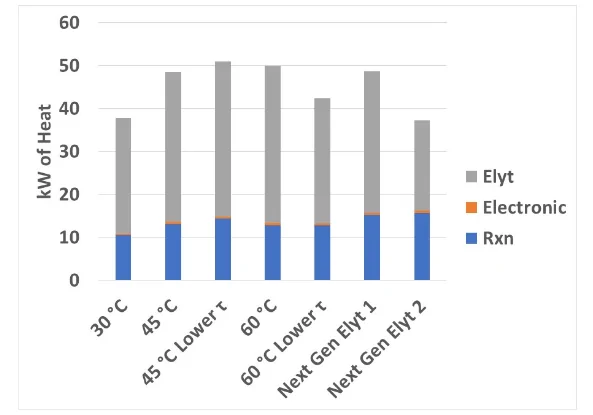
This is from a DOE study called Heat Concerns Associated with Extreme Fast Charging. It's a 2020-era study on heat generated through charging of NMC cells that's a bit dated now, but the punchline is still fairly relevant. Over 10 minutes at a charge rate of 3.5C they saw something like 40kW of heat generation and a 50 deg C temperature rise. In this example that very neatly makes the 100kWh pack line up with a 350kW charger. Thing is that's just from the cells. Here's the chart of the actual generation source, with the electronics being the BMS:

Rivian R1T R1S Am I the only one who thinks anything less than 400mi of range is legacy at this point? 1773897729905-mc


While I'm sure technology inexorably marches on, it basically implies that taking on about 50-ish% of the battery made it peg a longevity-based thermal limit within that 10 minutes. If it had been charging at 2.5C it would've taken 12 minutes to get to the same point, assuming no extra heat was bled off with more time to sink. Then it's all about thermals and if they're both the same, well, you've gained 2 minutes. The real question is if the 800V systems have vastly better (and more expensive) thermal design as a necessity of making effective use of that higher charging speed cap, as opposed to it being some intrinsic quality of being a higher voltage series arrangement of the same cells in the same pack. The basic physics are the same. Once you hit the thermal limit it doesn't matter what your charge rate is.

And if they can improve the thermals to make it charge faster? Cool. But the thing is that can also apply to a 400V system. It's true that a 140kWh pack won't ever go 20-80 faster than 20 minutes on a 250kW charger, but if you could run it at 350kW the best it could ever do is 14 minutes if it could hold 350kW the entire time. But it can't. That's why I tend to go with yeah, a handful of minutes are saved when you're dealing with SUVs and trucks with giant battery packs.

It's also probably the reason the 400 mile pack isn't there. They could go slap that GM 200 kWh monster pack in there but it's so huge that the actual charger rate is the problem. That's 29 minutes 20-80 on a 250kW charger and 21 minutes on a 350kW charger. If both were pegged out at 100% the entire time. It's quite impossible for it to get better than that without the charging infrastructure getting better.
 

hsctiger

Active Member
First Name
Brad
Joined
Sep 27, 2025
Threads
1
Messages
25
Reaction score
18
Location
Richmond, VA
Vehicles
2014 Tesla Model S
Clubs
 
Perhaps, which is why I will reserve my decision until after the Scout is released and we see what tech it has.

I live in the US, so unless the tech is available here, it is irrelevant what China or Europe has developed. They could have cold fusion powered hover cars, but if our administration blocks that, I have no choice anyway.
So tell me about these cold fusion hover cars... good cup holders? I could go for a good cup holder.
 

2kwik4u

Well-Known Member
First Name
Michael
Joined
Jan 8, 2025
Threads
11
Messages
818
Reaction score
1,061
Location
Western NY State
Vehicles
2024 Rivian R1T ; 2018 Nissan Rogue
So tell me about these cold fusion hover cars... good cup holders? I could go for a good cup holder.
It'll be electronically deployed and have a memory setting that never works right, so you'll still long for the "old days" of static cupholders that were just OK anyway.
 

Billyk24

Well-Known Member
First Name
William
Joined
Mar 21, 2020
Threads
8
Messages
157
Reaction score
72
Location
PA
Vehicles
Ford C-Max Energi, Premium Mach-E ordered
Occupation
health care
Driving and safety studies have come up with various recommendations. After 2 to 3 hours driving they recommend taking a 15 minute break for mental clarity. I usually target 3 to 3.5 hours regardless of what vehicle I am driving. There will be "manly men" who insist they are fine after 4 or more hours. But the reality is you often don't recognize that your senses & reaction are lagging and wandering a bit. Between needing to stretch and flex my bones and keeping alert, I'm fine with my range requiring a stop every 3 to 4 hours. Most people I talk to agree that 3 hours is their limit.
Agree. Two to two and half hours of driving then 20-25 minutes of on your feet works well. Done multiple 800 mile road trips in past three years using this formula. Bad weather can shorten the distance traveled in one day.
 

Imola.ZHP

Active Member
Joined
Mar 6, 2026
Threads
0
Messages
25
Reaction score
29
Location
Memphis, TN
Vehicles
Equinox EV AWD; Leaf SL+
Yes, you're the only one.

I've been driving EV's for almost 11 years now. When EV's were in the 100 mile range you (or people like you) were saying you need 200 miles of range. When EV's were in the 150 miles range you (or people like you) were saying you need 300 miles of range. When EV's were in the 200 mile range you (or people like you) were saying you need 400 miles of range.

There is no satisfying you (or people like you) so keep on driving ICE.
 

Sponsored

EmPickle

Well-Known Member
First Name
Jason
Joined
Sep 28, 2021
Threads
1
Messages
56
Reaction score
59
Location
North East
Vehicles
Model 3, Honda Odyssey, Miata
Occupation
Geek
Living in the northeast, cold climate, I won't buy an EV with less than 400 miles of range at this point. I just think it's too problematic especially in cold and especially as the car (batteries) age. Long drives in winter you get 30-50% range degradation, it's 2026, how is it that all batt packs aren't at least 400miles+?
I live in the Northeast and can easily take a day trip up to NH or VT for skiing in the winter or hiking in the summer. It's not a problem. DCFC along the way and L2 chargers at the mountains make it as easy as any ICE.
 

BannedByTMC

Active Member
Joined
Mar 11, 2026
Threads
0
Messages
31
Reaction score
34
Location
NYS
Vehicles
Model 3
Yes, you're the only one.
Obviously not.

I've been driving EV's for almost 11 years now. When EV's were in the 100 mile range you (or people like you) were saying you need 200 miles of range. When EV's were in the 150 miles range you (or people like you) were saying you need 300 miles of range. When EV's were in the 200 mile range you (or people like you) were saying you need 400 miles of range.
All those people were right. See the idea is to get as many people to adopt EV's as possible, and shockingly, different people have different needs. Yes, the world is larger than just you and your specific needs.

There is no satisfying you (or people like you) so keep on driving ICE.
People like you would hold back the EV industry if OEM's followed your "logic".
 

Mikekantorski_tech

New Member
Joined
Feb 1, 2026
Threads
0
Messages
2
Reaction score
31
Location
Boston
Vehicles
R1T, R1S
Living in the northeast, cold climate, I won't buy an EV with less than 400 miles of range at this point. I just think it's too problematic especially in cold and especially as the car (batteries) age. Long drives in winter you get 30-50% range degradation, it's 2026, how is it that all batt packs aren't at least 400miles+?
I live in the Northeast too. I’ve had the lowest range model 3 with 275 miles while only charging at work and easily made it work. This really isn’t an issue anymore.
 
OP
OP

thebottomline

Member
Joined
Feb 2, 2025
Threads
4
Messages
21
Reaction score
34
Location
Boston
Vehicles
2025 R1S
Yes, you're the only one.

I've been driving EV's for almost 11 years now. When EV's were in the 100 mile range you (or people like you) were saying you need 200 miles of range. When EV's were in the 150 miles range you (or people like you) were saying you need 300 miles of range. When EV's were in the 200 mile range you (or people like you) were saying you need 400 miles of range.

There is no satisfying you (or people like you) so keep on driving ICE.
I own a R1S, with 410 miles of range. I love it, I am never buying an ICE again. I am just saying I want 400+ miles of range with the current construct of temperature, charging availability, and speed of charging.
Sponsored


Top