Sponsored

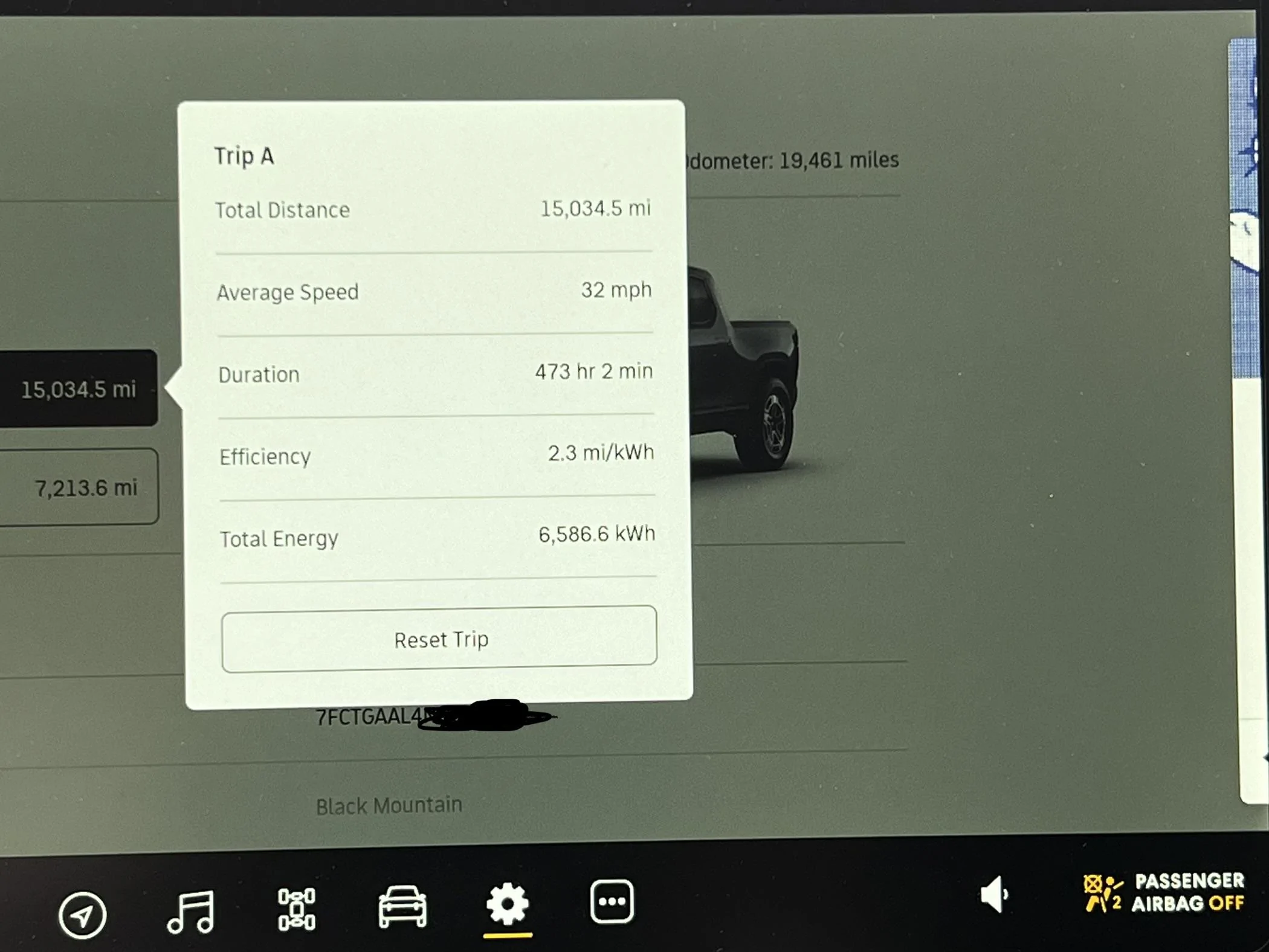
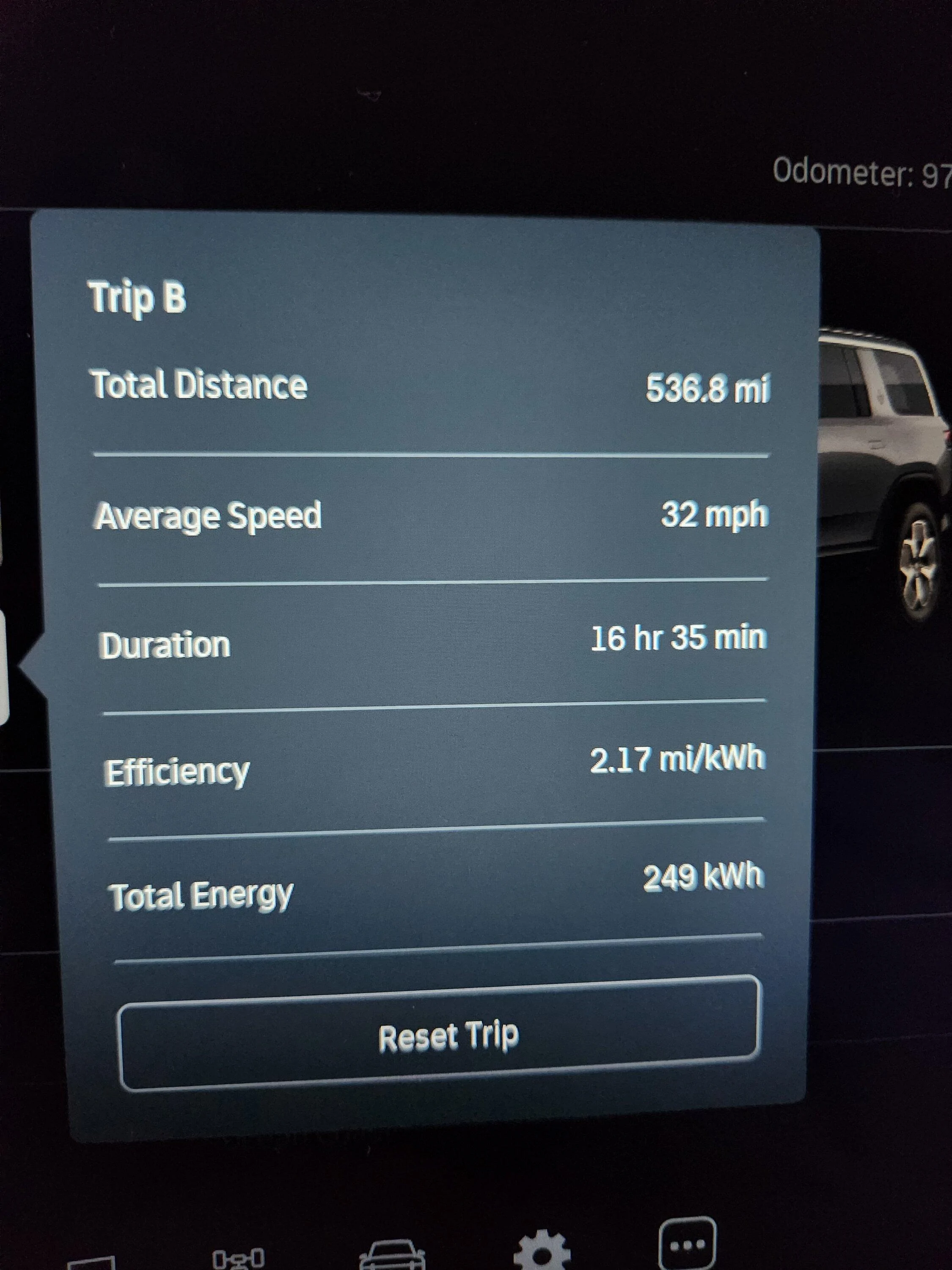
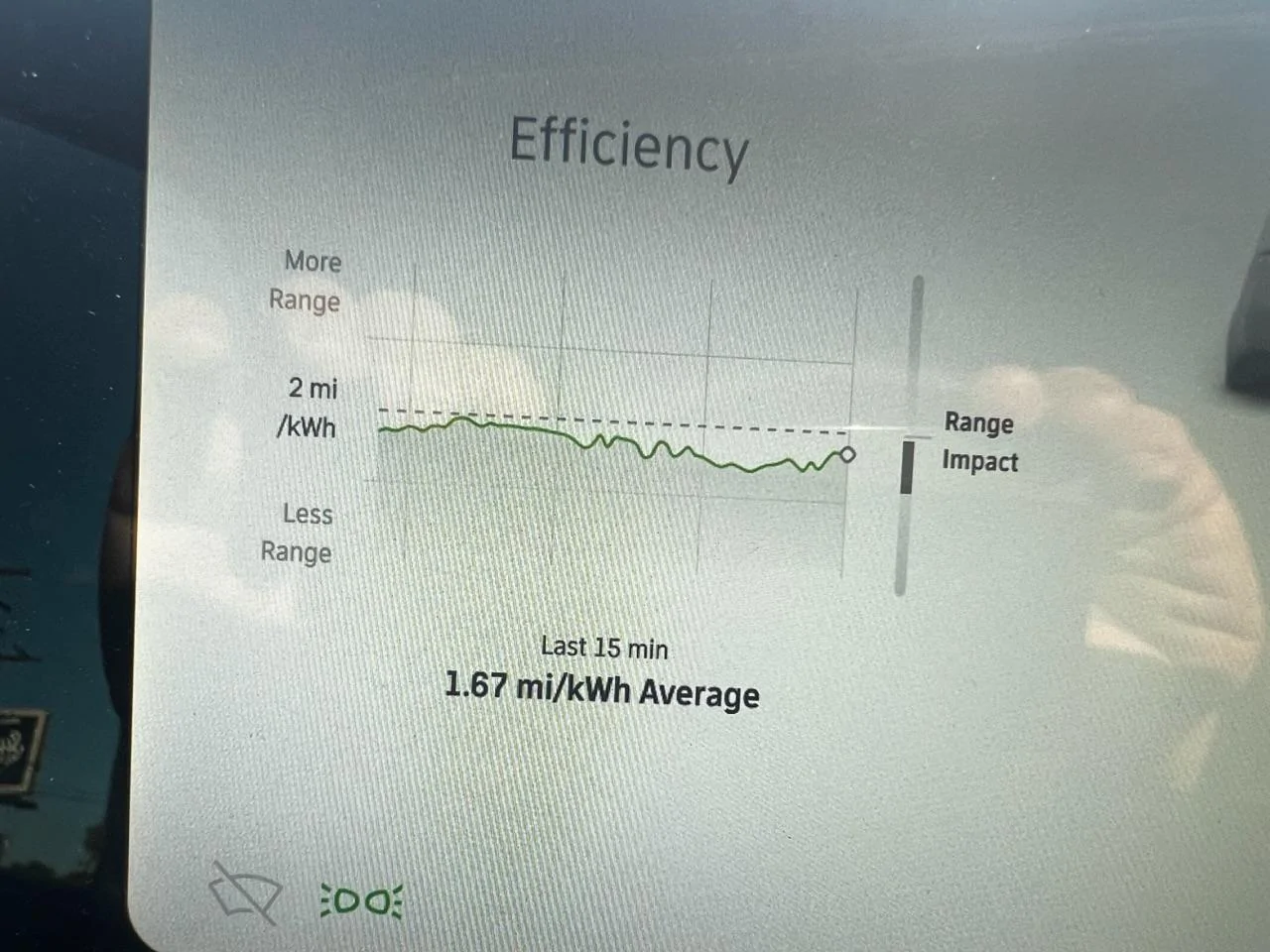
What's your average Miles/Kwh?

electruck

Well-Known Member
Joined
Oct 6, 2019
Threads
74
Messages
4,165
Reaction score
7,741
Location
Dallas, TX
Vehicles
2023 Rivian R1S
Yes it can be a struggle but I find that driver+ has more constraint than my leaded right boot.

In reality though on my really long stretch including I10 across Texas where I pretty much stayed around 75 even in the western portions where speed limits are 80, that driving a little slower is actually faster on long trips as the charge stops do not take as long. On a 200 mile stretch the difference between 70 mph and 75 mph is 12 minutes. 80 mph the difference is 21 minutes.

If I get 2.3 miles per kW at 70 I use 87 kW. If I get 1.9 at 80 I use 105 kW, if we assume that most of the extra 17 kW I need to replace is at 150 kWh then Out of the 21 minutes I saved I use 7 minutes charging.

That 105 kW is 82% of the 128 kW usable, so I need to charge to at least 90% to make it with 8% left. The 87 kW is only 67% of the battery so I’m probably good only charging to 75% for that stretch. The difference of charging from 75% to 90% at an average of 40kWh 13 minutes so I use 13 minutes at the top and 7 for the additional kW or 20 minutes of charging to save 21 minutes of driving.

Now if the stretch is 240 miles, I do not make it at 80 mph, need to find a place to charge between the 2 chargers.

For me, 120 mile trip, don’t need to charge 80-85 it is, driving cross country driver+ at 70 is my friend.

As a side note, this past February, I10 west in Western Texas, 80 mph into a medium headwind I was under 1.5 miles per kW, slowed down to 73 and got closer to 1.9 miles per kW.
Oh I certainly understand all that. And if there isn't much traffic on the road, it's easier to set your own pace. But on stretches with heavy traffic, such as I35 between Dallas and OKC or Austin, driving 70 gets to be borderline hazardous.
Sponsored


WSea

Well-Known Member
First Name
Patrick
Joined
Mar 6, 2022
Threads
39
Messages
1,678
Reaction score
2,044
Location
West seattle
Vehicles
R1T, Outback
Occupation
Architect
2.08 lifetime in T with 22s. Last couple of roadtrips I got 2.22 and 2.23 with RTT. Since then I added PPF over the rear cab spoiler. Will be interesting how much difference it makes on next trip
 
OP
OP

mikeriv

New Member
First Name
Mike
Joined
Jul 2, 2023
Threads
1
Messages
2
Reaction score
0
Location
CT
Vehicles
Grand Cherokee
Occupation
PT
Thanks for the info everyone. Really helpful in knowing what I'm getting into.
 

mkg3

Well-Known Member
Joined
Nov 19, 2021
Threads
91
Messages
2,799
Reaction score
3,722
Location
SoCal
Vehicles
R1S, Model 3, Outback, Artura
Clubs
 
2.08 lifetime in T with 22s. Last couple of roadtrips I got 2.22 and 2.23 with RTT. Since then I added PPF over the rear cab spoiler. Will be interesting how much difference it makes on next trip
I should add that as the tire wears, the range improves. So you'll get a better range with the older set and when you replace to new (same tire or otherwise) the range will drop back again.

The rolling resistance of tire reduces (due to less mass resulting in lower inertia) with wear; hence, range increases.
 

Sponsored

Sconces

Active Member
Joined
Mar 17, 2022
Threads
2
Messages
34
Reaction score
86
Location
OC
Vehicles
BMW M2 Comp/Rivian R1T
Spoken as a true EV veteran!

Leaned this exact thing early on with my Tesla. That said, I am very disappointed to hear that at 80mph, cannot make 240 miles. I know you have 22" (same as my order) so your experience would be typical for mine.

I was hoping to get around 260 miles at 80mph on 22"... such is life.

Doing some quick maths..

Frontal area = 2.08m x 1.65m (assuming low setting, ignoring tire area) = 3.43 m2 Cd= 0.30 Air density = 1.3 kg/m3 at sea level Assuming 80 mph = 35.8 m/s Aerodynamic drag = 1/2 * 1.3 * 35.8^2 * 0.30 * 3.43 = 857 N

Assuming rolling resistance coefficient of 0.012 with tires on asphalt, rolling resistance from tire can be calculated as: F = fmg = 0.012* 3500 kg * 9.81 m/s2 = 410 N

Total force required to maintain 80 mph ~= 1267 N

Energy required to move 1 mile = 1267 N* 1609m = 2.04 MJ = 0.567 kwh

Which is 1.76 mile/kwh at 80 mph, ignoring all other losses, head winds, and accessories drawing power…
 

Kgautam28

Well-Known Member
First Name
Gautam
Joined
Oct 17, 2021
Threads
9
Messages
121
Reaction score
96
Location
Seattle
Vehicles
2023 R1S Quad, Mustang mache GT, Range Rover Velar
Occupation
Software
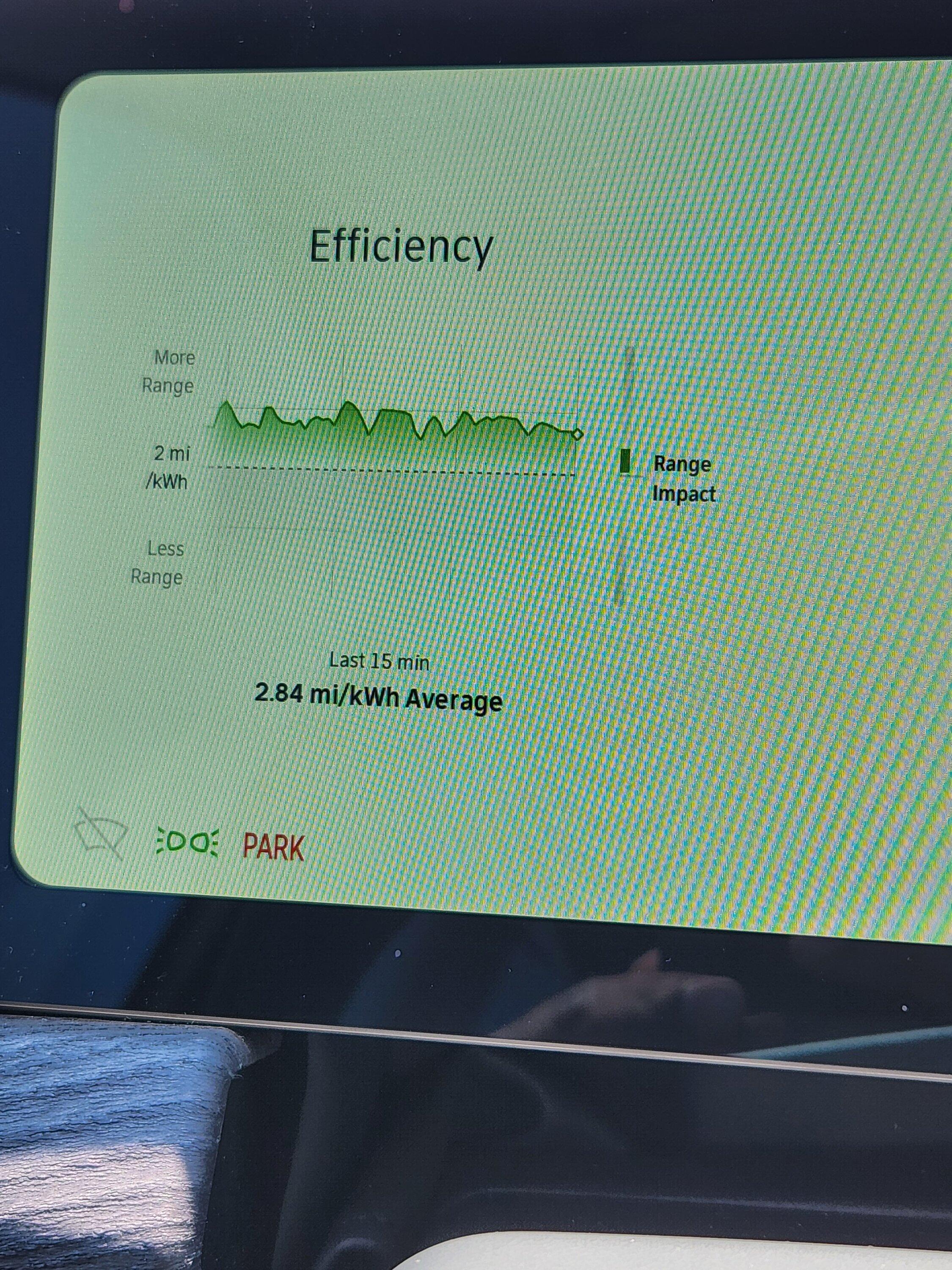
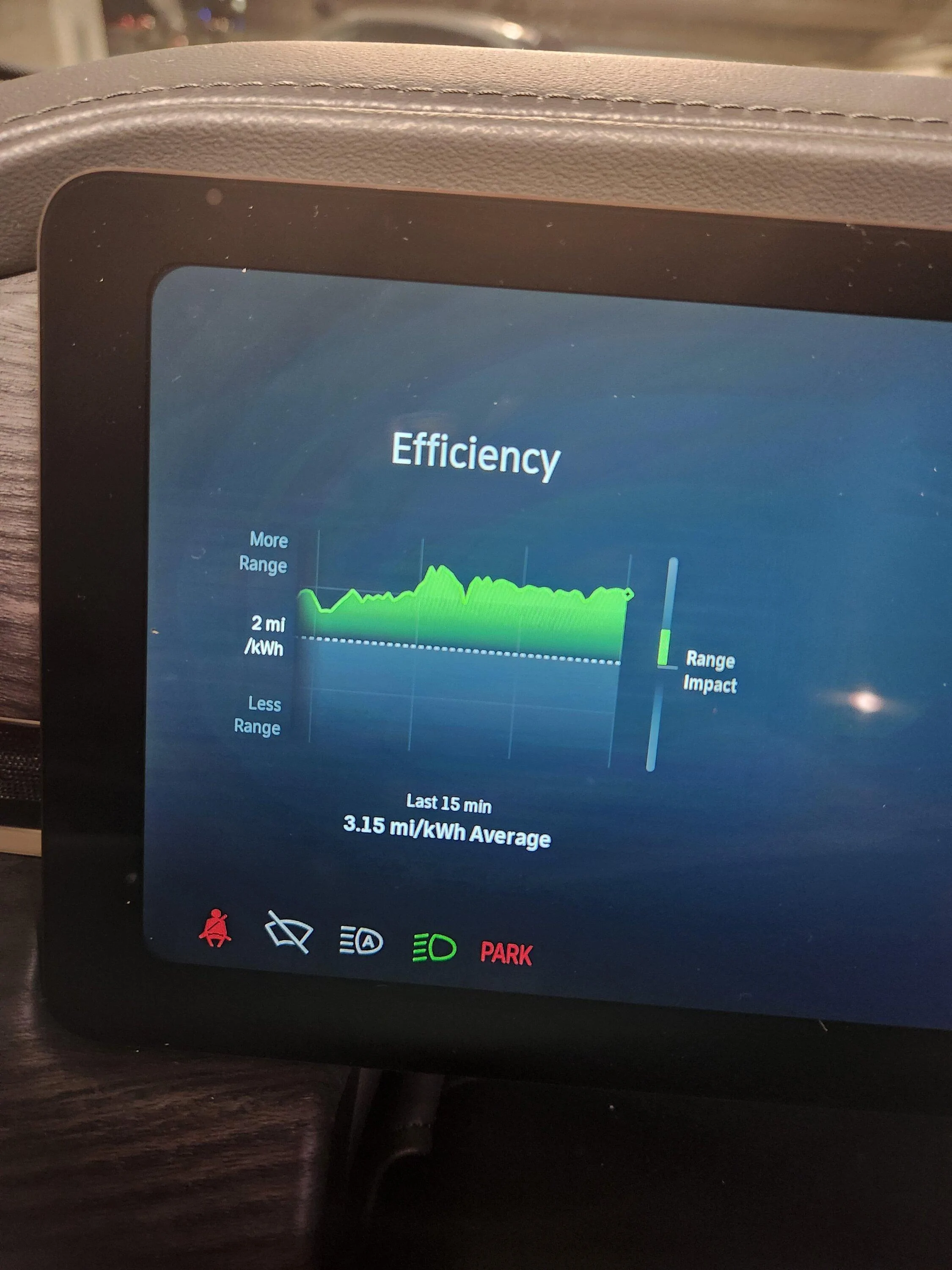
Here are two of mine. Both are a mix of freeway and city.
R1S 21" Road tires, 49PSI cold pressure. Feather foor driving.
#1 Lynnwood to Auburn,WA
#2 Auburn to Ashford WA

20230703_144107.jpg


20230627_121112.jpg
21s
50% of the mileage so far

Rivian R1T R1S What's your average Miles/Kwh? 20230704_213142
 

Neuneleven

Well-Known Member
Joined
Mar 29, 2023
Threads
2
Messages
81
Reaction score
84
Location
IL
Vehicles
2023 R1S, 2022 Expedition Max LTD, 2020 Volvo XC60
I love that you guys can go hundreds of miles driving 65-70 mph. I'm dealing with a posted speed limit of 75 and most traffic doing 85 +/-.
in the 1 month that I have owned this car, I have used cruise control more than the entire lifetime of most other previously owned cars. Done quite some highway driving with it set to 71 or 73 mph to remain efficient and avoid recharging where possible. I find if i use my foot, I tend to want to use at least 830 HP to be happy. You folks know how that works out with efficiency....
 

mkg3

Well-Known Member
Joined
Nov 19, 2021
Threads
91
Messages
2,799
Reaction score
3,722
Location
SoCal
Vehicles
R1S, Model 3, Outback, Artura
Clubs
 
Doing some quick maths..

Frontal area = 2.08m x 1.65m (assuming low setting, ignoring tire area) = 3.43 m2 Cd= 0.30 Air density = 1.3 kg/m3 at sea level Assuming 80 mph = 35.8 m/s Aerodynamic drag = 1/2 * 1.3 * 35.8^2 * 0.30 * 3.43 = 857 N

Assuming rolling resistance coefficient of 0.012 with tires on asphalt, rolling resistance from tire can be calculated as: F = fmg = 0.012* 3500 kg * 9.81 m/s2 = 410 N

Total force required to maintain 80 mph ~= 1267 N

Energy required to move 1 mile = 1267 N* 1609m = 2.04 MJ = 0.567 kwh

Which is 1.76 mile/kwh at 80 mph, ignoring all other losses, head winds, and accessories drawing power…
Yeah I get the calcs. Your sea level density is off a small bit (1.225 kg/m^3) for the IS standard day but not significant.

The only missing elements are the momentum (mV) and the regen that happens in real driving. Aside from topological variability, your estimates are close to what people are experiencing/reporting. The ability to reduce regen and coast, where momentum is working in your favor, can make a noticeable impact on range. Unfortunately, Rivian's normal regen is way too high to take advantage of this factor. Hope Rivian will offer low regen setting in the future.

So knowing the physics, still doesn't mean that I like it.... :(
 

goldburger

Well-Known Member
Joined
Feb 5, 2022
Threads
18
Messages
1,730
Reaction score
2,038
Location
Los Angeles
Vehicles
2022 R1T
Love having 21’s. Really great. ?
Rivian R1T R1S What's your average Miles/Kwh? IMG_8532
 

Sponsored

Chewy734

Well-Known Member
First Name
Ashu
Joined
Nov 8, 2020
Threads
27
Messages
1,319
Reaction score
2,732
Location
Los Angeles
Vehicles
BMW, Ford, Rivian
Clubs
 
On my latest trip (2061 miles), we averaged 2.14 mi/kWh.

That was mostly in all purpose mode on 21s (no aero covers) and the R1S packed to the top with luggage and 6 people. There was probably a couple hundred miles of conserve mode and fewer in off road mode mixed in.
 

HaveBlue

Well-Known Member
Joined
Nov 22, 2022
Threads
41
Messages
2,928
Reaction score
2,235
Location
91107
Vehicles
R1S DMP Max, Lifted GX470, APR Audi A7, BMW 325Ci
Clubs
 
Yeah I get the calcs. Your sea level density is off a small bit (1.225 kg/m^3) for the IS standard day but not significant.

The only missing elements are the momentum (mV) and the regen that happens in real driving. Aside from topological variability, your estimates are close to what people are experiencing/reporting. The ability to reduce regen and coast, where momentum is working in your favor, can make a noticeable impact on range. Unfortunately, Rivian's normal regen is way too high to take advantage of this factor. Hope Rivian will offer low regen setting in the future.

So knowing the physics, still doesn't mean that I like it.... :(
How about snow mode? Does that have less Regen? So there are no normal settings for one pedal?
Sponsored


Top