electruck
Well-Known Member
- Joined
- Oct 6, 2019
- Threads
- 74
- Messages
- 4,187
- Reaction score
- 7,786
- Location
- Dallas, TX
- Vehicles
- 2023 Rivian R1S
Oh I certainly understand all that. And if there isn't much traffic on the road, it's easier to set your own pace. But on stretches with heavy traffic, such as I35 between Dallas and OKC or Austin, driving 70 gets to be borderline hazardous.Yes it can be a struggle but I find that driver+ has more constraint than my leaded right boot.
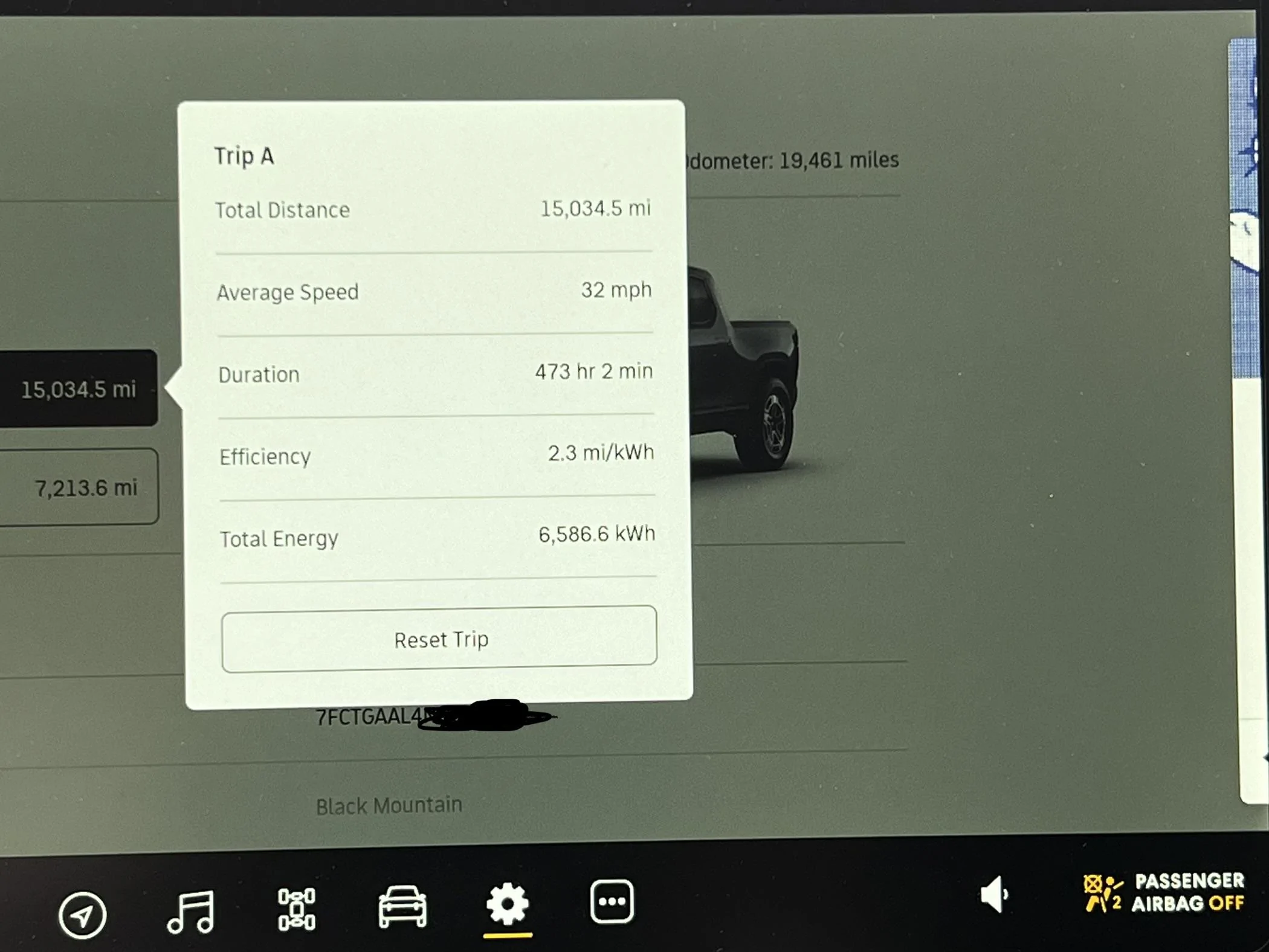
In reality though on my really long stretch including I10 across Texas where I pretty much stayed around 75 even in the western portions where speed limits are 80, that driving a little slower is actually faster on long trips as the charge stops do not take as long. On a 200 mile stretch the difference between 70 mph and 75 mph is 12 minutes. 80 mph the difference is 21 minutes.
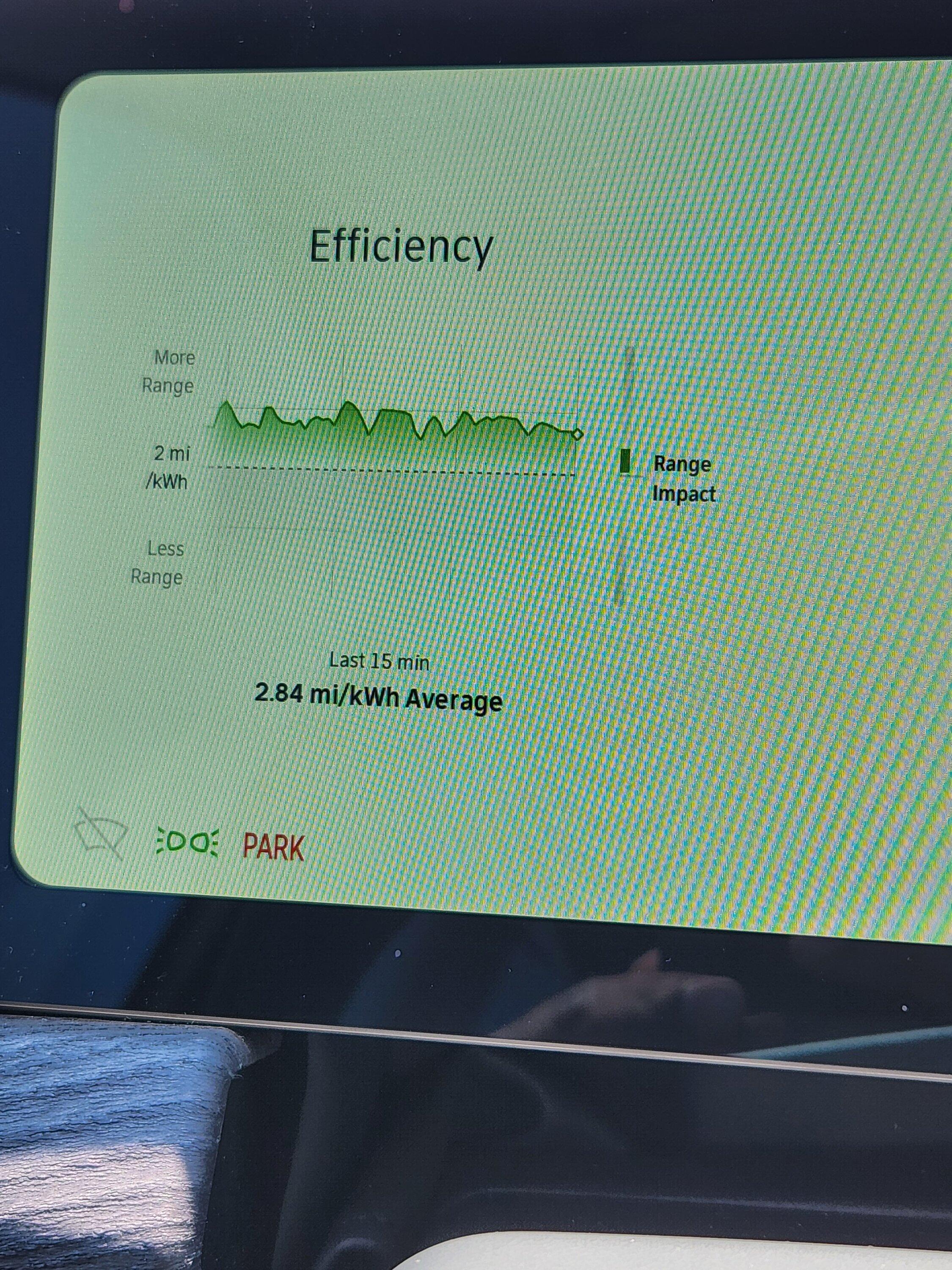
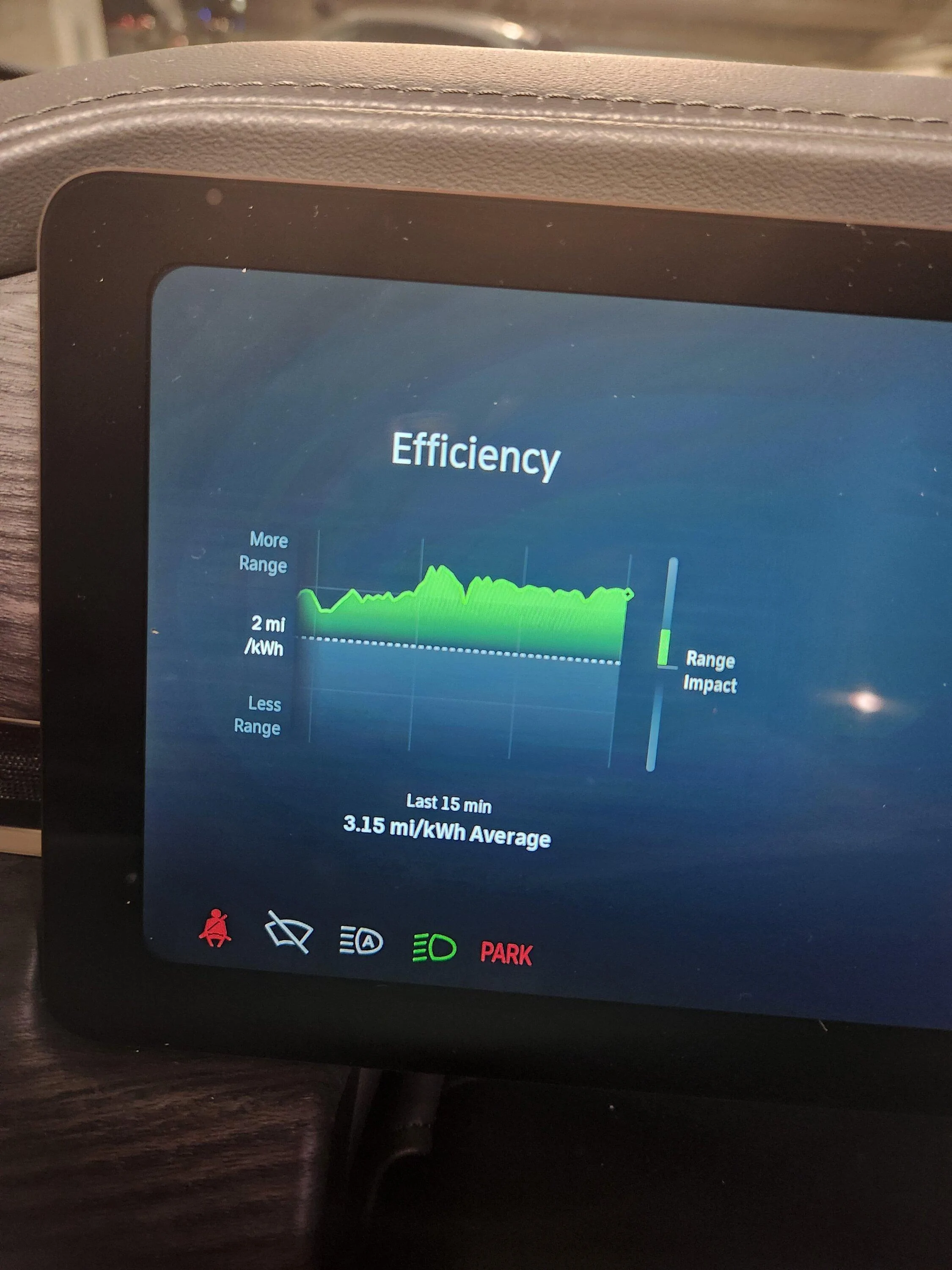
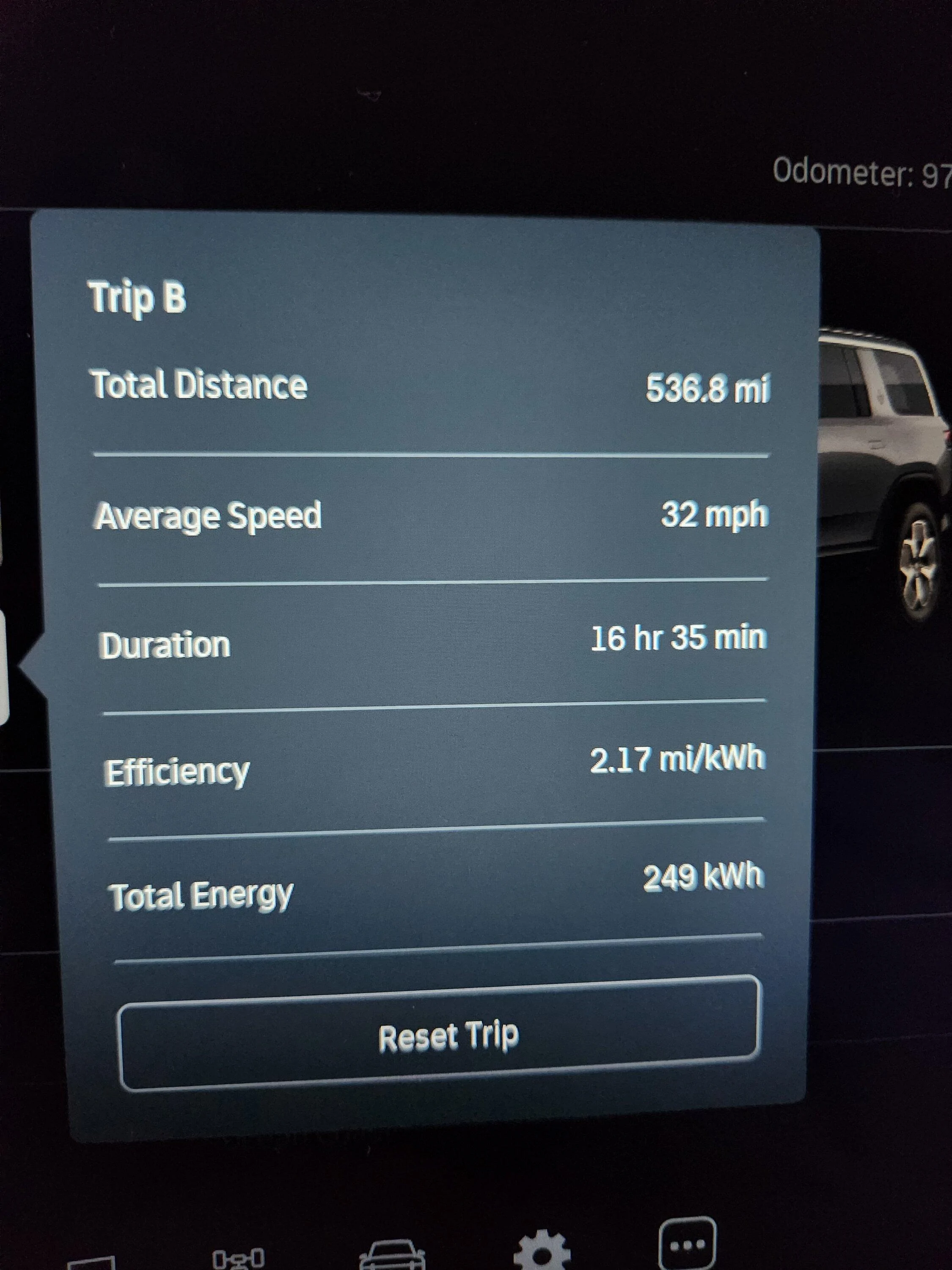
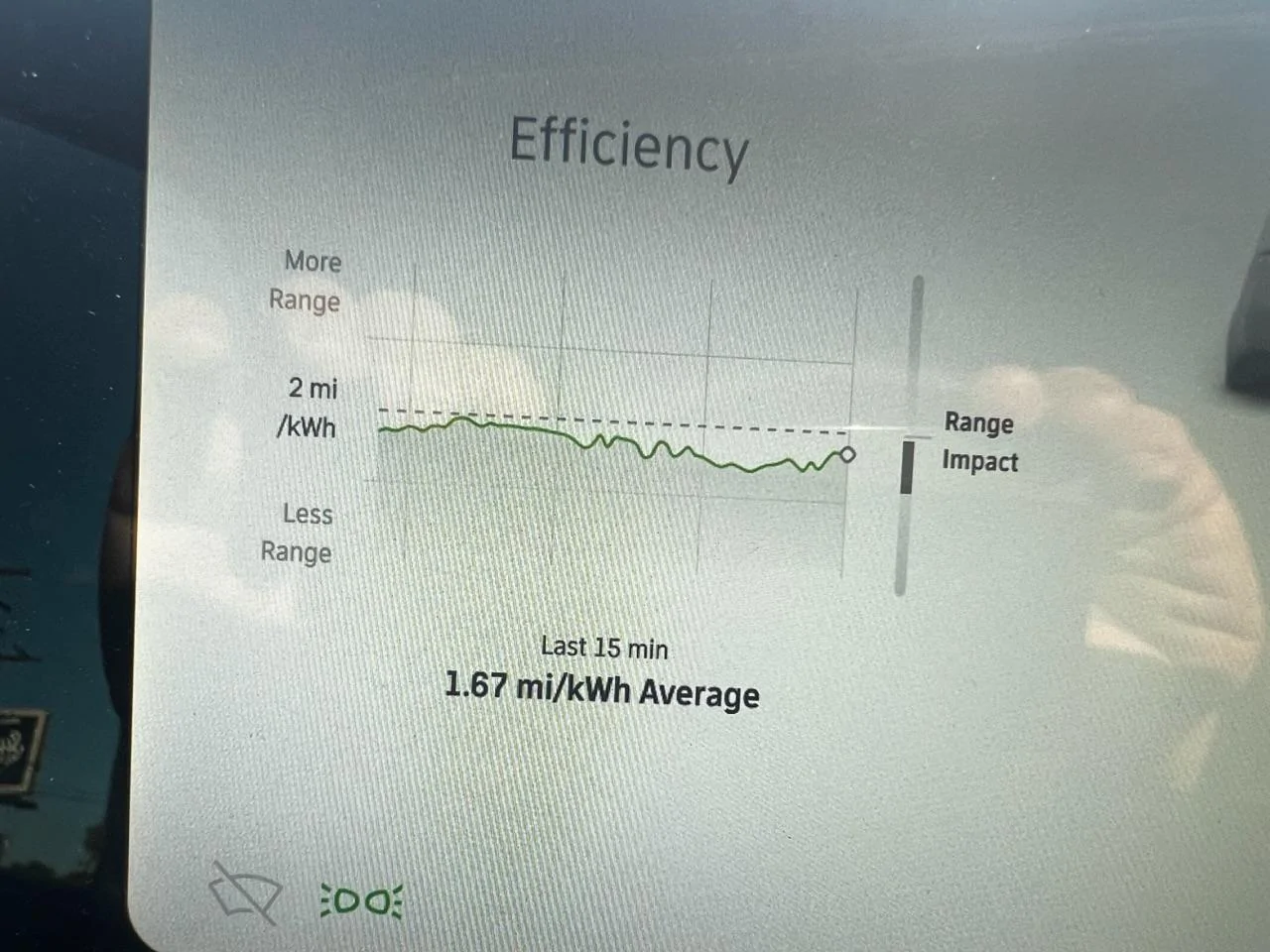
If I get 2.3 miles per kW at 70 I use 87 kW. If I get 1.9 at 80 I use 105 kW, if we assume that most of the extra 17 kW I need to replace is at 150 kWh then Out of the 21 minutes I saved I use 7 minutes charging.
That 105 kW is 82% of the 128 kW usable, so I need to charge to at least 90% to make it with 8% left. The 87 kW is only 67% of the battery so I’m probably good only charging to 75% for that stretch. The difference of charging from 75% to 90% at an average of 40kWh 13 minutes so I use 13 minutes at the top and 7 for the additional kW or 20 minutes of charging to save 21 minutes of driving.
Now if the stretch is 240 miles, I do not make it at 80 mph, need to find a place to charge between the 2 chargers.
For me, 120 mile trip, don’t need to charge 80-85 it is, driving cross country driver+ at 70 is my friend.
As a side note, this past February, I10 west in Western Texas, 80 mph into a medium headwind I was under 1.5 miles per kW, slowed down to 73 and got closer to 1.9 miles per kW.
Sponsored