
Max
Well-Known Member
- Thread starter
- #1
I have had a few conversations in this regard in the wrong thread so I thought I should start it's own so any discussion stays relevant to the thread topic. Please share any information or experience that is in support of or in conflict with what you see here.
I just reached out to Rivian with the following questions:
-------------------
Subject: Tow Charging
If I am out in an adventure with my R1S off road (somewhere a tow truck would not go) with some of my ICE friends, if I run out of charge, for how many miles and at what speed is it safe for them to tow me?
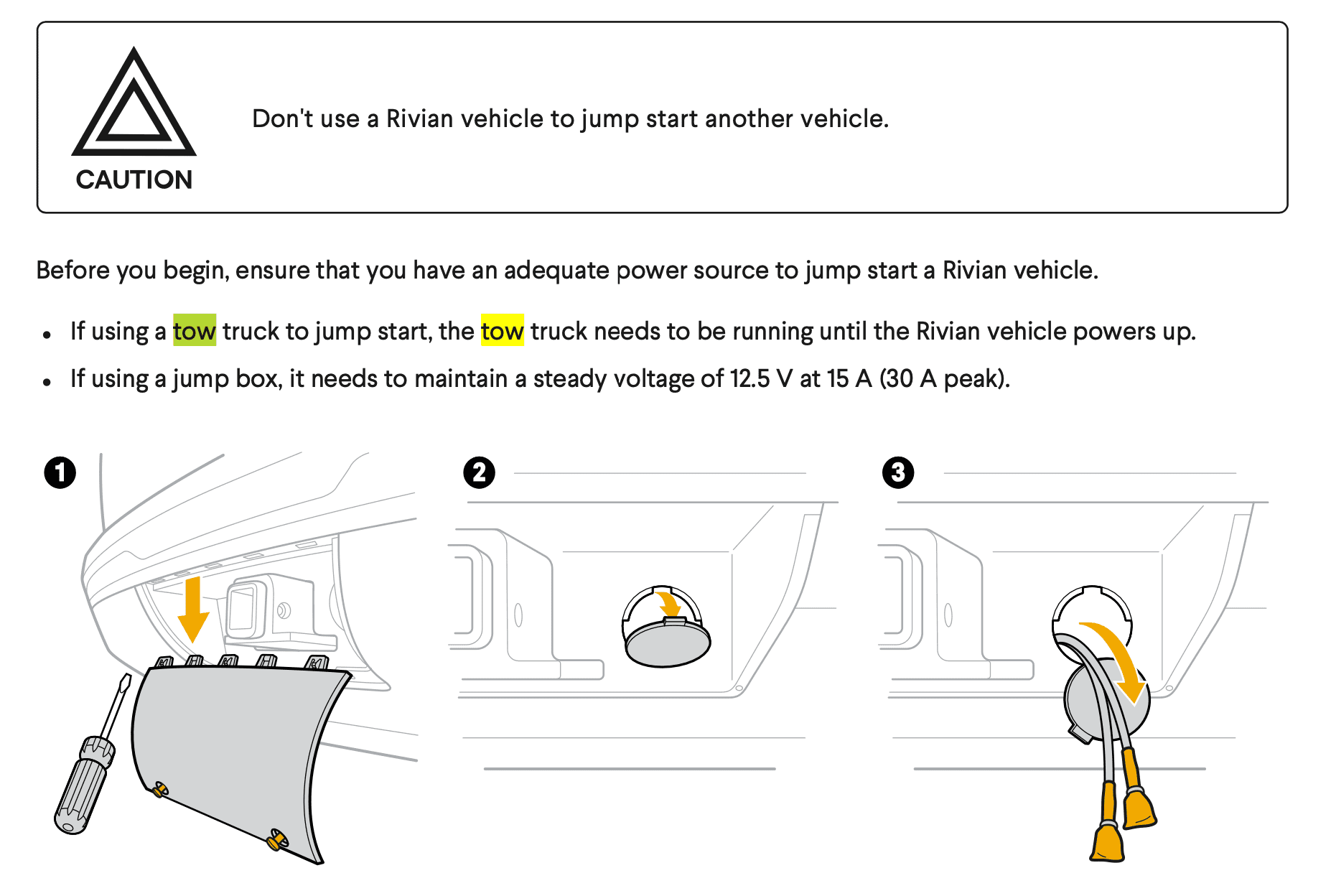
What are the best practices as far as how to connect to the R1 if I do or don't have tow hooks?
What are the best settings to make sure nothing is damaged?
Are there any plans for tow charge mode to be added for emergencies?
-----------------------
This was the response:
"Thanks for reaching out, I am happy to help! While I hope you don't run into this problems, it is always good to be one step ahead!
Rivian vehicles can be tow charged but are otherwise not flat towable.
If you've run out of charge somewhere remote, it is possible to use a tow vehicle to pull the Rivian forward to add charge back to its battery. This is accomplished by tow charging. When tow charging, it uses the vehicle's regen braking feature to add charge to the battery. We wouldn't recommend this over long distances because it'd be like driving with brakes permanently applied to the tow vehicle and it could damage the inverters of the vehicle. Tow charging would need to be done by towing the Rivian behind a tow vehicle with both vehicles facing the same direction under 3 mph. The tow vehicle drives forward while the driver in the Rivian puts the Rivian into neutral or reverse to resist that forward motion (if in reverse, the Rivian driver does not accelerate so hard that it overpowers the forward motion that the tow vehicle is creating). The important thing to note here is that tow charging requires active drivers in both vehicles and is more about adding energy back into the Rivian than transporting the Rivian across long distances.
I hope this answers all of your questions. If you have any more questions, please do not hesitate to reach back out. We are grateful to have you on this adventure with us. "
-----------------
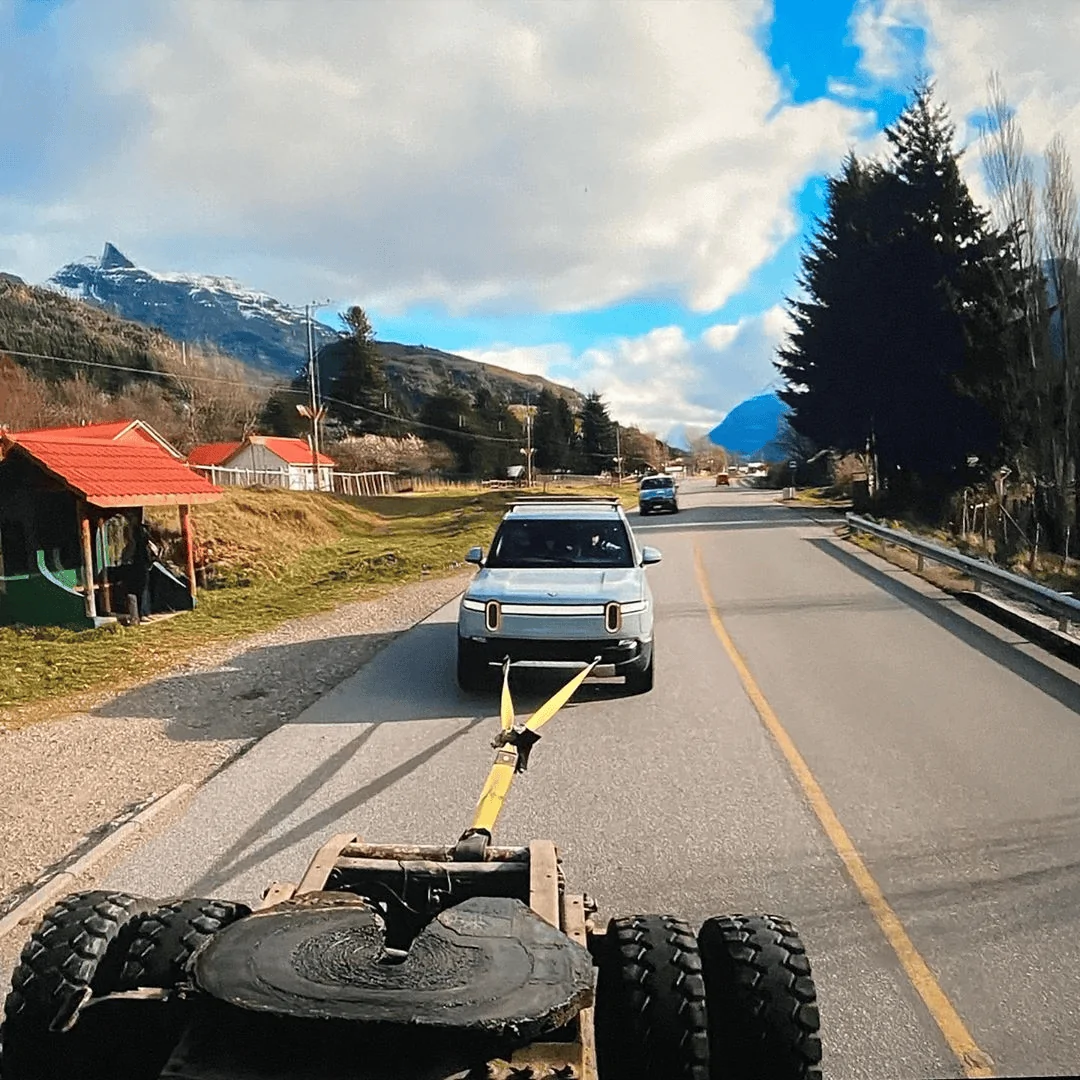
I think this may be from long way up (not sure):

I just reached out to Rivian with the following questions:
-------------------
Subject: Tow Charging
If I am out in an adventure with my R1S off road (somewhere a tow truck would not go) with some of my ICE friends, if I run out of charge, for how many miles and at what speed is it safe for them to tow me?
What are the best practices as far as how to connect to the R1 if I do or don't have tow hooks?
What are the best settings to make sure nothing is damaged?
Are there any plans for tow charge mode to be added for emergencies?
-----------------------
This was the response:
"Thanks for reaching out, I am happy to help! While I hope you don't run into this problems, it is always good to be one step ahead!
Rivian vehicles can be tow charged but are otherwise not flat towable.
If you've run out of charge somewhere remote, it is possible to use a tow vehicle to pull the Rivian forward to add charge back to its battery. This is accomplished by tow charging. When tow charging, it uses the vehicle's regen braking feature to add charge to the battery. We wouldn't recommend this over long distances because it'd be like driving with brakes permanently applied to the tow vehicle and it could damage the inverters of the vehicle. Tow charging would need to be done by towing the Rivian behind a tow vehicle with both vehicles facing the same direction under 3 mph. The tow vehicle drives forward while the driver in the Rivian puts the Rivian into neutral or reverse to resist that forward motion (if in reverse, the Rivian driver does not accelerate so hard that it overpowers the forward motion that the tow vehicle is creating). The important thing to note here is that tow charging requires active drivers in both vehicles and is more about adding energy back into the Rivian than transporting the Rivian across long distances.
I hope this answers all of your questions. If you have any more questions, please do not hesitate to reach back out. We are grateful to have you on this adventure with us. "
-----------------
I think this may be from long way up (not sure):
Sponsored