Sponsored

Home Wall Charger

emroch

Well-Known Member
First Name
Eric
Joined
Jun 9, 2026
Threads
2
Messages
60
Reaction score
120
Location
Austin, TX
Vehicles
Nissan Altima, Chevy Equinox
No no no no no. They charge at the same rate in kW. Don't use "miles" as a unit, you're not filling your battery with miles.

The different range achieved with the same number of kWh is because different models have different efficiencies, so unless you actually know the efficiency number and actually do the math, you can't compare "miles".
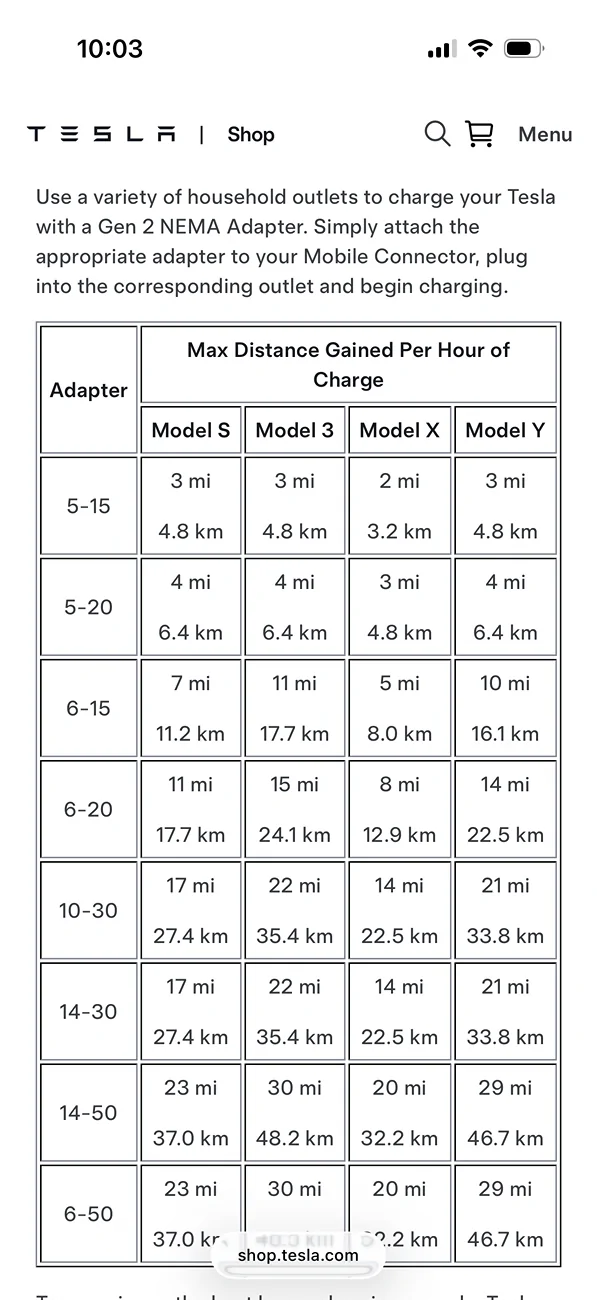
I'm just quoting what Tesla posted on the product page...

And the 5-15 vs 5-20 will not charge at the same rate in kW, as the available amperage is different. This is supported by the fact that the 5-20 adds 33% more range per hour (on the same vehicle) than the 5-15.

I agree that mph is not a great unit for charging speed, kind of like measuring intergalactic trade runs in parsecs, but retconned or not both have reasonable explanations. MPH is useful for personal charging where you want to know "I have X minutes available to charge right now, how much range can I add in this time?" If you only think in kW, you're probably doing another conversion in your head anyway, eg mi/kWh, which is just an extra step.

Benchmarking and real-world use are different beasts, and a unit that doesn't make sense for one can work for the other just fine.
Rivian R1T R1S Home Wall Charger IMG_9970
Sponsored


Bullwinkle

Well-Known Member
First Name
Jim
Joined
Aug 12, 2022
Threads
3
Messages
285
Reaction score
258
Location
Minnesota
Vehicles
2023 Rivian RS1, 2026 BMW X5 50e
Occupation
Retired
Yes, I have this setup at my parents house. You need the Tesla mobile connector and you can buy all the different plugs for $35 each I think.

6-20 is 240 volts at 16 amps, or 3.8 kW. Works great and is a very underrated setup.

5-20 is 16 amps at 120 volts so not as good, but better than a household outlet. Tesla sells the adapter for that too.

5-15 is a normal household outlet and won’t pull more than 12 amps on the charger.

So interestingly, the Tesla with a 5-20 pigtail is almost twice as fast because some of the amperage is used for
I'm just quoting what Tesla posted on the product page...

And the 5-15 vs 5-20 will not charge at the same rate in kW, as the available amperage is different. This is supported by the fact that the 5-20 adds 33% more range per hour (on the same vehicle) than the 5-15.

I agree that mph is not a great unit for charging speed, kind of like measuring intergalactic trade runs in parsecs, but retconned or not both have reasonable explanations. MPH is useful for personal charging where you want to know "I have X minutes available to charge right now, how much range can I add in this time?" If you only think in kW, you're probably doing another conversion in your head anyway, eg mi/kWh, which is just an extra step.

Benchmarking and real-world use are different beasts, and a unit that doesn't make sense for one can work for the other just fine.

IMG_9970.webp

It may be closer to twice as fast!
 

emroch

Well-Known Member
First Name
Eric
Joined
Jun 9, 2026
Threads
2
Messages
60
Reaction score
120
Location
Austin, TX
Vehicles
Nissan Altima, Chevy Equinox
Actually there is an argument for a smart level 2 EVSE. My house has a 100 amp panel which means I have to limit charging to 32 amps. My R2 can pull 48 amps. So my gen 3 Tesla EVSE allows me to keep things safe by throttling current.
You don't necessarily need a smart/connected EVSE for this, some models have internal switches you can configure to cap the current draw based on the circuit you have. So an 80A EVSE might be configured to draw 32A max, which means you don't have to worry about making sure the car is properly configured. This would be a headache if you ever use multiple chargers (and want to charge faster on the other charger), or have multiple vehicles/guests using your charger at home.
 

emroch

Well-Known Member
First Name
Eric
Joined
Jun 9, 2026
Threads
2
Messages
60
Reaction score
120
Location
Austin, TX
Vehicles
Nissan Altima, Chevy Equinox

So interestingly, the Tesla with a 5-20 pigtail is almost twice as fast because some of the amperage is used for


It may be closer to twice as fast!
That's very interesting and makes some sense. But for 5-20 to be twice as fast as 5-15 (16A vs 12A), there would have to be 8A of overhead (leaving 8A vs 4A for charging). At 120V, that is 960W for the following:
  • Battery management (charge controller, thermal management, etc)
  • AC/DC conversion losses
  • Onboard computer systems (likely very small)
My gut reaction was that ~1kW overhead seems high, but maybe keeping the battery cool and accounting for conversion losses could eat up that margin?
 

Bullwinkle

Well-Known Member
First Name
Jim
Joined
Aug 12, 2022
Threads
3
Messages
285
Reaction score
258
Location
Minnesota
Vehicles
2023 Rivian RS1, 2026 BMW X5 50e
Occupation
Retired
That's very interesting and makes some sense. But for 5-20 to be twice as fast as 5-15 (16A vs 12A), there would have to be 8A of overhead (leaving 8A vs 4A for charging). At 120V, that is 960W for the following:
  • Battery management (charge controller, thermal management, etc)
  • AC/DC conversion losses
  • Onboard computer systems (likely very small)
My gut reaction was that ~1kW overhead seems high, but maybe keeping the battery cool and accounting for conversion losses could eat up that margin?
I agree, it seems unlikely, but it makes sense that the increased speed may be noticeably higher than 12amp to 16amp would suggest.
 

Sponsored

emroch

Well-Known Member
First Name
Eric
Joined
Jun 9, 2026
Threads
2
Messages
60
Reaction score
120
Location
Austin, TX
Vehicles
Nissan Altima, Chevy Equinox
Hmm, this is an interesting data point: https://www.rivianforums.com/forum/...ging-session-at-a-tesla-sc.60729/post-1032450

The panel on the right shows that of the 52.3 kWh consumed during the charge, 51.8 went to the battery, 0.3 to the vehicle (?) and 0.2 to climate. Over a 21 minute charge, that 0.5 kWh that wasn't used for charging is about 1500W sustained, so maybe ~1kW overhead is about right.

A 5-15 would then give about 0.4kW to the battery while a 5-20 gives 0.9kW, which is a much bigger boost than the 15->20A jump implies.
 

VSG

Well-Known Member
Joined
Oct 3, 2022
Threads
4
Messages
3,283
Reaction score
6,162
Location
WA
Vehicles
R1T LE/RB/OC/20
And the 5-15 vs 5-20 will not charge at the same rate in kW, as the available amperage is different. This is supported by the fact that the 5-20 adds 33% more range per hour (on the same vehicle) than the 5-15.
Well first, I didn't say that. I'm not sure why you need to contradict what I said, which as far as I can tell agrees with what you later said.

But also, you're missing the point. Of course the different outlets have different specs. But they also use different plugs. A 5-15 plug will fit into a 5-20 outlet, but a 5-20 plug will not fit into a 5-15 outlet - that way the device can't pull more power than the outlet is rated for. Portable chargers like the Rivian charger use a 5-15 plug, because that is by far the most common outlet, and they automatically limit the current to 12A because that is the maximum continuous load rating for a 5-15 outlet. And while the Rivian portable charger CAN plug into a 5-20 outlet, it has no way of telling that it is not a normal 5-15, so will still never try to pull more than 12A. So regardless of the fact that the outlets have different specs, let me repeat:
The only way a portable charger could get more power is to use a dedicated 5-20 pigtail - that doesn't exist for the Rivian
More specifically, in order to actually use the extra current from the 5-20, you need a charger with a 5-20 plug, which will only fit in a 5-20 outlet, so the charger knows that it can pull 16A which is the max continuous load rating of a 5-20.

I believe Tesla sells an optional 5-20 pigtail, but that means @Bullwinkle would have to spend hundreds of dollars extra for a new Tesla-brand charger plus the cost of the optional pigtail. When instead @Bullwinkle could just use the Rivian charger he already has with a $20 adapter with a 5-20 plug on one end and a 14-50 outlet on the other, then use the Rivian charger with the 14-50 pigtail to get the full 16A. Or just go all-in on an L2 charger.
A 5-15 would then give about 0.4kW to the battery while a 5-20 gives 0.9kW, which is a much bigger boost than the 15->20A jump implies.
I have over 1000 hours of experience charging a Rivian R1T with a Rivian portable charger on a 5-15 outlet. My experience shows I get slightly more than 1kW into the battery off the 1.44kW circuit (120V 12A continuous). The number I use is 400W for power lost in the L1 charging process. And yes this seems to be a fixed overhead, so if you dial down to 6A for example you don't get half as much power into the battery you only get something like 30% (720W-400W =320W). Likewise, if you get the adapter/pigtail/whatever and draw 16A from a 5-20, you will be getting more like 1.5kW into the battery, or a 50% increase. On a Rivian. What a Tesla does is a different question.
 

SenatorSteak

Member
First Name
Ron
Joined
May 24, 2026
Threads
2
Messages
16
Reaction score
19
Location
Atlanta, GA
Vehicles
2026 R1T Tri-Motor
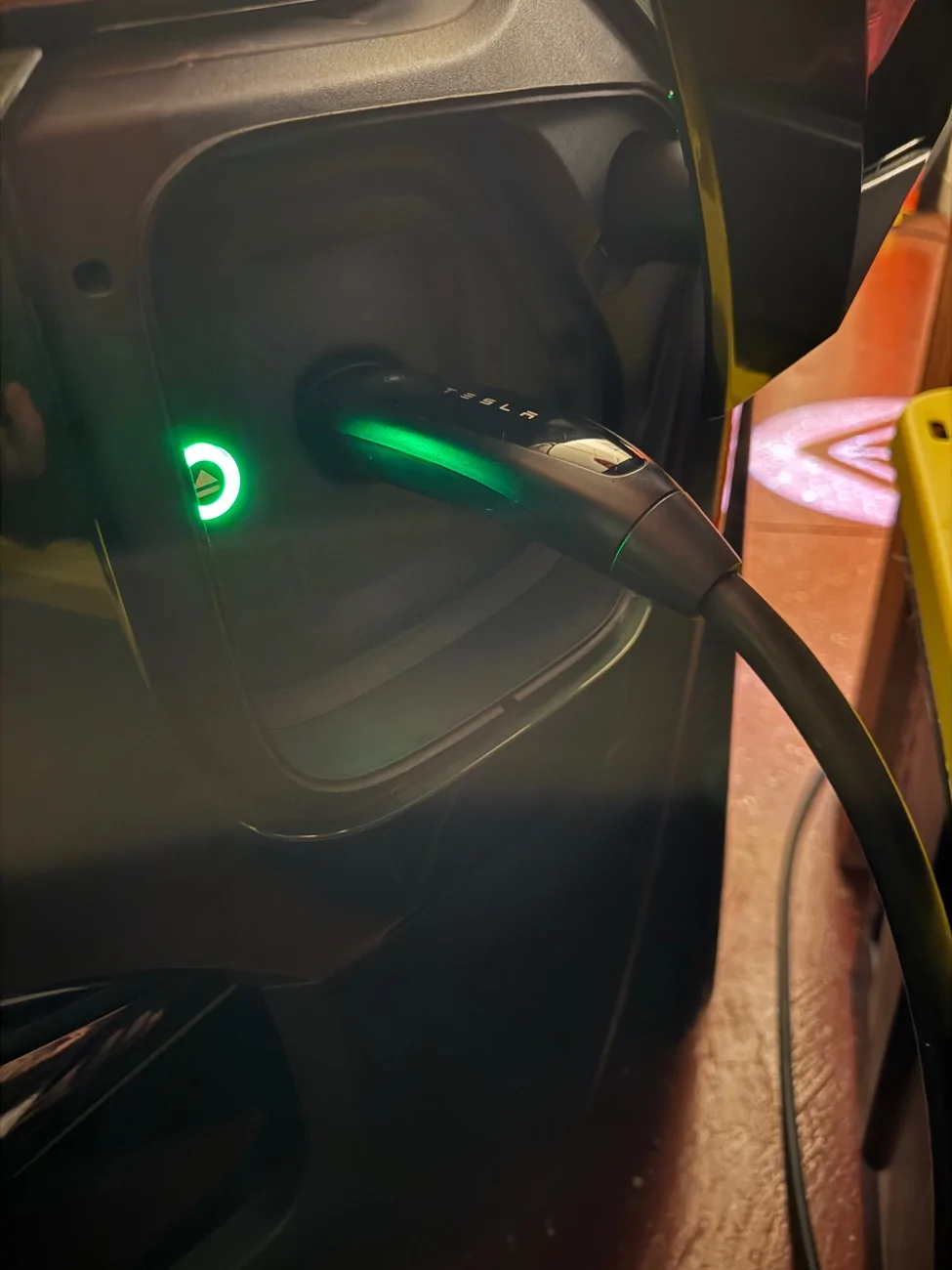
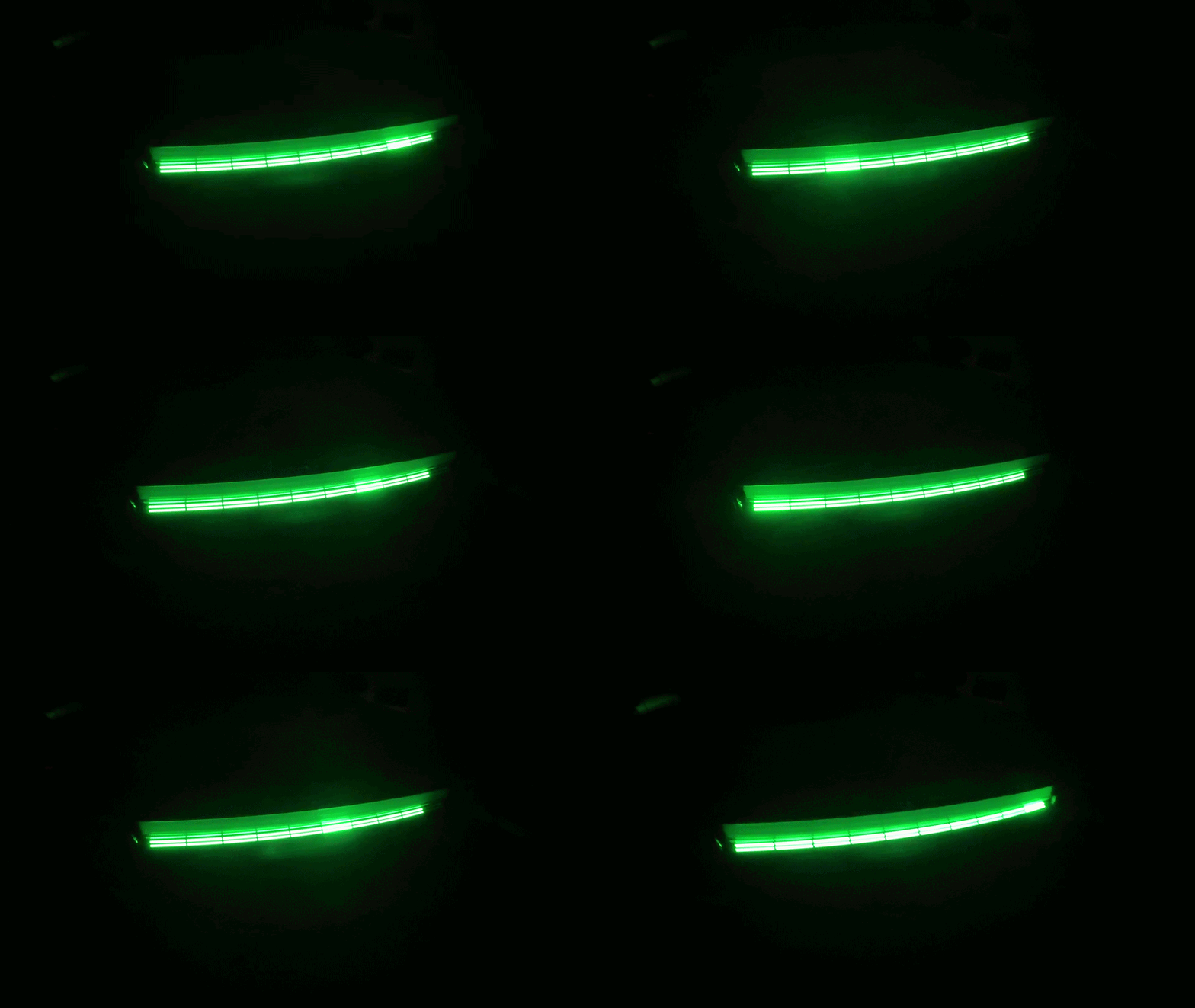
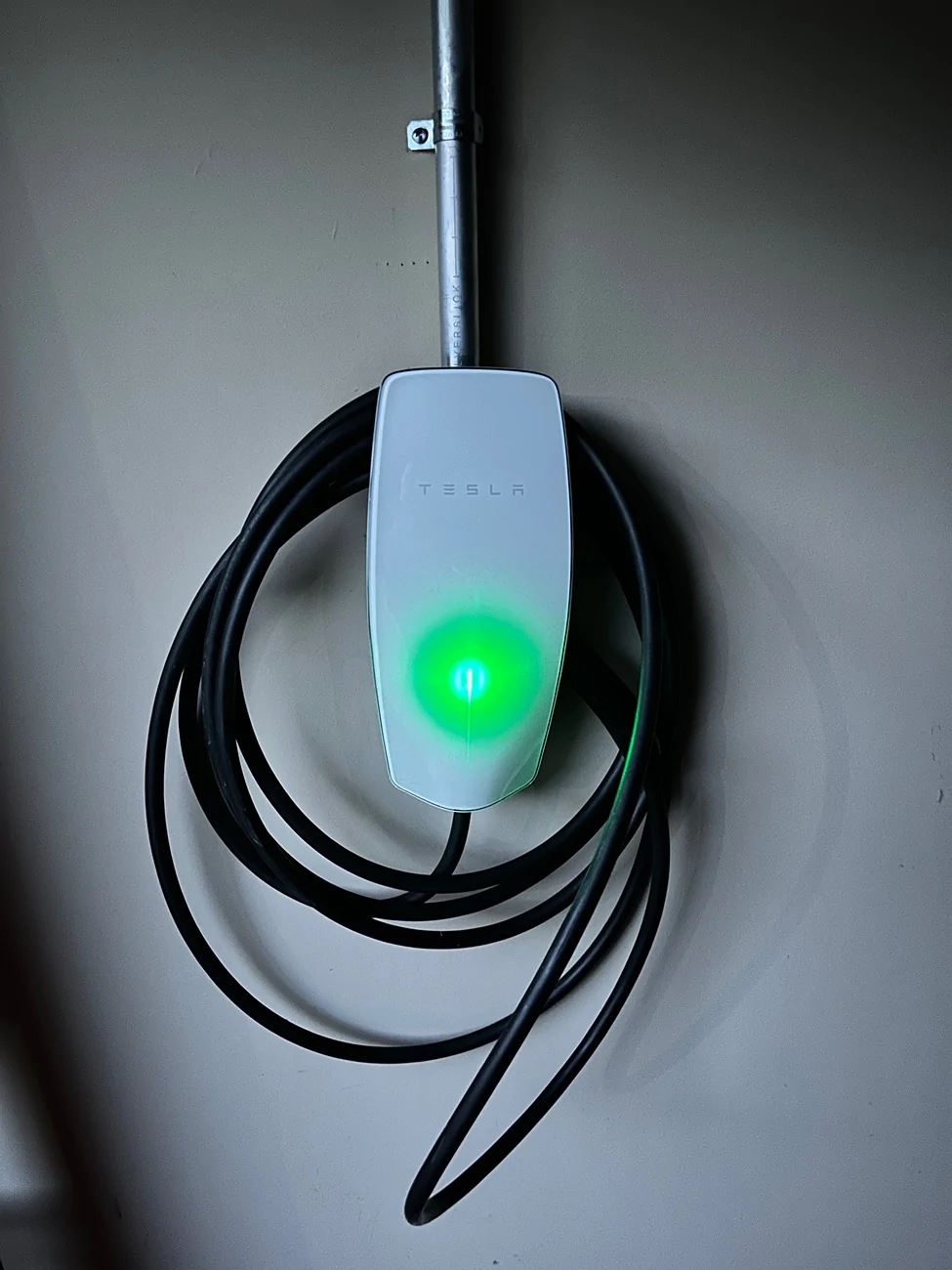
I have photos of my R1T and Tesla Wall Connector on my post right after I bought the vehicle - even a gif of it charging. In fact I have two of them with one on another property and zero issues charging. I previously owned a Tesla Model Y .

I have a 60amp breaker with 4 gauge wire for the wall connector which lets it charge at 48amps (as good as you can get at home currently). One of the reasons I waited for a 26 R1T was to have native NACs to not deal with adapters when I’m at home. You can install with a lower gauge wire for less expense but you’ll reduce your amperage and charging speed.

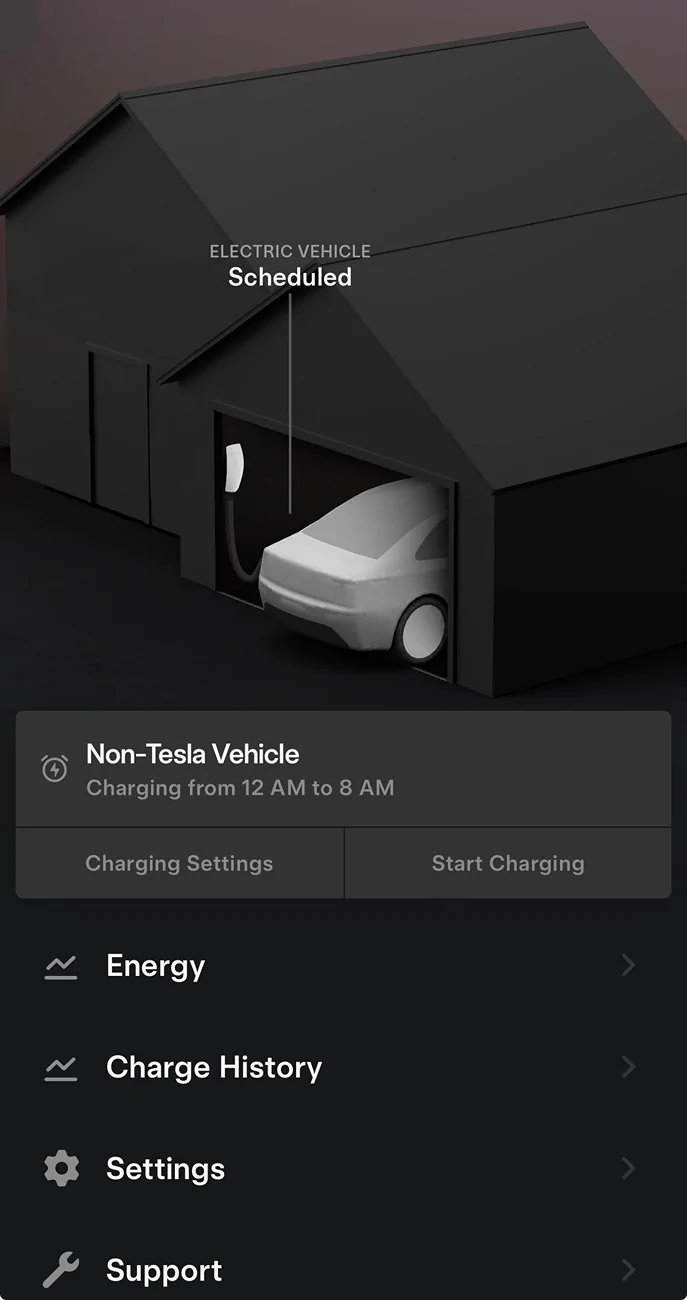
Also attached a screenshot of Tesla app showing what it looks like attached to the R1T with scheduled charging for cheaper electricity.


https://www.rivianforums.com/forum/threads/new-owner-—-2026-r1t-tri-max-forest-green-accessories-listed.60187/


Rivian R1T R1S Home Wall Charger IMG_6390

Rivian R1T R1S Home Wall Charger IMG_6492
Rivian R1T R1S Home Wall Charger IMG_0764

Rivian R1T R1S Home Wall Charger IMG_6509
 
Last edited:

emroch

Well-Known Member
First Name
Eric
Joined
Jun 9, 2026
Threads
2
Messages
60
Reaction score
120
Location
Austin, TX
Vehicles
Nissan Altima, Chevy Equinox
Well first, I didn't say that. I'm not sure why you need to contradict what I said, which as far as I can tell agrees with what you later said.
Let's look at the replay, shall we?
But I wonder if the Tesla 5-20 adapter actually would decrease charging time significantly—or if the current rate is actually the same as 5-15?
Tesla claims 3 mph vs 4 mph charging rate on the 5-15 vs 5-20, so it seems they are taking advantage of the extra current.
No no no no no. They charge at the same rate in kW.
And the 5-15 vs 5-20 will not charge at the same rate in kW, as the available amperage is different. This is supported by the fact that the 5-20 adds 33% more range per hour (on the same vehicle) than the 5-15.
Bullwinkle and I were talking about the 5-15 vs 5-20 pigtail adapters and how fast they charge, when you said "they charge at the same rate in kW" and seemed to think I was quoting numbers from different vehicle models. I was, in fact, using Tesla's own spec from the very product we were discussing.

But also, you're missing the point. [...] let me repeat:

More specifically, in order to actually use the extra current from the 5-20, you need a charger with a 5-20 plug, which will only fit in a 5-20 outlet, so the charger knows that it can pull 16A which is the max continuous load rating of a 5-20.
I think you missed the point actually... No one suggested that the 5-15 Rivian charger would pull extra power from a 5-20 outlet. The first time 5-20 was even mentioned was when we clarified that the outlet was infact 5-20 and not 6-20 and that Tesla makes a separate product to interface with that.

I have over 1000 hours of experience charging a Rivian R1T with a Rivian portable charger on a 5-15 outlet. My experience shows I get slightly more than 1kW into the battery off the 1.44kW circuit (120V 12A continuous). The number I use is 400W for power lost in the L1 charging process.
This is an interesting data point, thanks! I'll be interested to see what kind of losses R2 has and how much other factors like ambient temperature impact it.
 

Bullwinkle

Well-Known Member
First Name
Jim
Joined
Aug 12, 2022
Threads
3
Messages
285
Reaction score
258
Location
Minnesota
Vehicles
2023 Rivian RS1, 2026 BMW X5 50e
Occupation
Retired
Let's look at the replay, shall we?


Bullwinkle and I were talking about the 5-15 vs 5-20 pigtail adapters and how fast they charge, when you said "they charge at the same rate in kW" and seemed to think I was quoting numbers from different vehicle models. I was, in fact, using Tesla's own spec from the very product we were discussing.


I think you missed the point actually... No one suggested that the 5-15 Rivian charger would pull extra power from a 5-20 outlet. The first time 5-20 was even mentioned was when we clarified that the outlet was infact 5-20 and not 6-20 and that Tesla makes a separate product to interface with that.


This is an interesting data point, thanks! I'll be interested to see what kind of losses R2 has and how much other factors like ambient temperature impact it.
My conclusion is that I will need a Tesla charger (new or on eBay) for my R2 and a 5-20 pigtail for use when I am in Steamboat or anywhere that has a 120/20amp outlet. 30-50% faster charging makes L1 pretty useful. Actually, I use 12amp L1 when I am in Steamboat, and most days I add more miles than I use.

I may try VSG's workaround first. I can always return the 5-20>14-50 adapter if it doesn't work.
 

Sponsored

mogambo1

Member
First Name
S
Joined
Oct 28, 2023
Threads
1
Messages
10
Reaction score
2
Location
Frederick, MD
Vehicles
Acura MDX
Occupation
Scientist
I have boyh Model Y and R1s, same Tesla charger works for both. I got it from Tesla using their points and installed it on my own for $50. No rebates, nothing needed. Use any charger that does 48Amps and installed on 60Amps dual pole breaker and you will be good. 48amps will charge at 11.7KWH which gives approx 28miles/hur on my 2026 R1s Dual Max.
 

mogambo1

Member
First Name
S
Joined
Oct 28, 2023
Threads
1
Messages
10
Reaction score
2
Location
Frederick, MD
Vehicles
Acura MDX
Occupation
Scientist
Do hardwaire install and not on any socket such as 14-50. 14-40 does max of 40Amps AFAIK, hardware will take it to 48Amps. That is the best one can get on level 2.

Ther are 80amps level 2 charger 2 but I think car can't do more than 48amps on LEVEL 2.
 

emroch

Well-Known Member
First Name
Eric
Joined
Jun 9, 2026
Threads
2
Messages
60
Reaction score
120
Location
Austin, TX
Vehicles
Nissan Altima, Chevy Equinox
My conclusion is that I will need a Tesla charger (new or on eBay) for my R2 and a 5-20 pigtail for use when I am in Steamboat or anywhere that has a 120/20amp outlet. 30-50% faster charging makes L1 pretty useful. Actually, I use 12amp L1 when I am in Steamboat, and most days I add more miles than I use.

I may try VSG's workaround first. I can always return the 5-20>14-50 adapter if it doesn't work.
Just be careful using adapters on the pigtails as you're tricking the charger into thinking there is more current available than there is. You could easily trip a breaker or start a fire by overloading the circuit. The Rivian mobile charger (AFAIK) doesn't have a way to limit the power beyond using the appropriate pigtail, so you'll have to set the amperage limit on the car itself.

Also, I'm not sure what happens when adapting a 240V plug down to a 120V receptacle. I know there are adapters for the various 10-x and 14-x plugs, eg for dryer/RV/EVSE connections, but idk if you can directly convert those to the 5-x variants.
 

SwampNut

Well-Known Member
First Name
Carlos
Joined
Apr 22, 2024
Threads
52
Messages
3,575
Reaction score
3,799
Location
Peoria AZ
Vehicles
2022 R1T Launch Edition
Occupation
Geek
Clubs
 
Also, I'm not sure what happens when adapting a 240V plug down to a 120V receptacle. I know there are adapters for the various 10-x and 14-x plugs, eg for dryer/RV/EVSE connections, but idk if you can directly convert those to the 5-x variants.
You can convert anything to anything on an EVSE. They are dumb and don't care. The car has a switching power supply that generally should be just fine from 100v to 250v. Some portions of the J1772 spec even allow 277v (but I don't think that applies in the US with our split-phase power). As you said, you just have to manage current. Otherwise it's just not a big deal.

EVSEs demand a proper ground, so you have to make sure your adapter/source does that. And you have to carry the neutral from a 120v outlet to one of the hots on the EVSE. This is why EV charge adapters are different, and using one on anything other than an EV could be disastrous. A generic adapter will leave the EVSE unpowered, the EVSE adapter would do bad things to a non-EVSE.
 

Jeremy3292

Well-Known Member
First Name
Jeremy
Joined
Apr 27, 2026
Threads
5
Messages
550
Reaction score
812
Location
South Carolina
Vehicles
R2
You can convert anything to anything on an EVSE. They are dumb and don't care. The car has a switching power supply that generally should be just fine from 100v to 250v. Some portions of the J1772 spec even allow 277v (but I don't think that applies in the US with our split-phase power). As you said, you just have to manage current. Otherwise it's just not a big deal.

EVSEs demand a proper ground, so you have to make sure your adapter/source does that. And you have to carry the neutral from a 120v outlet to one of the hots on the EVSE. This is why EV charge adapters are different, and using one on anything other than an EV could be disastrous. A generic adapter will leave the EVSE unpowered, the EVSE adapter would do bad things to a non-EVSE.
Building on this, you can pretty easily convert a normal NEMA 5-20 120v receptacle to a NEMA 6-20 240v receptacle. Just need a dual pole 20 amp breaker instead of the single pole 120v breaker for like $20. The neutral white wire becomes a hot/load wire on the 6-20 outlet (and in the panel box) and voila a 240v L2 charger outlet!

That's what I did at my parents house when I visit, a NEMA 6-20. Almost 4 kW for minimal investment and time.
Sponsored


Top