Sponsored

Ford/Tesla Deal: Access to Superchargers, adapter coming, future EVs will have NACS (Tesla) port

Dark-Fx

Well-Known Member
First Name
Brian
Joined
Jul 15, 2020
Threads
148
Messages
13,571
Reaction score
27,390
Location
Michigan
Vehicles
R1T, R1S, Livewire One, Sierra EV, R1S
Occupation
Engineering
Clubs
 
If this happens the pyro fuse will blow and disable the car. You will have a non-operational vehicle but you also will be safe.
I don't think Tesla can blow the pyrofuse on demand but I could be wrong. Relying on a fuse during a significant over current event doesn't strike me as safe. There wasn't supposed to be an overcurrent event.
Sponsored


DuoRivians

Well-Known Member
Joined
Dec 30, 2022
Threads
257
Messages
3,812
Reaction score
9,086
Location
California
Vehicles
R1T, R1S
You are 100% correct on your first point. They don't need to populate the AC power pins on DCFC but they do need the communication pins from the J1772.

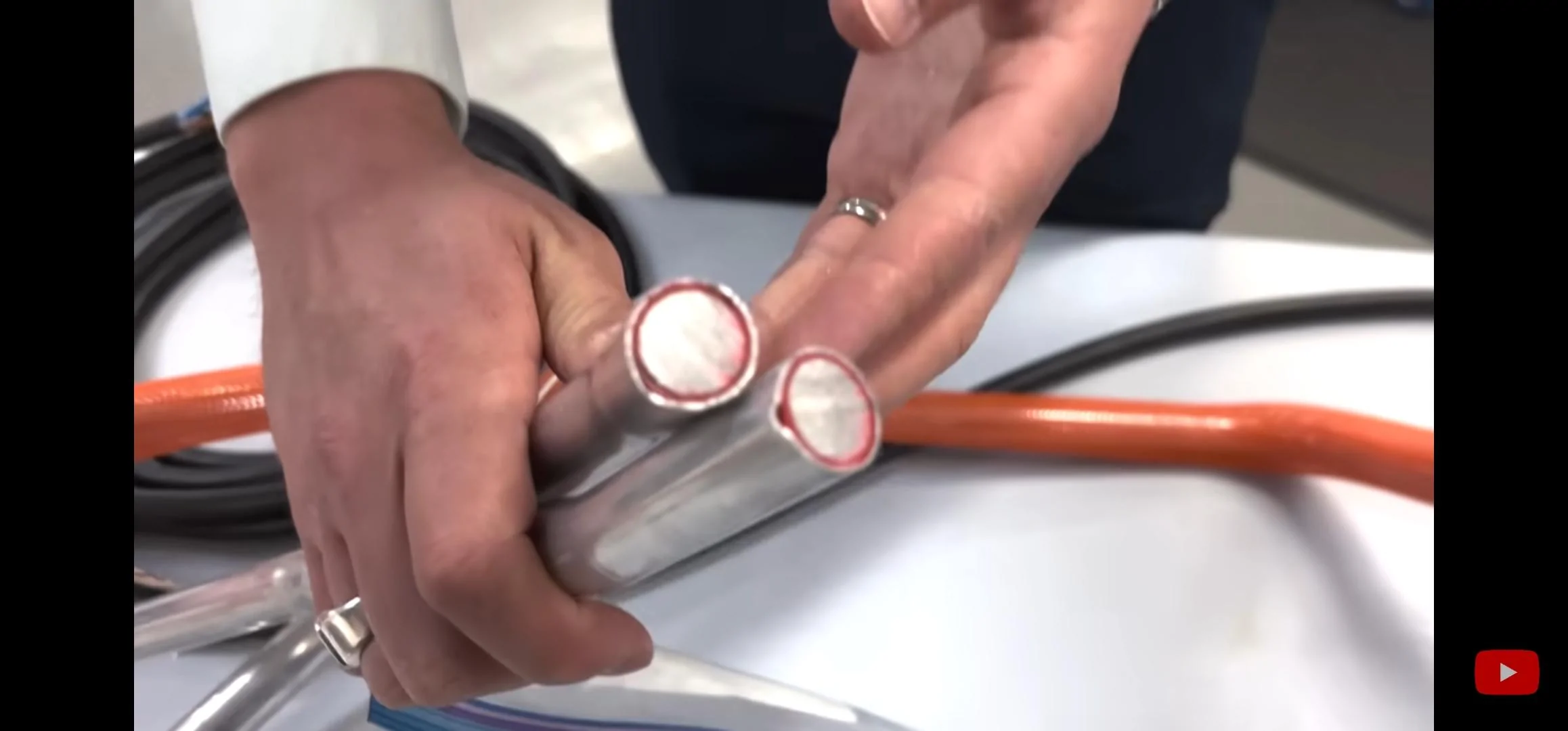
You are 100% wrong about aluminum wires carrying DC. The super dangerous Tesla configuration uses Aluminum for the AC and DC on the same bus bars. See picture of a cross section of the Tesla Model S bus bars.
Screenshot_20230529_115759_YouTube.jpg
Not talking about the bus bars, I’m talking about the DCFC *cables*. Your whole argument was about the cost of the wires

They need to be copper, because copper is the only element that allows for flexibility/bending that’s needed on the DCFC cables.

https://electrek.co/2022/02/07/tesla-supercharger-cables-stolen/
 
First Name
Matt
Joined
Jul 25, 2022
Threads
0
Messages
23
Reaction score
18
Location
SoCal
Vehicles
2022 Tesla model 3, 2016 Toyota Highlander
Not talking about the bus bars, I’m talking about the DCFC *cables*. Your whole argument was about the cost of the wires

They need to be copper, because copper is the only element that allows for flexibility/bending that’s needed on the DCFC cables.

https://electrek.co/2022/02/07/tesla-supercharger-cables-stolen/
The cost savings I'm referring to is on the car side, not the charger side.

You are correct though, flexible aluminum wire will fatigue and break before flexible copper wire will.
 

docwhiz

Well-Known Member
First Name
Mark
Joined
May 22, 2023
Threads
5
Messages
668
Reaction score
618
Location
Lake Tahoe, California
Vehicles
Tesla Model S LR (2022), Land Rover Discovery 2
Occupation
Retired
That isn't how electricity works.

Try plugging your phone into a wall socket by cutting the USB/Whatever-Apple-Uses cord and plugging the pos/neg wires into the outlet. Current won't flow into your phone's battery until a handshake is made, right? Seriously though, do not do this as it will cause a fire and/or explosion.
You clearly don't understand how electricity works.
Tesla designed their system to accept AC or DC. The comm protocol tells the car what is available. The system is designed to take AC or DC. No danger.
 

docwhiz

Well-Known Member
First Name
Mark
Joined
May 22, 2023
Threads
5
Messages
668
Reaction score
618
Location
Lake Tahoe, California
Vehicles
Tesla Model S LR (2022), Land Rover Discovery 2
Occupation
Retired
I don't think Tesla can blow the pyrofuse on demand but I could be wrong. Relying on a fuse during a significant over current event doesn't strike me as safe. There wasn't supposed to be an overcurrent event.
That's what fuses are for...
 

Sponsored

DuoRivians

Well-Known Member
Joined
Dec 30, 2022
Threads
257
Messages
3,812
Reaction score
9,086
Location
California
Vehicles
R1T, R1S
So after all this discussion, I still haven’t heard of a good reason why: a universal NACS to CCS adapter + Tesla Supercharger API available to oems isn’t the better option (or at least just as good).
 
First Name
Matt
Joined
Jul 25, 2022
Threads
0
Messages
23
Reaction score
18
Location
SoCal
Vehicles
2022 Tesla model 3, 2016 Toyota Highlander
You clearly don't understand how electricity works.
Tesla designed their system to accept AC or DC. The comm protocol tells the car what is available. The system is designed to take AC or DC. No danger.
Thank you. Much more elegant explanation than I could provide.
 
First Name
Matt
Joined
Jul 25, 2022
Threads
0
Messages
23
Reaction score
18
Location
SoCal
Vehicles
2022 Tesla model 3, 2016 Toyota Highlander
So after all this discussion, I still haven’t heard of a good reason why: a universal NACS to CCS adapter + Tesla Supercharger API available to oems isn’t the better option.
Cost.

NACS port in the vehicle is much cheaper than CCS port in the vehicle.
 

DuoRivians

Well-Known Member
Joined
Dec 30, 2022
Threads
257
Messages
3,812
Reaction score
9,086
Location
California
Vehicles
R1T, R1S
Cost.

NACS port in the vehicle is much cheaper than CCS port in the vehicle.
It’s not cheaper. You have to add extra controls and chip costs on the vehicle side. Plus, oems give up sticking to an industry standard. Marrying further with Tesla has definite costs—NACS is Tesla IP.
 

docwhiz

Well-Known Member
First Name
Mark
Joined
May 22, 2023
Threads
5
Messages
668
Reaction score
618
Location
Lake Tahoe, California
Vehicles
Tesla Model S LR (2022), Land Rover Discovery 2
Occupation
Retired
It’s not cheaper. You have to add extra controls and chip costs on the vehicle side. Plus, oems give up sticking to an industry standard. Marrying further with Tesla has definite costs—NACS is Tesla IP.
It's cheaper because you don't need two sets of heavy (expensive) power cables. The comm protocol chips are already there. It's just software.
 

Sponsored

Spork8

Well-Known Member
First Name
Trevor
Joined
Feb 18, 2022
Threads
1
Messages
134
Reaction score
148
Location
KZoo
Vehicles
2022 R1T
Occupation
Engineer
Clubs
 
You clearly don't understand how electricity works.
Tesla designed their system to accept AC or DC. The comm protocol tells the car what is available. The system is designed to take AC or DC. No danger.
Tesla designed their cars to do this, please reread @DuoRivians posts on this as they are well written. After 20+ pages of messages, you still have not gotten this point yet...? NACS refers to the plug, not the car. Yet you and the other Tesla/Elon stans can't wrap this idea around your head.
 

Dark-Fx

Well-Known Member
First Name
Brian
Joined
Jul 15, 2020
Threads
148
Messages
13,571
Reaction score
27,390
Location
Michigan
Vehicles
R1T, R1S, Livewire One, Sierra EV, R1S
Occupation
Engineering
Clubs
 
You don’t need two sets of heavy power cables. Once it gets past the inverter, it’s all the same
48A 240VAC cables aren't exactly thick compared to other wiring on an EV too.
 

DuoRivians

Well-Known Member
Joined
Dec 30, 2022
Threads
257
Messages
3,812
Reaction score
9,086
Location
California
Vehicles
R1T, R1S
It's cheaper because you don't need two sets of heavy (expensive) power cables. The comm protocol chips are already there. It's just software.
I’m also not talking about the comms protocol. I’m talking about the switch on the vehicle side to accept dc or ac current over wires. There is physical circuitry involved at this level.
 
Last edited:

docwhiz

Well-Known Member
First Name
Mark
Joined
May 22, 2023
Threads
5
Messages
668
Reaction score
618
Location
Lake Tahoe, California
Vehicles
Tesla Model S LR (2022), Land Rover Discovery 2
Occupation
Retired
You don’t need two sets of heavy power cables. Once it gets past the inverter, it’s all the same
You need two sets of power cables from the socket to the inverter/charger circuits.
(Sandy Munro explains the cost advantage well)
Sponsored


Top