
Sponsored
Rivian V2X V2H Solution available now using PointGuard/Sigenergy BiDirectional?
- Thread starter FutureTruck
- Start date
- Watchers 28


mikehmb
Well-Known Member
- First Name
- Mike
- Joined
- Jan 12, 2022
- Threads
- 154
- Messages
- 2,303
- Reaction score
- 5,223
- Location
- SF Bay Area
- Vehicles
- My name is Mike, and I have a (car) problem
Use case for me is that I live in a PG*E-managed territory and therefore have power, sometimes.What use cases do you gents see? I have solar and would only see a need if everything was down. Is there any concern with battery degradation with continued use? Cheers
Backup. I have a small system so the DC charging is not helpful. Just backup.
M3_R2
Well-Known Member
Battery degradation from strictly backup or even mild use would be next to nothing, esp if you are managing the use when possible and staying away from the extremes. My goal is to have 2 V2H vehicles which would provide emergency power almost indefinitely provided a charger is functioning within a reasonable distance and if not, with frugal use, probably 5+ days of backup.
One of those 2 vehicles for sure would be LFP.
Frequent use would probably be equal to a week or so of road tripping. Maybe 3 weeks if you used it daily for time shifting. Not insignificant but I don't see it causing much in the way of premature battery degradation unless you were using it for unusual daily power requirements. But then you aren't road tripping unless that's being done in a different vehicle ;-)
One of those 2 vehicles for sure would be LFP.
Frequent use would probably be equal to a week or so of road tripping. Maybe 3 weeks if you used it daily for time shifting. Not insignificant but I don't see it causing much in the way of premature battery degradation unless you were using it for unusual daily power requirements. But then you aren't road tripping unless that's being done in a different vehicle ;-)

itiming
Member
My use case is also for BU. We have an Enphase solar setup - but installed it w/o battery BU, due to budget. It is setup for solar BU to an essential loads panel. My goal is to have our R1T send power to our home grid's essential loads panel when the grid is down.
There are enough solar panels to supply our house and Tesla/Rivian daily driving. We import from the grid over the evening. Overall, we supply more power to the grid than we import--the power company credits us at half their residential rate ($0.061/kWh credit vs $0.122/kWh imported) so solar is working well for us. If the grid goes down, we can only supply power during daylight. A V2H connection with either/both our Tesla or Rivian is the goal.
For now, we use our EV's as solar storage, to maximize using our solar production and minimize grid import. We alternate using our EV's (retirement is nice); so one EV is home charging when we are traveling with the other EV. This allows us to run our vehicles on solar power w/o much grid import -- overall exporting more than importing.
There are enough solar panels to supply our house and Tesla/Rivian daily driving. We import from the grid over the evening. Overall, we supply more power to the grid than we import--the power company credits us at half their residential rate ($0.061/kWh credit vs $0.122/kWh imported) so solar is working well for us. If the grid goes down, we can only supply power during daylight. A V2H connection with either/both our Tesla or Rivian is the goal.
For now, we use our EV's as solar storage, to maximize using our solar production and minimize grid import. We alternate using our EV's (retirement is nice); so one EV is home charging when we are traveling with the other EV. This allows us to run our vehicles on solar power w/o much grid import -- overall exporting more than importing.
Last edited:
Sponsored
Gurule92
Well-Known Member
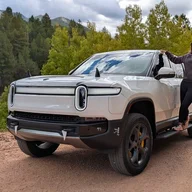
Looks like both my vehicles would work with this setup! 2019 X and 22 R1T. That's a ton of battery storage.
Gurule92
Well-Known Member
0.122 import?My use case is also for BU. We have an Enphase solar setup - but installed it w/o battery BU, due to budget. It is setup for solar BU to an essential loads panel. My goal is to have our R1T send power to our home grid's essential loads panel when the grid is down.
There are enough solar panels to supply our house and Tesla/Rivian daily driving. We import from the grid over the evening. Overall, we supply more power to the grid than we import--the power company credits us at half their residential rate ($0.061/kWh credit vs $12.2/kWh imported) so solar is working well for us. If the grid goes down, we can only supply power during daylight. A V2H connection with either/both our Tesla or Rivian is the goal.
For now, we use our EV's as solar storage, to maximize using our solar production and minimize grid import. We alternate using our EV's (retirement is nice); so one EV is home charging when we are traveling with the other EV. This allows us to run our vehicles on solar power w/o much grid import -- overall exporting more than importing.
Gurule92
Well-Known Member
What was the cost? Did they itemize it out? I am totally interested in something like this, but doesnt look like there are many distributers in the US
TrueDad
Member
- First Name
- Adam
- Joined
- Jul 23, 2025
- Threads
- 0
- Messages
- 7
- Reaction score
- 11
- Location
- San Diego County
- Vehicles
- 2025 Rivian R1S Dual Standard Gen 2, 2023 Ford Mustang Mach E, 2018 Nissan Leaf
Ok, so hopefully this clears some stuff up for everyone, but this is a universal system. It works with any EV it can plug into. There is an extremely long list of formally tested vehicles on the PointGuard/Sigenergy website.
I had existing solar prior to this being installed but since I’m a 3 EV household, I added 10 more panels while I was at the whole project because I don’t want to do this again anytime soon, I do one big house project a year so I did this as soon as it was available having watched it working over seas for a long time and finally arriving here. I wanted to take advantage of the federal incentives before they disappeared, which saved me 1/3 ($10k) of the total project.
You can read the Rivian warranty on the app, there is no concern there. I read the whole thing carefully and if memory serves the only mention is that they said it’s void if used as a “permanent stationary power supply.”
The latest studies say that cycling everyday such as fleet uses vs cycling once per week or less have almost no additional effect on degradation- 1% a year more for the high cycle rate vs low. The greatest degradation factor is time. Batteries are use it or loose it, so I’m going to use mine.
This is not a cheap crappy inverter that plugs into the charge port to give you limited 110v outlets. This is a fully capable 25kw max continuous output system that could power a commercial building or multiple homes if they were tied together.
I live in San Diego and the option to be literally off grid indefinitely between solar, house batteries and car batteries alone makes this system invaluable in situations like the grid being down and gives me absolute control over my own energy. I am into being green and taking care of the planet as best we can, but if that’s not your thing, you’re not exposed to fluctuating energy prices if you have this system and enough solar, like I do. I could literally flip the switch to the grid and never turn it back on again, saving all my excess solar to my vehicles during the day and pulling from them at night if the house batteries run out, which happens around 9 pm if I’m running absolutely everything in the house. Then keeping everything running all night consumes about 6% of my Rivian’s standard battery.
as far as other systems are concerned, I’m sure there will be some that do eventually arrive, but until they do, they are vaporware as far as I’m concerned. I had an existing Enphase system and thought that I would buy be in phased by directional charger since it should integrate well. It’s not here. No other systems are here in the US right now that are even remotely as capable as this system is. Even systems that are in the works are supposed to be on the way are still not as capable as this system.
Any of you could talk to sales today and find a company to schedule the install. This thing is real. If you live in San Diego area and you want to see for yourself, let me know and perhaps we can find a time to bring your EV over and see the 20 kW max charging that my system is capable of without DC panels and watch the energy flow back in to the house with my directional charging as well.
I think this system in systems like it are the future of home energy. having spoken to the CEO and engineers and the whole team, I feel really good about the future of this company and their products. They are already working to bring numerous new products to the US market as well, the integration of the system is only going to get even better. Having AI control is fantastic and also going to improve over time. it can control and manage literally anything in your house that runs on electricity.
if you have questions, feel free to ask, and I’ll get to them as I can, I do speak with the folks there fairly often and have asked various questions on behalf of others already.
I had existing solar prior to this being installed but since I’m a 3 EV household, I added 10 more panels while I was at the whole project because I don’t want to do this again anytime soon, I do one big house project a year so I did this as soon as it was available having watched it working over seas for a long time and finally arriving here. I wanted to take advantage of the federal incentives before they disappeared, which saved me 1/3 ($10k) of the total project.
You can read the Rivian warranty on the app, there is no concern there. I read the whole thing carefully and if memory serves the only mention is that they said it’s void if used as a “permanent stationary power supply.”
The latest studies say that cycling everyday such as fleet uses vs cycling once per week or less have almost no additional effect on degradation- 1% a year more for the high cycle rate vs low. The greatest degradation factor is time. Batteries are use it or loose it, so I’m going to use mine.
This is not a cheap crappy inverter that plugs into the charge port to give you limited 110v outlets. This is a fully capable 25kw max continuous output system that could power a commercial building or multiple homes if they were tied together.
I live in San Diego and the option to be literally off grid indefinitely between solar, house batteries and car batteries alone makes this system invaluable in situations like the grid being down and gives me absolute control over my own energy. I am into being green and taking care of the planet as best we can, but if that’s not your thing, you’re not exposed to fluctuating energy prices if you have this system and enough solar, like I do. I could literally flip the switch to the grid and never turn it back on again, saving all my excess solar to my vehicles during the day and pulling from them at night if the house batteries run out, which happens around 9 pm if I’m running absolutely everything in the house. Then keeping everything running all night consumes about 6% of my Rivian’s standard battery.
as far as other systems are concerned, I’m sure there will be some that do eventually arrive, but until they do, they are vaporware as far as I’m concerned. I had an existing Enphase system and thought that I would buy be in phased by directional charger since it should integrate well. It’s not here. No other systems are here in the US right now that are even remotely as capable as this system is. Even systems that are in the works are supposed to be on the way are still not as capable as this system.
Any of you could talk to sales today and find a company to schedule the install. This thing is real. If you live in San Diego area and you want to see for yourself, let me know and perhaps we can find a time to bring your EV over and see the 20 kW max charging that my system is capable of without DC panels and watch the energy flow back in to the house with my directional charging as well.
I think this system in systems like it are the future of home energy. having spoken to the CEO and engineers and the whole team, I feel really good about the future of this company and their products. They are already working to bring numerous new products to the US market as well, the integration of the system is only going to get even better. Having AI control is fantastic and also going to improve over time. it can control and manage literally anything in your house that runs on electricity.
if you have questions, feel free to ask, and I’ll get to them as I can, I do speak with the folks there fairly often and have asked various questions on behalf of others already.
TrueDad
Member
- First Name
- Adam
- Joined
- Jul 23, 2025
- Threads
- 0
- Messages
- 7
- Reaction score
- 11
- Location
- San Diego County
- Vehicles
- 2025 Rivian R1S Dual Standard Gen 2, 2023 Ford Mustang Mach E, 2018 Nissan Leaf
I paid around $18-24k for just the PG/Sigenergy system I believe. I wasn’t given an itemized receipt unfortunately. If you contact them directly, you can find a distributor that way that’s what I had to do. They are definitely still setting up their network in the US, but I do believe that they’re going to be as prevalent as enphase has been until now. if you act before the end of the year, I believe you can still get the federal incentive as well, which will cover a third of whatever your cost is. I am starting to look at selling energy back to the grid during peak times which could make anywhere from $30-$100 a day depending on how much I pushed in the specific hours that my utility company sets. it’s all still a bit complicated and new but I’ll definitely share what I’m learning as I go.What was the cost? Did they itemize it out? I am totally interested in something like this, but doesnt look like there are many distributers in the US
edit: typos
Last edited:
Sponsored
Gurule92
Well-Known Member
Okay, sorry if i missed what exactly your system is, but do they require you to get a battery pack installed to unlock the bidirectional charging?I paid around $18-24k for just the PG/Sigenergy system I believe. I wasn’t given an itemized receipt unfortunately. If you contact them directly, you can find a distributor that way that that’s what I had to do. They are definitely still setting up their network in the US, but I do believe that they’re going to be as prevalent as in phase has been until now. if you act before the end of the year, I believe you can still get the federal incentive as well, which will cover a third of whatever your cost is. I am starting to look at selling energy back to the grid during peak times which could make anywhere from $30-$100 a day depending on how much I pushed in the specific hours that my utility company sets. it’s all still a bit complicated and new but I’ll definitely share what I’m learning as I go.
My interest would be literally just that capability because if I have the 235kwh from my cars I wouldn't want a battery for sure.
TrueDad
Member
- First Name
- Adam
- Joined
- Jul 23, 2025
- Threads
- 0
- Messages
- 7
- Reaction score
- 11
- Location
- San Diego County
- Vehicles
- 2025 Rivian R1S Dual Standard Gen 2, 2023 Ford Mustang Mach E, 2018 Nissan Leaf
Yep they should both work- it makes way more sense to tap into the batteries you already have than building a huge house BU.Looks like both my vehicles would work with this setup! 2019 X and 22 R1T. That's a ton of battery storage.
TrueDad
Member
- First Name
- Adam
- Joined
- Jul 23, 2025
- Threads
- 0
- Messages
- 7
- Reaction score
- 11
- Location
- San Diego County
- Vehicles
- 2025 Rivian R1S Dual Standard Gen 2, 2023 Ford Mustang Mach E, 2018 Nissan Leaf
Yes I do believe you need at least one battery to make the system work. So you’d need an inverter, a battery and the V2X. The V2X comes in various sizes from 12-25kw ratings and with NACS or CCS. You can get 5 or 8kwh battery sizes and they’re modular like Lego bricks, so you can stack more years down the road if desired or add any of their future products. It’s all backwards compatible. I have 2 8kwh batteries, so I’m sure a single 5kwh would be relatively cheap.Okay, sorry if i missed what exactly your system is, but do they require you to get a battery pack installed to unlock the bidirectional charging?
My interest would be literally just that capability because if I have the 235kwh from my cars I wouldn't want a battery for sure.

CO-Ed
Well-Known Member
My use case is similar to @itiming - 10kw of panels and Enphase IQ8s but with 10kWh of batteries (which last until 4a-5a during the summer and around 11p at night). I have the original Rivian branded EVSE.What use cases do you gents see? I have solar and would only see a need if everything was down. Is there any concern with battery degradation with continued use? Cheers
I mostly charge during the day with excess solar and try to minimize how much energy I bank with my utility. I don't drive enough to be able to charge everyday though, so I do build a large bank (right now I'm over 4MWh banked). My net-metering/TOU rates are low at night but not as low as the solar buy-back rate by my utility, so there's no cost advantage to me to leave a large bank and charge overnight, only altruistic incentives.
The QUESTION I have for all - without logic somewhere in the Solar Storage System, EVSE, or EV, how are you gleaning the excess solar energy all day and sending it to the EV and not back to the grid?
For me, I'm guessing my solar production and house demand for the day based on the weather forecast and adjusting the AMPs the EV charges at - which typically means I've set the EV to charge at 18-24 Amps, not the full 48 Amps. But I'm NOT adjusting that AMP setting all day long, at most maybe setting in the morning and adjusting in situations, like if a storm rolls by and decreases my solar output.
There's also a complication I have - I also need to charge the house batteries. The Solar Storage System sees the house batteries as backup and energy IS gleaned to charge them, but the EV is seen as normal load and takes priority, even if it means pulling from the grid - which isn't bad in some situations (like a large bank, but not my desired approach).

Polar
Well-Known Member
Emporia EVSE can monitor production/consumption and direct excess solar into your EV. You need the CTs set up to make it happen, but this is one that does as you ask.The QUESTION I have for all - without logic somewhere in the Solar Storage System, EVSE, or EV, how are you gleaning the excess solar energy all day and sending it to the EV and not back to the grid?
from their white papers - I believe the SigEnergy system can also do this.
Sponsored
Similar threads

- Replies
- 5
- Views
- 534
- Replies
- 15
- Views
- 4,310

- Replies
- 51
- Views
- 4,395

- Replies
- 2,289
- Views
- 612,097


