Sponsored

Gauge view and front motor bias

sub

Well-Known Member
Joined
Jul 23, 2021
Threads
34
Messages
1,873
Reaction score
3,306
Location
USA
Vehicles
Rivian R1S, Tesla Model 3
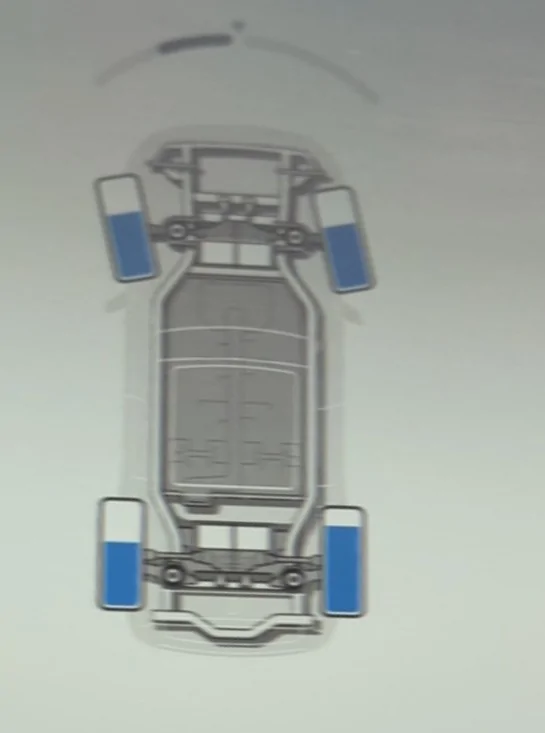
Just as an aside, I have never felt (or seen on gauge view) any signs of torque vectoring in my R1S quad when steering. If they do it, it must be subtle. I suspect this is more aspirational Rivian marketing.

At best, I think the car can sense the slip of each wheel, and back off on torque independently at each motor. I suppose you could call that “vectoring”, but to me that’s just “traction control without having to use the brakes.”
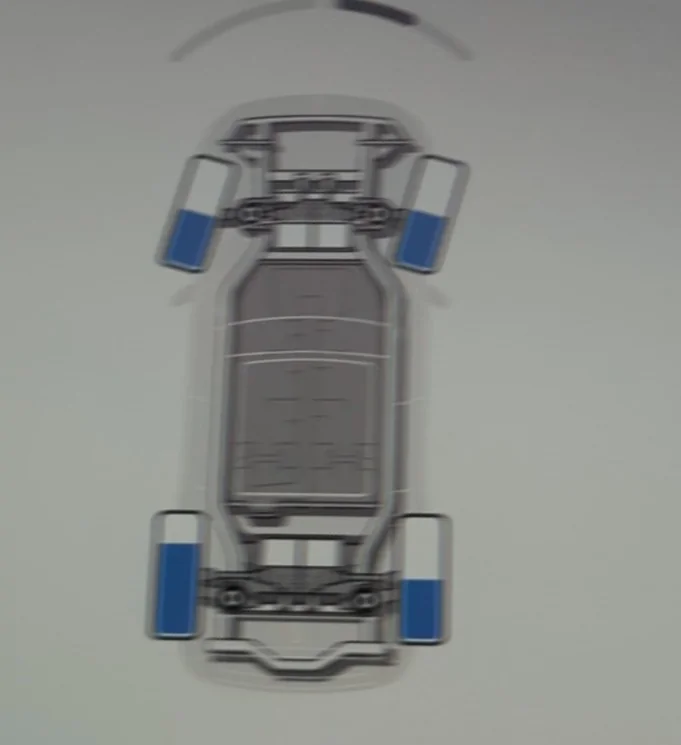
This sure looks like torque vectoring to me

Rivian R1T R1S Gauge view and front motor bias PXL_20231110_180227592.TS_exported_12613


Rivian R1T R1S Gauge view and front motor bias PXL_20231110_180325752.TS_exported_3656
Sponsored


swaggner

Well-Known Member
First Name
Andrew
Joined
Mar 28, 2022
Threads
1
Messages
86
Reaction score
131
Location
Towson, MD
Vehicles
BMW X3M / Rivian R1T (future)
Clubs
 
Let me tell you my tale, and perhaps you can advise on how best to prevent it.

In 5° temps, in the middle of storm, I found my R1S sliding uncontrollably down a highway off ramp and though a stop sign. The ramp was probably -2.5° and covered in ice. This slide was triggered by regen. I tried the brakes, but they did nothing; the wheels were already stopped. I believe the appropriate response is to touch the throttle, but I find that non-intuitive, and I’m not sure that regen wouldn’t have triggered the slide again soon afterwards.

Better tires would have helped, but if snow mode regen used all four wheels, I don’t think I would have slid in the first place. That’s what I mean by less forward bias in snow mode: using all wheels to regen on ice. Change my view.
Were you sliding straight ahead? If so, you can thank the benefits of front biased braking/regen which induces understeer and keeps you going straight. This is how OEMs design cars - they want to keep you pointed straight.

If it was rear biased, you’d likely start going sideways or backwards (oversteer).
 
OP
OP
NineElectrics

NineElectrics

Well-Known Member
Joined
Aug 7, 2022
Threads
49
Messages
915
Reaction score
1,126
Location
US
Vehicles
R1S
Were you sliding straight ahead? If so, you can thank the benefits of front biased braking/regen which induces understeer and keeps you going straight. This is how OEMs design cars - they want to keep you pointed straight.

If it was rear biased, you’d likely start going sideways or backwards (oversteer).
I was indeed sliding straight ahead. I definitely don’t want to understeer, but regen has a strong 100% front bump which seems unnecessary (in my lay view).

I briefly tested Snow Mode and it looks like it significantly reduces the front bias in regen, probably just from dialing back the regen in total. As I mentioned, with normal regen at slow speeds it starts at 100% front. I haven’t been able to reproduce that in snow mode yet.
 
OP
OP
NineElectrics

NineElectrics

Well-Known Member
Joined
Aug 7, 2022
Threads
49
Messages
915
Reaction score
1,126
Location
US
Vehicles
R1S
This sure looks like torque vectoring to me
That’s pretty cool. What mode are you in? I’ve not been able to reproduce this in my normal driving, when there is traction. Did you lose traction in one rear wheel? Why do you think the front wheel torque is not asymmetric?
 

Sponsored

sub

Well-Known Member
Joined
Jul 23, 2021
Threads
34
Messages
1,873
Reaction score
3,306
Location
USA
Vehicles
Rivian R1S, Tesla Model 3
That’s pretty cool. What mode are you in? I’ve not been able to reproduce this in my normal driving, when there is traction. Did you lose traction in one rear wheel? Why do you think the front wheel torque is not asymmetric?
Sport mode. Stability ON, Lowest, firm. The roads were dry, clean, and well above freezing.

The stability control system in All purpose aggressly cuts power when turning rather than helping you be reckless. But sports mode is happy to let you be foolish even when with the same stability = on setting. If you are in sports mode and can't reproduce I suspect you are just driving too responsibly.
 

ActionableDave

Well-Known Member
First Name
David
Joined
Sep 14, 2023
Threads
2
Messages
111
Reaction score
74
Location
Temecula, CA
Vehicles
R1S Launch Edition, LA Silver 22 Sport Bright
Occupation
Market Research Executive
This isn't possible. The computer can't know the point at which you lose traction without crossing it. There's no way to proactively go right up to the point of traction loss without crossing it. Car can sense traction loss and respond, it can't predict it.

What you don't want is to cause wheel slip every time people are stopping. On slick roads etc you'd be asking for people's rear ends to slip out all the time. Imagine the complaints if every rivian lost rear traction and fishtailed a bit every time you let off the gas on wet roads....
But isn't that what traction control does? It senses the point of slippage and backs off from that point, then takes another measurement, and another, as many as 100's per second. So you do get to the point of slippage, but it adjusts wheel torque so quickly that it is imperceptible.
 

cjust2006

Well-Known Member
Joined
May 9, 2022
Threads
27
Messages
326
Reaction score
415
Location
Houston, TX
Vehicles
R1T Adv Limestone
Occupation
IT Analyst
This is a long thread of speculation about something that's working completely correctly. More torque to the front for acceleration helps prevent oversteer. Higher regen in the front is because that's where the majority of stopping force comes from.

If you want to see rear bias, drift will do it, as well as highway speeds of > 75 MPH seem to be almost exact balance.
 

R.I.P.

Well-Known Member
First Name
Sean
Joined
Jan 2, 2023
Threads
13
Messages
1,217
Reaction score
1,681
Location
San Carlos, Mexico
Vehicles
Tesla Y, Cadillac ELR, Rivian R1T, Jeep TJ, F250
Occupation
Electrical Engineer
But isn't that what traction control does? It senses the point of slippage and backs off from that point, then takes another measurement, and another, as many as 100's per second. So you do get to the point of slippage, but it adjusts wheel torque so quickly that it is imperceptible.
Yes, but slippage has to happen for it to work.

This works quite well when combined with a differential. The differential mechanically anchors the wheel with the most traction, and lets the traction control try to harness the slipping one; stability is maintained.

When you take the differential out of the equation such as in the QM or my Hummer EV, both sides are left struggling to find that "grip point", and the result is very poor lateral stability on very slippery surfaces. Better have the best tires possible, and even those won't save you if the surface has a low enough CoF.
 

ActionableDave

Well-Known Member
First Name
David
Joined
Sep 14, 2023
Threads
2
Messages
111
Reaction score
74
Location
Temecula, CA
Vehicles
R1S Launch Edition, LA Silver 22 Sport Bright
Occupation
Market Research Executive
Agreed, but with the speed at which the TCS works, most of the time you don't notice the slip. Not sure why the differential is important with the Quad motor setup, since more power can easily be sent to other wheels to maintain control. Right? What am I missing?
 

Sponsored

R.I.P.

Well-Known Member
First Name
Sean
Joined
Jan 2, 2023
Threads
13
Messages
1,217
Reaction score
1,681
Location
San Carlos, Mexico
Vehicles
Tesla Y, Cadillac ELR, Rivian R1T, Jeep TJ, F250
Occupation
Electrical Engineer
Agreed, but with the speed at which the TCS works, most of the time you don't notice the slip. Not sure why the differential is important with the Quad motor setup, since more power can easily be sent to other wheels to maintain control. Right? What am I missing?
What you are missing is a trip up into the snow & ice with us (avid off-road group).

Reality is a far cry from how people "think" these things "should" work. We have guys running QM's (my first one was a QM) and guys running DMs (my new one is DM). The lack of a differential quickly cripples the QMs in obstacles that take 100% of the traction away from more than 1 wheel, or off-camber very slippery stuff.

With hundreds of hours at the wheel in both, I can assure you that you "notice the slip" lol.
 

ActionableDave

Well-Known Member
First Name
David
Joined
Sep 14, 2023
Threads
2
Messages
111
Reaction score
74
Location
Temecula, CA
Vehicles
R1S Launch Edition, LA Silver 22 Sport Bright
Occupation
Market Research Executive
Interesting; I am not using mine much off-road, but I can imagine how it would cause problems on ice with the issues you note. Something for me to keep in mind for sure. For my normal driving experience, it feels more sure-footed than my Jeep Grand Cherokee Overland 4x4, which had Quadra-Trac II. But I haven't tested my QM R1S on ice yet...
 

racekarl

Well-Known Member
Joined
Jan 5, 2023
Threads
9
Messages
567
Reaction score
853
Location
MA
Vehicles
2023 R1T
Better tires would have helped, but if snow mode regen used all four wheels, I don’t think I would have slid in the first place. That’s what I mean by less forward bias in snow mode: using all wheels to regen on ice. Change my view.
was indeed sliding straight ahead. I definitely don’t want to understeer,
You're describing a situation that, all things considered, was probably much closer to ideal than you imagine under the circumstances.

You are supposing that shifting braking force to the rear would have prevented your front tires from breaking traction. What is more likely, given the established wisdom of vehicle dynamics, is that instead you would have broken traction on the rear tires and would have traveled through that stop sign backwards or while spinning.
 
OP
OP
NineElectrics

NineElectrics

Well-Known Member
Joined
Aug 7, 2022
Threads
49
Messages
915
Reaction score
1,126
Location
US
Vehicles
R1S
This is a long thread of speculation about something that's working completely correctly. More torque to the front for acceleration helps prevent oversteer. Higher regen in the front is because that's where the majority of stopping force comes from.

If you want to see rear bias, drift will do it, as well as highway speeds of > 75 MPH seem to be almost exact balance.
Well, you can blame me for that. But, having experienced a lot of issues with my car, can you blame me for not giving Rivian the benefit of the doubt. I still don’t really trust their engineering. Perhaps they will gain it over time.
 
OP
OP
NineElectrics

NineElectrics

Well-Known Member
Joined
Aug 7, 2022
Threads
49
Messages
915
Reaction score
1,126
Location
US
Vehicles
R1S
You're describing a situation that, all things considered, was probably much closer to ideal than you imagine under the circumstances.

You are supposing that shifting braking force to the rear would have prevented your front tires from breaking traction. What is more likely, given the established wisdom of vehicle dynamics, is that instead you would have broken traction on the rear tires and would have traveled through that stop sign backwards or while spinning.
So, then, if Rivian did indeed reduce front regen bias in snow mode aI should now be concerned, or happy? That’s exactly what I was asking for. Am I a prophet, or did Rivian make a mistake?

Note, I am still not 100% sure they did so. I don’t really drive much in snow mode yet. Maybe this winter we can collect more data.
Sponsored


Top