
Dark-Fx
Well-Known Member
My R1T is covered in external contaminants pretty frequently just by driving it on the road.I'm not a fan of the CT, but the photos I've seen are of external contaminants (fallout or rail dust).
Sponsored
My R1T is covered in external contaminants pretty frequently just by driving it on the road.I'm not a fan of the CT, but the photos I've seen are of external contaminants (fallout or rail dust).
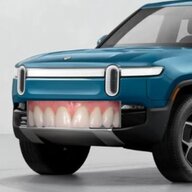
Eh, most trucks are going aluminum due to weight savings for EPA MPG's. Ford F150 body panels are the same. When I bought the R1T knowing it is aluminum skinned I knew that I would be getting some PDR done at some point in the future (Now I've owned the truck 15 months and did 1 PDR appt that cost $150 for 2 dents)Still beats the weak body panels the R1T/R1S has.
At least you can wrap a CT.
Still wouldn't want to buy a CT though due to a hideous design.
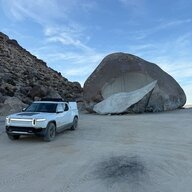
THUNDERDOME BABY!!!!!The Cybertruck forum is truly like a soap opera. People think we are rough here. Over there is like a dystopian future
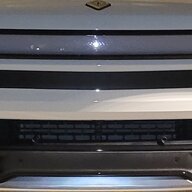
I agree that the image is photoshopped. I'm assuming that the actually corrosion they are seeing is more likely pinpoint surface spots distributed across the body. The corrosion pattern shown in the picture is not possible on a 2 or 3 month old CT.Not a CT fan, but that picture is clickbait doctored: Tesla CT's are Rusting There's no way that the bottoms of the doors are rusted out. No 300 series SS will produce brown thick rust even it is a modified chemistry. Most of the strength comes from the fact that they use cold rolled sheet (not annealed) and I don't believe the chemistry is so special. The first few microns of any SS react chemically with all sorts of things. In fact the reason why SS doesn't rust is a microscopic layer of chromium oxide from air exposure. If scratched it'll recover almost immediately and much faster than a brown iron oxide can form. If it gets too hot, oxygen in the air reacts more readily and the layer gets thicker - eventually becoming thick enough to discolor. Environmental acids can also compromise this layer and make it unsightly, but that doesn't mean it'll rust through. Keeping it looking good is whole other story. Chemical passivation will pull chromium to the surface and will make it act more like chrome plated metal. Polishing the heck out if will make the chromium layer shiny and it'll look and behave more like your SS sink and less susceptible to surface corrosion. I have not laid hands on a CT, but the surface appears lightly brushed, not polished, making it almost impossible to look pristine after exposure to fingerprints, bird crap and maybe standard issue acid rain. I would wrap this thing on day one before it becomes blotchy. Paint is hard to beat for making cars look great. The CT body is an experiment gone wrong. They can't press form any three-dimensional shapes because the material has no such forming capabilities. They can only bend it along straight lines. All cars made from this material will look a like mini-me of the CT. The lack of crumple zones turns it into a road weapon. I do believe Tesla engineers saw this disaster coming, but Elon got his wish.

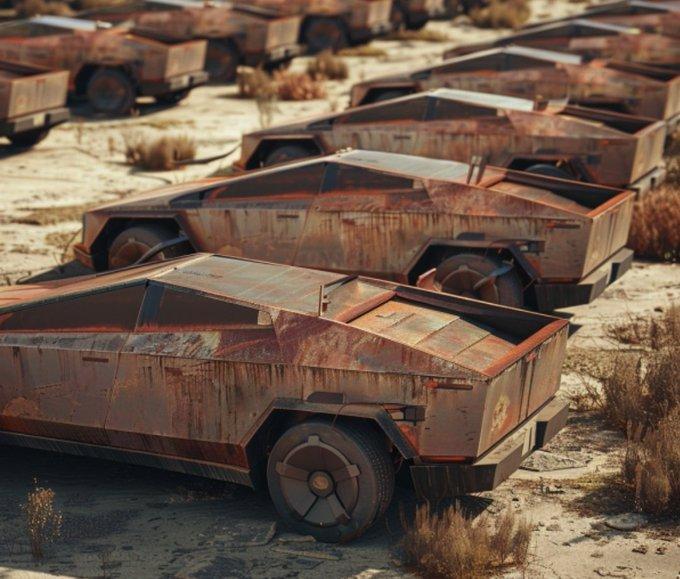

Looks much better.

Even 300 series can be somewhat magnetic where it has been worked.Cost savings, but I'd rather pay 20 bucks more. 300 series is non-magnetic, making it easily distinguishable from cheap 400 series. But I have read somewhere that Tesla uses a modified 300 series. Not sure, though. Now I'm gonna have to carry a magnet in case of a close encounter of CT kind.
There's an enormous gap between rusted out and looks like shit because of the rust. The latter won't take much.There's no way that the bottoms of the doors are rusted out. No 300 series SS will produce brown thick rust even it is a modified chemistry.

?
Tesla offers to the owners of the foundation series a color scheme change after their first 90 days of ownership, free of charge.