
iQB
Active Member
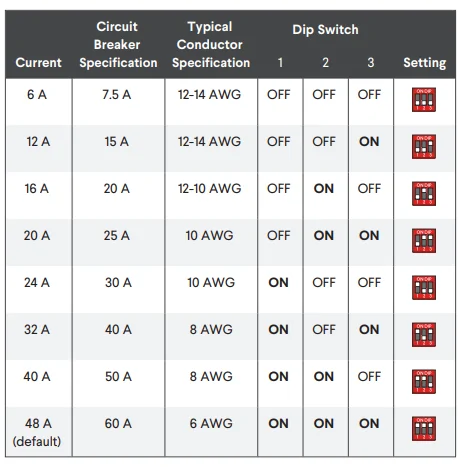
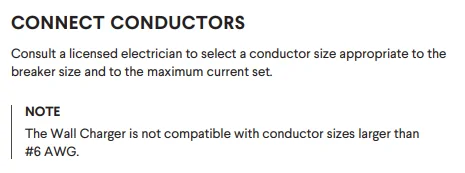
I can't argue with the manual, but no way I'm using #6 for continuous current draw @ 48A. The heat buildup over 4+ hours is a hazard.
Sponsored
I can't argue with the manual, but no way I'm using #6 for continuous current draw @ 48A. The heat buildup over 4+ hours is a hazard.

A #6 AWG wire can typically handle a maximum continuous current of 55 amps. However, this can vary based on the type of insulation, length of the wire, and the environment in which it is installed. For example, a #6 AWG THHN wire can handle 105 amps. A #6 wire with a 75-degree C insulation can be protected by a 60-amp breaker. When considering long-term usage, an 80% load factor should be applied, meaning a #6 AWG wire can safely carry 44 amps over a long period.I can't argue with the manual, but no way I'm using #6 for continuous current draw @ 48A. The heat buildup over 4+ hours is a hazard.
Properly installed, it's not a hazard at all. That's what NEC is all about - specifications that include a safety factor. Don't be a fearmonger.I can't argue with the manual, but no way I'm using #6 for continuous current draw @ 48A. The heat buildup over 4+ hours is a hazard.

Debate is healthy, resorting to name calling is childish, surprised this is the route you've taken. This will be my last response to you on this topic.Properly installed, it's not a hazard at all. That's what NEC is all about - specifications that include a safety factor. Don't be a fearmonger.

This is a small nuance, but it's relevant since the guide doesn't specify the conditions where #6 doesn't actually pass muster for a 60A circuit. When I was first learning about EVSE installation, I found this pretty confusing since I thought wire is wire. What's worse is that the code says that #6 THHN is good for 60A, and that's actually what's inside the NM (Romex) outer jacket!6AWG in conduit properly installed Is ok for 48A on a 60 breaker. 6 AWG Romex is not and is derated due to heat considerations.
Debate is healthy, yes. In the light of well documented and time tested NEC standards, spreading irrational fear despite those standards is not debate and is not healthy on a public forum.Debate is healthy, resorting to name calling is childish, surprised this is the route you've taken. This will be my last response to you on this topic.
To support my comment, I've had several instances in the past 8 years of EV charging, where my 32A mobile connectors will heat up to the point that the charge rate is reduced to 16A. This is using #6 AWG on a NEMA 14-50, which shouldn't even come close to being an issue with continuous charging over a period of hours (~4+ hours). Had this been an issue with one of my properties, I'd say its probably install related, but its happened at several (all located in differing states).

Dropping to 16A at multiple locations sounds like an EVSE or an onboard charger issue. Even 32A is pretty low for a 50A circuit. It's unlikely that all the circuits you've charged on are incapable of safely providing 32A unless maybe the same person installed them and cut the same corner in all of them.To support my comment, I've had several instances in the past 8 years of EV charging, where my 32A mobile connectors will heat up to the point that the charge rate is reduced to 16A. This is using #6 AWG on a NEMA 14-50, which shouldn't even come close to being an issue with continuous charging over a period of hours (~4+ hours). Had this been an issue with one of my properties, I'd say its probably install related, but its happened at several (all located in differing states).
The last install I completed, I used 6/3 Romex, so this may be the culprit. It was my understanding that using this on a 50A breaker shouldn't cause any overheating issues whatsoever, but it definitely does sporadically over extended charging sessions. I've only been charging at 32A when it has happened (receptacle directly beneath the panel).This is a small nuance, but it's relevant since the guide doesn't specify the conditions where #6 doesn't actually pass muster for a 60A circuit. When I was first learning about EVSE installation, I found this pretty confusing since I thought wire is wire. What's worse is that the code says that #6 THHN is good for 60A, and that's actually what's inside the NM (Romex) outer jacket!
I went 14-50 instead of hardwired for a couple reasons.But why not get a hardwired solution when its cheaper to hardwire without expense GFCI breaker/commercial receptacle, less connection point of failure, and yes also the bonus of more power?
Yes, it was somewhat unclear, but conduit apparently allows more heat dissipation than Romex, when installed in the correct size conduit.This is a small nuance, but it's relevant since the guide doesn't specify the conditions where #6 doesn't actually pass muster for a 60A circuit. When I was first learning about EVSE installation, I found this pretty confusing since I thought wire is wire. What's worse is that the code says that #6 THHN is good for 60A, and that's actually what's inside the NM (Romex) outer jacket!
That's because the outer jacket of Romex tightly and thermally couples the individual conductors and also traps heat in the overall bundle. Individual THHN conductors in a properly size conduit (per NEC max cross sectional area fill of 40% with three or more conductors) have room to dissipate heat inside the conduit and through the conduit wall. NEC specifies all of this to provide a time tested safety margin against bad things happening. Just because you could force 6 wires in a conduit doesn't mean you can and meet code. Conduit fll calcs are mandatory to meet code.What's worse is that the code says that #6 THHN is good for 60A, and that's actually what's inside the NM (Romex) outer jacket!
6/3 Romex will be fine for a 50A circuit. It's what I used on my 14-50, but my failures came from the terminals. Before I installed a hardwired EVSE, I replaced my melted 14-50R with a non-melted receptacle and kept going. Within a few hours, I noticed my breaker had tripped. I went to reset it and then noticed the breaker itself was very hot. I took it out of the panel and noticed one of the terminals was loose. Mind you this had been operating perfectly for over 2 years, and it was now overheating. Apparently the extended charging sessions at 40A had loosened the terminals. This may have been a contributing factor for the failure of the receptacle as well. I mention this as something to check that may be atypical of a breaker trip elsewhere. When I installed my Tesla UWC, I also used a torque wrench. The recommended amount of torque is surprisingly high - perhaps more than I could put into the terminal with a screwdriver alone.The last install I completed, I used 6/3 Romex, so this may be the culprit. It was my understanding that using this on a 50A breaker shouldn't cause any overheating issues whatsoever, but it definitely does sporadically over extended charging sessions. I've only been charging at 32A when it has happened (receptacle directly beneath the panel).


