
Sponsored

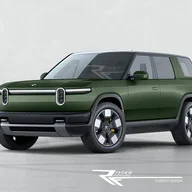
Video: R2 Owner demonstrating a charging session at a Tesla SC

justinkitswa

Well-Known Member
First Name
Justin
Joined
Apr 18, 2025
Threads
3
Messages
53
Reaction score
75
Location
Western Washington State
Vehicles
R1S
I did some math a while back on the 800V/1kV charging concept and fully agree the very-high-charge-rate doesn't make sense - mostly because the grid struggles to handle it, and the infrastructure costs to support it aren't financially feasible.

The charge rate issue for me is more about making the most of what 400V can do and optimizing it. And I suspect it's less about pack endurance and more about thermal management. The amount of heat generated while drawing even 200kW for any length of time easily overwhelms the thermal management systems in most vehicles. Our last R1S would quit charging every single time after about 10 minutes if it was over 90 degrees outside.

https://www.rivianforums.com/forum/...1t-a-new-owners-perspective.54749/post-930864
Sponsored

 

NC-Rivian

Well-Known Member
First Name
Greg
Joined
Jul 31, 2022
Threads
33
Messages
383
Reaction score
670
Location
Hendersonville, NC
Vehicles
LA Silver R1T; Blue R1S
Occupation
Sales
Thanks for posting. This is a bit lower than what I expected: adding 54% in 22 minutes (180 EPA miles). Fwiw almost identical to the Subaru Trailseeker recent video posted.

The gap with the shorter range 800V systems like the Volvo P10 EX60 would add 225 miles in 16 minutes. The long range 800V systems (iX3, Volvo P12) add 280 EPA miles in 19-21 minutes.
On my experience with my R1T, the kw speed is as much a function of the Tesla SC as it is the vehicle. I almost always get a better charge rate from a Rivian SC.
 

NC-Rivian

Well-Known Member
First Name
Greg
Joined
Jul 31, 2022
Threads
33
Messages
383
Reaction score
670
Location
Hendersonville, NC
Vehicles
LA Silver R1T; Blue R1S
Occupation
Sales
Same reason I'm baffled by the "800V or nothing" crowd. No 800V-based car available in the US that can charge that fast. Faster, yes, but not much faster than 400V cars. And the DCFC that can deliver 5 minute charging is even more uncommon. Those who don't read/think past the hot take headlines...
400v would work just fine if Rivian could handle the thermal aspect of charging. At some point the charge rate will be derated due to the inability to keep the battery cool.
 

Indy avocado

Well-Known Member
First Name
Greg
Joined
Dec 17, 2022
Threads
2
Messages
192
Reaction score
238
Location
Indiana
Vehicles
'22 R1T, '17 Macan S, '11 Mustang GT
Jumping in late to this thread, but a lot of confusion/FUD is buried in here, so I'll do what I can to help (and I'm sure get some heat.)

Isn’t that charging speed in line with expectations? I admit I am not sitting through the video but seemed like 20(ish) to 75% in 20(ish) is what you’d expect, no?
OP didn’t hit the prepare battery for fast charging prior to DCFC and he only drove 4mi prior so the battery was likely not warm enough to go faster than 183kW.
IMO - The charging speed in the video is underwhelming - marginally better than we've been seeing from commodity EVs from other manufacturers for the past 3-5 years.

NERD ALERT:
What I did notice is that the R2 never got over 200kW, which almost certainly means that the Supercharger is not providing the 600A that the R2 is capable of and *needs* in order to do a sub-30 minute 10-80% charge. Edit: looks like I haven't been keeping up. The example I saw was 31min 10-80% on a 350kW EA site, but that started at exactly 10% IIRC. Regardless, 600A will help with charging speeds below ~40%.
Its OK though, because 70% of superchargers (V3) can only provide 350A continuously... so 600A would just mean that it slows down to 135kW after 3 minutes instead of 4 minutes.

Testing at a site with a RAN or a HYC400 shows upwards of 210+kW in the 30-40% range, which matches the battery ~380V * 600A. At this supercharger, we see 188kW, which maps to~380V * 500A. It's about a 2-3 minute time savings between 10% and 45% (And therefore to 80% as well) if the R2 can get the 600A it wants.


-------------------------------
An important difference to some people for sure.

Honest question - Aren't the vast majority of chargers available nationwide 400v? And don't most sites that support 800v de-rate when multiple vehicles are present?
Well I mean I agree with that, but that’s not reality. 400v is reality in the USA today and for the next few years at least. Is what it is. Charging infrastructure is a few years away and I have no doubt next gen R1 and R2 will be 800v.
Parts of the U.S. perhaps. West coast and California are fully ready for 800V right now. Even the v4 Superchargers have upgraded to provided 325kw of charging (not talking about the 500kw ones that are still few)
I deleted an earlier reply, because th formatting of the message got screwed up. Even RANs are 350kw, 800v capable and plenty of EVGo, EA stations in the West coast are both 800V and highly reliable now.

We are ready for 800v cars here, and when it comes to the chicken-egg problem, the cars needs to move faster, adopting faster speeds, because the charger deployments are already here.
I took the comments as speaking about 800v infrastructure, not the ability to charge in general. Pointing out that the 800v cars in OOS road trip challenge didn't beat out their 400v counterparts bc of the lack of ubiquitous 800v charging infrastructure today. The thing about 800v cars is they only charge faster if on an 800v capable charger, which again are limited throughout the USA. Otherwise most charge under 120 kW to deal with the mismatched voltage - which means they are actually slower than an R2 or Model 3/Y.

Some newer more expensive cars like BMW iX3 have split pack architecture that can still charge at 200 kW on 400v stations. But that just keeps them on par with R2 and Model 3/Y, not better. The fact that BMW put the extra split pack cost (which isn't cheap) into the iX3 shows they know most people are still plugging into 400v chargers. Joe Q Public doesn't know that Tesla superchargers don't support 800v (except the very few V4 cabinets around).

800v is clearly the future, Tesla is now doing 800v superchargers, it just takes time to build out and become the norm.
If we look at all chargers that the R2 can leverage (NACS w/ CCS adapter) In terms of number of sites/locations:

Currently, ~54% of sites with high power infrastructure are 800V, and every >150kW non-Tesla site.

With Tesla having ended production on the V3 cabinets, *EVERY* site going forward will be 800V capable. The ratio will be 65-75% by this time next year.

2450 Tesla Superchargers
- 1628 are V3 (400V, 350A - Can deliver 500A for 3-6 minutes)
- 809 are V3.5 (support 500A continuous - ~190kW for R2)
- 13 are V4 (800V)

2790 "Other" sites with over 200kW charging (800V+)
- 120 IONNA (all 400kW, 600A)
- 544 EVgo (350kW, 540A)
- 294 PFJ (350kW, 540A)
- 155 Chargepoint (300kW, 500A)
- 1,111 Electrify America (mix of 150kW and 350kW, all 500A?)
- 153 Rivian (300kW, 600A)
- 74 Mercedes (mix of 300kW 500A and 400kW 600A)
- 62 Walmart (and growing by multiple per week)
- 32 BP Pulse (no idea)
- 120 Red E (typically 240kW, 400A - so you're going to see ~140-150kW on R2 here)
- 68 Francis Energy (a shit show)
- 57 Applegreen (mix of 350kW, 500A and 400kW, 600A)
- 46 EV Connect (no idea)
- a bunch of other small providers with 1-20 sites
 
Last edited:

Sponsored

Indy avocado

Well-Known Member
First Name
Greg
Joined
Dec 17, 2022
Threads
2
Messages
192
Reaction score
238
Location
Indiana
Vehicles
'22 R1T, '17 Macan S, '11 Mustang GT
400v would work just fine if Rivian could handle the thermal aspect of charging. At some point the charge rate will be derated due to the inability to keep the battery cool.
400V, at best, is going to deliver a 10-80% of ~19 minutes:

400V * 500A *19/60 = ~63kWh delivered (70% of 90kWh).

However, it's not just thermals at that point. That is holding 2.2C up past 75% SOC. It takes a hell of a good battery to manage that at any temperature. The Taycan and Cayenne fall below that before 70%. Lucid is nowhere close.
 

VandalSibs

Well-Known Member
First Name
Andrew
Joined
Dec 27, 2023
Threads
15
Messages
1,441
Reaction score
2,539
Location
Eastern Washington State
Website
www.sibulskymusic.com
Vehicles
R1T Dual Motor Large Pack
Occupation
Composer, IT Service Desk Analyst
Clubs
 
Exactly. EVs should be capped at 50kw max then. I mean, DCFC is so few in occurrences, why invest in it at all?!
It's not that it isn't worth investing in, it's that in the case of R2 eeking out a few mor kW charge rate wasn't worth the cost when considering the overall price point they were trying to hit for the vehicle or for overall battery life (plus who knows what other considerations). The datapoint that RJ mentioned in the OOS video relates to that - not the overall concept of getting charging rates quicker.
 

Jeremy3292

Well-Known Member
First Name
Jeremy
Joined
Apr 27, 2026
Threads
5
Messages
585
Reaction score
870
Location
South Carolina
Vehicles
R2
400v would work just fine if Rivian could handle the thermal aspect of charging. At some point the charge rate will be derated due to the inability to keep the battery cool.
R2 pretty much solves that problem from what I've seen, at least as good as you'll do on 400v. 4695 tabless cells + ribbon cooling. R1 is not good and they did not manage the thermals on it well at all.
 

Jeremy3292

Well-Known Member
First Name
Jeremy
Joined
Apr 27, 2026
Threads
5
Messages
585
Reaction score
870
Location
South Carolina
Vehicles
R2
Jumping in late to this thread, but a lot of confusion/FUD is buried in here, so I'll do what I can to help (and I'm sure get some heat.)

IMO - The charging speed in the video is underwhelming - marginally better than we've been seeing from commodity EVs from other manufacturers for the past 3-5 years.

NERD ALERT:
What I did notice is that the R2 never got over 200kW, which almost certainly means that the Supercharger is not providing the 600A that the R2 is capable of and *needs* in order to do a sub-30 minute 10-80% charge. Its OK though, because 70% of superchargers (V3) can only provide 350A continuously... so 600A would just mean that it slows down to 135kW after 3 minutes instead of 4 minutes.

Testing at a site with a RAN or a HYC400 shows upwards of 210+kW in the 30-40% range, which matches the battery ~380V * 600A. At this supercharger, we see 188kW, which maps to~380V * 500A. It's about a 2-3 minute time savings between 10% and 45% (And therefore to 80% as well) if the R2 can get the 600A it wants.
There's already videos of R2 doing 6% to 78% in 28 minutes and never touching 200 kW. I'll link the video below. 10% to 73%-ish is going to be the sweet spot of charging as R2 does it in around 20 minutes. It takes another 5+ minutes to get to 80%. Another YouTube video linked below showing that from Kyle at OOS.

R2 charging is the best you'll do on 400v IMO. I'll take 190kW on a nice flat curve every day of the week then some stupid "250 kW for 3 seconds" curve like Tesla does. I've yet to see any better unless it's a small battery (~60 kWh).


6% to 78% video around 10:45 mark:


Kyle OOS spec video showing R2 charging around 1 hr 28 min mark:
 
Last edited:

Indy avocado

Well-Known Member
First Name
Greg
Joined
Dec 17, 2022
Threads
2
Messages
192
Reaction score
238
Location
Indiana
Vehicles
'22 R1T, '17 Macan S, '11 Mustang GT
I've never seen an EV in the USA capable of doing 10 to 80% in under 20 minutes that is 400v. Best you can do on 400v is what R2 and Tesla are doing IMO. R2 looks to be ~20 minutes 10 to 70% from every video I've seen. Falls off around 73% and takes awhile to get to 80%. There are many "hidden" DCFC charges for R2 in YouTube videos if you watch through them.
Correct. That was my point. The *best* a bigger battery 400v EV can do in pure theory is what I consider to be the minimum expectation of a modern long-range EV.

I really hope Rivian can offer a bigger, faster charging battery option in the future. But without 800V architecture, they can't do a whole lot better. I'm not sure that R2 currently fits our needs (as a couple who roadtrips a LOT to very rural/remote areas).

edit:

There's already videos of R2 doing 6% to 78% in 28 minutes and never touching 200 kW. I'll link the video below.
Edited my post to correct this.
 
Last edited:

Sponsored

Jeremy3292

Well-Known Member
First Name
Jeremy
Joined
Apr 27, 2026
Threads
5
Messages
585
Reaction score
870
Location
South Carolina
Vehicles
R2
It's not that it isn't worth investing in, it's that in the case of R2 eeking out a few mor kW charge rate wasn't worth the cost when considering the overall price point they were trying to hit for the vehicle or for overall battery life (plus who knows what other considerations). The datapoint that RJ mentioned in the OOS video relates to that - not the overall concept of getting charging rates quicker.
Exactly.

In order to manage consumer expectations, knowing the lack of ubiquitous 800v infrastructure currently, you have to spend a lot of money on 800v and then also do something like BMW is doing with the iX3 split pack so they aren't deathly slow on 400v chargers. Rivian, and clearly BMW, both know most people are plugging into Tesla superchargers bc they are everywhere. Can't have your iX3 or R2 getting 120 kW bc the charger is only 400v capable. So now we are spending money on 800v and silicon carbide semiconductors, and then also spending money on split pack to deal with 400v chargers. As much as I would pay extra for 800v on R2, it's not a good business proposition currently until charging infrastructure catches up.

It looks like R2 has the best 400v setup there is, so Rivian did the best they could. 4695 tabless cells + ribbon cooling + large heat pump. Next gen R1 and R2 will be 800v I have no doubt. R1 needs it more than R2 at this point with such big batteries.
 

Indy avocado

Well-Known Member
First Name
Greg
Joined
Dec 17, 2022
Threads
2
Messages
192
Reaction score
238
Location
Indiana
Vehicles
'22 R1T, '17 Macan S, '11 Mustang GT
Exactly.

In order to manage consumer expectations, knowing the lack of ubiquitous 800v infrastructure currently, you have to spend a lot of money on 800v and then also do something like BMW is doing with the iX3 split pack so they aren't deathly slow on 400v chargers. Rivian, and clearly BMW, both know most people are plugging into Tesla superchargers bc they are everywhere. Can't have your iX3 or R2 getting 120 kW bc the charger is only 400v capable. So now we are spending money on 800v and silicon carbide semiconductors, and then also spending money on split pack to deal with 400v chargers. As much as I would pay extra for 800v on R2, it's not a good business proposition currently until charging infrastructure catches up.

It looks like R2 has the best 400v setup there is, so Rivian did the best they could. 4695 tabless cells + ribbon cooling + large heat pump. Next gen R1 and R2 will be 800v I have no doubt. R1 needs it more than R2 at this point with such big batteries.
Gravity and iX3 will *smoke* the R2 in charging performance even on 400V.
I would flip the direction - Rivian didn't do the "best" they could with 400V, they chose the cheapest battery that would push 400V architecture to the limit.

Does it matter to most of the EV buying public? Probably not, but I don't know. It matters to me, and I'd prefer to see the state of the industry advance - R2 does 10-80% approximately the same as the 2020 Model Y.
 

DuoRivians

Well-Known Member
Joined
Dec 30, 2022
Threads
259
Messages
3,861
Reaction score
9,181
Location
California
Vehicles
R1T, R1S
Rivian did what they thought was best for their company’s bottom line when they adopted only 400V for the R2. But, consumers of EVs are under no obligation to buy the R2 to support Rivian’s bottom line. Let’s see how the market competition ends up being for the R2. Remember, this product needs to be a global hit, not just a U.S. hit to support the company.


Top