
Sponsored

Charging with a generator

NY_Rob

Well-Known Member
First Name
Rob
Joined
Feb 9, 2022
Threads
23
Messages
5,396
Reaction score
7,970
Location
long island
Vehicles
Model 3 LR AWD, BMW i3 REX, 2024 Rubicon 4xe
Occupation
IT
That seems to be a common misconception on these fora. Why do we think that?
I guess because modern systems contain microprocessors and other sensitive components which were designed to run off clean fully formed sinusoidal wave AC power from utility companies vs. the anything but clean/miss-shaped waveforms produced by cheap/old school portable generators?

I tried running my (microprocessor controlled) HTP UFT 80K BTU condensing boiler with it's (microprocessor controlled) Grundfos Alpha2 ECM circulating pump off my old portable 5'500 watt Generac generator last summer. As soon as the circulator pump came on... it started singing like a hair buzzer, and sounded like it was going to blow up any second. I could only imagine what the (microprocessor based) control board of the boiler was doing. I had to disconnect the power immediately. Obviously I was not going to try my (microprocessor controlled) LG mini-split A/C systems after the boiler disaster. After that I ran the same boiler and it's circulator off my 2,000 watt mini inverter generator and it ran flawlessly without a peep coming from the circulator pump. I later posted my results on heatinghelp.com and was told by several experienced HVAC contractors that modern microprocessor based HVAC equipment should not be run on old school conventional portable generators for several reasons including phase variation, voltage excursions and out of spec waveforms.

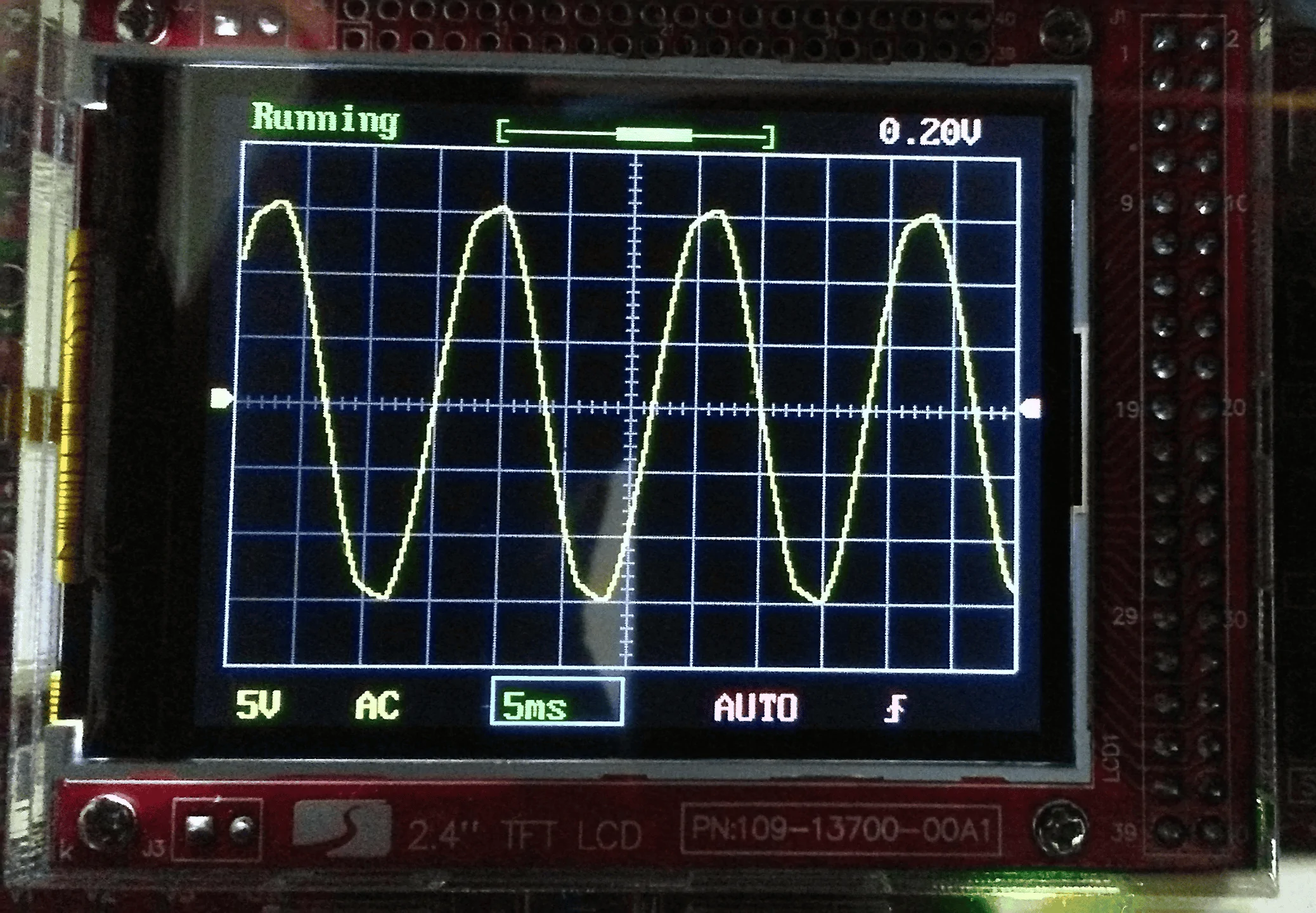
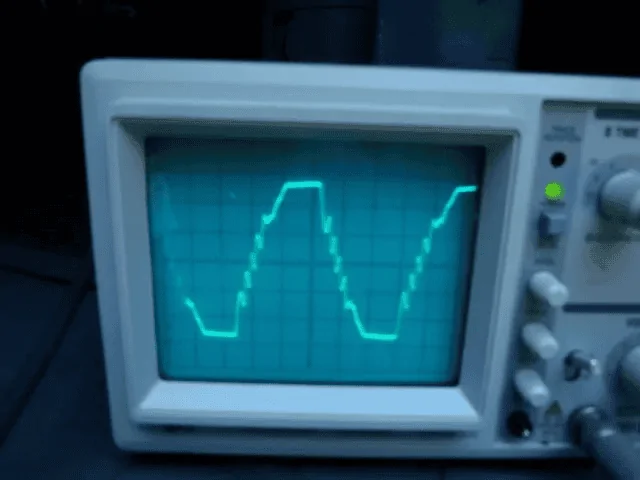
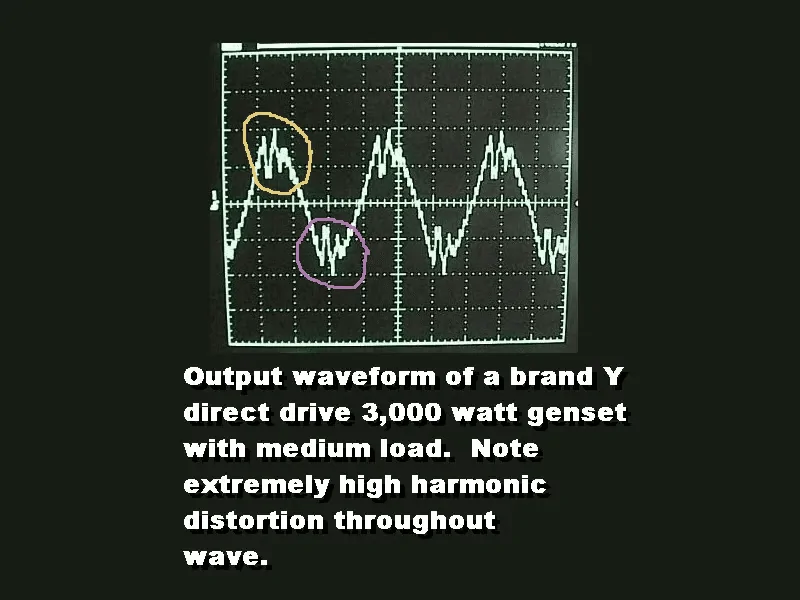
If you want to try to charge your $80K Rivian off a $400 Harbor Freight POS portable generator, be my guest. But at least be informed, put your generator on a oscilloscope and take a look at the garbage energy you are sending to it. That may just change your mind.
Sponsored

 
Last edited:

ajdelange

Well-Known Member
First Name
A. J.
Joined
Aug 1, 2019
Threads
9
Messages
2,883
Reaction score
2,319
Location
Virginia/Quebec
Vehicles
Tesla XLR+2019, Lexus, Landcruiser, R1T
Occupation
EE Retired
Keep in mind that the automobile environment is a difficult one and that therefore the circuits (and other components) are designed to be very robust. I expect that's why they are immune to high harmonic content in the input waveform. I have no Grundfos ECM pumps in my BEV. The ECM motors in my house, however, are run on non inverter generators I won't say frequently (damn thing didn't start last night) but seem to be fine with that (except for the bloody varistor which blows on mains current as well). But that generator is pretty good on THD.

Also be aware that the chargers in BEV have pretty robust filtering in order to suppress high harm
onic current draw typical of switchers (such as we have in this application). What is the THD at the rectifier input in one of these cars when the voltage THD is 15%? Why does the rectifier care what the waveshape is?

I certainly prefer nice clean inverter output when it is available but I think you are doing a chicken little when declaring that inverters are required to charge a BEV

If you want to try to charge your $80K Rivian off a $400 Harbor Freight POS portable generator, be my guest. But at least be informed, put your generator on a oscilloscope and take a look at the garbage energy you are sending to it. That may just change your mind.
Time domain doesn't do the trick. You must look at the spectrum in order to get THD. Why is a signal with harmonic content "garbage"?
 

Zoidz

Well-Known Member
First Name
Gil
Joined
Feb 28, 2021
Threads
226
Messages
5,190
Reaction score
11,692
Location
PA
Vehicles
23 R1S Adv, Avalanche, BMWs-X3,330cic,K1200RS bike
Occupation
Engineer
^ any inverter generator should be safe, but if you're using it's 120v outlets you still may need the neutral/ground bonding adapter depending on how it's wired internally.

Below is the waveform from my little 2,000 watt inverter generator under full load, it's as clean as what I get from my power utility co.

1649273457815.webp
As mentioned previousy, a basic oscilloscope won't show the harmonics. But wait, there's more. The oscilloscope is showing the voltage waveform. But there's also a current waveform. In a conventional generator, the current waveform can be distorted while the voltage waveform looks fine. And it's th
Also be aware that the chargers in BEV have pretty robust filtering in order to suppress high harm
onic current draw typical of switchers (such as we have in this application). What is the THD at the rectifier input in one of these cars when the voltage THD is 15%? Why does the rectifier care what the waveshape is?

I certainly prefer nice clean inverter output when it is available but I think you are doing a chicken little when declaring that inverters are required to charge a BEV

Time domain doesn't do the trick. You must look at the spectrum in order to get THD. Why is a signal with harmonic content "garbage"?
The waveform matters to the rectifier (typically MOSFETs) because a waveform with THD can cause the MOSFET to conduct and/or switch on/off beyond it's intended design limits, which usually causes overheating and destruction of the MOSFET.

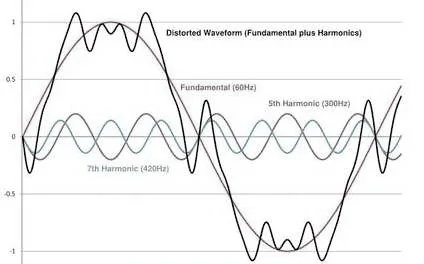
In the AC waveform below, it shows 5th and 7th order harmonics contributing to the distortion. In the real world, there can be additional harmonic orders. The harmonics create the resulting complex waveform, potentially causing the rectifier/MOSFET to operate at a greater duty cycle or peak voltage than designed, and overheat. For example, on a normal waveform, the MOSFET switches on/off once per cycle. In the complex waveform, it could on/off times per cycle if designed to switch at 75%.

To me, it's not worth risking a $10k (or whatever repair cost) by using a non-inverter generator.

Rivian R1T R1S Charging with a generator 1649307303323
 

ajdelange

Well-Known Member
First Name
A. J.
Joined
Aug 1, 2019
Threads
9
Messages
2,883
Reaction score
2,319
Location
Virginia/Quebec
Vehicles
Tesla XLR+2019, Lexus, Landcruiser, R1T
Occupation
EE Retired
As mentioned previousy, a basic oscilloscope won't show the harmonics. But wait, there's more. The oscilloscope is showing the voltage waveform. But there's also a current waveform. In a conventional generator, the current waveform can be distorted while the voltage waveform looks fine.
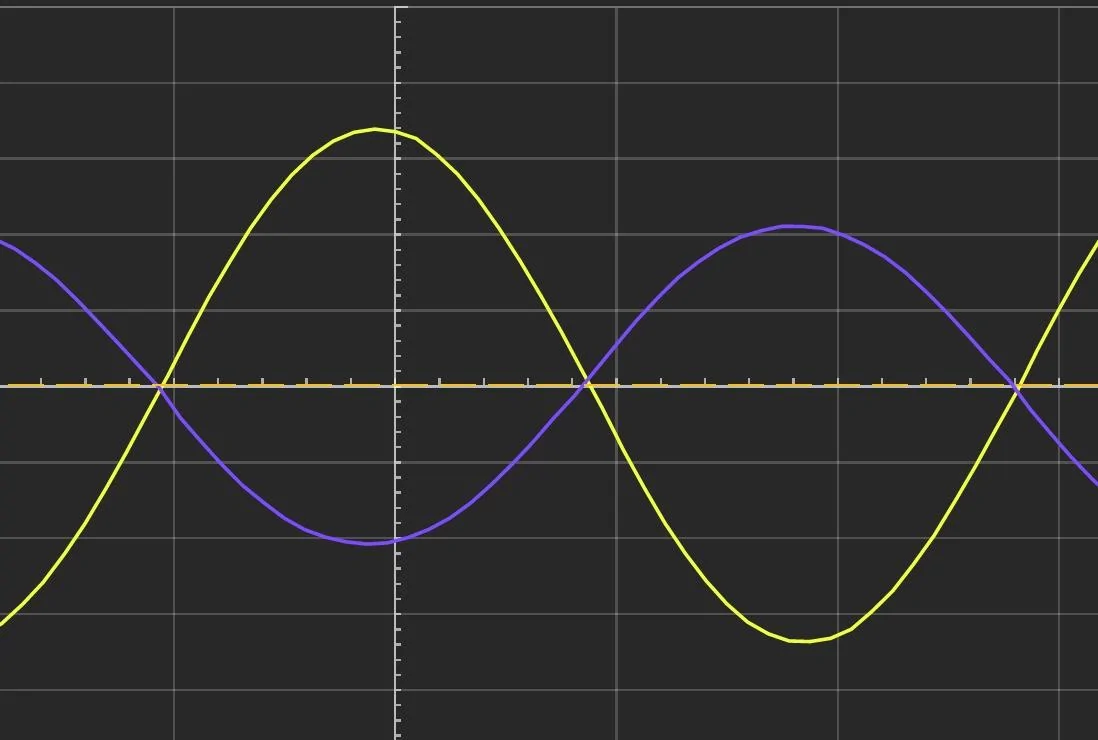
. For a linear load the current follows the voltage. The thing is that most modern power supplies are switchers - not linear. This leads to high harmonic content in the drawn current. I wonder if your concerns have been misplaced from this. High line current harmonics are detrimental to the distribution system (some of the harmonics are negative sequence for example). Equipment to be installed in many facilities is required to meet current harmonic requirements for this reason. The Tesla chargers have filtering in front of the rectifier presumably for this. The following picture shows the voltage and current waveforms for a Tesla charging at 20A. As you can see the current waveform is clean as a whistle:

Rivian R1T R1S Charging with a generator TeslaChargeWaveforms

Voltage: 50V.div; Current: 20A/div.


The waveform matters to the rectifier (typically MOSFETs) because a waveform with THD can cause the MOSFET to conduct and/or switch on/off beyond it's intended design limits, which usually causes overheating and destruction of the MOSFET.
I'm calling BS here because it violates common sense. Today's semiconductors are very robust. Semiconductors aren't designed for a particular waveform or a particular duty cycle. They are designed to switch at a certain rate, dissipate a certain power and withstand a certain PIV.


it could on/off times per cycle if designed to switch at 75%.
So? If such semiconductors can't do that how could they be used in field oriented controll inverters (with PWM on top)? If extra switching results in extra heat (and it will) then more heat sinking solves the problem. Look at you diagram. How much is the peak voltage increased.


To me, it's not worth risking a $10k (or whatever repair cost) by using a non-inverter generator.
The automotive industry's electronics must meet tougher specs than the military's. Tesla nor Rivian has no idea what sort of power supply their vehicles will be connected to. Don't you suppose that they would put in design margins for high THD? Or caveats in the manuals or have protective circuits to prevent charging if THD is too high. AFAIK the only caveat is Tesla's which admonishes not to charge from a generator which is "privately owned".


Your squib says you are an engineer. If you design power electronics on a daily basis then I must bow to your experience but the arguments you have advanced here don't seem to pass the common sense test based on my experience which such things which experience is not exactly recent. I used to design rectifiers with primary control using SCRs when a college student.

Background: I do not charge from generators except for tests and would not do so unless absolutely necessary. The generators I would use are as good as the utility (THD wise). The main reason for this is that electricity from other sources is a penny a kWh or free whereas from a generator it's over a buck (or probably more now that propane prices have gone up so much).
 

Zoidz

Well-Known Member
First Name
Gil
Joined
Feb 28, 2021
Threads
226
Messages
5,190
Reaction score
11,692
Location
PA
Vehicles
23 R1S Adv, Avalanche, BMWs-X3,330cic,K1200RS bike
Occupation
Engineer
. For a linear load the current follows the voltage. The thing is that most modern power supplies are switchers - not linear. This leads to high harmonic content in the drawn current. I wonder if your concerns have been misplaced from this. High line current harmonics are detrimental to the distribution system (some of the harmonics are negative sequence for example). Equipment to be installed in many facilities is required to meet current harmonic requirements for this reason.
All true, but this has nothing to do with my comments - they were specific to the original discussion - THD from a cheap generator - and if Rivian says not to use a generator as a charge source.

The Tesla chargers have filtering in front of the rectifier presumably for this. The following picture shows the voltage and current waveforms for a Tesla charging at 20A. As you can see the current waveform is clean as a whistle:
Was this waveform from a cheap generator as the AC source? Otherwise, it's not relevant to the original discussion - THD from cheap generators vs. inverter generators.
TeslaChargeWaveforms.webp

Voltage: 50V.div; Current: 20A/div.

I'm calling BS here because it violates common sense. Today's semiconductors are very robust. Semiconductors aren't designed for a particular waveform or a particular duty cycle. They are designed to switch at a certain rate, dissipate a certain power and withstand a certain PIV.
No BS here, you are not understanding my comment. Semiconductors are not designed for a waveform or duty cycle, that's correct. But that's not what I'm referring to. I'm referring the circuit design criteria. The switching MOSFET or IGBT in a switching power circuit does in fact have an operating duty cycle (conducting time divided by total time) that is part of the design criteria due to heat generation, and this is why a complex AC input waveform (i.e. containing THD orders) can damage the device as follows:
1 - The circuit design specifies that the device starts conducting at 50% of peak of a normal sinusoidal 60 hz waveform.
2 - A switching device (MOSFET or IGBT) is selected whose specs meet the above design criteria, plus some safety margin.
3 - The mechanical heat sink/cooling system is designed to support that heat load, plus some safety margin.

Now, someone uses an AC source that is out of the design spec, such as a cheap generator that adds 10% THD.

4 - The generator's complex waveform, due to the harmonics, is no longer sinusoidal and has a wider peak that starts to resemble a square wave, and harmonics creates 110% spikes (waveform per my original comment)
5 - This wider waveform with higher peaks causes the device to turn on sooner, and off later, compared to the designed sinusoidal waveform. Therefore, the duty cycle and current flow is increased.
6 - Increased duty cycle and current flow increases heat generated by the device.
7 - The heatsink cooling system was not designed for that, but it operates OK in the safety margin.
8 - Until a hot, 110 degree day with a power outage occurs. You plug the charger into the cheap generator, and after an hour the onboard charger overheats and the MOSFETs or IGBTs fail.

So? If such semiconductors can't do that how could they be used in field oriented controll inverters (with PWM on top)? If extra switching results in extra heat (and it will) then more heat sinking solves the problem. Look at you diagram. How much is the peak voltage increased.
Agreed, this was/is the point of my post. If Rivian designed and fabricated expecting a lower THD or clean waveform with the resulting heat load, a complex waveform will create more heat, potentially greater than the existing heat sinks could handle.

The automotive industry's electronics must meet tougher specs than the military's. Tesla nor Rivian has no idea what sort of power supply their vehicles will be connected to. Don't you suppose that they would put in design margins for high THD? Or caveats in the manuals or have protective circuits to prevent charging if THD is too high. AFAIK the only caveat is Tesla's which admonishes not to charge from a generator which is "privately owned".
I don't recall if it was here or elsewhere, but I recall seeing forum posts that Rivian says to not use a generator. But I can't provide any definite proof Rivian makes that claim. I'm not comfortable assuming that Rivian built in an unknown tolerance for high THD. I have a 7.5kw high quality but non-inverter generator. I'll sell it and by an inverter generator if I decide I need a backup charging source.

Your squib says you are an engineer. If you design power electronics on a daily basis then I must bow to your experience but the arguments you have advanced here don't seem to pass the common sense test based on my experience which such things which experience is not exactly recent. I used to design rectifiers with primary control using SCRs when a college student.
My degree is EE with a second BS in Comp Sci. My work for the past 30 years has blended both degrees in industrial control systems in a variety of roles over the years. A significant part of what we do is MCC (Motor Control Center) spec/layout, installation and startup in the factories we design/build. I have field experience (spec'ing, programming, tuning, troubleshooting) Allen Bradley and other brands of Variable Frequency Drives. At the heart they are AC to DC inverters (and output a complex PWM waveform to power the motor) using the same basic technology as the on-board chargers/inverters in EVs. We have had to deal with cleaning up dirty AC mains to VFDs (using line reactors, etc.) that resulted in the drive repeatedly tripping or faulting, and in a few extreme cases, destruction of the drive IGBTs. The electronics are robust when operated in design spec, but not tolerant of current or thermal abuse. On the circuit design side, I've done several custom switching circuit design/pcb design/fab projects for specialized applications. I'm that engineer who takes on the projects nobody else wants to do, lol. That's where I had hands on experience with component thermal characteristics and heat sink sizing.
 

Sponsored

No.92

Well-Known Member
Joined
Oct 9, 2021
Threads
0
Messages
140
Reaction score
129
Location
California
Vehicles
Jeep Wrangler
^ any inverter generator should be safe, but if you're using it's 120v outlets you still may need the neutral/ground bonding adapter depending on how it's wired internally.

Below is the waveform from my little 2,000 watt inverter generator under full load, it's as clean as what I get from my power utility co.

1649273457815.png
Now please show us one that is not clean?
 

crashmtb

Well-Known Member
Joined
Jul 11, 2021
Threads
1
Messages
4,725
Reaction score
7,238
Location
Man oh Manitoba
Vehicles
2002 aluminium garden shed TD5
SLIDE RULE SWORDFIGHT

Why even risk damage to expensive electronics with a cheap chinesium generator? “I nuked my warranty, but at least I didn’t spend $500 more on an inverter generator”
 
Last edited:

NY_Rob

Well-Known Member
First Name
Rob
Joined
Feb 9, 2022
Threads
23
Messages
5,396
Reaction score
7,970
Location
long island
Vehicles
Model 3 LR AWD, BMW i3 REX, 2024 Rubicon 4xe
Occupation
IT

NY_Rob

Well-Known Member
First Name
Rob
Joined
Feb 9, 2022
Threads
23
Messages
5,396
Reaction score
7,970
Location
long island
Vehicles
Model 3 LR AWD, BMW i3 REX, 2024 Rubicon 4xe
Occupation
IT
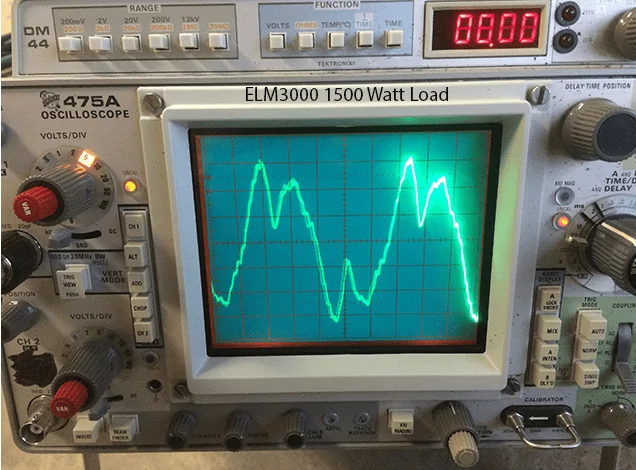
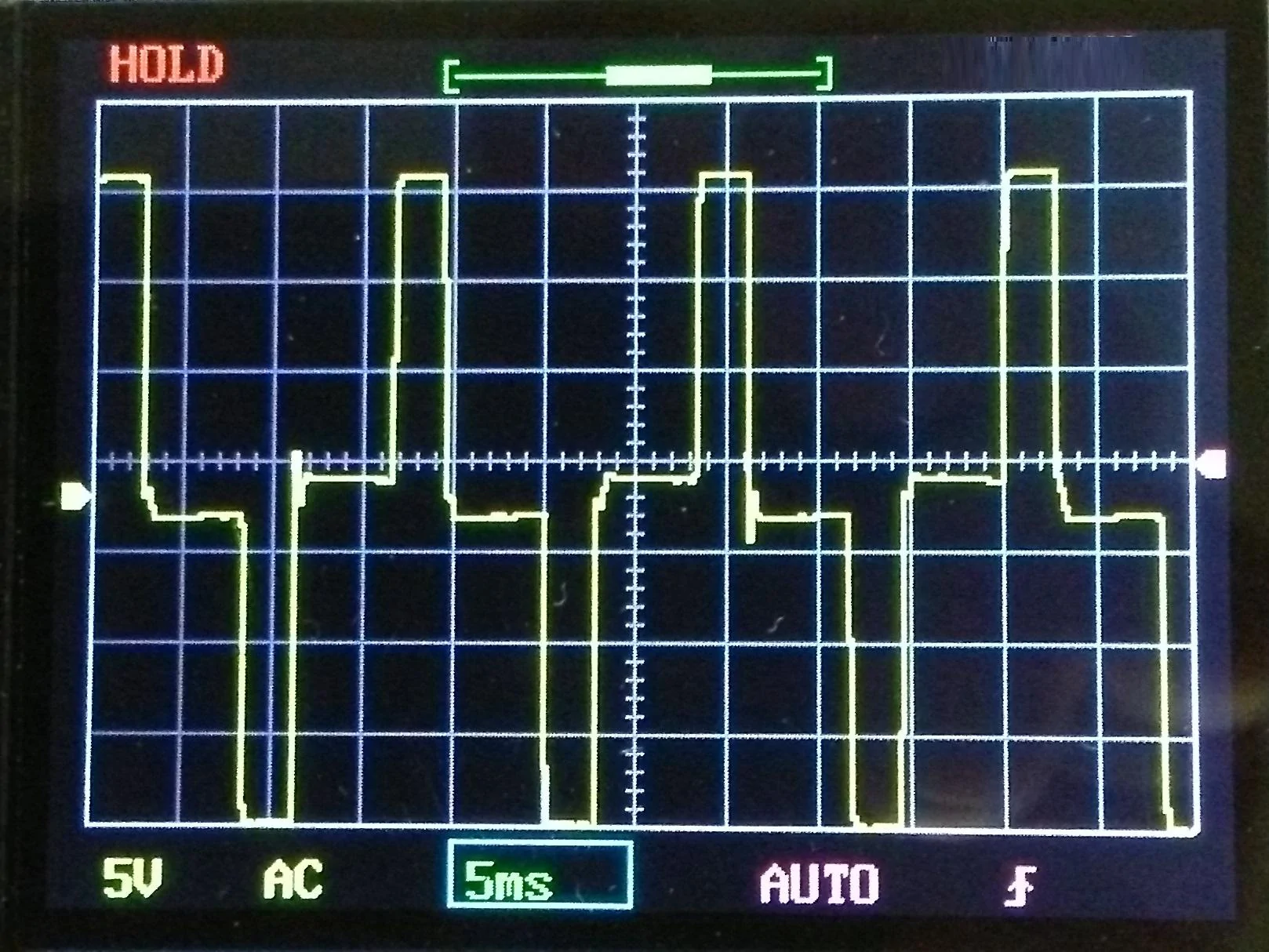
Ot.. but as a PSA.... look at the horrendous voltage waveform output from a standard "non- sine wave" office UPS... You think that's healthy for anything with a microprocessor?

Nowadays, unless you're only planning to run a few incandescent light bulbs or toaster, use an inverter generator and or Sine Wave UPS.


Rivian R1T R1S Charging with a generator Non Sine wave UPS no load
 

SeaGeo

Well-Known Member
First Name
Brice
Joined
Jan 12, 2021
Threads
50
Messages
5,673
Reaction score
10,212
Location
Seattle
Vehicles
Xc60 T8
Occupation
Engineer
1649388903654.png

.
.
.
1649389107501.png

.
.
.
1649389132229.png
Let me grab a ground motion time history. Those are full of content across a whole shit ton of frequency ranges. ?
 

Sponsored

ajdelange

Well-Known Member
First Name
A. J.
Joined
Aug 1, 2019
Threads
9
Messages
2,883
Reaction score
2,319
Location
Virginia/Quebec
Vehicles
Tesla XLR+2019, Lexus, Landcruiser, R1T
Occupation
EE Retired
All true, but this has nothing to do with my comments - they were specific to the original discussion - THD from a cheap generator -
But your concern is clearly about harmonics in the voltage source and your concern seems to be misplaced. Harmonics in the current drawn by a load ARE a big deal and I thought perhaps that's where you got your concerns.

and if Rivian says not to use a generator as a charge source.
But they don't. At least not in the owners manual that I downloaded last fall. Do thy somewhere else?


Was this waveform from a cheap generator as the AC source?
No. As you can see it it is very low THD (< 2%) blended from Powerwall and Enphase Microinverters.


Otherwise, it's not relevant to the original discussion - THD from cheap generators vs. inverter generators.
Well I think it may be. First you'll need to know a bit about the architecture of the Tesla charger (as deduced from autopsies posted on YouTube). The input to the charger is passed through a pretty substantial pre-conditioning filter and thence to a bridge rectifier which is thought to be passive but there is debate on this. The DC from the rectifier is then inverted in another bridge the output of which is connected to the primary of an isolation transformer and the secondary of that goes to a second rectifier which feeds the battery. The current to the battery is clearly regulated by changing the PWM duty cycle at the inverter.

The picture was captured with the charging rate throttled back to 20A at which point the PWM waveform duty cycle is clearly relatively low so that the current drawn from the input is very rich in harmonics. But the current drawn from the line is pure as a mountain spring so clearly the input filter has done an excellent job in removing those harmonics (that's what it is there for). My thought is that if it remove harmonics in one direction it will remove them in the other too so that the inut waveform to the rectifier bridge may not be as dirty as you think even with 20% THD sources,

No BS here, you are not understanding my comment. Semiconductors are not designed for a waveform or duty cycle, that's correct. But that's not what I'm referring to. I'm referring the circuit design criteria.
No, I'm afraid it is still BS. If you were working for me in the rectifier design section of Rivian or Tesla and came back with a design that wouldn't robustly withstand 20% THD I'd send you back to the drawing board.


Now, someone uses an AC source that is out of the design spec, such as a cheap generator that adds 10% THD.
Let's assume, for a crude analysis, that ALL that THD gets converted to unwanted heat. That's an increase of 1% over the fundamental power handling capability of the device at the fundamental. This is a problem?


Agreed, this was/is the point of my post. If Rivian designed and fabricated expecting a lower THD or clean waveform with the resulting heat load, a complex waveform will create more heat, potentially greater than the existing heat sinks could handle.
I wouldn't design such a system. Would you?


I'm not comfortable assuming that Rivian built in an unknown tolerance for high THD.
That, I believe, is at the core of your problem here. I am absolutely confident that their design is as robust in this dimension as in any other. That portable "charger" can be plugged in anywhere in the world where the voltage and grounding are correct. Were there severe limitations on THD they would have to at least warn us about them.


I have a 7.5kw high quality but non-inverter generator. I'll sell it and by an inverter generator
What's its THD?

My degree is EE with...
Thanks. Helps to know to whom one is talking.
 

blturner

Well-Known Member
First Name
Brian
Joined
Jun 10, 2021
Threads
17
Messages
262
Reaction score
238
Location
Kansas City MO
Vehicles
Rivian R1T
Occupation
Space Pirate
I have a friend that is a genius in power electronics with many years building power supplies for mainframes. I will ask him and report back.
Those generator waveforms do look terrible. This surprises me because our whole 60hz AC system is historically based on spinning wires through magnetic fields at some multiple of 3600RPM. I know that Portable generators do struggle to keep the RPM/Hz steady but I don't see a reason why the waveform would have significant harmonics to it. I though that a sine wave was the natural shape of a generator waveform. I am not saying you're wrong, but now I am curious as to why. Perhaps magnet arrangement, inconsistent magnet materials or some such.
I did once try to power a computer off of a cheap generator and it did not even power on. Switched to an inverter one and then no problem. The inverter one was half the watts of the non-inverter one.
 

ajdelange

Well-Known Member
First Name
A. J.
Joined
Aug 1, 2019
Threads
9
Messages
2,883
Reaction score
2,319
Location
Virginia/Quebec
Vehicles
Tesla XLR+2019, Lexus, Landcruiser, R1T
Occupation
EE Retired
They have been making generators for years and there is as much art in it as science. The trick to getting a nice sinusoidal output is in winding the stator carefully. If one looks in books on the subject one sees things about how to number the turns in slots, how many slots to have a winding span etc in order to suppress a given harmonic. That's the general idea but I have no idea what corners one must cut in order to get waveforms as lousy looking as the ones posted but note that any of them are easy to rectify which is all that's required to turn them into DC.
 

ajdelange

Well-Known Member
First Name
A. J.
Joined
Aug 1, 2019
Threads
9
Messages
2,883
Reaction score
2,319
Location
Virginia/Quebec
Vehicles
Tesla XLR+2019, Lexus, Landcruiser, R1T
Occupation
EE Retired
You're trying to figure out how to charge your electric car with a portable gas generator? I'm sorry, this is just a dumb concept to begin with.
Why ever would you think that? You might be interested to know that is a few places around the US there are services with generators mounted on trucks that will come out to you if you run out of electricity and give you enough of a charge to get to a DCFC.

If I have a 10 day power outage here (not common but it happens) I'll be charging my BEV from a generator for sure.

How is either of these dumb?
Sponsored


Top