Sponsored

Cold weather Kills the battery!

Thedude

Well-Known Member
Joined
Oct 28, 2022
Threads
4
Messages
1,641
Reaction score
2,934
Location
Alaska
Vehicles
R1T
If you are charged fully does the plug-in keep the batteries heated?
No, what I’ve been doing is setting the charge limit to 70/85 and the bumping it up to 100 a while before leaving to get the juice flowing again.
Sponsored


crashmtb

Well-Known Member
Joined
Jul 11, 2021
Threads
1
Messages
4,725
Reaction score
7,238
Location
Man oh Manitoba
Vehicles
2002 aluminium garden shed TD5
What radiator? Is there a fluid cooling the battery?
Yes the battery is heated/cooled via liquid.

there is a big heat exchanger(radiator) at the front of the vehicle. angled to fit a larger unit.
 

mkhuffman

Well-Known Member
First Name
Mike
Joined
Nov 9, 2020
Threads
14
Messages
2,869
Reaction score
3,219
Location
Virginia
Vehicles
2025 R1T Tri-Max, Jeep GC-L, VW Jetta
No, what I’ve been doing is setting the charge limit to 70/85 and the bumping it up to 100 a while before leaving to get the juice flowing again.
Are you sure? It would be very unusual for a BEV to not warm the battery when the battery is cold. It might not warm it when the battery is 40 F, but if the battery temp drops below freezing, it could cause battery pack damage. When plugged in during very cold weather, it should warm the battery if the battery temperature drops too low. If it doesn't, that is a problem IMO.
 

Thedude

Well-Known Member
Joined
Oct 28, 2022
Threads
4
Messages
1,641
Reaction score
2,934
Location
Alaska
Vehicles
R1T
Are you sure? It would be very unusual for a BEV to not warm the battery when the battery is cold. It might not warm it when the battery is 40 F, but if the battery temp drops below freezing, it could cause battery pack damage. When plugged in during very cold weather, it should warm the battery if the battery temperature drops too low. If it doesn't, that is a problem IMO.
I’m not certain but there is no reason to keep a battery not in use warm. The batteries are not damaged by being cold.
 

mkhuffman

Well-Known Member
First Name
Mike
Joined
Nov 9, 2020
Threads
14
Messages
2,869
Reaction score
3,219
Location
Virginia
Vehicles
2025 R1T Tri-Max, Jeep GC-L, VW Jetta
I’m not certain but there is no reason to keep a battery not in use warm. The batteries are not damaged by being cold.
If you want to charge the battery, you should never charge it if the battery is 32 F or below. From what I have read, it can severely damage the battery. That is why the battery should never be allowed to drop below freezing.
 

Sponsored

Thedude

Well-Known Member
Joined
Oct 28, 2022
Threads
4
Messages
1,641
Reaction score
2,934
Location
Alaska
Vehicles
R1T
If you want to charge the battery, you should never charge it if the battery is 32 F or below. From what I have read, it can severely damage the battery. That is why the battery should never be allowed to drop below freezing.
For charging yes but sitting in the cold doesn’t damage the battery. My trailer batteries are lithium and they are not damaged even when it gets below 0°F. They won’t accept a charge until warmed up and are designed to use incoming current to heat up before changing in a similar fashion the an EV’s battery pack.
 

RealBillNye

Well-Known Member
Joined
Mar 29, 2022
Threads
0
Messages
150
Reaction score
98
Location
Hood River, OR
Vehicles
2021 Honda Ridgeline RTL-E
Occupation
Aerospace Engineer
250 miles drive in 16-20 degrees, with pretty gusty wind. No precip.

Good speeds, up to 80 mph.

Averaged 1.47 miles/Kw

About a 30-40% drop from norm.

R1S.

What efficiency are you getting without gusty winds and speeding? Both of those seem like the reasons you are getting that efficiency vs the temperature.
 

3l3c7r1c

Well-Known Member
Joined
Sep 21, 2021
Threads
6
Messages
218
Reaction score
200
Location
Seattle, Washington
Vehicles
2020 Hyundai Palisade Limited, 2012 Honda CR-V
There are two factors that impact range in cold temperatures: battery capacity and efficiency.

If the battery is cold, the chemical reactions are slower and battery capacity is effectively lower. So if the usable capacity is 125 kWh when the battery is warm, it could be 100 kWh (or lower) when cold, depending on how cold the battery is of course. The BMS will warm the battery during preconditioning, but of course the warming process needs energy, which reduces driving efficiency.

Besides preconditioning, I do not know when Rivian keeps the battery warm, so if you do not precondition, it is possible no additional warming of the pack occurs. This would mean only capacity is impacted, not efficiency. You could drive at the same efficiency with a cold pack, but because the capacity is reduced, have shorter range.

Full battery capacity requires the battery to be at around 70 F.

Efficiency is greatly impacted by interior climate control settings. If you like the interior of the truck warm, of course that will greatly reduce efficiency. If you leave from a warm garage, with the battery capacity close to normal, and you don't use the climate control heater, you will likely see the same efficiency and range as when it is warm outside. At least until you turn on the heat and the battery starts to cool off.

As the battery cools off, your available battery capacity will shrink but efficiency will stay the same, as long as you are not heating the cabin.

A 40-50% reduction in range in zero F temperatures is normal in a BEV. My Mach-E is EPA rated at 270 miles, which I can achieve in the summer. In the winter, I have seen 180 miles of range when it is below freezing outside. I use the heat, and I don't care because I can charge at home. When on a trip I keep interior temperatures lower and pre-condition when on L2. Also my garage is usually in the 60s even when it is very cold outside.

IMO, BEVs are not ready for the general public. Early adopters like us can deal with the challenges, but normal people (like my wife) have no patience for it. Cold weather range, poor highway range and poor charging infrastructure are big problems that normal people won't want to deal with. I admit, I am not normal.
I have built a LFP battery for emergency home power backup and did some research on battery capacity, variables impacting capacity, charging and discharging temp etc. Just putting my thoughts based on that knowledge.

Not totally accurate the battery's actual capacity is impacted by the temperature. If discharged faster, capacity is reduced a little bit and cold battery may show higher/lower internal resistance that's why manufacturers came up with a standard on what temperature and what rate of discharge to test the capacity. But that capacity difference is just couple of percentage at most.

Lithium battery can be used at -20C, which is pretty low and should be rare in most places. Battery heater technically doesn't have to to kick in above this temperature if you are just driving. But cold air is usually heavier (not sure if that's significant) and cabin heating takes up a lot of energy. That's possibly eating up the battery. Now if you are heading for a charger the car needs to warm up the battery to 0C at least, below that it cannot take charge (it damages the battery cells). So battery heater starts working and that might consume a hell lot of energy for such a large pack. That's why if you start charging at below freezing, the car won't charge the battery for a while; use the energy it is getting for the charger for heating up the batteries first. Also maybe for safety, car is actually heating the battery even few degrees above this threshold so even more power usage there.
 

Franksmartin

Well-Known Member
First Name
Frank
Joined
Jan 9, 2022
Threads
8
Messages
264
Reaction score
253
Location
Somerville MA
Vehicles
None
Occupation
Software
Craigins nailed it

n EV coming out of a warm garage will fare MUCH better than a car sitting outside at 0 degrees. I think this is one of the reasons person X swears it’s fine while person Y cites a 50% loss. Preconditioning helps but not as much as that toasty garage

and don’t get cocky if you have a garage since the vehicle may be sitting outside at your destination
Do you run heat inside your garage?
 

Sponsored

R.I.P.

Well-Known Member
First Name
Sean
Joined
Jan 2, 2023
Threads
13
Messages
1,217
Reaction score
1,681
Location
San Carlos, Mexico
Vehicles
Tesla Y, Cadillac ELR, Rivian R1T, Jeep TJ, F250
Occupation
Electrical Engineer
There is some less-than accurate information being tossed about here.
Q: "Will the vehicle maintain the battery pack at safe temperatures if I leave it plugged in?"
A: YES. At least it _better_.

I was not involved in the design of the Rivian BMS, but I have designed & built the BMSs in a half dozen other OEMs. Rivian is not stupid, they are going to use best practice.
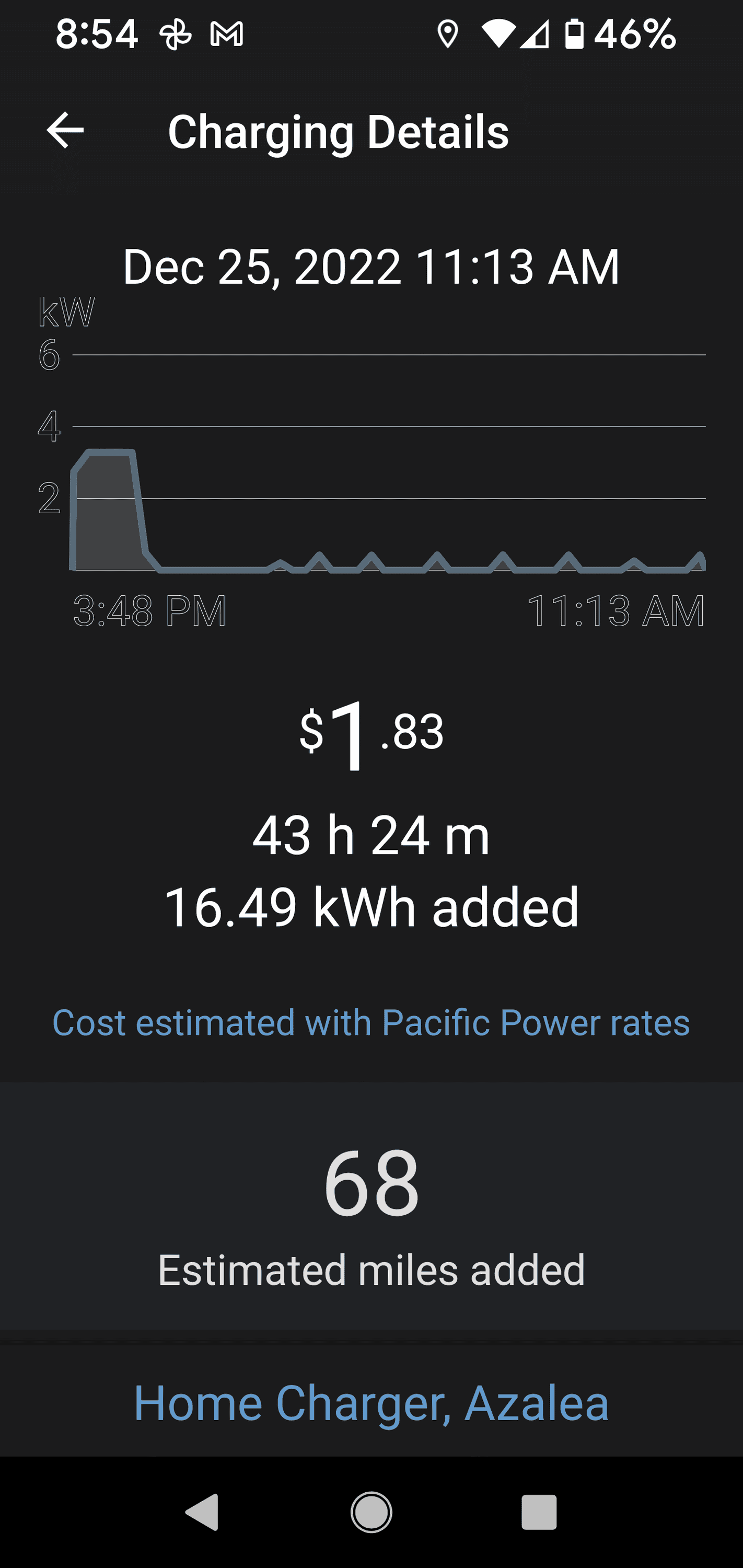
Rivian R1T R1S Cold weather Kills the battery! Screenshot_20230102-085418

This is a shot of the draw behavior of a 2015 Spark EV plugged into a ChargePoint home Flex EVSE at about 32 degrees Fahrenheit. You see the power draws as it uses the battery heaters to keep its pack from freezing. Now mind you, this is a 10-year-old pack using 20-year-old tech. I would find it hard to believe that Rivian has not caught up with 20-year-old GM technology, so I would find it equally hard to believe that it is not using similar battery protection algorithms.

While it is technically true that it will not damage a pack to "freeze" as stated by one poster, it certainly _will_ damage the pack to use it at temperatures below 32F; that includes charging or discharging the pack. That being said, if you were to drive the vehicle with the pack below freezing, you would damage it. So the BMS _must_ keep the battery from freezing to allow it to be used (otherwise, you would have to wait until the battery warmed up to use the truck).

All OEM EV builders I am familiar with recommend leaving the vehicle plugged in when not in use if at all possible in very cold or hot weather. This is to allow the vehicle to use shore power to keep the battery at operational temperatures. I am new to Rivian, but I would be stunned if they did not use all of these best practices for pack longevity, and would ask for my deposit back.
 

crashmtb

Well-Known Member
Joined
Jul 11, 2021
Threads
1
Messages
4,725
Reaction score
7,238
Location
Man oh Manitoba
Vehicles
2002 aluminium garden shed TD5
If you want to charge the battery, you should never charge it if the battery is 32 F or below. From what I have read, it can severely damage the battery. That is why the battery should never be allowed to drop below freezing.
The batteries are fine to get below freezing, just have to warm up before chsrging(including via regenerative braking). Have cold soaked an tesla model S at -30 more then once...
 

R.I.P.

Well-Known Member
First Name
Sean
Joined
Jan 2, 2023
Threads
13
Messages
1,217
Reaction score
1,681
Location
San Carlos, Mexico
Vehicles
Tesla Y, Cadillac ELR, Rivian R1T, Jeep TJ, F250
Occupation
Electrical Engineer
The batteries are fine to get below freezing, just have to warm up before chsrging(including via regenerative braking). Have cold soaked an tesla model S at -30 more then once...
No. It is _not_ ok for your battery to freeze. If you charge/discharge it at extreme temperatures, it _will_ damage it.

-Regenerative braking is charging the battery.-

When you cold soaked your Model S, Tesla's BMS made sure that the actual pack temperature did not go below safe (32F). That is how it is designed. If something happens that prevents the BMS from doing this (like your pack drains too low) the BMS will not allow you to start, use or charge the vehicle until the battery is back within safe temperatures. This is rare, because the car and the ap will give you a lot of warnings first.
 

crashmtb

Well-Known Member
Joined
Jul 11, 2021
Threads
1
Messages
4,725
Reaction score
7,238
Location
Man oh Manitoba
Vehicles
2002 aluminium garden shed TD5


Top