Sponsored

1st Time Trying DCFC - Observation & Questions

BTOR

Well-Known Member
First Name
Brad
Joined
Dec 2, 2024
Threads
14
Messages
222
Reaction score
136
Location
Oregon
Vehicles
2023 Bolt, 2025 R1S
After reading several posts where owners had very low DCFC speeds with their Gen2's, I wanted to see what my 2025 R1S would do. Perviously, I had only done Level 2 charging. I drove to an Electrify America station that was a CCS 350 kW charger.

It was a 20 min drive to the station. I used navigation to the station thinking that would start a preconditioning session. I don't think it worked. My battery temp still read 50 deg when I arrived at the charger (same as when I left). So question #1: I've been told that if I used Nav and stop at the recommended selected charger, the vehicle will automatically start pre conditioning the HV battery. But not sure how to do it when you drive straight to a charger that is relatively close to home and your current SOC is more than enough to get you to the charger. Maybe someone knows the answer to that.

SOC started at 47% and finished at 70%. It delivered between 72 - 78 kW for the first 20 minutes or so. I had the heater on during the those 20 min. which I know used more power but I figured it would not slow down the charging since the charger was capable of putting out way more power than what it was delivering. When I turned the heater off, however, it climbed to the mid 90's for the remaining 10 minutes with a peak at 105 kW. I am not sure if this was due to the batter pack warming up or me turning off the heater or a combo. I suppose I could have turned the heater back on. If power delivered dropped back to the mid 70's that might have told me there was something up with the charger. Not really sure.

In general, I was glad to see the delivered power climb during the CS, rather than drop as several posts described with their vehicles. I figured the low delivery power was primarily due to the HV battery being very cold. At the end of the CS, the battery read 91 deg. which still seems low for optimum DCFC. The ambient temperature was 45 deg.

So my questions is... does this all sound fairly normal given the ambient conditions and the starting battery temperature or should I have expected something in the 130 - 170 kW range? Should I be suspicious or concerned that my R1S isn't charging properly with DCFC? I plan to try a couple of other DCFC to rule out the this particular station and hopefully have the battery at a much higher temp for optimum charging conditions.

Thank you.
Sponsored
 

SPITmadFIRE

Well-Known Member
Joined
Jul 27, 2021
Threads
10
Messages
842
Reaction score
1,388
Location
CA
Vehicles
2024 R1S PDM Max Pack 20" AT
I've been told that if I used Nav and stop at the recommended selected charger, the vehicle will automatically start pre conditioning the HV battery. But not sure how to do it when you drive straight to a charger that is relatively close to home and your current SOC is more than enough to get you to the charger. Maybe someone knows the answer to that.
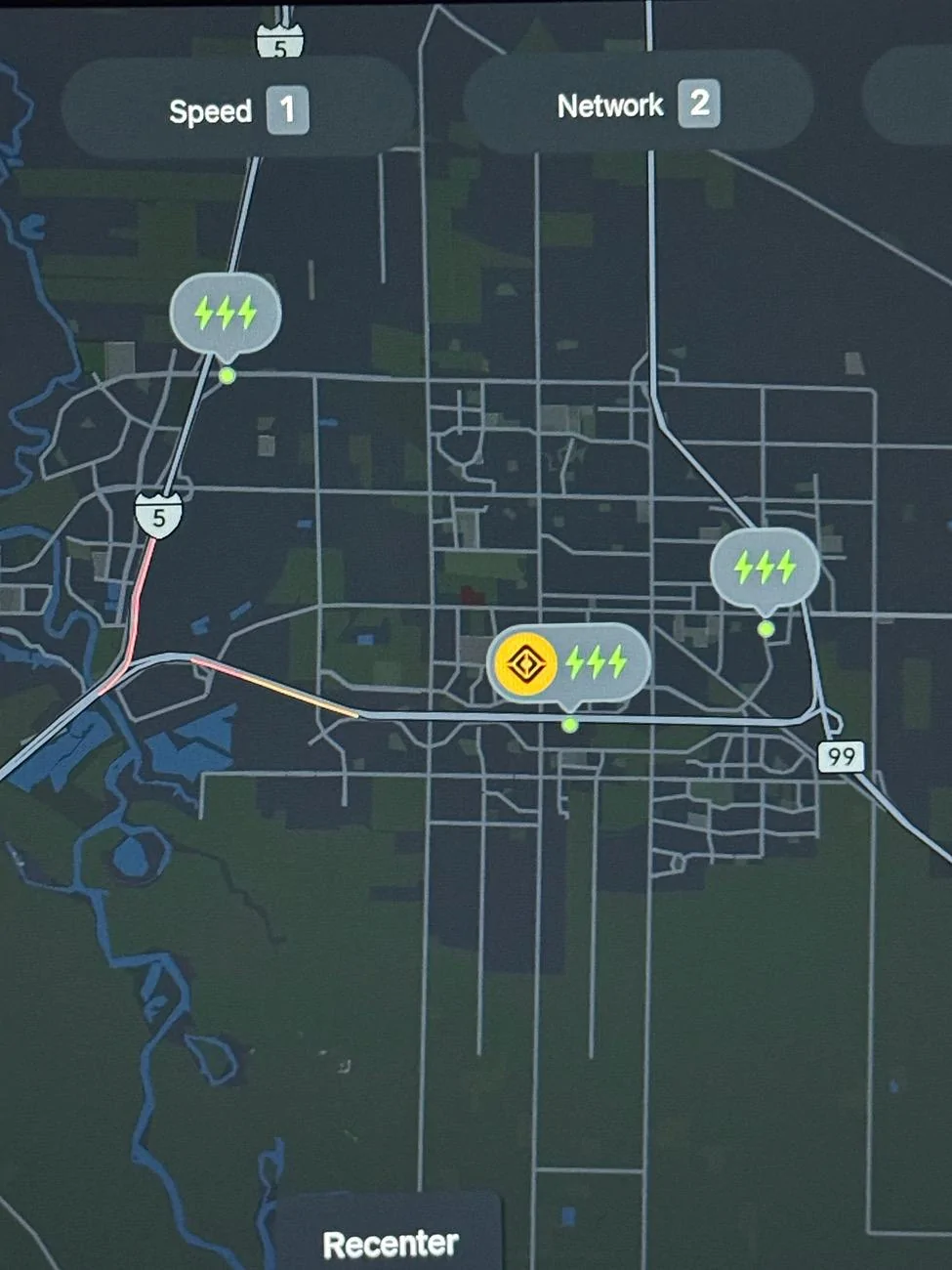
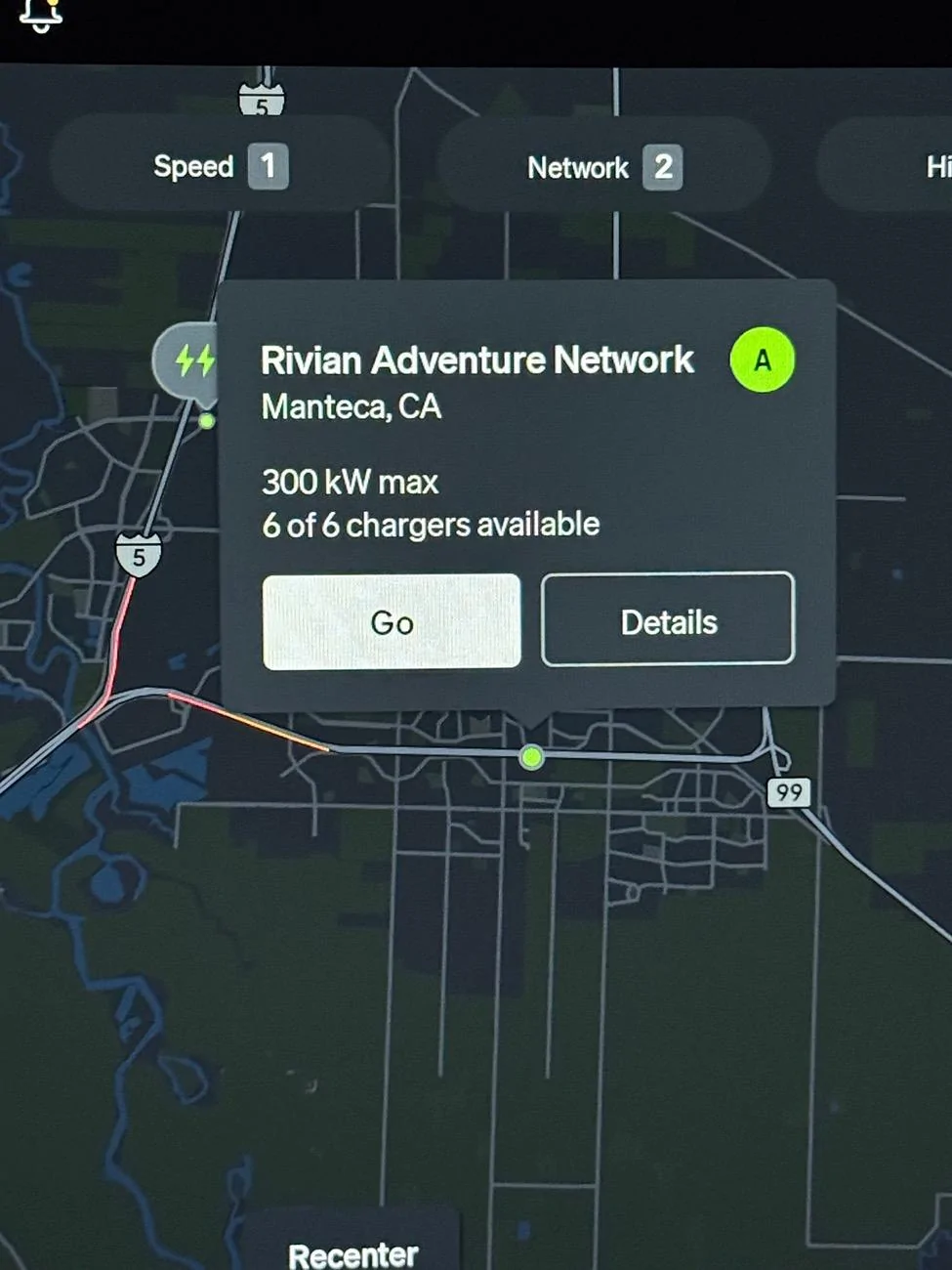
This is true regardless of which fast charger you select in the nav. It does not have to be one recommended along your route. It can be confusing when *manually entering the address of a charger* because the nav will NOT recognize that. If you just want to drive right to a charger and enable preconditioning, you should select the lightning bolt icon on the map for the chosen charger and start navigating to it.

Rivian R1T R1S 1st Time Trying DCFC - Observation & Questions 1735693893302-id


Rivian R1T R1S 1st Time Trying DCFC - Observation & Questions IMG_4903


Your drive was only 20min which is not really enough time to do any meaningful preconditioning. If you want to get a few more Fahrenheit's into your battery, just do some... aggressive... accelerations. That'll get the battery warmed up quick ?

SOC started at 47% and finished at 70%. It delivered between 72 - 78 kW for the first 20 minutes or so. I had the heater on during the those 20 min. which I know used more power but I figured it would not slow down the charging since the charger was capable of putting out way more power than what it was delivering.
The charger was almost certainly not the limiting factor here. It's important to note that despite a charger saying 350kW, it will not always max out at that value. Multiple chargers are usually linked to a single feed point, and all of the chargers on that feed share capacity. Even so, I doubt the charger was limiting anything here. Your charge rates are indicative of a cold battery, and running the heat/AC at the same time. It's not that the heat is directly taking the power from the charger, it's that your vehicle only has so much thermal management capacity. If the car is warming the cabin, that's thermal management capacity it cannot use to cool down the charging components, the battery itself, etc. Rivians are notorious for limiting charge rates dramatically when heat/AC is on

When I turned the heater off, however, it climbed to the mid 90's for the remaining 10 minutes with a peak at 105 kW. I am not sure if this was due to the batter pack warming up or me turning off the heater or a combo.
This increase is almost certainly because both the battery has been warmed a bit, and there's more thermal management capacity available when turning off the heat. Try just your seat heater and steering wheel heater next time. Those don't affect charge rates.

Also, it's helpful to note what state of charge your battery was at for a given charge rate. 105kW is extremely slow for a 15% battery at 80F, but is relatively fast for a 70% battery that's a bit cold.

In general, I was glad to see the delivered power climb during the CS, rather than drop as several posts described with their vehicles.
I would definitely not bank on this happening again in the future. The charge rate limitations you've seen on other posts are very real and can be quite annoying when you hit them for seemingly no reason. Your charge rate only increased because you arrived with a cold battery and ran the heat.

does this all sound fairly normal given the ambient conditions and the starting battery temperature or should I have expected something in the 130 - 170 kW range? Should I be suspicious or concerned that my R1S isn't charging properly with DCFC?
Yes, this all sounds typical. No need for concern. There's no way to judge your vehicle's max charging speed when you arrive with a relatively high state of charge (anything over 20% will most likely not sustain peak charge rates for more than a couple minutes) and also relatively cold battery temps (aim for 75-80F when you start a charge).
 

mikehmb

Well-Known Member
First Name
Mike
Joined
Jan 12, 2022
Threads
154
Messages
2,303
Reaction score
5,223
Location
SF Bay Area
Vehicles
My name is Mike, and I have a (car) problem
Rivians charge "up to" 214kW, but they do so only in a fairly narrow band of the charge curve. The truck will absolutely throttle if it's not in a sweet spot for temperature. I'm sure the charge rate is different between the battery options, as well.

Preconditioning will only happen if you tell the Nav you are going to a DCFC. 20 mins is a pretty decent amount of time - I've seen mine go up or down 20 degrees in that short period of time when conditioning.

Your <80kW rate is pretty low considering your starting SOC - you should have been near maximum, if the truck was happy with the battery temps (and, presumably, other factors). But 50 degrees is pretty low and likely the limiting factor.
 
OP
OP
BTOR

BTOR

Well-Known Member
First Name
Brad
Joined
Dec 2, 2024
Threads
14
Messages
222
Reaction score
136
Location
Oregon
Vehicles
2023 Bolt, 2025 R1S
This is true regardless of which fast charger you select in the nav. It does not have to be one recommended along your route. It can be confusing when *manually entering the address of a charger* because the nav will NOT recognize that. If you just want to drive right to a charger and enable preconditioning, you should select the lightning bolt icon on the map for the chosen charger and start navigating to it.

1735693893302-id.jpg


IMG_4903.jpeg


Your drive was only 20min which is not really enough time to do any meaningful preconditioning. If you want to get a few more Fahrenheit's into your battery, just do some... aggressive... accelerations. That'll get the battery warmed up quick ?


The charger was almost certainly not the limiting factor here. It's important to note that despite a charger saying 350kW, it will not always max out at that value. Multiple chargers are usually linked to a single feed point, and all of the chargers on that feed share capacity. Even so, I doubt the charger was limiting anything here. Your charge rates are indicative of a cold battery, and running the heat/AC at the same time. It's not that the heat is directly taking the power from the charger, it's that your vehicle only has so much thermal management capacity. If the car is warming the cabin, that's thermal management capacity it cannot use to cool down the charging components, the battery itself, etc. Rivians are notorious for limiting charge rates dramatically when heat/AC is on


This increase is almost certainly because both the battery has been warmed a bit, and there's more thermal management capacity available when turning off the heat. Try just your seat heater and steering wheel heater next time. Those don't affect charge rates.

Also, it's helpful to note what state of charge your battery was at for a given charge rate. 105kW is extremely slow for a 15% battery at 80F, but is relatively fast for a 70% battery that's a bit cold.


I would definitely not bank on this happening again in the future. The charge rate limitations you've seen on other posts are very real and can be quite annoying when you hit them for seemingly no reason. Your charge rate only increased because you arrived with a cold battery and ran the heat.


Yes, this all sounds typical. No need for concern. There's no way to judge your vehicle's max charging speed when you arrive with a relatively high state of charge (anything over 20% will most likely not sustain peak charge rates for more than a couple minutes) and also relatively cold battery temps (aim for 75-80F when you start a charge).
Thank you for the great feedback. I didn't think about syphoning heat from the battery while running the cabin heater. I'll remember that next time and do as you suggest, run the seat heater. I did what you suggested with the nav but thinking back, I forgot to "start" the nav, once I loaded it and selected the charger. I've done that a few times now. The navigation on my cycling computer starts automatically after I've loaded the route and start riding. It is just in my mind set that it starts by itself. Eventually I will get in the habit and remember to press "start".
 

SPITmadFIRE

Well-Known Member
Joined
Jul 27, 2021
Threads
10
Messages
842
Reaction score
1,388
Location
CA
Vehicles
2024 R1S PDM Max Pack 20" AT
Thank you for the great feedback. I didn't think about syphoning heat from the battery while running the cabin heater. I'll remember that next time and do as you suggest, run the seat heater. I did what you suggested with the nav but thinking back, I forgot to "start" the nav, once I loaded it and selected the charger. I've done that a few times now. The navigation on my cycling computer starts automatically after I've loaded the route and start riding. It is just in my mind set that it starts by itself. Eventually I will get in the habit and remember to press "start".
It's also just a weird system that tries to be much too smart. I would much prefer a button somewhere on the energy screen that would start preconditioning manually, even if it requires a big "This functionality will waste lots of charge if you do not actually need it; only use this functionality if you're en route to a DC fast charger" warning.
 

Sponsored

BCondrey

Well-Known Member
First Name
Barry
Joined
Dec 12, 2021
Threads
0
Messages
695
Reaction score
696
Location
Richmond, VA
Vehicles
R1T
Occupation
IT
This is why we need a manual battery precondition button. I have lots of addresses of DCFCs, and they are a pain to navigate to on the map and select by hitting the lightening bolt. Some of the addresses are not the published address, but the address of where I turn down a side street or whatever. Just give me a button and let me manage it, like I manage all the other energy stuff on my truck.
 

PaythePiper

Banned
Well-Known Member
Joined
Sep 2, 2024
Threads
5
Messages
587
Reaction score
697
Location
Phx AZ
Vehicles
Model Y, R1S Dual Max
The shit thermals Rivian has is well known. Go watch OutofSpec on YouTube and learn all about it.
 

ndmiller

Well-Known Member
First Name
Noah
Joined
Nov 19, 2023
Threads
15
Messages
1,388
Reaction score
1,738
Location
Atlanta
Vehicles
23 R1T Silver (The AG)
Occupation
Retailler
Clubs
 
The lower SOC you arrive at ideal battery temperature the faster the charge rate when starting. Then from there it will throttle based on battery SOC/Temperature down. I've been very successful starting at 20ish ending at 70ish on all brands of chargers (Rivian/EvGo/EA/Tesla/Chargepoint). Fast charging at 50% and above just wastes time on trips, we slow charge overnight when we arrive home or roadtrip home.

IMHO this isn't something to worry about, just plan accordingly. It's the same on my Tesla Y, the lower SOC you arrive with the faster the charge rate again regardless of charger brand.

Our roadtrip this weekend planning to arrive in the 15-25% SOC at each charging stop and grab food/bathroom break. <30 minutes 70% ish is 3-4 hours or driving, the most we can take before another stop.
 
OP
OP
BTOR

BTOR

Well-Known Member
First Name
Brad
Joined
Dec 2, 2024
Threads
14
Messages
222
Reaction score
136
Location
Oregon
Vehicles
2023 Bolt, 2025 R1S
The lower SOC you arrive at ideal battery temperature the faster the charge rate when starting. Then from there it will throttle based on battery SOC/Temperature down. I've been very successful starting at 20ish ending at 70ish on all brands of chargers (Rivian/EvGo/EA/Tesla/Chargepoint). Fast charging at 50% and above just wastes time on trips, we slow charge overnight when we arrive home or roadtrip home.

IMHO this isn't something to worry about, just plan accordingly. It's the same on my Tesla Y, the lower SOC you arrive with the faster the charge rate again regardless of charger brand.

Our roadtrip this weekend planning to arrive in the 15-25% SOC at each charging stop and grab food/bathroom break. <30 minutes 70% ish is 3-4 hours or driving, the most we can take before another stop.
I'll be driving to the deserts of SoCal soon (about an 1100 mile roadtrip). Not having used a "public" charger, I wanted to familiarize myself with the process. Pretty straight forward. Up to now, our home charger has covered all of our needs for both our EV's.

I got to thinking, my trip to SoCal will be a long, slow one if the delivered power is limited for some reason. It seems that won't be the case.....? which is a very good thing ?. Using the Rivian trip planner, it typically shows SOC in the 20-30% range at the recommended stops. I may alter it a bit depending on various factors the day of travel and run it a little lower. Once in CA, there are plenty off charge options along my route.
Sponsored


Top