Sponsored

Level 3 Charging 2025-2026 for Rivian R1S May Require a $300 "Accessory"

CANCERDOC

Well-Known Member
First Name
Eric
Joined
Oct 26, 2023
Threads
14
Messages
734
Reaction score
1,126
Location
Southern California
Vehicles
2024 R1S PDM
Occupation
Healthcare
Never thought I’d hear someone complain about their vehicle having the latest charging standard. Yes you will need adapters if you want o use a non NACS plug. They are a drop in the bucket compared to the $100,000+ vehicle you just purchased.

Understanding of charging requirements should be basic knowledge prior to purchasing this vehicle. However you are not alone. Many people purchase EVs expecting that everything is compatible with everything else and that is simply not the case. NACS is the standard all future chargers in the USA will likely move to, so it makes sense for Rivian to go that way too. It really isn’t their responsibility to provide adapters, and you can purchase adapters outside of Rivian. For example A2Z makes excellent adapters.
Sponsored

 

VandalSibs

Well-Known Member
First Name
Andrew
Joined
Dec 27, 2023
Threads
15
Messages
1,377
Reaction score
2,383
Location
Eastern Washington State
Website
www.sibulskymusic.com
Vehicles
R1T Dual Motor Large Pack
Occupation
Composer, IT Service Desk Analyst
Clubs
 
People sometimes forget that a large percentage of Tesla Superchargers are not NACS compliant and non-Tesla vehicles will never be able to use them (until/unless Tesla upgrades them).
68% of Tesla's North American Supercharger sites are compatible with non-Teslas (3,263 for Tesla use, 2234 of those for NACS-compatible vehicles like Rivian).

(EDIT - did my math incorrectly!)
 
Last edited:

TexasCrane

Well-Known Member
Joined
Sep 2, 2021
Threads
9
Messages
145
Reaction score
262
Location
Austin, TX
Vehicles
'26 Quad R1T, '24 Ineos Grenadier
The 2025 and later models of the R1 vehicles come with a NACS charging receptacle. No charging capability is included with the purchase in most regions of the country, except for limited options at other companies' stations. No level 1 cable for home charging is provided, and, importantly, there is no adapter for level 3 CCS charging (including the Rivian Charging network or any of the other "227K chargers in North America" mentioned on the website), which make up the vast majority of what is available to you.
There's a few inaccuracies/misconceptions here. I think this has already been pointed out but NACS is on 2026+ Rivians, not 2025+.

There are about 50k Level 3 chargers (DC Fast Chargers) in the US. Roughly half of those are Tesla Superchargers that you can use natively. More and more 3rd party stations are coming online (or being retrofitted) with NACS now that it's the dominant standard in the US moving forward.

But that leaves roughly 180k level 2 (AC chargers) in the US. I don't know what the breakout of NACS to J1772 is, but with the provided level 2 J1772 to NACS adapter from Rivian, you can access 100% of those.

You can find the language referenced by Rivian on this page: https://rivian.com/experience/charging

Depending on your vehicle, you can use a Rivian-approved CCS1 adapter, J1772 AC adapter or NACS DC adapter to expand your charging options. Adapters are easy to connect, and included with some vehicles.⁵
You can purchase a CCS to NACS DC Fast Charging adapter from Rivian or A2Z. My 2026 R1T quad came with one. I've taken 2 road trips in the past few weeks and have yet to use it. I've used NACS fast charging exclusively with Tesla Superchargers, RAN, and Ionna. You might decide you need to purchase an adapter depending on supercharger coverage on road trips that you want to take. FWIW, having had a 2022 Rivian originally with no access to Superchargers, it was huge when they became accessible to non-Teslas. The non-Tesla DC Fast charging networks in general aren't that great.

But here's the thing, you really only use DC fast charging for roadtrips. You're going to charge at home 99% of the time. Once you get a home charger installed, you won't care that the closest supercharger is a 45 minute round trip, because you'll never use it.

FWIW, wrapping your head around charging, all the different standards, and how it's fundamentally different from filling up your car at the gas station is one of the biggest shifts when moving to an EV. This seems like a big deal that you don't have an adapter right now, but the reality is that if you buy one, once you get home charging installed, you might rarely, if ever, use it.
 
OP
OP
Empirate

Empirate

Member
First Name
Franklin
Joined
Dec 15, 2025
Threads
2
Messages
23
Reaction score
23
Location
Indy
Vehicles
2013 Land Rover LR4
Clubs
 
I appreciate all the helpful responses. Fast, too! My takeaways (from the thread and the responses I received from Rivian):

1. You can charge your EV at virtually any Level 3 charging station (also called high voltage - Direct Current, DC fast chargers, or superchargers) with equipment that matches your vehicle's equipment or for which you have an adapter.

2. An adapter (NACS -> CCS or CCS -> NACS) specific for Level 3 charging is necessary to charge your vehicle at both major types of stations you will encounter.* Many Rivian owners assert that this is a basic need, even if it is not frequently an issue, and that you should get one with your purchase or plan to do it later, then keep it in your vehicle.

3. Whatever prior practice (or promotion, etc.), new 2026 Rivians do not currently include this device with the purchase; it is an "accessory".

4. Adapters for Level 2 chargers (also called fast AC chargers - only relative to Level one chargers, 240-volt chargers, or wall connectors), which are used primarily as home chargers or "Destination" chargers (hotels, parking garages, or other public locations), may also be needed if your vehicle has an NACS port. However, this adapter will not work with Level 3 chargers; these are separate pieces of equipment.**

5. Many with real-world experience assert that less expensive, 3rd-party adapters are safe to use and also not likely to cause damage (which would not be covered by warranty, as would damage associated with using a "Rivian approved" device, but such may cost 2x or more).

6. Some owners do not feel an adapter is needed, finding adequate charging options with a single charging type.

7. Charging infrastructure and technology are dynamic. Those with NACS-type ports in their vehicles appear to benefit in the long run, as the trend points towards NACS dominance (for example, Rivian has adopted this charging technology for its new vehicles, and is building its new charging stations and retrofitting existing ones with native NACS cables). However, this process is likely to take years.


*This does not address CHAdeMO chargers, a 3rd type of Level 3 charger less commonly encountered and which may be seen less/become obsolete.

**This can be confusing as Level 2 chargers may have NACS hardware (compatible with vehicles equipped with NACS ports), but not CCS hardware. The Level 2 chargers for vehicles with CCS ports are called J1772 chargers, but do function without an adapter.


Thanks again to everyone who provided constructive input. Great Forum!


- Franklin

Note Edits are explained on post #58
 
Last edited:

VandalSibs

Well-Known Member
First Name
Andrew
Joined
Dec 27, 2023
Threads
15
Messages
1,377
Reaction score
2,383
Location
Eastern Washington State
Website
www.sibulskymusic.com
Vehicles
R1T Dual Motor Large Pack
Occupation
Composer, IT Service Desk Analyst
Clubs
 
*This does not address CHAdeMO chargers, a 3rd type of Level 3 charger less commonly encountered and which may be seen less/become obsolete.
Vehicles that use CHAdeMO ports are, for the most part, limited to pre-2026 Nissan Leafs and weirdly, the Plug-in Hybrid Mitsubishi Highlander.

It's a port that is essentially dead in North America, although there are adapters out there enabling some vehicles to use it, but they not really worth it.
 

Sponsored

eddysales001

Active Member
First Name
Edward
Joined
Sep 11, 2025
Threads
2
Messages
40
Reaction score
14
Location
pennsylvania
Vehicles
Rivian R1S, Mustang Dark Horse
Occupation
retired
As is the case with other OEMS as well - it is a confusing landscape for sure and best to do some reading up on.


Yes and probably yes.

It sounds like some of this is new to you and unfortunately, I think you caught the industry at a weird time where something not super clear to new people got even more confusing.

OEMs are in the process of changing. It used to be if you had anything other than a Tesla (NACS) your car was probably CCS and needed an adapter for using Tesla's network. If you had the CCS to NACS adapter a whole world of new stations became available.

Then, NACS became the standard for new stations including Rivian RAN and OEMs starting changing their cars so newer models now need to go the other way (have NACS and need a CCS adapter for the legacy non-Tesla stuff out there)

Maybe Rivian decided to be cheap, maybe they just figured it was too much to manage. Either way, if you're new to EV's, get yourself the right DCFC and Level 2 adapters, leave them in your car and you're prepared for no matter what you encounter.

And check out an app like Plugshare - They will show you everything that is around your area.
It is not because it is too hard to manage because when Rivian signed the agreement with Tesla they provided free of charge after the fact NACS adapters to all their ccs equipped vehicles. This is clearly a cost savings IMO
 

John.S

Active Member
First Name
John
Joined
Jun 17, 2025
Threads
3
Messages
40
Reaction score
25
Location
Nor Cal
Vehicles
2025 R1S Forest Green Dual Performance Large
Some notes:
First, congrats on your new Rivian You will get over the adapter thing in no time. Most manufacturers have quit providing the free DCFC adapters.

Second, Only the 2026 and above has the NCAS Port, the '25 Rivians do not have the NACS port.

Third, I went to Google and found an Lectron CCS to NACS EV Adapter for Less than 180
 

VandalSibs

Well-Known Member
First Name
Andrew
Joined
Dec 27, 2023
Threads
15
Messages
1,377
Reaction score
2,383
Location
Eastern Washington State
Website
www.sibulskymusic.com
Vehicles
R1T Dual Motor Large Pack
Occupation
Composer, IT Service Desk Analyst
Clubs
 
It is not because it is too hard to manage because when Rivian signed the agreement with Tesla they provided free of charge after the fact NACS adapters to all their ccs equipped vehicles. This is clearly a cost savings IMO
It was not to all vehicle owners - it was limited to those that filled out an "I'm Interested" form by a particular date, then confirmed a shipping address by another date. Then they started shipping out.

Additionally, the adapters were outright manufactured by Tesla and so it may have been Tesla that decided to absorb the cost of giving out adapters as a loss-leader to get more vehicles using their chargers (and thus, more money). We don't know the full details of whatever agreement was signed between Rivian and Tesla.

On top of that, not all of the vehicle manufacturers gave them away for free. GM required a purchase from the get-go.
 

DCFC

Well-Known Member
Joined
Jul 13, 2024
Threads
0
Messages
154
Reaction score
162
Location
SoCal
Vehicles
P2
Adapters will be a fact of life for at least a decade due to the mix of vehicles being sold now. I prefer Lectron myself for adapters.
 

MountainBikeDude

Well-Known Member
First Name
Adam
Joined
Jun 20, 2019
Threads
54
Messages
3,331
Reaction score
7,083
Location
Vancouver
Vehicles
2023 El Cap Quad Motor R1T (Selling the Xterra)
Clubs
 
In all fairness, I think owners of CCS and NACS version charge parts need to have the opposite adapter. Rivian could easily bake the adapter into the vehicle purchase price, and I don't think it would phase a perspective buyer, they would instead likely praise Rivian for including it.

Personally, I think the OEM NACS adapter is hot garbage based on feel and build quality, and am far more confident in my A2Z adapter.
 

Sponsored

Spork8

Well-Known Member
First Name
Trevor
Joined
Feb 18, 2022
Threads
1
Messages
134
Reaction score
148
Location
KZoo
Vehicles
2022 R1T
Occupation
Engineer
Clubs
 
I appreciate all the helpful responses. Fast, too! My takeaways (from the thread and the responses I received from Rivian):

1. You can charge your EV at virtually any Level 3 charging station (also called high voltage - Direct Current, DC fast chargers, or superchargers) with equipment that matches your vehicle's equipment or for which you have an adapter.

2. An adapter (NACS -> CCS or CCS -> NACS) specific for Level 3 charging is necessary to charge your vehicle at both major types of stations you will encounter.* Many Rivian owners assert that this is a basic need, even if it is not frequently an issue, and that you should get one with your purchase or plan to do it later, then keep it in your vehicle.

3. Whatever prior practice (or promotion, etc.), Rivian does not currently include this device with the purchase of a new vehicle; it is an "accessory".

4. Adapters for Level 2 chargers (also called fast AC chargers, 240-volt chargers, or wall connectors), which are used primarily as home chargers or "Destination" chargers (hotels, parking garages, or other public locations), may also be needed if your vehicle has an NACS port. However, this adapter will not work with Level 3 chargers; these are separate pieces of equipment.**

5. Many with real-world experience assert that less expensive, 3rd-party adapters are safe to use and also not likely to cause damage (which would not be covered by warranty, as would damage associated with using a "Rivian approved" device, but such may cost 2x or more).

6. Some owners do not feel an adapter is needed, finding adequate charging options with a single charging type.

7. Charging infrastructure and technology are dynamic. Those with NACS-type ports in their vehicles appear to benefit in the long run, as the trend points towards NACS dominance (for example, Rivian has adopted this charging technology for its new vehicles, and is building its new charging stations and retrofitting existing ones with native NACS cables). However, this process is likely to take years.


*This does not address CHAdeMO chargers, a 3rd type of Level 3 charger less commonly encountered and which may be seen less/become obsolete.

**This can be confusing as Level 2 chargers may have NACS hardware (compatible with vehicles equipped with NACS ports), but not CCS hardware. The Level 2 chargers for vehicles with CCS ports are called J1772 chargers, but do function without an adapter. Also complicating the picture: an adapter is available to charge from a Level 2 J1772 device via a NACS port, but no such adapter is available to use a Level 2 NACS charger with a CCS port.


Thanks again to everyone who provided constructive input. Great Forum!


- Franklin
I just wanted to add that since you're coming up from Indy to Northern Michigan (passing through my neck of the woods), I'm guessing you're either coming through 31 or 69. I've done both routes a few times with no issues for charging options but once you are north of 94 you've got some hard life choices. I haven't checked in a while, but I'm fairly certain that once you're north of Holland(31)/GR(131)/Lansing(69), available Tesla charging locations are basically absent but there's PLENTY of CCS1 locations (most not shown in the Rivian Nav, so please use Plugshare.com or ABRP to find these locations and practice manually triggering prep for DCFC). There are a lot of old Tesla charging locations (V1 and V2) that use the plug (NACS) but do not conform to the standard as far as communications go - confusing, I know. NACS does not separate AC from DC where CCS1 and J-1772 do. To interface with these, you will need multiple adapters sadly and as others have pointed out, A2Z is a great adapter supplier.

Hope that helps. I do a lot of trips north and primarily use CCS1 chargers - the RedE ones have been so great to see...
 

CharonPDX

Well-Known Member
First Name
Charon
Joined
Jul 12, 2021
Threads
31
Messages
2,495
Reaction score
4,166
Location
Cascadia
Vehicles
'22 R1T LE, '16 Model S, '19 Arcimoto FUV
Occupation
InfoSec Geek
Clubs
 
So… A couple issues going on here.

#1 is "expectation was not met." That is partly on Rivian for not making expectations clear this early in the J3400/NACS transition.

It is also partly on OP for diving into a vehicle purchase without doing due diligence. This is the second "major change of charge ports" for EVs in the US. I bought my first EV in the last one - I bought a CCS vehicle not realizing that CCS and CHAdeMO were different, just assuming that "DC rapid charge" stations could charge my CCS vehicle. Although even I knew that Tesla stations were unique. In my area, the overwhelming majority of DC stations were CHAdeMO. I drove an hour and a half away, expecting to charge… only to find it CHAdeMO only. Had to charge at a level 2 station for a couple hours to add enough range to get to the one and only CCS station within an hour drive.

You learn. Especially when being an early adopter. The thing I learned? PlugShare.

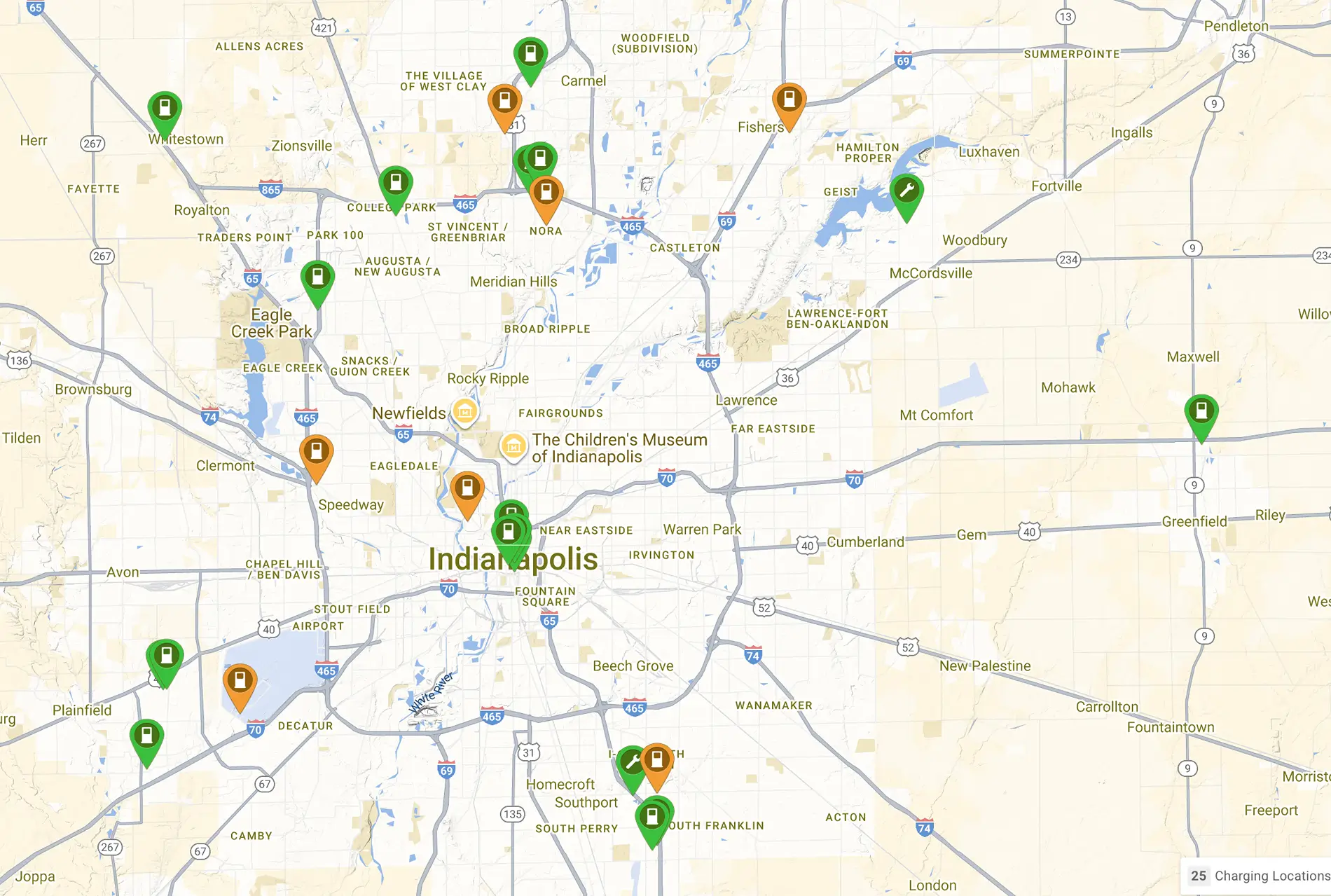
Here is a map of Indianapolis showing Rivian-compatible J3400 charging stations. Green are AC/level 2, Orange are DC:
Rivian R1T R1S Level 3 Charging 2025-2026 for Rivian R1S May Require a $300 "Accessory" Screenshot 2026-01-06 at 07.12.03


If OP lives in Cumberland or Greenfield area, and can't charge at home, then yes, this would come as a surprise that they can't charge nearby.

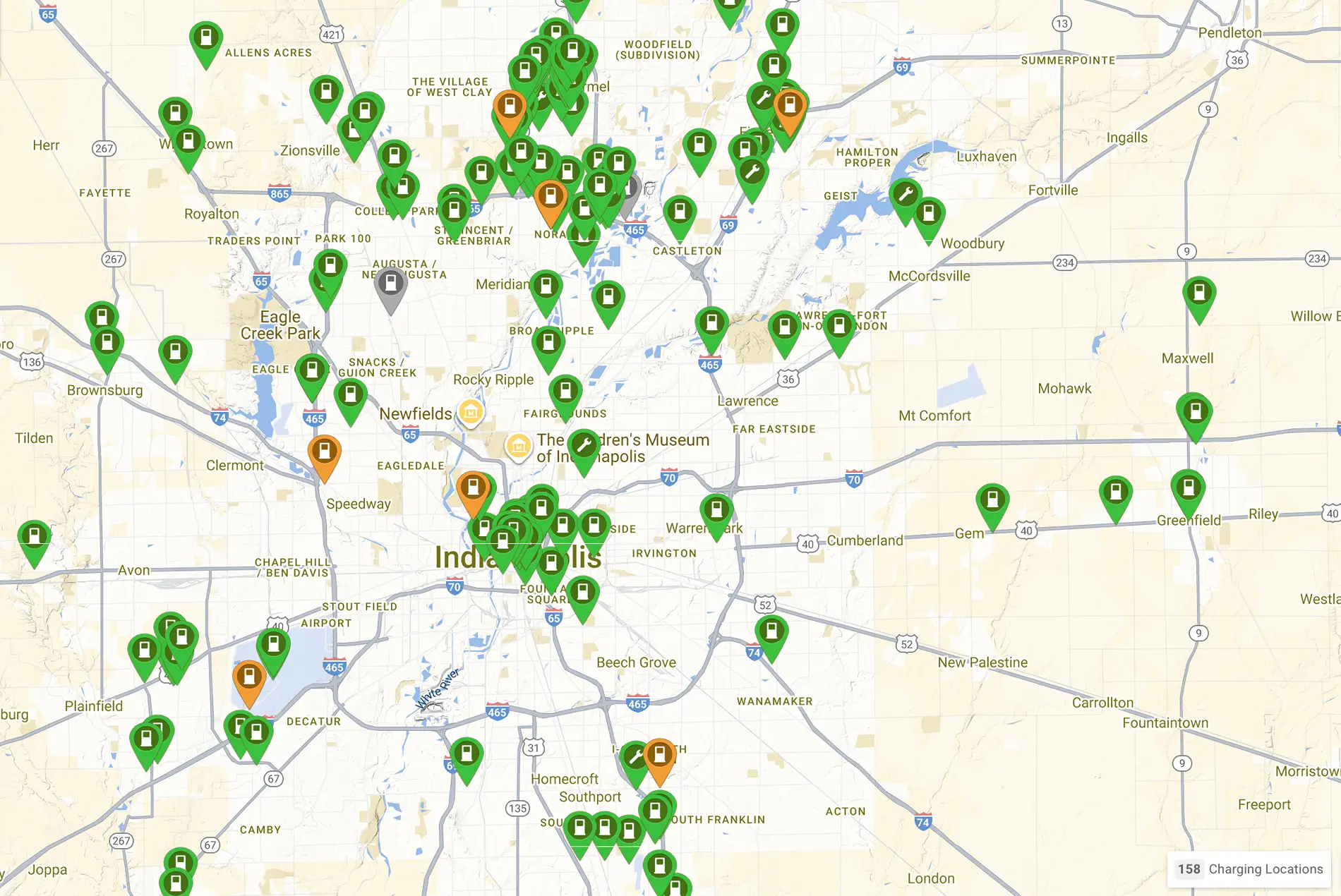
When we add in J1772 using the Rivian-supplied adapter, level 2 options become a lot better:
Rivian R1T R1S Level 3 Charging 2025-2026 for Rivian R1S May Require a $300 "Accessory" Screenshot 2026-01-06 at 07.12.46

But still, those are level 2. If you can't charge at home, the Cumberland area is still not great.

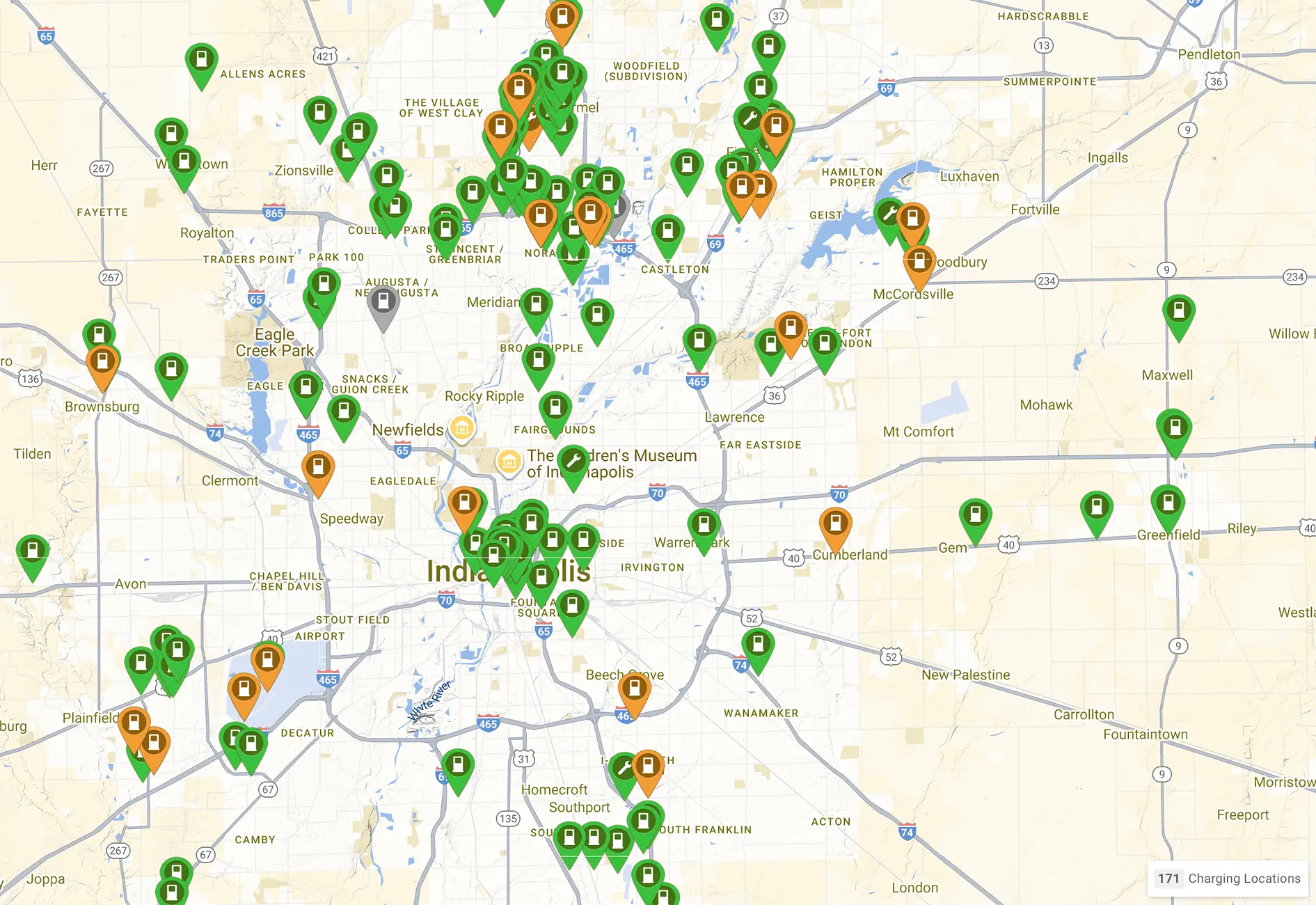
Finally, if we add in the CCS adapter for DC charging:
Rivian R1T R1S Level 3 Charging 2025-2026 for Rivian R1S May Require a $300 "Accessory" Screenshot 2026-01-06 at 07.13.16

There we go. If OP had a CCS vehicle before, and/or just drove by that Cumberland CCS station and knew it was there, expecting they could charge from it, then yes, not having an adapter, and not doing their due diligence to understand that such an adapter was needed would come as a bit of a shock.

Vehicles that use CHAdeMO ports are, for the most part, limited to pre-2026 Nissan Leafs and weirdly, the Plug-in Hybrid Mitsubishi Highlander.

It's a port that is essentially dead in North America, although there are adapters out there enabling some vehicles to use it, but they not really worth it.
Yeah, that summary was clearly AI generated. Don't know if OP even read it or just copy/pasted it.
 

10BladeDad

Well-Known Member
First Name
KB
Joined
Feb 10, 2024
Threads
3
Messages
57
Reaction score
59
Location
Frisco, TX
Vehicles
'08H2, '13 MDX, '25 Highlander
Occupation
Live
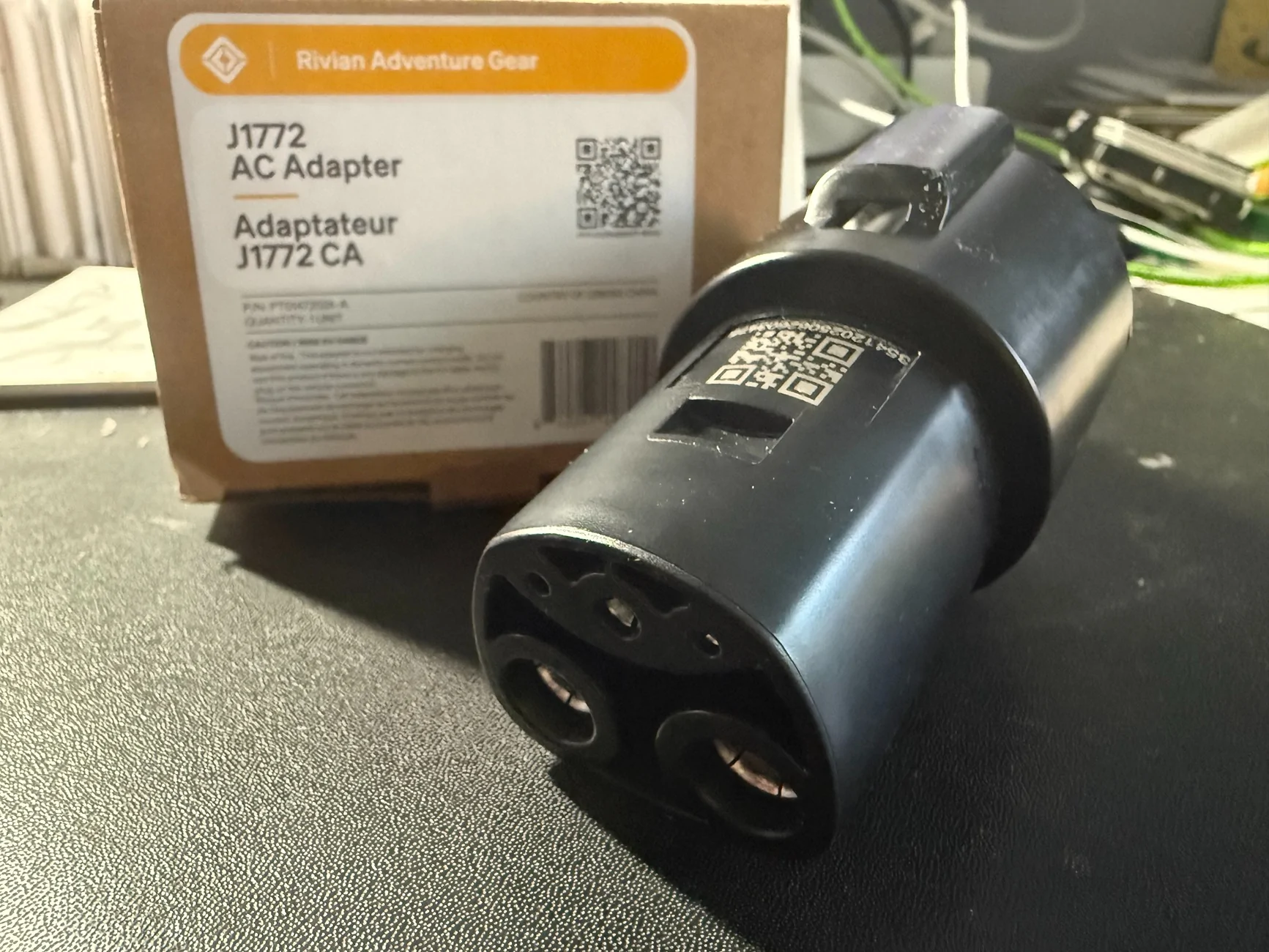
Rivian included a J1772 adapter when I took delivery of my R1S in Sept. I assume this is the adapter I would use if I needed to use a CCS DCFC. Before today, I had never taken it out of the box nor frunk.

I have a home charger, so I haven't needed to use a DCFC...yet. I'm sure I will soon. EVgo sent me a promo $10 credit. So, I'll DCFC if for no other reason than not to waste a FREE 10 bucks:CWL:

UPDATE: Thanks @TexasCrane & @UnsungZero_OldTimeAdMan for letting me know J1772 is for Lvl 2 charging. Guess I'll be buying CCS adapter soon. Is A2Z better than Lectron?

Rivian R1T R1S Level 3 Charging 2025-2026 for Rivian R1S May Require a $300 "Accessory" IMG_0905
Sponsored

 
Last edited:


Top