Sponsored

Lithium shortage

Craigins

Well-Known Member
Joined
Jun 10, 2021
Threads
2
Messages
1,571
Reaction score
2,397
Location
Chicago Suburbs
Vehicles
Rivian R1T
Occupation
Software engineer
Clubs
 
Opponents of any type of zero emission energy revert to scare tactics, regardless of the energy source.

It works, people enjoy ignorance. And decision makers would rather stay in power with backing of the ignorant than to make scientifically sound decisions.
Sponsored

 

JEV

Well-Known Member
Joined
Aug 26, 2021
Threads
2
Messages
123
Reaction score
358
Location
East Central Illinois
Vehicles
R1T LE, 2016 Volvo S60
Occupation
Technical Support
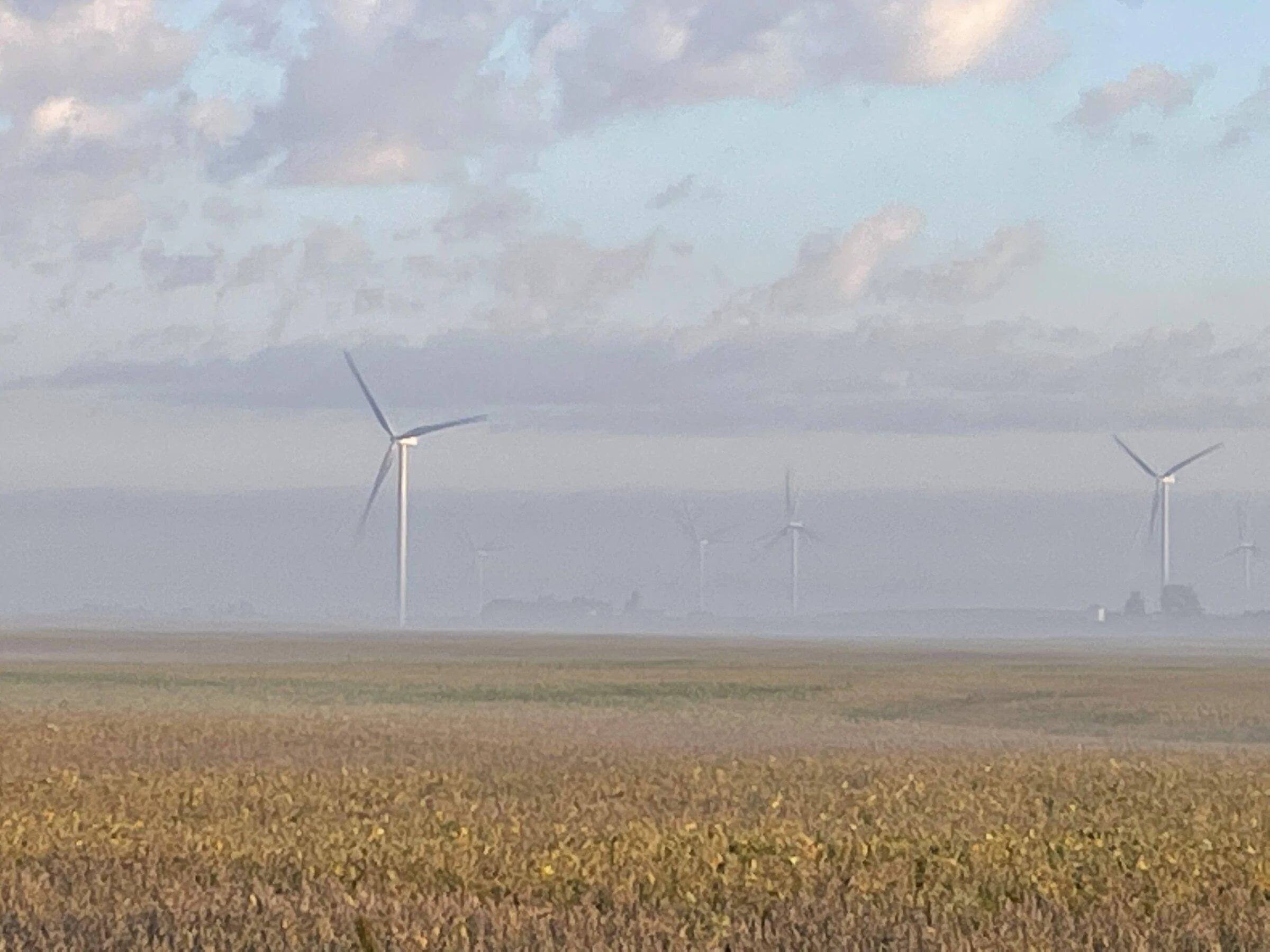
I live near a wind farm. The closest wind turbine is about a mile away. Many of the stories you hear are overblown in my opinion. I hardly ever notice noise from them. When the wind is blowing hard, the movement of the tree branches generates more noise. I have walked around under the wind turbines many times and have never seen a dead bird. Canadian geese migrate through here and they just go over or around.
A lot of the stories about bird kills came from the early days when they had lattice type towers, which provide roosting opportunities for birds, particularly birds of prey. They would see the tower as a good place to land and have a good view for hunting rodents, then take off and get hit by the rotating blades. Most towers are now a solid pole and do not offer a place to roost.
I heard from one of the local wind farm technicians, that they have had issues with bat kills. They were studying how to generate a noise that only bats can hear to keep them away.

When they first built the wind farm, it took a little time to adjust to the change in the landscape, but now I don't think much about it. I kind of like the gentle motion in an otherwise flat landscape.

I'll take a wind farm in my back yard over a coal fired plant any day !

Rivian R1T R1S Lithium shortage IMG_4166
 

DuckTruck

Well-Known Member
First Name
Duck
Joined
Dec 23, 2020
Threads
36
Messages
2,352
Reaction score
6,287
Location
PNW
Vehicles
Corvair, BMW325, Acura Legend, XC60, '16 Caddy ELR
Clubs
 
There been some studies that have promising results of significantly reducing bird loss by painting one of the blades a dark color.

I think we should do what we can to minimize bird loss but the alternative is much worse. I’d rather lose some birds than have them go extinct. Also windows and cats account for an order of magnitude more deaths to birds than wind turbines.
I agree with what you said here. Turning one rotor black makes sense, even if it might make them even more visually obnoxious for us, which is a very tiny price to pay. Also, even my most pampered house cat becomes a prowling predator as soon as she get's out back. Such forays are very limited, and usually accompanied. House windows and tall urban skyscrapers are a huge component of the kill-offs, but above the Columbia River Gorge, many dozens of birds are found littering the bases of the towers on these extremely rural grounds. Again, the season may matter, but to birds and birders, it's devastating.

To hijack this thread further [FULL DISCLOSURE - HIJACKING UNDERWAY!], check out these stories about the end of life for turbine blades. The last line of this first article is particularly bothersome.

https://iowacapitaldispatch.com/2021/12/03/turbine-graveyard-removal-underway-near-ellsworth/

Bloomberg also did a piece a few years ago referencing the problem of what to do with the old blades and how to limit the problem in the future:

https://www.bloomberg.com/news/feat...be-recycled-so-they-re-piling-up-in-landfills

Bloomberg included this brief video on the topic:

https://www.bloomberg.com/news/vide...ind-turbine-blades-wind-up-in-landfills-video

Hopefully, the links above allow viewing without climbing a firewall.
 

DuckTruck

Well-Known Member
First Name
Duck
Joined
Dec 23, 2020
Threads
36
Messages
2,352
Reaction score
6,287
Location
PNW
Vehicles
Corvair, BMW325, Acura Legend, XC60, '16 Caddy ELR
Clubs
 
I live near a wind farm. The closest wind turbine is about a mile away. Many of the stories you hear are overblown in my opinion. I hardly ever notice noise from them. When the wind is blowing hard, the movement of the tree branches generates more noise. I have walked around under the wind turbines many times and have never seen a dead bird. Canadian geese migrate through here and they just go over or around.
A lot of the stories about bird kills came from the early days when they had lattice type towers, which provide roosting opportunities for birds, particularly birds of prey. They would see the tower as a good place to land and have a good view for hunting rodents, then take off and get hit by the rotating blades. Most towers are now a solid pole and do not offer a place to roost.
I heard from one of the local wind farm technicians, that they have had issues with bat kills. They were studying how to generate a noise that only bats can hear to keep them away.

When they first built the wind farm, it took a little time to adjust to the change in the landscape, but now I don't think much about it. I kind of like the gentle motion in an otherwise flat landscape.

I'll take a wind farm in my back yard over a coal fired plant any day !

IMG_4166.jpeg
Thanks for your real-world, personal observations, and Amen to your comment about a wind turbine versus a coal-fired plant around home. Anything we can do to keep from burning fossil fuels is helpful. That said, I still don't want a tower in my neighborhood. Off in the distance is one thing, but not not looming too close nearby. When I saw them in the fields around Normal, they seemed less ominous than looming overhead on the mountaintops and ridgelines that I encounter here in the PNW. You're right about how we've learned to minimize the attractiveness of the towers to predators and others, but the fact remains that the kill-off continues nonetheless. Sad, but perhaps a price to be paid for reducing greenhouse gasses.

When I saw my first story about the turbine burial areas, I was surprised that the lifespan of the blades isn't longer. I'm not sure what drives their demise, and would think they'd be easier to teardown/disassemble to allow the materials to be repurposed. I know progress is being made in these areas, along with developing ways for each tower to produce increasing amounts of energy. As with all technology, efficiencies and improvements will make our clean energy cheaper and more plentiful going forward.
 

emoore

Well-Known Member
Joined
Nov 29, 2020
Threads
4
Messages
3,815
Reaction score
4,240
Location
Colorado
Vehicles
2022 R1T
I agree with what you said here. Turning one rotor black makes sense, even if it might make them even more visually obnoxious for us, which is a very tiny price to pay. Also, even my most pampered house cat becomes a prowling predator as soon as she get's out back. Such forays are very limited, and usually accompanied. House windows and tall urban skyscrapers are a huge component of the kill-offs, but above the Columbia River Gorge, many dozens of birds are found littering the bases of the towers on these extremely rural grounds. Again, the season may matter, but to birds and birders, it's devastating.

To hijack this thread further [FULL DISCLOSURE - HIJACKING UNDERWAY!], check out these stories about the end of life for turbine blades. The last line of this first article is particularly bothersome.

https://iowacapitaldispatch.com/2021/12/03/turbine-graveyard-removal-underway-near-ellsworth/

Bloomberg also did a piece a few years ago referencing the problem of what to do with the old blades and how to limit the problem in the future:

https://www.bloomberg.com/news/feat...be-recycled-so-they-re-piling-up-in-landfills

Bloomberg included this brief video on the topic:

https://www.bloomberg.com/news/vide...ind-turbine-blades-wind-up-in-landfills-video

Hopefully, the links above allow viewing without climbing a firewall.
I agree. We need to find better ways to recycle wind turbine blades, solar panels, and batteries. At least those ending up in a landfill is not nearly as bad as the coal ash in waterways, oil spills on land and in the ocean, and all the carbon emissions. Humans will never be environment neutral but I think we can go back to respecting the environment even with the enormous energy requirements of humans. Who knows, maybe fusion will get here someday instead of always being 10 years away.
 

Sponsored

ajdelange

Well-Known Member
First Name
A. J.
Joined
Aug 1, 2019
Threads
9
Messages
2,883
Reaction score
2,319
Location
Virginia/Quebec
Vehicles
Tesla XLR+2019, Lexus, Landcruiser, R1T
Occupation
EE Retired
The significant bird loss to wind turbines may be location specific and heightened at different times of the year, but I've read plenty and have seen the various shows and interviews with bird experts touting the tally. You are correct that wind opponents use scare tactics, as well, but turbine blades and birds are not a good mix.

"Wind turbines—some with 200-foot blades spinning up to 180 mph—are estimated to kill between 140,000 and 500,000 birds a year through accidental collisions, according to the U.S. Fish and Wildlife Service. Jun 5, 2021 wsj.com"
I'm a long in the tooth engineer. Being the latter has made me analytical and being the former, cynical. Lets start with the latter. The USGS maintains a data base on operating turbines in the US. The most recent release shows that there are currently 70,808 operating today. That means that each is, if we accept the numbers cited, killing 1.98 to 7.06 birds per year. That's well less than one per month and while I love our feathered friends as much as anyone else one bird every other month doesn't seem like much of a threat to the avian population. As I noted in the earlier post more get killed flying into my house.

Now we come to the cynicism part ""Wind turbines—some with 200-foot blades spinning up to 180 mph—". Two hundred foot long blades! 180 mph! Wow1 No wonder they are decimating the bird population. I learned over many years TOE to look carefully at the "facts" as presented by people with an agenda (and everyone has an agenda). For starters only the tips of the blades are "spinning" at 180 mph. The speeds decrease to near 0 as the hub is approached. Certainly a bird being hit by an object going 180 mph is going to get fricasseed but, based on what I witness, the speed at which birds fly is sufficient to kill them just by flying into the blade even at the hub. IOW, the chance a bird will be killed in trying to fly anywhere through the swept area of the blades depends on the area of the blades relative to the swept area. The blades might average 6 ft wide and at 200 feet long the projected are could be as much as 1200 ft^2 each (if the blades are in flat pitch) and as there are 3 of them that totals 3600 ft^2. OTOH the swept area is pi*200^2 = 125,663 ft^2 so that the probability a bird transiting the disc will fly into a blade is 2.8% but in any case it is the same probability that the bird will fly into a building of cross section 3600 ft^2 and compared to them the cross section of the windmills in an area is in the noise. The intent in the language used in the quotation is to inflame emotion and deflect people from the apparent facts of the situation. Now if someone came up with a scheme to scare birds away from flight paths near turbines in order to prevent even the number of losses that are incurred I'd be all for it but it certainly seems to me that the claims of devastation by windmills seem as bogus as the claims that the noise is a problem.
 

DuckTruck

Well-Known Member
First Name
Duck
Joined
Dec 23, 2020
Threads
36
Messages
2,352
Reaction score
6,287
Location
PNW
Vehicles
Corvair, BMW325, Acura Legend, XC60, '16 Caddy ELR
Clubs
 
I'm a long in the tooth engineer. Being the latter has made me analytical and being the former, cynical. Lets start with the latter. The USGS maintains a data base on operating turbines in the US. The most recent release shows that there are currently 70,808 operating today. That means that each is, if we accept the numbers cited, killing 1.98 to 7.06 birds per year. That's well less than one per month and while I love our feathered friends as much as anyone else one bird every other month doesn't seem like much of a threat to the avian population. As I noted in the earlier post more get killed flying into my house.

Now we come to the cynicism part ""Wind turbines—some with 200-foot blades spinning up to 180 mph—". Two hundred foot long blades! 180 mph! Wow1 No wonder they are decimating the bird population. I learned over many years TOE to look carefully at the "facts" as presented by people with an agenda (and everyone has an agenda). For starters only the tips of the blades are "spinning" at 180 mph. The speeds decrease to near 0 as the hub is approached. Certainly a bird being hit by an object going 180 mph is going to get fricasseed but, based on what I witness, the speed at which birds fly is sufficient to kill them just by flying into the blade even at the hub. IOW, the chance a bird will be killed in trying to fly anywhere through the swept area of the blades depends on the area of the blades relative to the swept area. The blades might average 6 ft wide and at 200 feet long the projected are could be as much as 1200 ft^2 each (if the blades are in flat pitch) and as there are 3 of them that totals 3600 ft^2. OTOH the swept area is pi*200^2 = 125,663 ft^2 so that the probability a bird transiting the disc will fly into a blade is 2.8% but in any case it is the same probability that the bird will fly into a building of cross section 3600 ft^2 and compared to them the cross section of the windmills in an area is in the noise. The intent in the language used in the quotation is to inflame emotion and deflect people from the apparent facts of the situation. Now if someone came up with a scheme to scare birds away from flight paths near turbines in order to prevent even the number of losses that are incurred I'd be all for it but it certainly seems to me that the claims of devastation by windmills seem as bogus as the claims that the noise is a problem.
AJ,

As always, I appreciate your well-supported reasoning and the high level of detail in your presentations. I never fail to learn something from your thoughtful feedback. I shall lose no more sleep over the bird issue than I have to date, which, to be honest, has been none.

I do feel better seeing your numbers after having fallen victim to the pics and stories of those turbines that have been the most productive at culling the flocks, murders, and skeins flying around.

Thanks again for another informative and entertaining read. I enjoy your communication style.

Be well!
 

fastwheels

Well-Known Member
First Name
Doug
Joined
Mar 26, 2019
Threads
19
Messages
440
Reaction score
881
Location
Michigan
Vehicles
R1T LE, C8 Z06, GT-350, Optiq
The city owned utility in the small town I live in has had an operational wind turbine in use since somewhere in the late 1970s. I've never heard of significant concerns about noise or bird kills. It is one piece of the plan to work towards 100% renewable energy here.

The cleanest/cheapest way to handle increased energy demand is to flatten the demand curve. One good way it to change building standards to require the installation of more efficient insulation/windows/lighting/HVAC in all new construction or remodeling projects. Installing a modest sized PV array as part of all new home builds would also help.
 

DuckTruck

Well-Known Member
First Name
Duck
Joined
Dec 23, 2020
Threads
36
Messages
2,352
Reaction score
6,287
Location
PNW
Vehicles
Corvair, BMW325, Acura Legend, XC60, '16 Caddy ELR
Clubs
 
I agree. We need to find better ways to recycle wind turbine blades, solar panels, and batteries. At least those ending up in a landfill is not nearly as bad as the coal ash in waterways, oil spills on land and in the ocean, and all the carbon emissions. Humans will never be environment neutral but I think we can go back to respecting the environment even with the enormous energy requirements of humans. Who knows, maybe fusion will get here someday instead of always being 10 years away.
Again, "Amen, Brother!"
 

mkennedy1996

Well-Known Member
First Name
Max
Joined
Nov 18, 2020
Threads
41
Messages
437
Reaction score
744
Location
North Georgia
Vehicles
R1S, Model X, Model Y
Just as scary to me . . . is the question of how we're going to generate enough electricity to power the world's expanding population and the coming transition to a growing fleet of EV's around the world.
The grid has plenty of capacity to handle a conversion to EVs. The grid is largely idle overnight, when EVs are most likely to charge.

There are a lot of articles that go deep into the math on grid capacity and EV demand.
 

Sponsored

DuckTruck

Well-Known Member
First Name
Duck
Joined
Dec 23, 2020
Threads
36
Messages
2,352
Reaction score
6,287
Location
PNW
Vehicles
Corvair, BMW325, Acura Legend, XC60, '16 Caddy ELR
Clubs
 
The grid has plenty of capacity to handle a conversion to EVs. The grid is largely idle overnight, when EVs are most likely to charge.

There are a lot of articles that go deep into the math on grid capacity and EV demand.
No doubt that overnight charging will actually smooth or flatten the demand peaks, but there's plenty of evidence out there that with our expansion of EV's and other growth needs, our aging power grid needs some sizable repairs, upgrading, and new power sources for extra capacity. Climate change and population growth account for some of our shortfalls, but decisions like isolating some regions from larger, regional/national grids have proven problematic in recent years.

Better to be ready than to play catch up when the need for juice is now.
 

electruck

Well-Known Member
Joined
Oct 6, 2019
Threads
74
Messages
4,157
Reaction score
7,729
Location
Dallas, TX
Vehicles
2023 Rivian R1S
there's plenty of evidence out there that with our expansion of EV's and other growth needs, our aging power grid needs some sizable repairs, upgrading, and new power sources for extra capacity.... decisions like isolating some regions from larger, regional/national grids have proven problematic in recent years.
Maintenance, resilience, and capacity are 3 different issues.
 

DuckTruck

Well-Known Member
First Name
Duck
Joined
Dec 23, 2020
Threads
36
Messages
2,352
Reaction score
6,287
Location
PNW
Vehicles
Corvair, BMW325, Acura Legend, XC60, '16 Caddy ELR
Clubs
 
Maintenance, resilience, and capacity are 3 different issues.
electruck,

Very true. Of the three, I'm curious as to your take of where we stand today, and the greatest challenges we face. I think the local/regional issues we've seen over the last several years, particularly in California and Texas, are indicative of issues that will continue, if we don't make changes now. Looking forward to hearing from you and others that are better in touch and more Subject Matter Experts than I could ever hope to be.

Thanks!
Sponsored


Top