
TexasBob
Well-Known Member
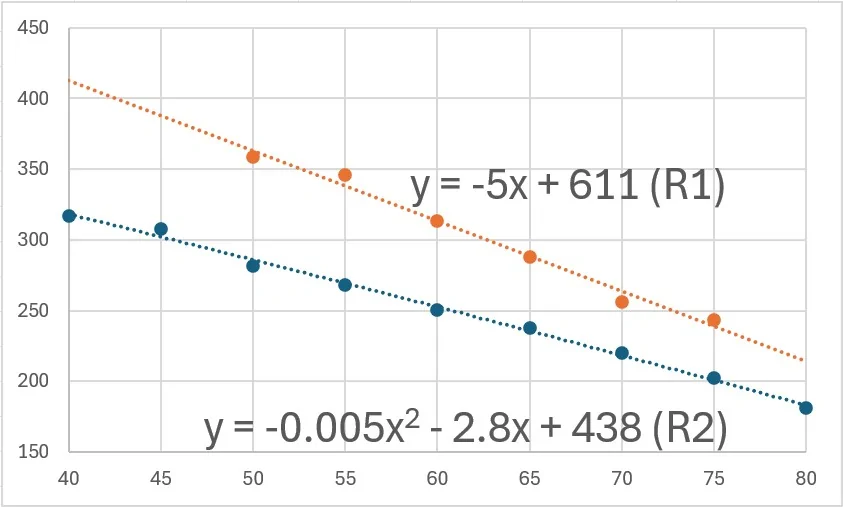
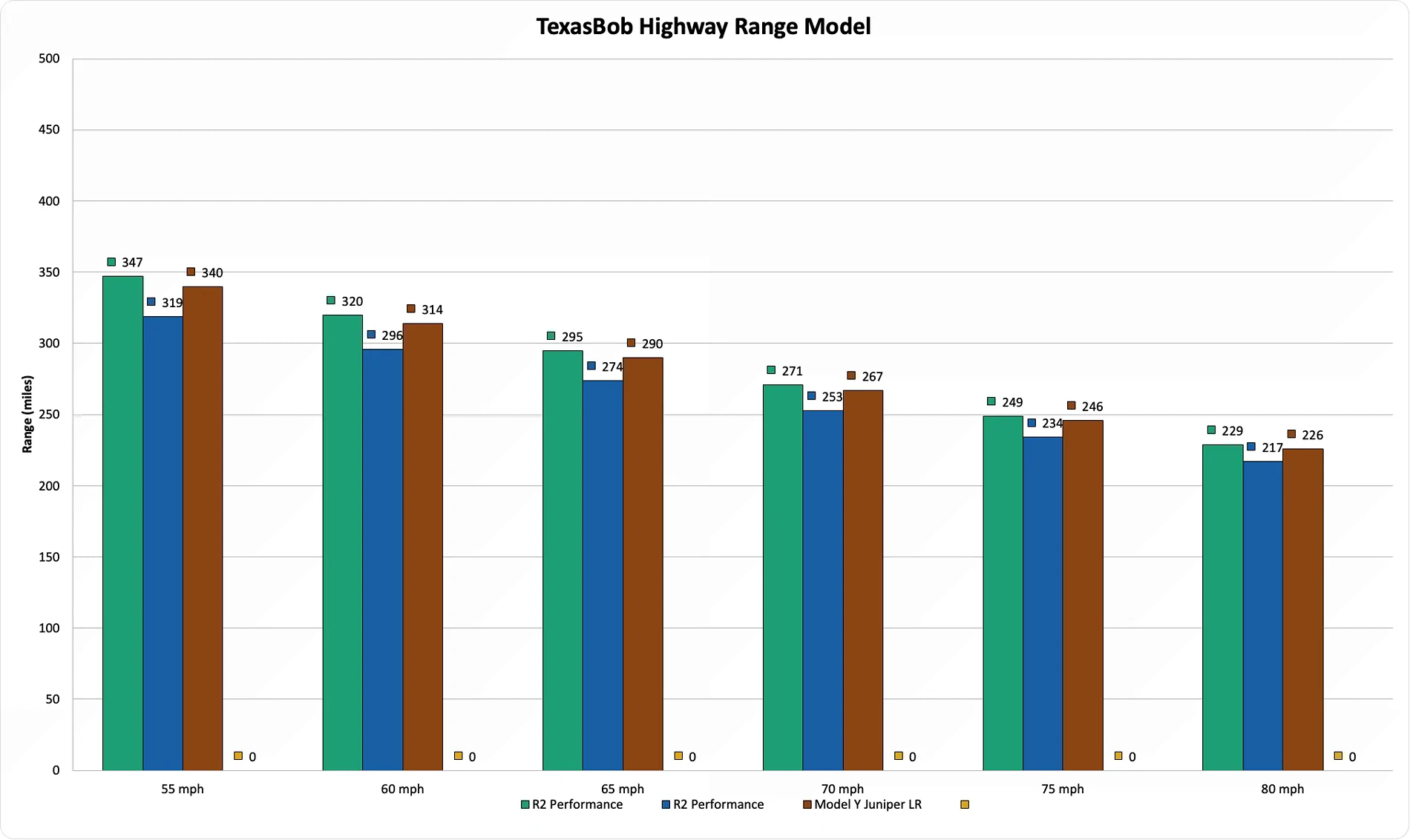
My range model was forecasting this at 229 (+/-) at 80. If your data holds over longer distances, the model may be very optimistic.

Sponsored
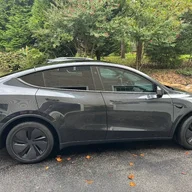
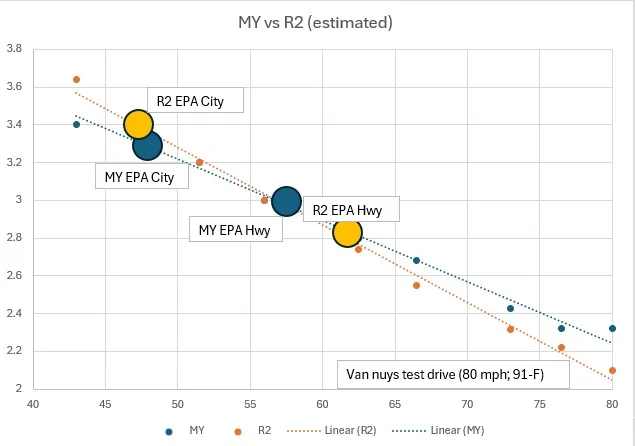
Good to know and hope it proves out in tests. My current Model Y RWD is rated at 357 miles, so it is a good reminder the comparison needs to be with the AWD version which is more comparable.R2 matches Tesla My above 65 mph on range, below 65 mph it likely has 10-20 more miles than an 81 kWh MY…it’s ~5% less efficient than MY but the 9% bigger battery means it wins (especially at lower speeds)
The model y is it a performance model? Since I suspect the higher power is killing efficiency. Also did you try Turing on conserve mode?Location - Van Nuys
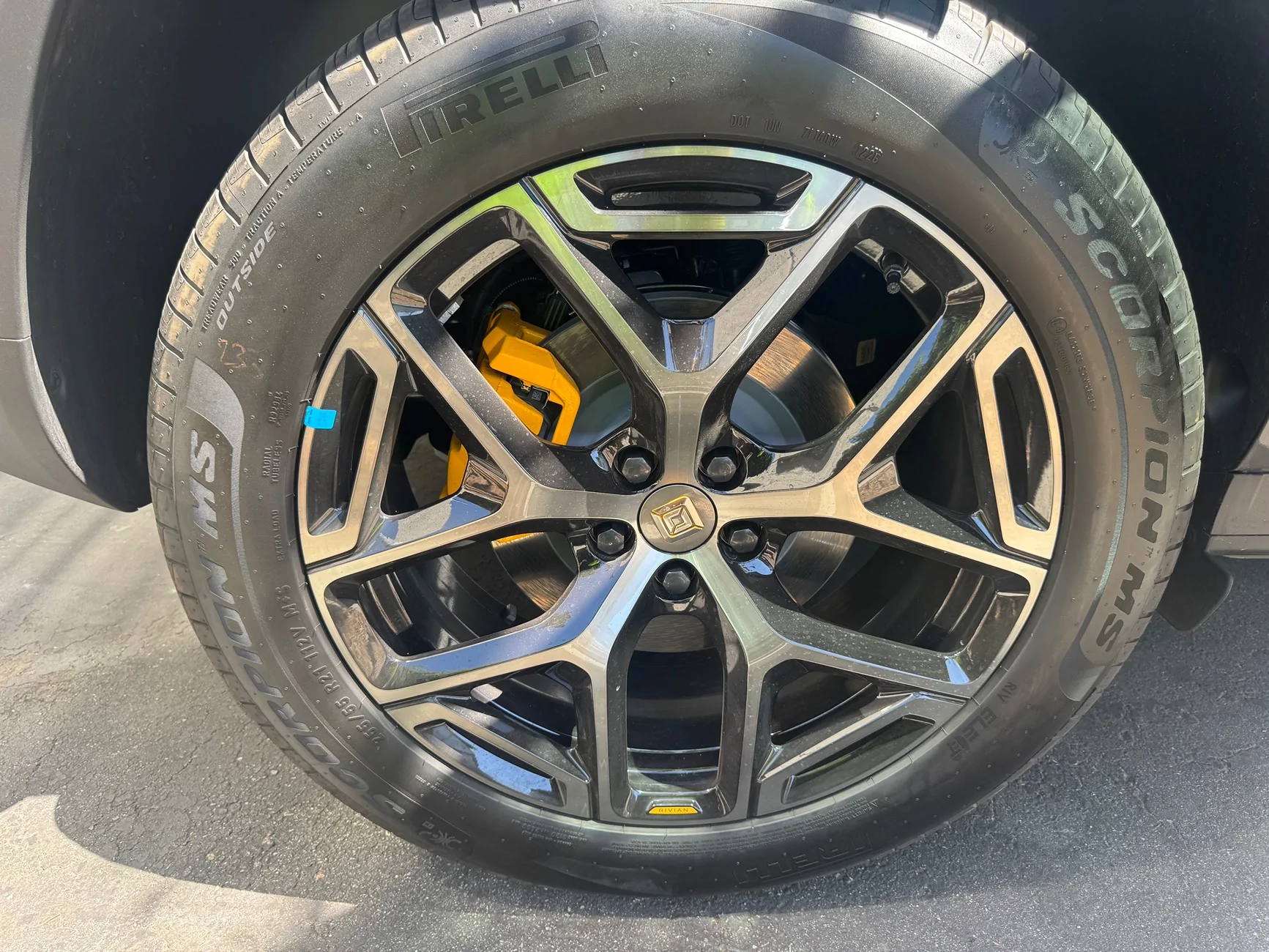
Based on everything I've seen, I believe the typical usable range for the R2 w/ 21" rims to be ~230 miles at 100% (2.6 MPK) and R2 w/ 20" rims to be ~207 miles at 100% (2.35 MPK).
Something else important jumps out at me. The older R1 EPA rating appears unusually representative of actual highway range, whereas the R2’s newer combined rating is much more optimistic for highway travel. Applying the same real-world relationship seen with the 2023 R1 would put the R2 closer to approximately 210 miles of 70-mph highway range, versus roughly 240 miles in slower or city-weighted driving. If tire, then the R2 delivers roughly 200 highway miles from its 88 kWh battery, its highway efficiency is nearly identical to the 2023 R1. That would suggest the higher EPA-rated efficiency is driven primarily by how the EPA combined range is derived—whether due to different certification procedures, greater weighting of low-speed efficiency, or both—rather than a dramatic improvement in sustained highway efficiency.
I think the most interesting part of this drive wasn’t the interior or the acceleration—it was how dramatically speed dominated efficiency. The data tells a much bigger story than the spec sheet.
First Drive Review: Rivian R2 Performance (21” Wheels)
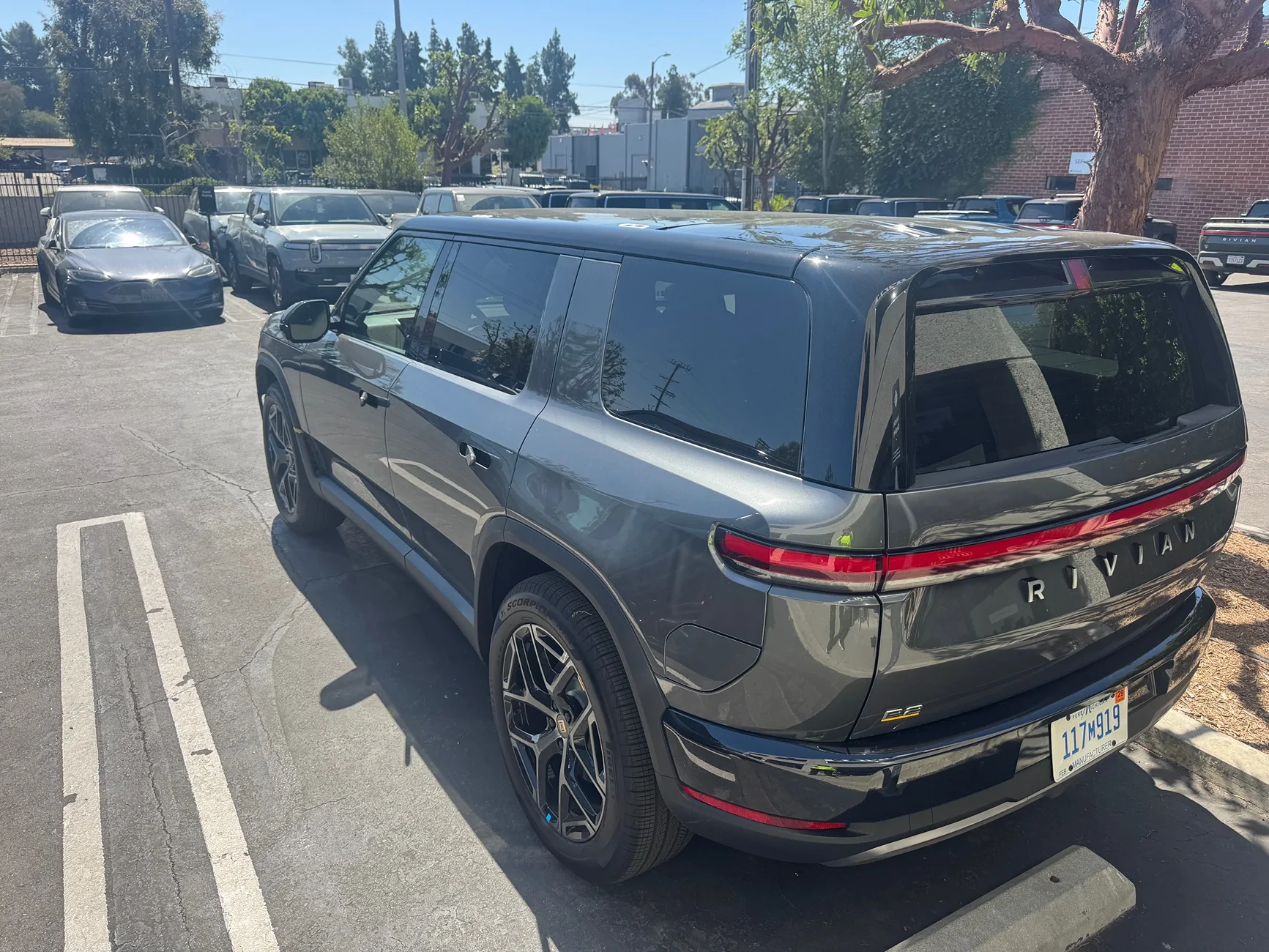
I picked up a Moonlight Gray R2 Performance on 21-inch Pirelli Scorpions from Rivian Van Nuys around 10:30 AM on a 91°F Thursday. With Southern California traffic running lite, I immediately headed north on the freeway to see how it behaved in real-world conditions instead of around-town demo routes.
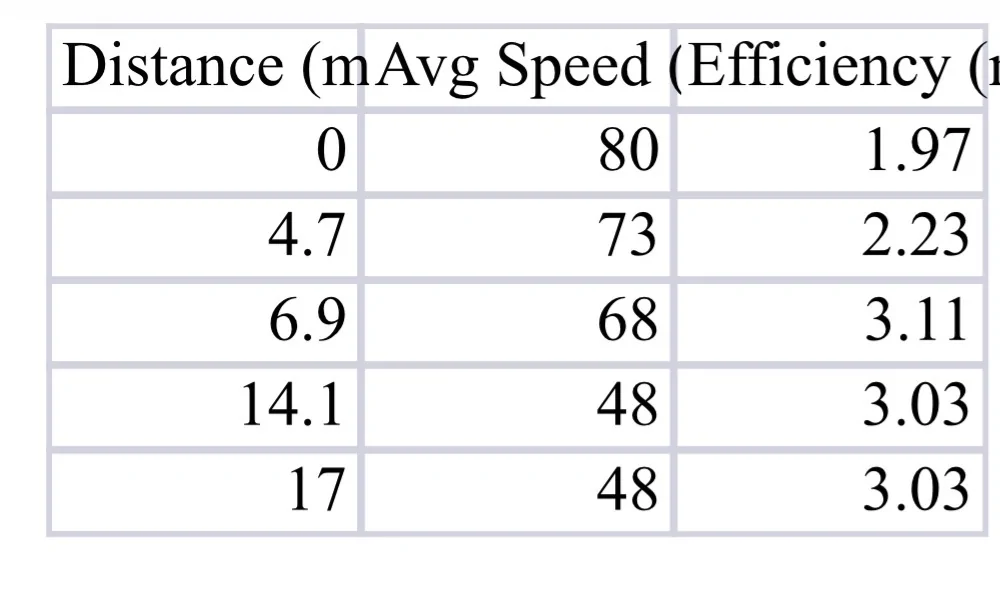
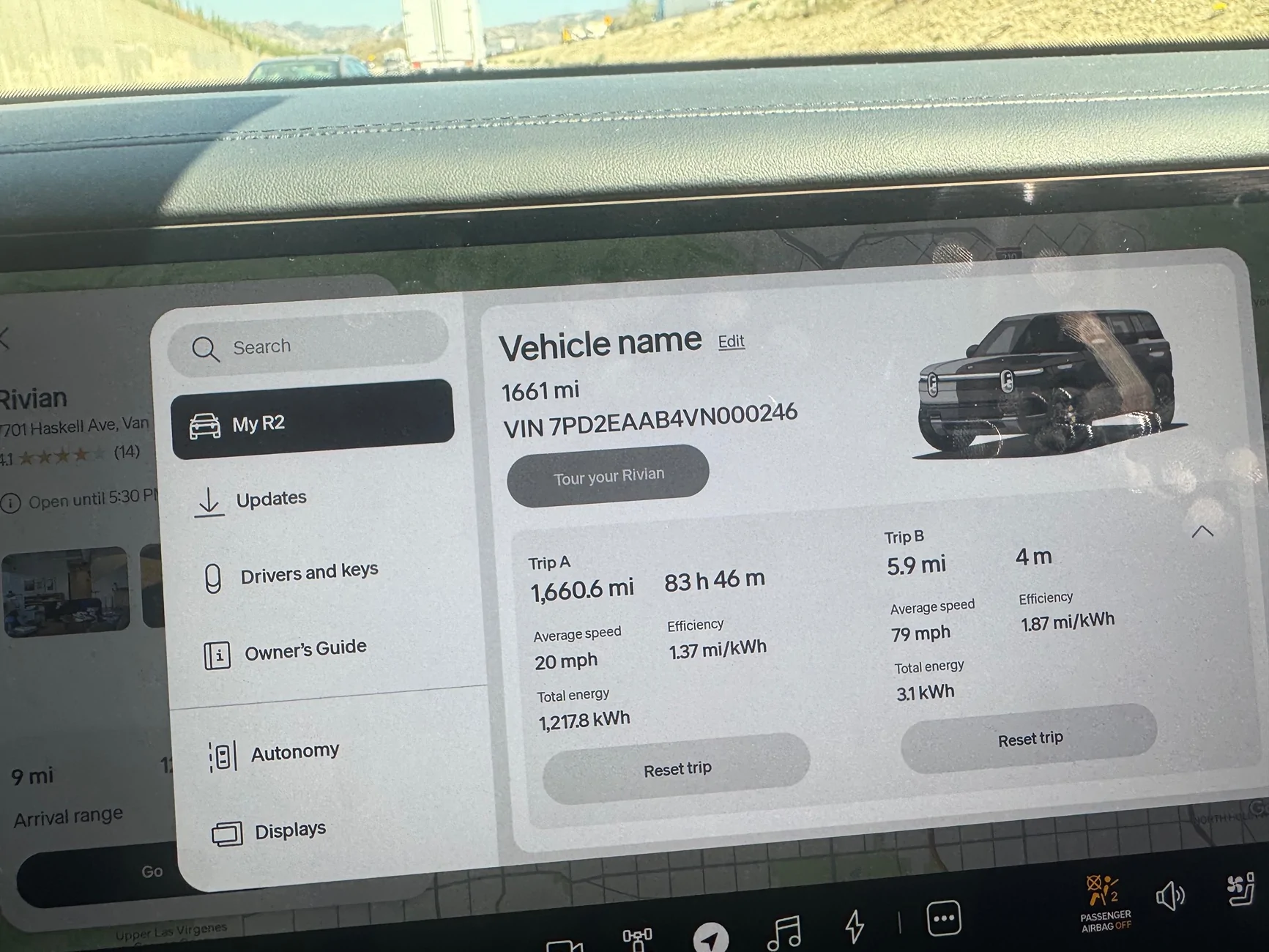
The first few miles were intentionally tough on the vehicle. I settled in around 80 mph with the A/C running in triple-digit pavement temperatures. Efficiency wasn’t flattering—hovering around 2.0 mi/kWh (Trip B showed 1.97 mi/kWh after the initial run). That’s a useful reminder that high speed is still the biggest enemy of EV range, regardless of manufacturer.
On the return trip I changed just two variables:
* Reduced speed to roughly 70 mph
* Turned the A/C off
The difference was immediate. As the route transitioned downhill and onto city streets, efficiency climbed rapidly:
* 2.23 mi/kWh
* then 3.11 mi/kWh
* ultimately settling around 3.0 mi/kWh
That’s more than a 50% improvement simply from changing driving conditions—not the vehicle itself.
The takeaway
People often ask, “What’s the R2’s real-world efficiency?”
The better question is:
“At what speed?”
This drive demonstrated that speed has a much larger impact than most people appreciate. Driving 80 mph in 91°F heat paints a completely different picture than cruising at 65–70 mph.
The vehicle itself
The R2 feels like Rivian distilled the best parts of the R1 into something that is more attainable.
Highlights
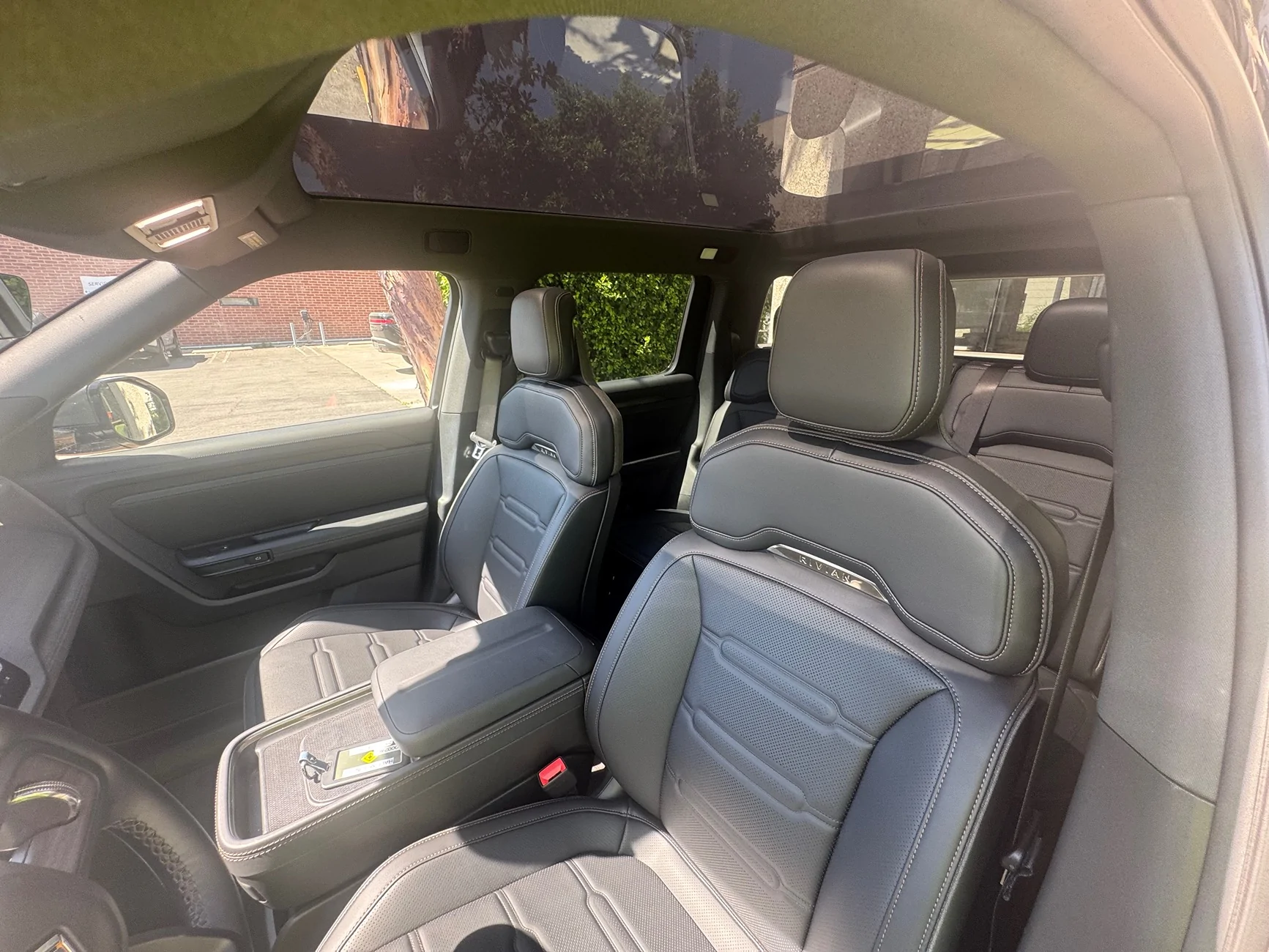
*Ventilated seats are outstanding—among the best I’ve experienced.
*
*
*
*
The ride isn’t quite as polished as an R1—which is expected considering the price difference—but it’s surprisingly close. Nothing ever felt cheap.
Performance
The Performance model has one interesting characteristic:
It almost feels like too much power.
Acceleration is effortless and entertaining, but unlike the larger R1, the lighter R2 almost feels eager enough that you find yourself using only part throttle most of the time. It’s fast in a way that will probably surprise people moving from Model Ys or gas SUVs.
Final thoughts
After spending time with it, I came away thinking Rivian didn’t simply build a smaller R1.
They built what could become the benchmark electric SUV in the $45–65k segment.
It has the design, technology, comfort, practicality, and performance to appeal well beyond existing Rivian owners. If pricing lands where Rivian has indicated, I wouldn’t be surprised if the R2 becomes the vehicle that moves Rivian from a niche manufacturer into the mainstream.
One short drive obviously can’t answer every question, but it answered the most important one:
Does the R2 feel like a compromised “budget Rivian”?
Not even close.
Another Key takeaway: The R2 appears to be only about 15–20% more efficient than the Gen1 R1 in real-world driving. However, that modest efficiency gain is paired with a battery pack that’s roughly one-third smaller (88 vs. 128 kWh). As a result, in real-world highway driving the 88 kWh R2 is expected to deliver roughly 40 fewer miles of range than the original 128 kWh R1, despite being the more efficient vehicle. Combined with the newer EPA methodology—which likely produces a more optimistic range estimate than the 2023 procedure used for the R1—the R2’s highway range at 75–80 mph is noticeably shorter than many would expect. The issue isn’t that the R2 is unusually sensitive to speed; it’s that aerodynamic losses at highway speeds quickly overwhelm its modest efficiency advantage, leaving the smaller battery as the limiting factor.
⸻
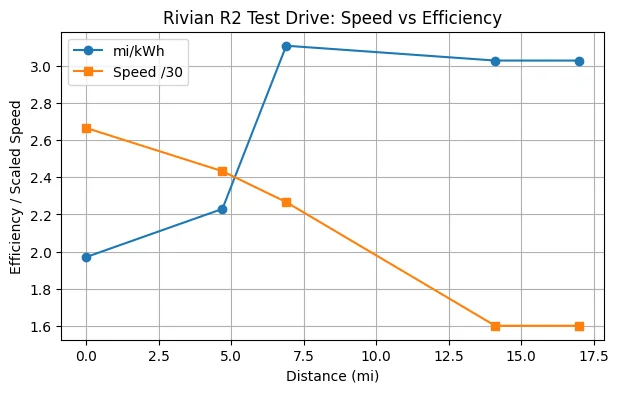
Efficiency Graph
I’ve created a graph based on your recorded observations, showing how efficiency increased as average speed decreased over the course of the drive




I take it GREEN is 21" and BLUE is 20"My range model was forecasting this at 229 (+/-) at 80. If your data holds over longer distances, the model may be very optimistic.
sorry yes. don't know why it did not read out. M-Y is LR 20"I take it GREEN is 21" and BLUE is 20"
Oh come on. You're not aware that for any vehicle, speeding up causes reduced efficiency/greater fuel usage? That cold weather affects fuel usage? That roof racks/etc. affect fuel usage? That HVAC use affects fuel usage?Not necessarily. Lots of folks on here buying their first ever EVs may not. ICE cars are so inefficient that you don't really notice the efficiency hit for going a bit faster.
Very fair, but I would like to see the EPA add a 75mph highway test (without getting rid of other tests).I take exception to the frequent use of the phrase "real world driving" and range to mean strictly high speed freeway driving. I, and many others, travel extensively off the freeway at lower speeds or mixed city/hwy driving in rural areas so the EPA cycle is very applicable to us. And with the heavy concentration of DC fast chargers on freeways and vastly fewer off the freeway the EPA info is meaningful and very "real world" for us.
Oh come on yourself.Oh come on. You're not aware that for any vehicle, speeding up causes reduced efficiency/greater fuel usage? That cold weather affects fuel usage? That roof racks/etc. affect fuel usage? That HVAC use affects fuel usage?
The exact same factors apply to EVs.
The 1973 oil crisis prompted huge changes in how we think about driving and gas usage, led to the creation of Federal fuel efficiency standards, EPA mileage ratings and the mandatory disclosure of this information for new vehicles, and established public information campaigns that continue to this day to educate people on the factors that affect mileage in their gas vehicles.and it's not only the government, it's pretty much every car-related website or publication, and this information is being constantly disseminated, and has been constantly disseminated for at least 50 years.
https://www.fueleconomy.gov/feg/driveHabits.jsp
https://www.fueleconomy.gov/feg/drive.shtml
https://www.fueleconomy.gov/feg/coldweather.shtml
https://www.fueleconomy.gov/feg/hotweather.shtml
The OP shows us is that the effect of speed on efficiency of an R2 is just about exactly what a back-of-the-envelope calculation will tell us:
Aerodynamic drag is proportional to velocity squared.
Energy used is proportional to Aerodynamic drag.
Efficiency is inversely proportional to Energy used.
At higher speeds when aerodynamics becomes dominant, the Efficiency at 80mph approaches (70/80)^2 or 76.5% of the Efficiency at 70mph.
The OP says 2.23 mi/kWh at 80mph vs 3.0 mi/kWh at 70mph, which is 74.3%.
(For comparison, @TexasBob's graph shows about 71.5%.)
So basically the same. The quick calculation gets the right answer. We don't need AI to tell us this. To first order, everything we learned about efficiency of ICE vehicles applies directly to EVs - there's nothing mysterious or surprising about it.


The other point to be made is that the wasted energy is only gong going to make you a few minutes faster for most trips. So save the energy, and a few lives along the way.Literally everyone knows this and it's why ABRP is such a great planning tool (now built into Rivian's backend). I can simulate a trip for any conditions knowing what my expected efficiency will be, even towing, and it's pretty damn accurate. Link ABRP with your Rivian account and over time its estimates get even better. I suspect they've done this on the backend for the in-vehicle nav now too as I've had a few drives recently where the estimate at trip start was almost spot on when I arrived at the destination.
TL;DR...if you're ever looking to be short on range, slow down 5-10 mph and you'll likely make it without issue.
Noting that Air is 14% less dense at 5,000 ft than Sea Level. That translates into about an 8% benefit at high altitude at 75 mph (depending on vehicle). Beware colorado 70 mph range tests!1. Direct testing: InsideEVs measured about 2.97 mi/kWh under favorable Colorado conditions.
2. Physics: The R2’s estimated CdA predicts approximately 2.5–2.7 mi/kWh at sea level.
3. Vehicle comparison: The R2 falls exactly between the Model Y and R1, where its estimated CdA places it.
4. Battery capacity: Multiplying 2.5–2.9 mi/kWh × 88 kWh gives approximately 220–255 miles usable, depending on conditions, with favorable conditions approaching 260 miles.
I agree. EPA range estimates are very applicable, unless you are hitting the highway for long drives.I take exception to the frequent use of the phrase "real world driving" and range to mean strictly high speed freeway driving. I, and many others, travel extensively off the freeway at lower speeds or mixed city/hwy driving in rural areas so the EPA cycle is very applicable to us. And with the heavy concentration of DC fast chargers on freeways and vastly fewer off the freeway the EPA info is meaningful and very "real world" for us.
I only have 200 mile bladder so I should be fine.1. Direct testing: InsideEVs measured about 2.97 mi/kWh under favorable Colorado conditions.
2. Physics: The R2’s estimated CdA predicts approximately 2.5–2.7 mi/kWh at sea level.
3. Vehicle comparison: The R2 falls exactly between the Model Y and R1, where its estimated CdA places it.
4. Battery capacity: Multiplying 2.5–2.9 mi/kWh × 88 kWh gives approximately 220–255 miles usable, depending on conditions, with favorable conditions approaching 260 miles.