
Sponsored

Rivian Patent - Charging Algorithm - May explain why owners have different charge rate experiences

Zoidz

Well-Known Member
First Name
Gil
Joined
Feb 28, 2021
Threads
227
Messages
5,217
Reaction score
11,734
Location
PA
Vehicles
23 R1S Adv, Avalanche, BMWs-X3,330cic,K1200RS bike
Occupation
Engineer
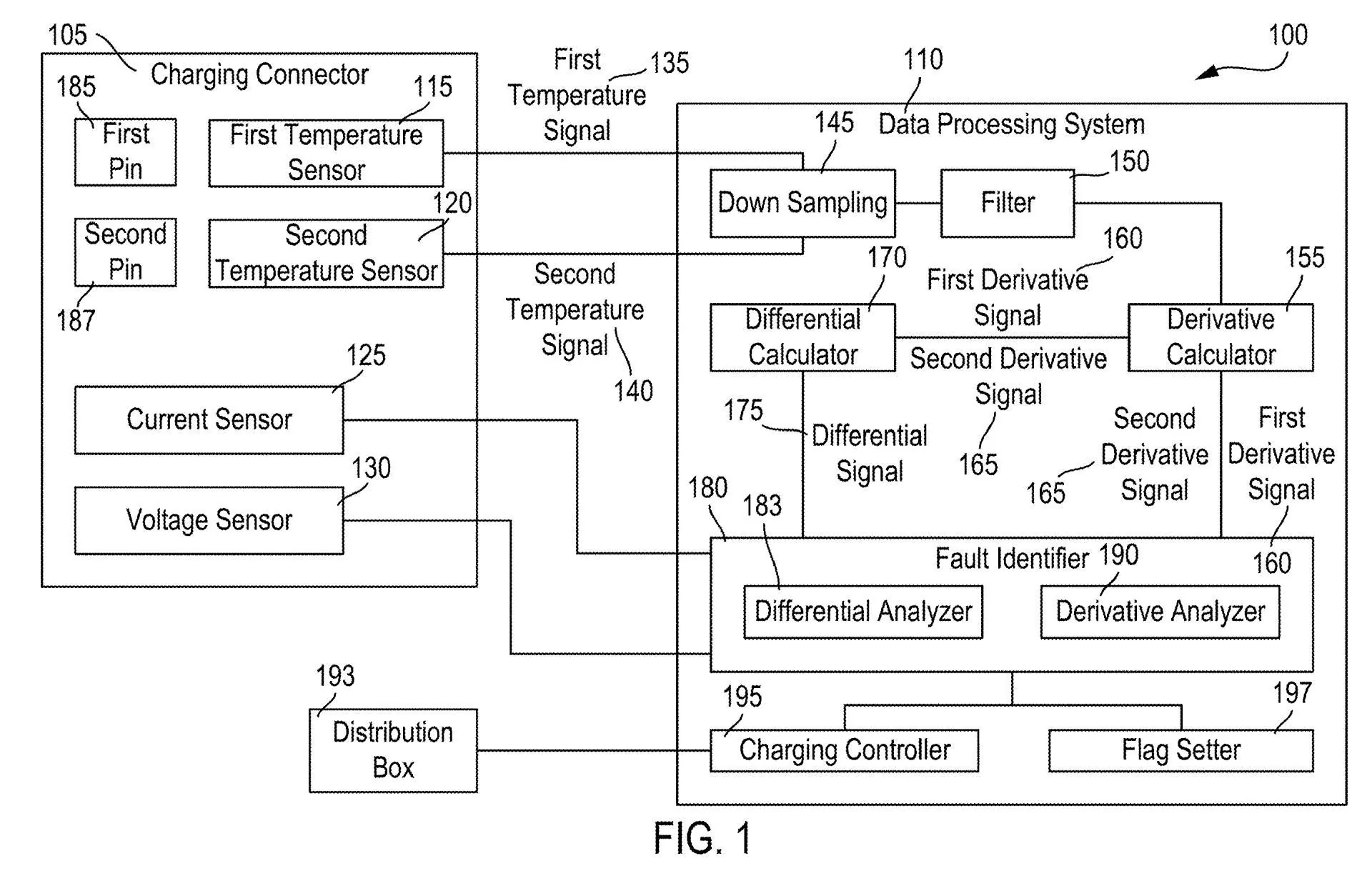
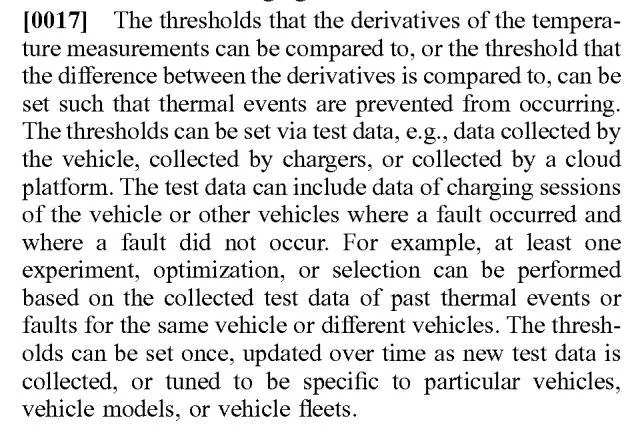
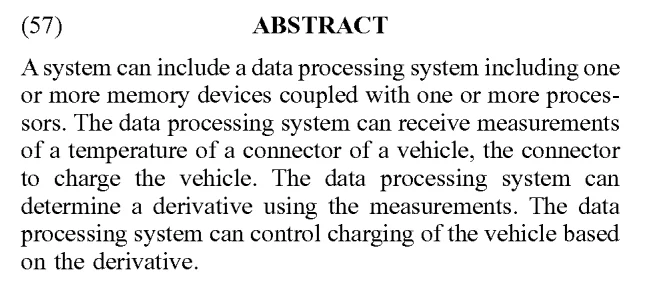
There has been a fair amount of discussion regarding L3 charging where different users see different charge rates with no clear explanation. This patent application was filed in July 2023, so it's possible (likely?) that this algorithm is used in our vehicles. It uses temperature, voltage and current sensors via a mathematical derivation to predict an overheating situation and cut charge rate preemptively. It specifically says that the algorithm can adjust based on new data collected.

Rivian R1T R1S Rivian Patent - Charging Algorithm - May explain why owners have different charge rate experiences 1740929982406-yu
Rivian R1T R1S Rivian Patent - Charging Algorithm - May explain why owners have different charge rate experiences 1740930040705-8v
Rivian R1T R1S Rivian Patent - Charging Algorithm - May explain why owners have different charge rate experiences 1740930084920-c6
. It's possible/likely that owners will see different charging experiences due to this.
Sponsored
 

DayTripping

Well-Known Member
First Name
Timothy
Joined
Sep 12, 2024
Threads
13
Messages
1,544
Reaction score
2,133
Location
DFW
Vehicles
Gen1 R1T QM, S Plaid, Highland 3 Perf, 3 Long Range, R2 on order
Occupation
Consultant
Great find and very interesting.
 

COdogman

Well-Known Member
First Name
Brian
Joined
Jan 21, 2022
Threads
33
Messages
11,641
Reaction score
34,500
Location
CO
Vehicles
2023 R1T
Occupation
Cyber defender
Clubs
 
 
OP
OP
Zoidz

Zoidz

Well-Known Member
First Name
Gil
Joined
Feb 28, 2021
Threads
227
Messages
5,217
Reaction score
11,734
Location
PA
Vehicles
23 R1S Adv, Avalanche, BMWs-X3,330cic,K1200RS bike
Occupation
Engineer

Sponsored

DayTripping

Well-Known Member
First Name
Timothy
Joined
Sep 12, 2024
Threads
13
Messages
1,544
Reaction score
2,133
Location
DFW
Vehicles
Gen1 R1T QM, S Plaid, Highland 3 Perf, 3 Long Range, R2 on order
Occupation
Consultant
Here is another way to access it.

https://patents.justia.com/patent/20250042285

I asked Chat GPT for a summary of the page I linked.

This patent describes an advanced electric vehicle (EV) charging system designed to make charging more efficient, cost-effective, and environmentally friendly. Unlike traditional chargers that simply supply power, this system can intelligently adjust charging based on various factors such as electricity demand, pricing, and renewable energy availability. By optimizing when and how an EV is charged, the system helps drivers save money, reduces strain on the power grid, and ensures that charging happens in the most sustainable way possible.

A major feature of this system is its ability to communicate with both the EV and the power grid. It can receive real-time data about electricity prices and demand, allowing it to charge the vehicle when rates are lowest. For example, if electricity is cheaper at night when overall demand is low, the system can delay charging until then. Additionally, it can adjust the charging speed based on grid conditions, slowing down or pausing charging during peak hours to help prevent overloading the electrical system.

Another important aspect is the system’s integration with renewable energy sources like solar and wind power. If clean energy is available, the charger can prioritize using it instead of drawing power from fossil fuel-based electricity sources. This reduces the carbon footprint of EV charging and makes better use of sustainable energy. The system can also store energy information and predict when renewable sources will be most available, further improving efficiency.

For EV owners, the system offers a convenient and user-friendly experience. A smartphone app or online dashboard allows users to monitor and control charging remotely. They can set preferences such as when they want their car to be fully charged, and the system will automatically handle the process in the most cost-effective and eco-friendly way. This takes the guesswork out of charging and ensures that the vehicle is always ready when needed.

Overall, this smart EV charging system represents a step forward in making electric vehicle charging more intelligent and efficient. By optimizing energy use, integrating with renewable sources, and giving users greater control, it not only benefits individual EV owners but also supports a more stable and sustainable electricity grid. As electric vehicles become more common, innovations like this will play a key role in ensuring that charging is both convenient and environmentally responsible.
 
OP
OP
Zoidz

Zoidz

Well-Known Member
First Name
Gil
Joined
Feb 28, 2021
Threads
227
Messages
5,217
Reaction score
11,734
Location
PA
Vehicles
23 R1S Adv, Avalanche, BMWs-X3,330cic,K1200RS bike
Occupation
Engineer
Here is another way to access it.

https://patents.justia.com/patent/20250042285

I asked Chat GPT for a summary of the page I linked.

This patent describes an advanced electric vehicle (EV) charging system designed to make charging more efficient, cost-effective, and environmentally friendly. Unlike traditional chargers that simply supply power, this system can intelligently adjust charging based on various factors such as electricity demand, pricing, and renewable energy availability. By optimizing when and how an EV is charged, the system helps drivers save money, reduces strain on the power grid, and ensures that charging happens in the most sustainable way possible.

A major feature of this system is its ability to communicate with both the EV and the power grid. It can receive real-time data about electricity prices and demand, allowing it to charge the vehicle when rates are lowest. For example, if electricity is cheaper at night when overall demand is low, the system can delay charging until then. Additionally, it can adjust the charging speed based on grid conditions, slowing down or pausing charging during peak hours to help prevent overloading the electrical system.

Another important aspect is the system’s integration with renewable energy sources like solar and wind power. If clean energy is available, the charger can prioritize using it instead of drawing power from fossil fuel-based electricity sources. This reduces the carbon footprint of EV charging and makes better use of sustainable energy. The system can also store energy information and predict when renewable sources will be most available, further improving efficiency.

For EV owners, the system offers a convenient and user-friendly experience. A smartphone app or online dashboard allows users to monitor and control charging remotely. They can set preferences such as when they want their car to be fully charged, and the system will automatically handle the process in the most cost-effective and eco-friendly way. This takes the guesswork out of charging and ensures that the vehicle is always ready when needed.

Overall, this smart EV charging system represents a step forward in making electric vehicle charging more intelligent and efficient. By optimizing energy use, integrating with renewable sources, and giving users greater control, it not only benefits individual EV owners but also supports a more stable and sustainable electricity grid. As electric vehicles become more common, innovations like this will play a key role in ensuring that charging is both convenient and environmentally responsible.
This is a perfect example of AI Hallucination. The patent literally says none of this, lol.

Rivian R1T R1S Rivian Patent - Charging Algorithm - May explain why owners have different charge rate experiences 1740942409707-mo
 

portdirect

Well-Known Member
Joined
Jun 15, 2023
Threads
17
Messages
938
Reaction score
1,388
Location
Missouri
Vehicles
R1T (2023 QM - RIP, 2025 Tri Max), R1S (2024 DM Large)
Occupation
Blinkenlight Hearder
Here is another way to access it.

https://patents.justia.com/patent/20250042285

I asked Chat GPT for a summary of the page I linked.

This patent describes an advanced electric vehicle (EV) charging system designed to make charging more efficient, cost-effective, and environmentally friendly. Unlike traditional chargers that simply supply power, this system can intelligently adjust charging based on various factors such as electricity demand, pricing, and renewable energy availability. By optimizing when and how an EV is charged, the system helps drivers save money, reduces strain on the power grid, and ensures that charging happens in the most sustainable way possible.

A major feature of this system is its ability to communicate with both the EV and the power grid. It can receive real-time data about electricity prices and demand, allowing it to charge the vehicle when rates are lowest. For example, if electricity is cheaper at night when overall demand is low, the system can delay charging until then. Additionally, it can adjust the charging speed based on grid conditions, slowing down or pausing charging during peak hours to help prevent overloading the electrical system.

Another important aspect is the system’s integration with renewable energy sources like solar and wind power. If clean energy is available, the charger can prioritize using it instead of drawing power from fossil fuel-based electricity sources. This reduces the carbon footprint of EV charging and makes better use of sustainable energy. The system can also store energy information and predict when renewable sources will be most available, further improving efficiency.

For EV owners, the system offers a convenient and user-friendly experience. A smartphone app or online dashboard allows users to monitor and control charging remotely. They can set preferences such as when they want their car to be fully charged, and the system will automatically handle the process in the most cost-effective and eco-friendly way. This takes the guesswork out of charging and ensures that the vehicle is always ready when needed.

Overall, this smart EV charging system represents a step forward in making electric vehicle charging more intelligent and efficient. By optimizing energy use, integrating with renewable sources, and giving users greater control, it not only benefits individual EV owners but also supports a more stable and sustainable electricity grid. As electric vehicles become more common, innovations like this will play a key role in ensuring that charging is both convenient and environmentally responsible.
I did the same, and got some slightly more useful output from o1-pro:


1. Overview
This patent application describes a temperature-based charging control system for electric vehicles (EVs). Unlike traditional battery management systems (BMS) that often rely on absolute temperature thresholds (for example, stopping or slowing charging once a certain connector temperature is reached), this system continuously monitors how fast the connector temperature is changing (the “derivative” or “gradient” of temperature over time). By looking at the temperature’s rate of increase—rather than just its magnitude—this method aims to anticipate and prevent thermal events before they occur.

2. How It Works
1. Temperature Measurement
• The system places temperature sensors near the charging pins on the vehicle’s connector. These pins carry charging current from an external charger to the EV’s battery.
• Multiple sensors may be used, each capturing temperature readings from different pins (e.g., positive and negative pins)
.
2. Derivative (Rate of Change) Calculation
• The EV’s data processing system (or a charger’s processor) collects these temperature readings over time.
• It calculates how quickly the connector’s temperature is rising—or the “thermal gradient.”
• In addition, the system may compare rate-of-change measurements across different pins (i.e., detect if one pin is heating up significantly faster than the other).

3. Adaptive Charging Control
• If the derivative of temperature exceeds a predefined threshold—or if one pin’s heating rate is drastically higher than another—the system predicts an impending thermal issue.
• In response, charging current can be reduced (“derated”) or halted entirely before the temperature reaches dangerous levels.
• This approach helps avoid thermal runaway or damage to the connector and battery pack.

4. Learning and Tuning Thresholds
• The thresholds that trigger derating or shutdown can be determined through real-world testing or data analysis across multiple vehicles and chargers.
• These thresholds may be continuously tuned or updated based on observed conditions, improving predictive accuracy over time.

3. Advantages Over Traditional BMS Approaches
Most existing battery management systems focus on:
• Absolute Temperature Limits: They stop or slow down charging only after the connector or battery surpasses a specific high-temperature threshold (e.g., 80°C or 90°C). By that time, significant damage can already be underway.
• Battery-Centric Monitoring: They may prioritize monitoring cell or module temperatures inside the battery, paying less attention to connector temperatures or how quickly the connector heats up.

Key Differentiator:
This new system uses temperature rate-of-change at the charging interface itself. This proactive method predicts a potential fault sooner—rather than reacting after the temperature has already spiked—thereby preventing or minimizing damage.


4. Plain English Explanation
Think of it like watching water boil. Instead of waiting until the water is already at 100°C to turn down the heat, you monitor how quickly the bubbles are forming. If the bubbles start forming too fast (indicating a rapid temperature rise), you turn down the stove before it boils over. Here, the “boiling over” is equivalent to a thermal event at the charging connector.

By responding to the speed of temperature change rather than just a single temperature reading, the EV can gracefully and safely slow or stop charging. This keeps the connector from reaching temperatures that could cause damage or pose safety risks. It’s a more predictive and proactive safety measure than many current charging or BMS systems.
 

mikehmb

Well-Known Member
First Name
Mike
Joined
Jan 12, 2022
Threads
154
Messages
2,303
Reaction score
5,225
Location
SF Bay Area
Vehicles
My name is Mike, and I have a (car) problem
They implemented down-rating a few cycles back based on connector temperature, at least on L2, so this definitely jives.

I haven't read beyond what you posted here, so unclear to me if this applies to L3. Seems logical - you'd want to take into account a number of factors including the potential (ha!) of the input overheating.

Good find. I'll try to read it in full later tonight. The ChatGPT interpretation made me think I was reading the collateral from a junior marketing manager.
 

ThirteenElectrics

Banned
Well-Known Member
Joined
Jul 4, 2024
Threads
29
Messages
452
Reaction score
510
Location
USA
Vehicles
R1S, R1T, XC40 Recharge
Anyone that didn't know this is what all good BMS does probably isn't really going to understand this. They'll still stop by to complain.
Slow charging is still a bad user experience, even if it’s the BMS causing it.
 

Glembi2

Well-Known Member
First Name
Chris
Joined
Dec 3, 2023
Threads
1
Messages
736
Reaction score
818
Location
Vienna, Virginia
Vehicles
R1S, Genesis GV70, Civic
Occupation
Patent attorney
Clubs
 
To see what the patent drafted thought would be the broadest protection available on filing, just go to the claims section:

“1. A system, comprising:
a data processing system comprising one or more memory devices coupled with one or more processors to:
receive a plurality of measurements of a temperature of a connector of a vehicle, the connector to charge the vehicle;
determine a derivative using the plurality of measurements; and
control charging of the vehicle based on the derivative.”

Google Patents is good but delays posting pre-grant publications (like the one above) and patents by a month or so.
https://patents.google.com/patent/US20250042285A1/en?oq=20250042285

Another good site I use for searching is Espacenet (the European Patent Office’s search portal):
https://worldwide.espacenet.com/pat...ublication/US2025042285A1?q=pn=US2025042285A1
Sponsored


Top