tps5352
Well-Known Member
- Joined
- Dec 26, 2020
- Threads
- 22
- Messages
- 235
- Reaction score
- 285
- Location
- California Central Valley
- Vehicles
- 2026 Tesla Model X All-Wheel Drive (5-seater)
- Thread starter
- #1
Note: Question 9 in the Poll above should read: "I plan to buy a Rivian R2 (2026) or R3 (2027) with NACS charge-port.
This post is mostly aimed at folks still new to electric-car charging. Developing it helped me--and I hope will help others--better understand adapters required for CCS1-outfitted cars, like Rivian. Input from 'the experienced' is, as always, appreciated.
Sometime soon, we are told, Rivian (like others selling EVs in Canada and the U.S.) will be adding North American Charging Standard (NACS) (SAE International J3400) charging ports to its vehicles. (Simply stated, Rivian cars will have Tesla female [ ] port and male [
 ] plug charging equipment.)
This, imo, is a good thing for a number of reasons, but as with most change it may add (temporary) confusion, (minor) inconvenience, and/or (hopefully affordable) cost to owning a Rivian. Here is a tabular breakdown that attempts to illustrate what we face now, and what may be coming.
In Summary (from Table 1)
Rivian vehicles today may require the following adapters:
_____
* If third-party DC and AC charge-station companies switch to NACS equipment, see Table 3. Otherwise, use Table 1.
In Summary (from Table 3)
In the future older Rivian vehicles with CCS1 charging ports may require the following adapters:
_____
** Assuming that Level 2 charging equipment remains in use.
Comments
(Rogue's) Gallery of Adapters (not to scale)
If nothing else, some of these indicate that plenty of (new) Rivian drivers have questions about adapters.
*****
This post is mostly aimed at folks still new to electric-car charging. Developing it helped me--and I hope will help others--better understand adapters required for CCS1-outfitted cars, like Rivian. Input from 'the experienced' is, as always, appreciated.
*****
Sometime soon, we are told, Rivian (like others selling EVs in Canada and the U.S.) will be adding North American Charging Standard (NACS) (SAE International J3400) charging ports to its vehicles. (Simply stated, Rivian cars will have Tesla female [
] port and male [] plug charging equipment.)This, imo, is a good thing for a number of reasons, but as with most change it may add (temporary) confusion, (minor) inconvenience, and/or (hopefully affordable) cost to owning a Rivian. Here is a tabular breakdown that attempts to illustrate what we face now, and what may be coming.
WHAT CHARGING ADAPTERS ARE REQUIRED?
Table 1. TODAY (early 2025)
Table 1. TODAY (early 2025)
| Electrical Current | (Cars with) CCS1 Charge Port (e.g., Rivian) | (Cars with) NACS Charge Port (Tesla) | |
|---|---|---|---|
| | TRAVEL | CHARGING | |
Level 3 Tesla Supercharger (NACS) | DC | NACS-to-CCS1 | NONE |
Level 3 Third-Party Fast-Charger (CCS1) | DC | NONE | CCS1-to-NACS |
Level 2 Charger (J1772) | AC | NONE | J1772-to-NACS |
| | HOME | CHARGING | |
Level 2 NEMA 14-50 Wall Outlet | AC | [NEMA 14-50]- to-J1772 cable | [NEMA 14-50]- to-NACS cable |
Level 2 Wall Charger (w/J1772) | AC | NONE | J1772-to-NACS |
Level 2 Wall Charger (w/NACS) | AC | NACS-to-J1772 | NONE |
In Summary (from Table 1)
Rivian vehicles today may require the following adapters:
- NACS-to-CCS1 adapter (Figure 1) to use Level 3 Superchargers.
- NACS-to-J1772 adapter (Figure 3) to use Level 2 NACS wall chargers.
- CCS1-to-NACS adapter (Figure 2) to use most Level 3 third-party DC fast chargers.
- J1772-to-NACS adapter (Figure 4) to use most Level 2 third-party AC charging stations and wall chargers.
Table 2. TRANSITION PERIOD (5-10 years?)
| Electrical Current | (Cars with) CCS1 Charge Port (older Rivian) | (Cars with) NACS Charge Port (newer Rivian) | |
|---|---|---|---|
| | TRAVEL | CHARGING | |
Level 3 Tesla Supercharger (NACS) | DC | No change | (see Table 1). |
Level 3 Third-Party Fast-Charger (?) | DC | Whether/what adapters on if and when third- | are required depends party stations |
Level 2 Charger (?) | AC | switch to NACS | cable-plugs.* |
| | HOME | CHARGING | |
Level 2 NEMA 14-50 Wall Outlet | AC | No change | (see Table 1). |
Level 2 Wall Charger (w/J1772) | AC | No change | (see Table 1). |
Level 2 Wall Charger (w/NACS) | AC | No change | (see Table 1). |
* If third-party DC and AC charge-station companies switch to NACS equipment, see Table 3. Otherwise, use Table 1.
Table 3. THE FUTURE
| Electrical Current | (Cars with) CCS1 Charge Port (older Rivian) | (Cars with) NACS Charge Port (new Rivian) | |
|---|---|---|---|
| | TRAVEL | CHARGING | |
Level 3 Tesla Supercharger (NACS) | DC | No change | (see Table 1). |
Level 3 Third-Party Fast-Charger (NACS) | DC | NACS-to-CCS1 | NONE |
Level 2 Charger (NACS) | AC | NACS-to-J1772 | NONE |
| | HOME | CHARGING | |
Level 2 NEMA 14-50 Wall Outlet | AC | No change | (see Table 1). |
Level 2 Wall Charger (w/J1772) | AC | No change | (see Table 1). |
Level 2 Wall Charger (w/NACS) | AC | No change | (see Table 1). |
In Summary (from Table 3)
In the future older Rivian vehicles with CCS1 charging ports may require the following adapters:
- NACS-to-CCS1 adapter (Figure 1) to use Level 3 Tesla Superchargers and third-party DC fast-chargers.
- NACS-to-J1772 adapter (Figure 3) to use a Level 2** third-party AC charging stations and Tesla wall chargers.
- J1772-to-NACS adapter (Figure 4) to use older Level 2** third-party AC wall chargers with J1772 cable-plugs.
_____
** Assuming that Level 2 charging equipment remains in use.
Comments
- This analysis suggests that situations TODAY and in THE FUTURE seem relatively straightforward. Home charging situations in all three scenarios (TODAY, TRANSITION, and FUTURE) may not change much, except when customers buy new equipment. Some buyers will seek out the most compatible chargers in order to avoid adapters. Others will continue to use existing equipment (with adapters) as long as it holds up.
| - Right now (see Table 1), having a (e.g., Rivian) CCS1/J1772 charge port is perhaps slightly more advantageous if--in addition to home charging--a driver can rely on third-party DC (CCS1) fast chargering. But using Tesla Superchargers requires a NACS-to-CCS1 adapter.
Of course, many EV drivers rarely use DC fast charging. But because their size, design, and intention, some Rivian vehicles may tend to need DC charging (say for recreational trips) more often than your standard EV sedan.
- No surprise, perhaps, that the main questions are about third-party DC-fast charging in the inevitable TRANSITION PERIOD. This is not just about Rivian, or even Tesla cars. There are now lots of North American EVs on the road with CCS1 charge ports. How long will they continue to use CCS1 charging stations, and hence influence third-party charging-station policy?
| - Tesla will, of course, continue to use its NACS equipment. But Rivian will have to decide when and how to switch to NACS charging equipment (Adventure Network and home wall chargers) and at the same time not orphan or inconvenience its earlier, CCS1-equipped machines. (Seems like a clear case for 'adapters to the rescue.')
| - Speculation: Due to economics, is it possible that some/most Level 2 charging stations never make the switch over to NACS plugs? As battery and car technology evolves could we see a decline in or outright regional disappearance of Level 2 equipment (except remnants in homes and businesses)? Time will tell.
| - How soon companies will switch DC Level 3 fast-charging (and possibly AC Level 2 charging) equipment over to NACS cable-plugs, if at all, and end the Transition Period is of course unknown. Will some charge stations be supplied with both types of cables? That may be unlikely due to installation costs and the ever-present threat of copper theft. Or will the charge-station companies instead simply rely on drivers to carry the requisite set of adapters? I would bet on the latter.
| - One (reasonable?) estimate for the length of this hypothetical Transition Period is 10 years or less (to accommodate natural attrition of older, CCS1-outfitted cars). Difficult to know whether this guess too long, or not long enough? On the one hand, as we've seen, high-tech-related circumstances can change rapidly. But on the other hand, quality EVs seem to hold up well (for example, see this interesting thread).
| - Even in a projected Future, when most charging equipment is theoretically NACS-equipped, older vehicles with CCS1 ports should hopefully still be able to charge easily with the standard adapters. (But such a Pollyanna viewpoint assumes that changes coming with future DC chargers will still allow this.)
- For now it seems that with the availability of safe, reliable, and (mostly) affordable adapters, Rivian customers today should be able to confidently purchase a vehicle with either CCS1 or (the upcoming) NACS ports.
| - But for the future the NACS standard will replace the need for CCS1 and J1772 plugs/ports with a single, less bulky, and arguably more convenient design.
(Rogue's) Gallery of Adapters (not to scale)
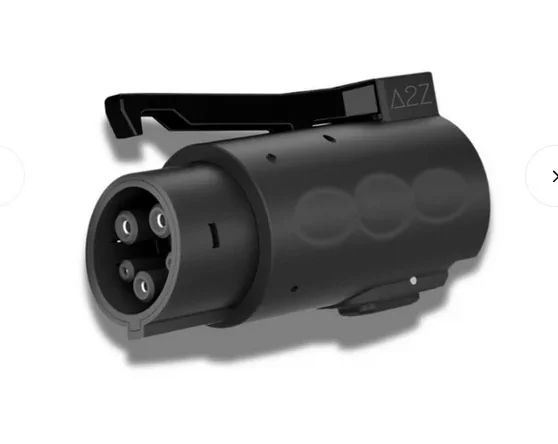
Figure 3 - NACS-to-J1772 Level 2 AC Adapter (See A2Z or EVSportline , or other sellers and brands.) |
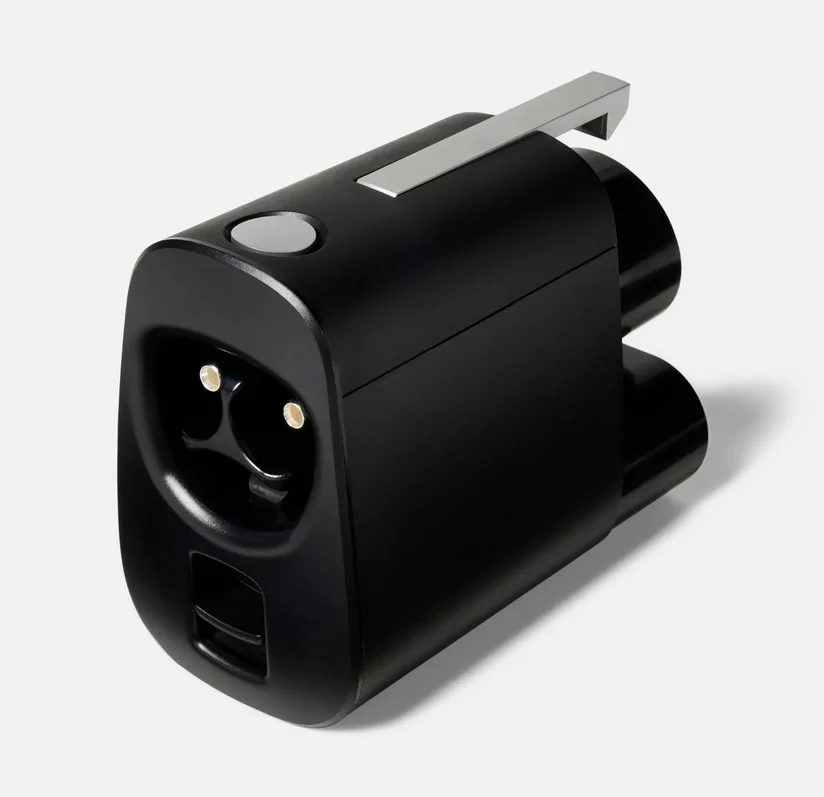
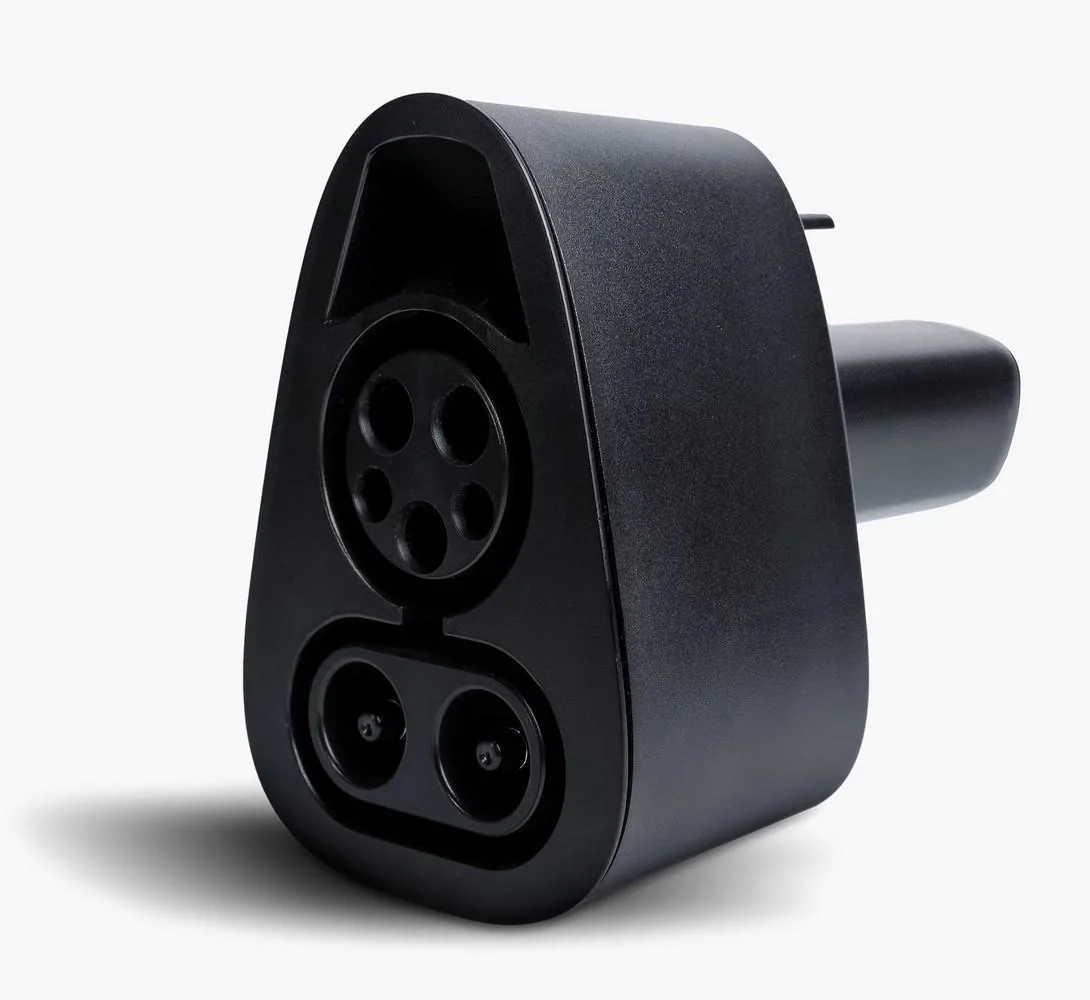
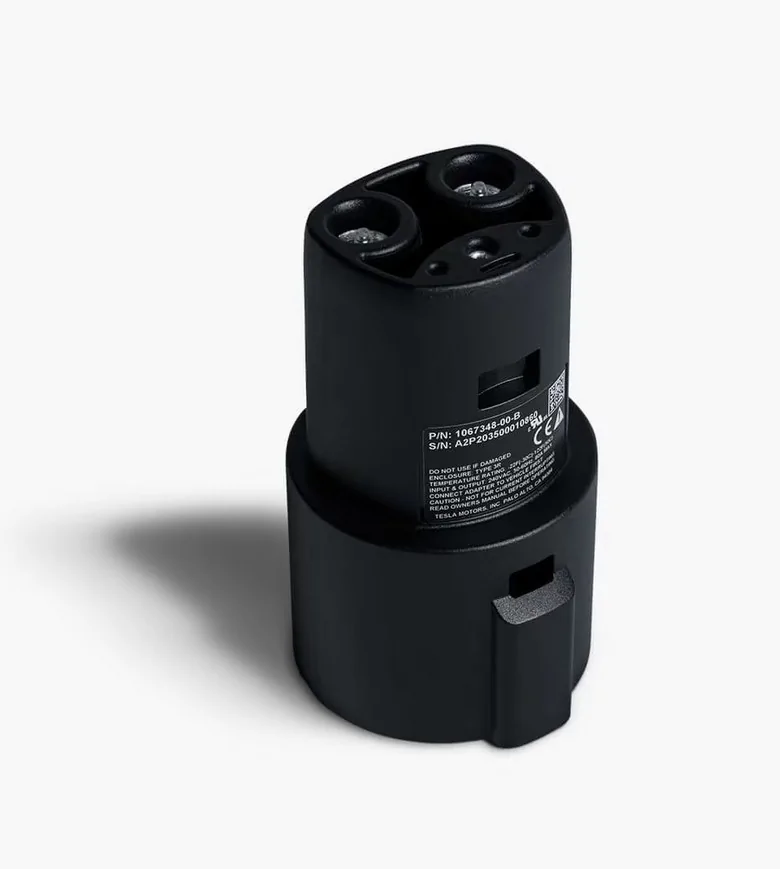
APPENDIX A
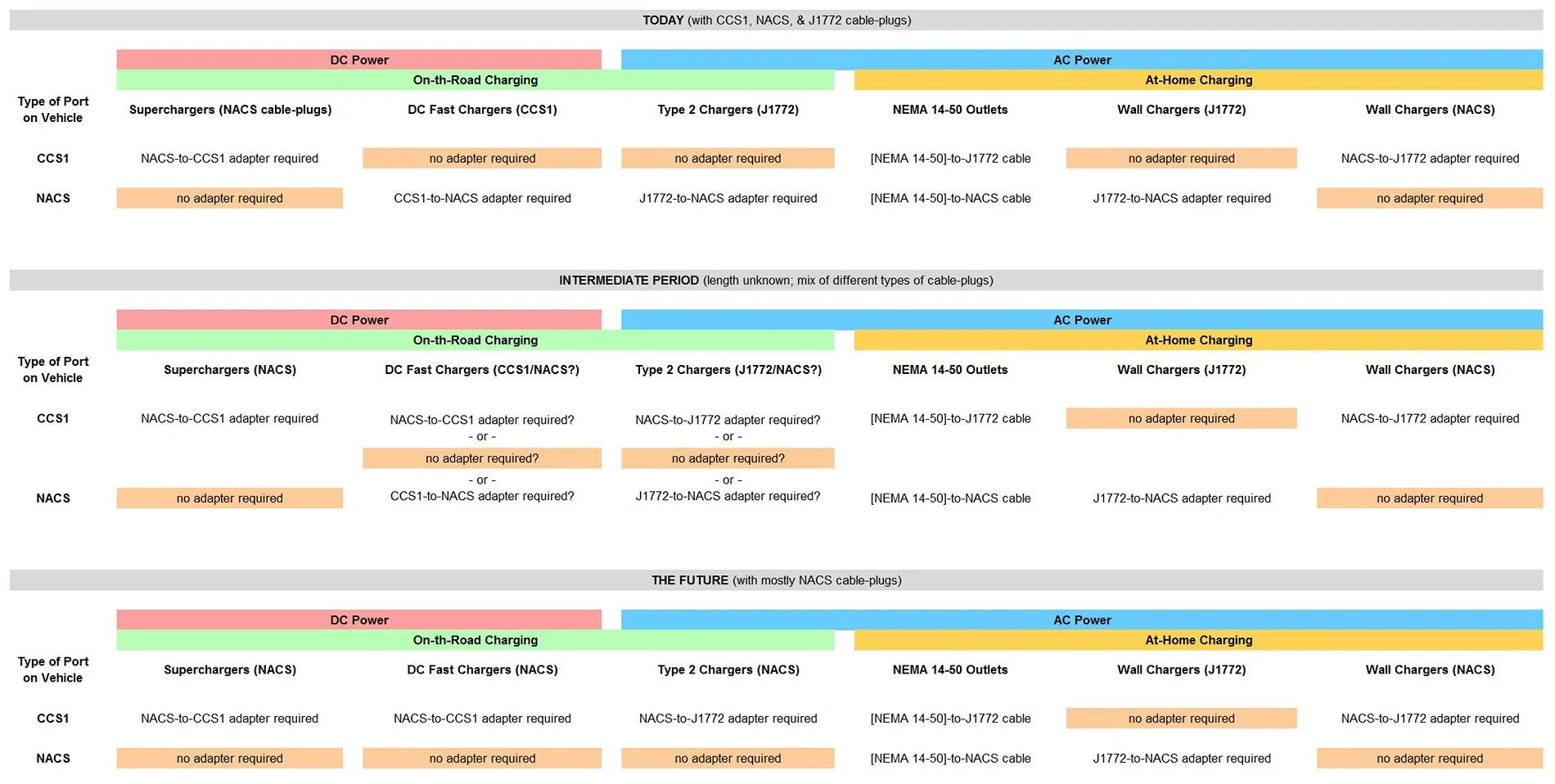
Original Spreadsheet
When Are Charging Adapters Necessary?
(Click to enlarge.)

APPENDIX B
Just a Few Recent Adapter-related Threads
Original Spreadsheet
When Are Charging Adapters Necessary?
(Click to enlarge.)
APPENDIX B
Just a Few Recent Adapter-related Threads
If nothing else, some of these indicate that plenty of (new) Rivian drivers have questions about adapters.
- "A2Z vs Rivian adapter" - 01/25/25
- "Why does NACS adapter not work with L2 Chargers?" - 01/26/25
- Trouble "Using Tesla Wall Charger w/ adapter" - 12/20/24
- "Tesla adapter first time question" - 11/24/24
- "Lectron NACS to CCS Adapter Recall Notice (from Amazon)" - 11/15/24
- "Adapter Lock Issues, any solves?" - 11/06/24
- "Cannot get any Tesla To J1772 adapter to work" - 10/10/24
- "RS1 Home Charging Adapter" - 10/09/24
- "Rivian vs Ford J3400 Tesla supercharger NACS adapter" - 09/13/24
- "First Supercharger Experience w/ A2Z NACS adapter" - 09/12/24
- "Official Tesla adapter would not unlock from truck" - 09/12/24
Sponsored
Last edited: