Sponsored

What if Tesla spun off the SuperCharger network to an independent company and gave up the NACS to an independent organization?

Zoidz

Well-Known Member
First Name
Gil
Joined
Feb 28, 2021
Threads
226
Messages
5,185
Reaction score
11,687
Location
PA
Vehicles
23 R1S Adv, Avalanche, BMWs-X3,330cic,K1200RS bike
Occupation
Engineer
I thought about this some more, and the “dominate” part is exactly what concerns me, and probably others.

The issue with the network being under Tesla’s control, I think, is that at any moment they can change pricing, availability, or charging speed if it furthers their purpose in selling vehicles. We’ve already seen that Teslas may get preferential pricing.

Imagine if Tesla implemented a rule such that 25% of available chargers at a site will always be reserved for Tesla vehicles. So, if you pull up to a site with 4 pedestals and 3 of them are occupied by a Hyundai, a Ford, and a Mercedes, you cannot initiate a charging session in your Rivian but a Tesla can.

Along those same lines, what if Tesla throttles the charging speed on non-Teslas to provide faster charging for Teslas at the same Supercharger? Or, what if tasked with cutting demand during peak power usage, Superchargers reduce demand by supplying less (or zero) power to non-Teslas first?

Maybe I am too distrustful of large corporations, but these shenanigans are what I’m picturing if Tesla controls the network. Heck, they could be the lowest price and highest availability for all… until they’ve driven most competition out of the business. THEN they start the shenanigans.
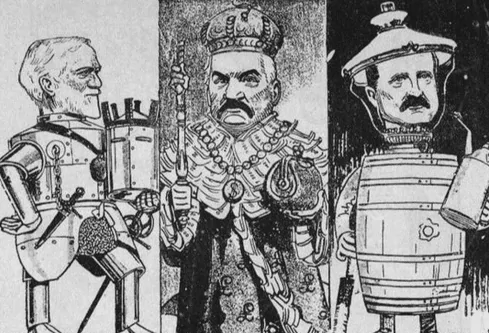
Exactly. This is the point I was trying to make in the other thread with my Feb 29, 2025 News Article. I have nothing against CCS, NACS, or Tesla. I have nothing against Elon per se, but he is a loose cannon with plenty of drive, ideas and money to make things happen and is not someone to put all your trust in. It's not a stretch to see EV charging turn into the "Robber Baron" stranglehold of the late 19th century. I suspect some people here have little to no knowledge of what I am referring to, lol.
Rivian R1T R1S What if Tesla spun off the SuperCharger network to an independent company and gave up the NACS to an independent organization? 1686596694781
Sponsored


ohseedee

Well-Known Member
Joined
Mar 1, 2022
Threads
15
Messages
735
Reaction score
1,728
Location
California
Vehicles
R1T
No not really. I bought a CCS car from Rivian at least partially on the promise it would be supported long term with Rivian and others building out infrastructure to charge it.

If my truck is now obsolete that is a real kick in the teeth but I don't really believe that as I have said a couple times these obituaries that the Tesla sheople are writing all over the forum are just overblown.
I don't think our R1s will be obsolete if there is an adapter without any reduction in performance. A Ford/GM adapter has already been announced, so it stands to reason an adaptor that works on Rivian and others will come before it's an issue. If I'm wrong however, I will also feel the teeth kick.
 

kallisti5

Well-Known Member
First Name
Alex
Joined
Apr 28, 2023
Threads
14
Messages
147
Reaction score
246
Location
Austin, TX
Vehicles
2022 R1T
I don't think our R1s will be obsolete if there is an adapter without any reduction in performance.
Looking over the specs... The R1 Rivian do 220 kW max.

* Supercharger v1 100kW
* Supercharger v2 120kW
* Supercharger v3 250kW
* Supercharger v4 250kW

(source: https://en.wikipedia.org/wiki/Tesla_Supercharger)

Of note... the V4 superchargers don't have space for a magic adapter thing...
https://insideevs.com/news/657445/tesla-first-v4-supercharger-now-open/


Luckily most of the Tesla charging speeds are inline with the Rivian speeds at 400v.
Man though, none of this feels safe. What happens when a 3rd party adapter has crappy pins or terminations and melts a vehicle?
 
OP
OP
SoCal Rob

SoCal Rob

Well-Known Member
First Name
Rob
Joined
Apr 19, 2021
Threads
39
Messages
2,808
Reaction score
5,963
Location
Laguna Niguel / Palm Springs / Pioneertown
Vehicles
2025 Rivian R1S & 2021 VW ID.4 (2023 R1S sold)
Occupation
Information Technology
Clubs
 
I think it's safe to say that throttling charging speed will never be something you'll have to worry about. It's in everyone's best interest to get every car in and out as fast as possible.
It’s in everyone’s best interest to get every car in and out as possible only if you decouple the manufacturers from the charging networks.

How would it hurt Tesla to cut charging speeds in half and charge twice as much per kWh? For non-Teslas only, of course. That’s a wash for them and making your competitors look worse by creating an advantage sounds like a possibility to me. So, yeah, I can see how it’s in Tesla’s best interest as a manufacturer of vehicles to make sure that Cybertrucks charge faster than Fords, Chevrolets, GMCs, Hummers, and Rivians if Cybertruck sales aren’t what they expect.

I don’t know what’s in the agreements between Tesla and other manufacturers, but I’d hope there is something to prevent this type of thing. I’m not counting on it, though.

edit:typo
 
Last edited:

zefram47

Well-Known Member
First Name
Aaron
Joined
Feb 6, 2022
Threads
18
Messages
2,749
Reaction score
4,511
Location
Denver, CO
Vehicles
Rivian R1T, Alfa Romeo 4C
Occupation
Software Engineer
It’s in everyone’s best interest to get every car in and out as possible only if you decouple the manufacturers from the charging networks.

How would it hurt Tesla to cut charging speeds in half and charge twice as much per kWh? For non-Teslas only, of course. That’s a wash for them and making your competitors look worse by creating an advantage sounds like a possibility to me. So, yeah, I can see how it’s in Tesla’s best interest as a manufacturer of vehicles to make sure that Cybertrucks charge faster than Fords, Chevrolets, GMCs, Hummers, and Rivians if Cybertruck sales aren’t what they expect.

I don’t know what’s in the agreements between Tesla and other manufacturers, but I’d hope there is something to prevent this type of thing. I’m not counting on it, though.

edit:typo
Unless they detect manufacturer via the ISO 15118 authentication they wouldn't know what's plugged in. With Ford / GM now tying in, it's not enough to just say that it's not a Tesla via whatever side-protocol they've been doing all along. The non plug-and-charge (non ISO 15118) CCS protocol literally has no communication about the vehicle in it, IIRC. And again, in busy stations Tesla's incentive to charge non-Teslas at full speed is to maintain availability for Tesla owners as well. It does no one any good to intentionally slow down a charge...doubly so if you're charging per kWh and not per-minute. When selling energy per kWh you want as much throughput on that station as possible.
 

Sponsored

OP
OP
SoCal Rob

SoCal Rob

Well-Known Member
First Name
Rob
Joined
Apr 19, 2021
Threads
39
Messages
2,808
Reaction score
5,963
Location
Laguna Niguel / Palm Springs / Pioneertown
Vehicles
2025 Rivian R1S & 2021 VW ID.4 (2023 R1S sold)
Occupation
Information Technology
Clubs
 
Unless they detect manufacturer via the ISO 15118 authentication they wouldn't know what's plugged in. With Ford / GM now tying in, it's not enough to just say that it's not a Tesla via whatever side-protocol they've been doing all along. The non plug-and-charge (non ISO 15118) CCS protocol literally has no communication about the vehicle in it, IIRC. And again, in busy stations Tesla's incentive to charge non-Teslas at full speed is to maintain availability for Tesla owners as well. It does no one any good to intentionally slow down a charge...doubly so if you're charging per kWh and not per-minute. When selling energy per kWh you want as much throughput on that station as possible.
Tesla supports plug-and-charge so, whatever the mechanism, they not only know when a Tesla connects but even which account it’s tied to.

I completely understand what you’re saying about wanting to maximize profits by maximizing throughput. If charging is your only business then that will always be true. My concern is that when the manufacturer of a brand of vehicle has influence over their captive in-house charging network, there may be times when a calculation is made that it is better to lose a little on charging revenue if it means increasing vehicle sales because their brand’s vehicles are demonstrably better.

I have worked for large corporations and I’ve seen some interesting decisions made as a result of a bigger picture. As just one example, my cable company charged less for bundled cable TV + landline phone + high speed internet than they do for cable TV + high speed internet. If I had to guess it’s because early on there was a goal to increase adoption of landline phone service, even if it came at the cost of slightly reduced revenue.

edit:typo
 

SASSquatch

Well-Known Member
Joined
Feb 3, 2022
Threads
36
Messages
2,303
Reaction score
4,471
Location
Washington DC
Vehicles
BMW i3s Ford C-Max Hybrid
Occupation
Semi-Autonomous Yeti
Clubs
 
I think it's safe to say that throttling charging speed will never be something you'll have to worry about. It's in everyone's best interest to get every car in and out as fast as possible.
In theory, that sounds great. But if you can control the infrastructure, there are too many incentives to make profit.

I doubt it would happen with the existing, about to be completely overwhelmed Tesla Network since I am predicting people are going to end up getting hurt when inevitable conflicts erupt when Tesla chargers ill equipped to handle anything other than a Tesla are blocked by a Ford Lightning, or a Hummer EV, and everything in between.

But in any new rollout, where there are actually spaced stalls and long cables - why does Elon Musk care if the station gets bogged down if he can make a profit?

He saw the writing on the wall that Tesla could not keep such a huge EV market share forever and competition would eventually come for him. Phase 2 of his master plan is to convince OEMS to adopt NACS, corner the charging market, and make his profit margins from that.

It's brilliant. He's an Evil Genius.
 

SASSquatch

Well-Known Member
Joined
Feb 3, 2022
Threads
36
Messages
2,303
Reaction score
4,471
Location
Washington DC
Vehicles
BMW i3s Ford C-Max Hybrid
Occupation
Semi-Autonomous Yeti
Clubs
 
I have an alternative solution that I threw out there in another thread a few days ago:

What if Rivian reaches out to other OEMs to develop a partnership for Rivian to continue to build out its existing network which will offer both CCS now and NACS in the future?

That way OEMs can decide if they want to make the switch or not but they can invest in a network that isn't tied to Tesla and that will be optimized for all of them. They can agree on a plug and play standard and they can hand money over to Rivian - who would also qualify for NEVI funding on top of that.

Rivian needs to step up and be our Huckleberry!
 

Dark-Fx

Well-Known Member
First Name
Brian
Joined
Jul 15, 2020
Threads
147
Messages
13,521
Reaction score
27,288
Location
Michigan
Vehicles
R1T, R1S, Livewire One, Sierra EV, R1S
Occupation
Engineering
Clubs
 
It's interesting to me that all of the sudden what F and GM are doing in the EV space is a strategy that the rest of the industry should emulate.... oh how the times and opinions change so quickly.
It's because it aligns with their interests. Doesn't matter who is doing it. Although if VW was the first to announce it and EA said they were going to begin switching immediately, I'd bet some folks would be upset about it because of EA.
 

Sponsored

Dark-Fx

Well-Known Member
First Name
Brian
Joined
Jul 15, 2020
Threads
147
Messages
13,521
Reaction score
27,288
Location
Michigan
Vehicles
R1T, R1S, Livewire One, Sierra EV, R1S
Occupation
Engineering
Clubs
 
Unless they detect manufacturer via the ISO 15118 authentication they wouldn't know what's plugged in. With Ford / GM now tying in, it's not enough to just say that it's not a Tesla via whatever side-protocol they've been doing all along. The non plug-and-charge (non ISO 15118) CCS protocol literally has no communication about the vehicle in it, IIRC. And again, in busy stations Tesla's incentive to charge non-Teslas at full speed is to maintain availability for Tesla owners as well. It does no one any good to intentionally slow down a charge...doubly so if you're charging per kWh and not per-minute. When selling energy per kWh you want as much throughput on that station as possible.
VIN is shared on CCS even without the advanced features. Obviously there isn't security on what VIN is announced but the vast majority of people would be incapable of changing the announcement.
 

mkg3

Well-Known Member
Joined
Nov 19, 2021
Threads
90
Messages
2,787
Reaction score
3,701
Location
SoCal
Vehicles
R1S, Model 3, Outback, Artura
Clubs
 
I’ve been reading the back-and-forth on the various charging threads and I’ve been trying to come up with a solution which makes most people happy. As if.

The closest I got is this: Tesla spins off the SuperCharger network into a separate profit-driven company so there is no favoritism among vehicle manufacturers, with that as a permanent part of the new company’s mission statement. Tesla releases all claim to any control over the NACS connector specifications to an independent body.

This would allow consumers to use SuperChargers (regardless of connector type) which are not controlled by a single vehicle manufacturer and it would allow manufacturers to include the NACS connector without being at the mercy of a competitor.

Would that make most people happy? I know that I could live with that.
Congrats on your icon image. Must got yours now!! Enjoy the ride...

On this subject, the only ones with heartburn over the NACS transition by F and GM are those that have reservations about, distaste/hate for Elon, Tesla or both.

Further, none of us know what the agreement entails and the implementation other than the imagination and speculation of what Tesla would/may do based on individual bias. It's creating lots of entropy without any insightful information.

Vast majority of the people are glad that there will be more reliable charging options available, especially after the EVgo, ChargePoint and others have also got on board to support the format.

I am very hopeful that Rivian will follow suit and move to NACS (the survey herein shows 2:1 in favor to do so). Once they do, it will open up all the superchargers to Rivian and make roadtrip planning significantly easier.
 
OP
OP
SoCal Rob

SoCal Rob

Well-Known Member
First Name
Rob
Joined
Apr 19, 2021
Threads
39
Messages
2,808
Reaction score
5,963
Location
Laguna Niguel / Palm Springs / Pioneertown
Vehicles
2025 Rivian R1S & 2021 VW ID.4 (2023 R1S sold)
Occupation
Information Technology
Clubs
 
Hear me out; what if pigs fly?
Instead of frying pork chops we’ll have flying pork chops! :CWL:

Seriously, I just tried to look for a solution which should accommodate both sides of the argument. If someone would rather argue than try to come up with solutions that take more than their own viewpoint into account, they’re more than welcome to keep making the same argument. :headbang:

What I’m suggesting would allow for the proliferation of NACS and interoperability without potentially crippling manufacturers of CCS vehicles via a fog of FUD. All of the pro-NACS side should be happy with that if they’re being honest in what they say: they want the NACS connector and compatibility with the Supercharger network.

It also allows the Supercharger arm of Tesla to become a profit-driven business rather than a way for one manufacturer to exert undue influence on charging infrastructure, which they claim they want widely adopted. Making SuperCharger, LLC (or whatever it’s called) truly manufacturer-agnostic should make all of the anti-Tesla side happy if they’re being honest in what they say: they want assurance that Tesla cannot use control over charging to exert control over other vehicle manufacturers.

What’s your solution or are you content with the, ”My way or no way!” approach?
 

spurcap

New Member
First Name
Josh
Joined
Jun 6, 2023
Threads
0
Messages
4
Reaction score
5
Location
NJ
Vehicles
2023 R1T
Clubs
 
Almost. It genuinely cares about its ability to sell vehicles at a profit. That focus on selling their vehicles is what concerns many people about the experience for owners of other brands as long as the Supercharger network is run by a single manufacturer.


I think it’s more about legacy thinking versus tech startup thinking.


Supercharger does not equal NACS. NACS is the connector, and having it governed by an independent standards organization, which would be looking at universal access to the standard for the betterment of EV adoption and backwards-compatibility, should be all that’s needed. Tying control to manufacturers rather than a standards body is a straw man argument and not what I’m suggesting.

I don’t think it would work out better keeping it tied to any vehicle manufacturer(s) as you propose, especially since as market shares change you’d potentially have a different manufacturer exerting its power over the rest. To me, that’s no better than when Tesla was in that position.
Yup. Everyone is talking like Ford and GM swapping a plug is groundbreaking. It isnt. Its their agreement to access SCs that gives them a competitive advantage.

Flip it around... if EA announced plan to replace all the CCS plugs with NACS plugs (operating on CCS protocol) do we think EA would all of a sudden become reliability EVSEs? Rivian is running a CCS network for Rivians that is 100% reliable....

One thing not proven on any meaninful scale whether SCs will be like current SC reliability if open to the masses. They do a great job charging 4 different models for one make using standardized plug and charge software. Will they be the same when all the different permutations of vehicles are there? I have more faith in Tesla to make it work than EA but we are still making big assumptions that Tesla SC experience will be the same when various OEM cars with various battery arcitectures and payment methods are inserted into the mix.

People want gas pump reliability... but the gas pump doeant care if you are filling a car, a truck, a gas can or pouring the gas on the ground. The challenge is EVSEs need communication and the more makes/models the more variables you need to deal with.
 

spurcap

New Member
First Name
Josh
Joined
Jun 6, 2023
Threads
0
Messages
4
Reaction score
5
Location
NJ
Vehicles
2023 R1T
Clubs
 
Looking over the specs... The R1 Rivian do 220 kW max.

* Supercharger v1 100kW
* Supercharger v2 120kW
* Supercharger v3 250kW
* Supercharger v4 250kW

(source: https://en.wikipedia.org/wiki/Tesla_Supercharger)

Of note... the V4 superchargers don't have space for a magic adapter thing...
https://insideevs.com/news/657445/tesla-first-v4-supercharger-now-open/


Luckily most of the Tesla charging speeds are inline with the Rivian speeds at 400v.
Man though, none of this feels safe. What happens when a 3rd party adapter has crappy pins or terminations and melts a vehicle?
A real risk is that the adaptor and additional cable length needed (to get to other side of car) will require the speed to derate so people working with an adaptor will have a slower charging experience than those with a NACS port on the driver rear/pax front.
Sponsored


Top