Sponsored

TrueDad

Member
First Name
Adam
Joined
Jul 23, 2025
Threads
0
Messages
7
Reaction score
11
Location
San Diego County
Vehicles
2025 Rivian R1S Dual Standard Gen 2, 2023 Ford Mustang Mach E, 2018 Nissan Leaf
Emporia EVSE can monitor production/consumption and direct excess solar into your EV. You need the CTs set up to make it happen, but this is one that does as you ask.

from their white papers - I believe the SigEnergy system can also do this.
Correct, the SigEnergy system does this. You can set it to do so automatically with any vehicle plugged in or manually control the circumstances it’ll send excess to EVs.
Sponsored


itiming

Member
First Name
Chuck
Joined
Jan 13, 2024
Threads
3
Messages
23
Reaction score
34
Location
Wisconsin
Vehicles
Rivian R1T, Tesla Model Y
Occupation
Retired
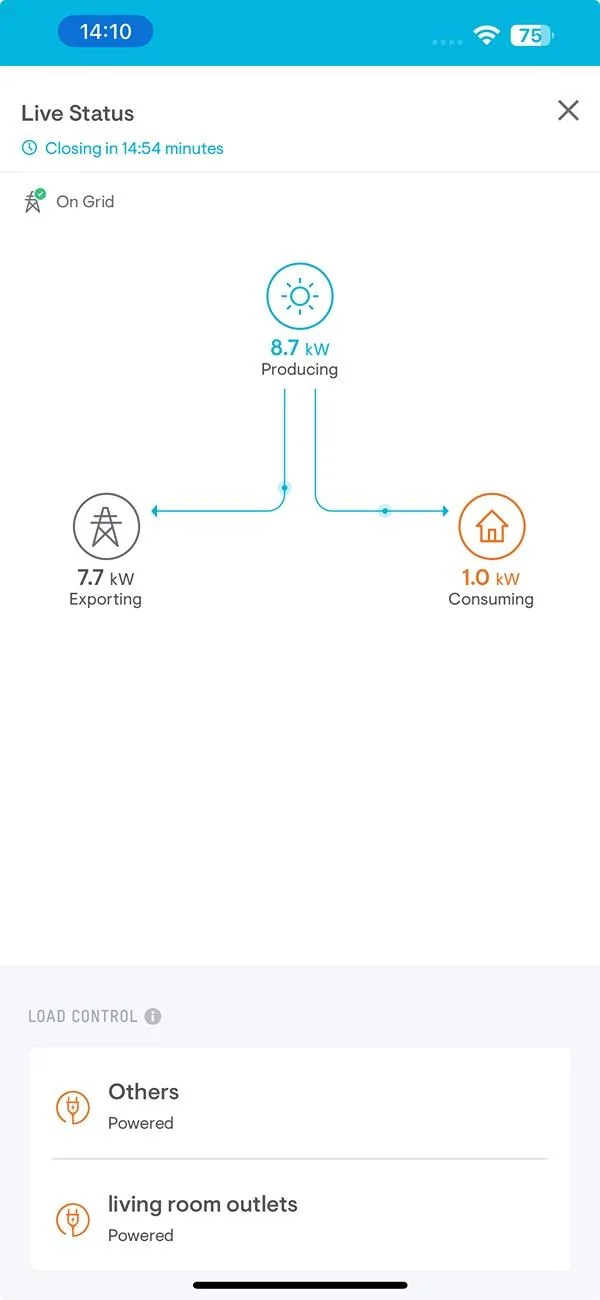
When we installed the Enphase system, we added a controller (you might already have with your battery BU) to allow us to operate off-grid using daylight solar production from the IQ inverters. Our installer set it up with the CT's so that solar power is used first and augmented with grid power, as needed. Here is when the EV's are charged:

Rivian R1T R1S Rivian V2X V2H Solution available now using PointGuard/Sigenergy BiDirectional? enphaseEnergy


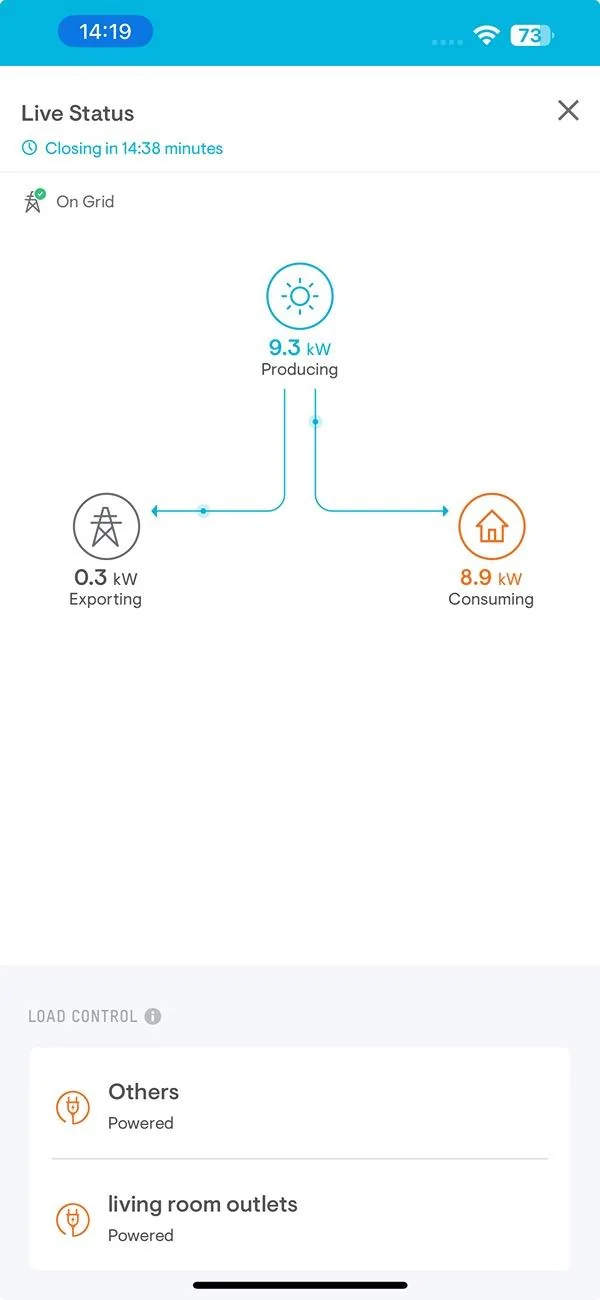
I also set the scheduled charge for 9:30 am to 4:30 pm using 32 amps for each EV. I can adjust, as needed for low solar or high travel days--in that case Enphase pulls just enough from the grid to hold the charge rate.


Here is when the EV's are being charged:

Rivian R1T R1S Rivian V2X V2H Solution available now using PointGuard/Sigenergy BiDirectional? enphaseEnergy2
 
Last edited:

Just Passing By

Well-Known Member
First Name
John
Joined
Jan 18, 2025
Threads
1
Messages
201
Reaction score
274
Location
Bay Area
Vehicles
(Ancient Audi A6 gone) - 2 wheels-only for now Honda CB500X
What use cases do you gents see? I have solar and would only see a need if everything was down. Is there any concern with battery degradation with continued use? Cheers
My use case for a system like this is to primarily provide additional energy for house heat pump use in the winter and as insurance for a major power outage and gas service interruption, should they occur, such as a large earthquake event. As a retiree there may be many days when the vehicle never moves, or is only used for short local trips, so I want to leverage the large vehicle battery sat in the garage otherwise doing nothing.

The house system would have a 5-10 kWh battery as primary storage, for use on a regular basis when the sun isn't generating energy in the evening/overnight, and the vehicle battery would only be used if the energy storage in the house battery isn't sufficient.

As background, I live in San Jose, which is probably an ideal location for a heat pump, with ~300 days of sun a year and a temperate climate that rarely dips below freezing. Thus most of the house heating and cooling will occur during sunny hours, with the house already pre-conditioned to maintain evening temps. I hardly need aircon in the summer (I don't even have one installed currently) but in winter there can be multiple periods of contiguous days where there would be low to no solar generation and the vehicle battery would cover these. As I age I expect to maintain a cooler house in summer and a warmer one in winter so that might increase vehicle battery use.

I may be the optimum example for this type of use, but I suspect many retirees will be in a similar position, where they no longer commute and aren't driving anywhere near as much as when they were working and will want to get more value from their BEV and its battery.
 

KenCar

Well-Known Member
First Name
Ken
Joined
Aug 27, 2024
Threads
1
Messages
58
Reaction score
58
Location
California
Vehicles
R1S
My use case is also for BU. We have an Enphase solar setup - but installed it w/o battery BU, due to budget. It is setup for solar BU to an essential loads panel. My goal is to have our R1T send power to our home grid's essential loads panel when the grid is down.

There are enough solar panels to supply our house and Tesla/Rivian daily driving. We import from the grid over the evening. Overall, we supply more power to the grid than we import--the power company credits us at half their residential rate ($0.061/kWh credit vs $0.122/kWh imported) so solar is working well for us. If the grid goes down, we can only supply power during daylight. A V2H connection with either/both our Tesla or Rivian is the goal.

For now, we use our EV's as solar storage, to maximize using our solar production and minimize grid import. We alternate using our EV's (retirement is nice); so one EV is home charging when we are traveling with the other EV. This allows us to run our vehicles on solar power w/o much grid import -- overall exporting more than importing.
My use case is also for BU. We have an Enphase solar setup - but installed it w/o battery BU, due to budget. It is setup for solar BU to an essential loads panel. My goal is to have our R1T send power to our home grid's essential loads panel when the grid is down.

There are enough solar panels to supply our house and Tesla/Rivian daily driving. We import from the grid over the evening. Overall, we supply more power to the grid than we import--the power company credits us at half their residential rate ($0.061/kWh credit vs $0.122/kWh imported) so solar is working well for us. If the grid goes down, we can only supply power during daylight. A V2H connection with either/both our Tesla or Rivian is the goal.

For now, we use our EV's as solar storage, to maximize using our solar production and minimize grid import. We alternate using our EV's (retirement is nice); so one EV is home charging when we are traveling with the other EV. This allows us to run our vehicles on solar power w/o much grid import -- overall exporting more than importing.
Wow, those electric rates and credits are amazing! My Cali company charges up to 63 cents/Kwh for peak hours, but only credits me 1.5 cents/Kwh when I have excess production.
 

iansriv

Well-Known Member
Joined
Feb 12, 2022
Threads
20
Messages
2,792
Reaction score
3,801
Location
US
Vehicles
R1S
My use case for a system like this is to primarily provide additional energy for house heat pump use in the winter and as insurance for a major power outage and gas service interruption, should they occur, such as a large earthquake event. As a retiree there may be many days when the vehicle never moves, or is only used for short local trips, so I want to leverage the large vehicle battery sat in the garage otherwise doing nothing.

The house system would have a 5-10 kWh battery as primary storage, for use on a regular basis when the sun isn't generating energy in the evening/overnight, and the vehicle battery would only be used if the energy storage in the house battery isn't sufficient.

As background, I live in San Jose, which is probably an ideal location for a heat pump, with ~300 days of sun a year and a temperate climate that rarely dips below freezing. Thus most of the house heating and cooling will occur during sunny hours, with the house already pre-conditioned to maintain evening temps. I hardly need aircon in the summer (I don't even have one installed currently) but in winter there can be multiple periods of contiguous days where there would be low to no solar generation and the vehicle battery would cover these. As I age I expect to maintain a cooler house in summer and a warmer one in winter so that might increase vehicle battery use.

I may be the optimum example for this type of use, but I suspect many retirees will be in a similar position, where they no longer commute and aren't driving anywhere near as much as when they were working and will want to get more value from their BEV and its battery.
Thank you for a very detailed and insightful post. It's great to see people like you proactively preparing for the future. I'd like to share two thoughts with you that may be of interest. Firstly, I started my solar journey with trying to attempt to get as much energy as possible but a friend of mine suggested to try to make the as energy efficient as possible. I see a lot of people in the same boat as me that chase max energy & not efficiency. Secondly, please look up "Blue Zones." It's on Netflix and lots of info online. It's a great insight into how other people age strongly. My friends and family view age as inevitable and do very little to help themselves. An active lifestyle and proper diet go a long way. All the best.
 

Sponsored

Just Passing By

Well-Known Member
First Name
John
Joined
Jan 18, 2025
Threads
1
Messages
201
Reaction score
274
Location
Bay Area
Vehicles
(Ancient Audi A6 gone) - 2 wheels-only for now Honda CB500X
I started my solar journey with trying to attempt to get as much energy as possible but a friend of mine suggested to try to make the as energy efficient as possible. I see a lot of people in the same boat as me that chase max energy & not efficiency.
Definitely a valid point. A system with solar generation purely based on worst case energy demand, winter in my case, is going to be very inefficient in the shoulder seasons where my energy consumption is minimal and where PG&E credits for excess generation during the off-peak TOU are minimal. This is part of the reason why I want to be able to use the vehicles battery rather than over invest in the house battery.

Also worth considering that under California's NEM 3.0 there are some exceptionally high energy export rates in August and especially September, with the latter at $2.35 & $2.74/kWh between 6-8pm. This is because the curtailing of late-day solar generation at this time of year, while CA still experiences high temps, may cause state wide AC use to stress the grid early evening. Hence the high rates and another reason my focus is weighted more to batteries/energy storage over excess solar generation.
"Blue Zones."
Thanks for the thought and suggestion. I suspect I'm already well ahead of the curve on diet (mostly plant, fish and chicken based) and exercise (currently running > 100miles per month), need to do more weight training though. Hoping for 100 with some good longevity genes in the family. I plan to see out the 25 year warranty on the solar panel installation once standard V2x is more broadly available. 😀
 

mudito

Well-Known Member
First Name
Aldo
Joined
Jul 30, 2024
Threads
18
Messages
1,010
Reaction score
1,413
Location
Texas
Vehicles
Rivian R1T
I'm also very tempted to get this and integrate it with my existing battery backup /inverter...

Very cool indeed
 

SANZC02

Well-Known Member
First Name
Bob
Joined
Feb 11, 2021
Threads
50
Messages
7,397
Reaction score
12,677
Location
California
Vehicles
Tesla Model S, LE - R1S
Occupation
Retired
Wow, those electric rates and credits are amazing! My Cali company charges up to 63 cents/Kwh for peak hours, but only credits me 1.5 cents/Kwh when I have excess production.
CA makes it very easy to get an ROI for solar that actually works.

I did just get a notice from SCE though, in November the minimum monthly is going to $24, I think right now mine is around $14 and usually is covered by my annual overage credits. Looks like I might need to start sending money to SCE again in November.
 

docwhiz

Well-Known Member
First Name
Mark
Joined
May 22, 2023
Threads
5
Messages
668
Reaction score
618
Location
Lake Tahoe, California
Vehicles
Tesla Model S LR (2022), Land Rover Discovery 2
Occupation
Retired
Friend was using V2L adapter for Tesla that fried the charging port edit: Pyro fuse. Buyer beware. It was a different brand and they refunded the purchase price but not the repair costs.
Would love V2G/L, as well as better inverter capacity, 240v like the Lightning has.
I don't understand how a pyro fuse which can handle 150 or 225 kW charging would blow with a 10 or 20 kW V2x load.
 

Sponsored

pointless

Well-Known Member
Joined
Jan 21, 2023
Threads
13
Messages
257
Reaction score
186
Location
US
Vehicles
Awaiting R1T
I don't understand how a pyro fuse which can handle 150 or 225 kW charging would blow with a 10 or 20 kW V2x load.
Great question.
 

scottf200

Well-Known Member
First Name
Scott
Joined
Nov 25, 2019
Threads
6
Messages
432
Reaction score
296
Location
WNC
Vehicles
Past Ford Exped; curr TMX 100D; future BEV truck/SUV
Occupation
sw engineer
My use case is also for BU. We have an Enphase solar setup - but installed it w/o battery BU, due to budget. It is setup for solar BU to an essential loads panel. My goal is to have our R1T send power to our home grid's essential loads panel when the grid is down.

There are enough solar panels to supply our house and Tesla/Rivian daily driving. We import from the grid over the evening. Overall, we supply more power to the grid than we import--the power company credits us at half their residential rate ($0.061/kWh credit vs $0.122/kWh imported) so solar is working well for us. If the grid goes down, we can only supply power during daylight. A V2H connection with either/both our Tesla or Rivian is the goal.

For now, we use our EV's as solar storage, to maximize using our solar production and minimize grid import. We alternate using our EV's (retirement is nice); so one EV is home charging when we are traveling with the other EV. This allows us to run our vehicles on solar power w/o much grid import -- overall exporting more than importing.
New video from 3 days ago.

IQ Bidirectional EV Charger | Built for Broad Vehicle, Home, and Grid Compatibility
via: Enphase Energy
 

Just Passing By

Well-Known Member
First Name
John
Joined
Jan 18, 2025
Threads
1
Messages
201
Reaction score
274
Location
Bay Area
Vehicles
(Ancient Audi A6 gone) - 2 wheels-only for now Honda CB500X
Still seems they have the requirement for their darn meter collar.
They have to have some form of isolation from the grid if the grid goes down. Otherwise they would back feed the grid which is dangerous to line workers.
Sponsored


Top