Sponsored

CCS is Dead Man Walkin’

Tahoe Man

Banned
Well-Known Member
Joined
Aug 12, 2022
Threads
1
Messages
561
Reaction score
498
Location
Tahoe
Vehicles
Chevy Volt
277 can kill and does.
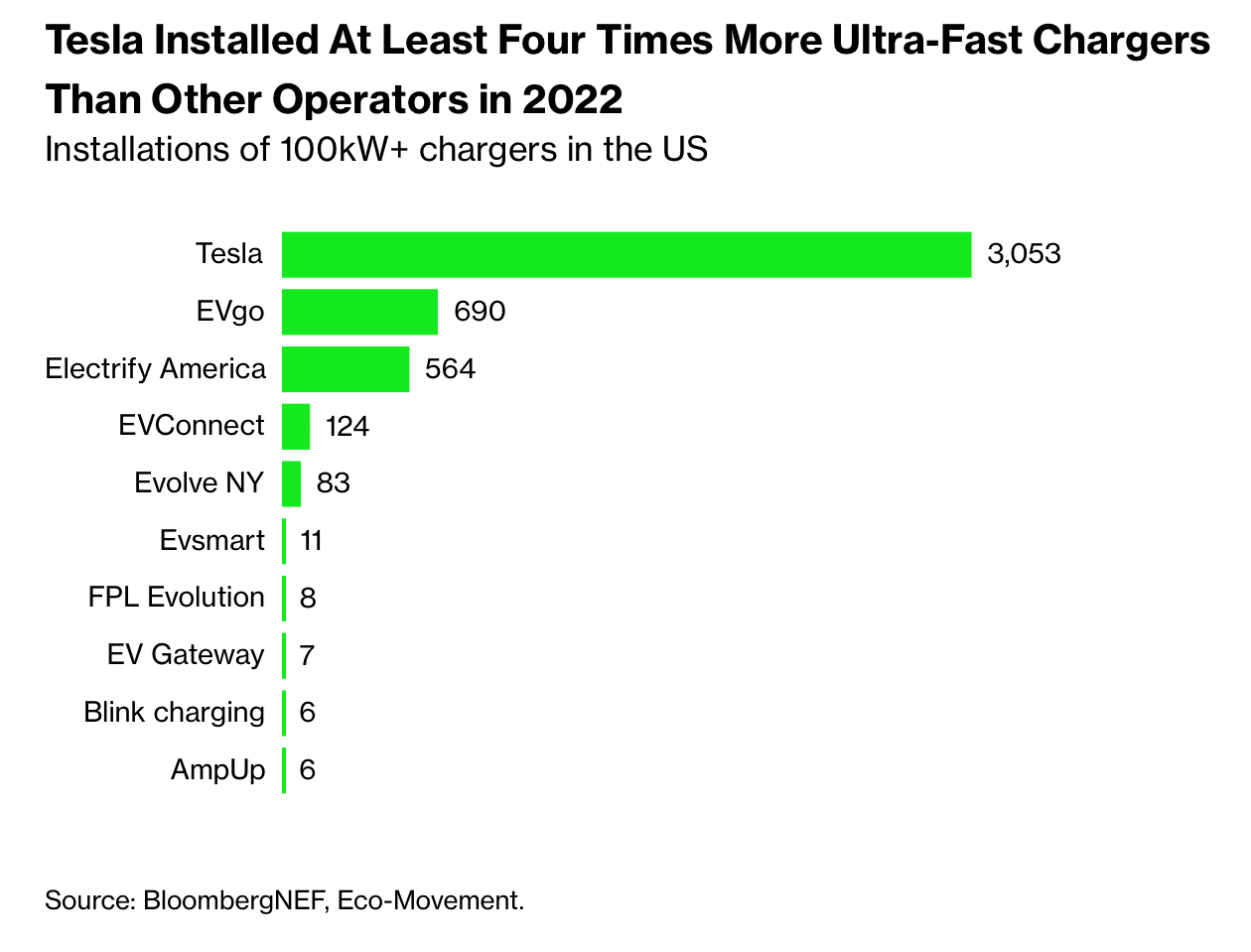
Could add all the DCFC installed by every other brand in 2022, and they wouldn’t add up to what Tesla manufactured in just 6 months of 2022.

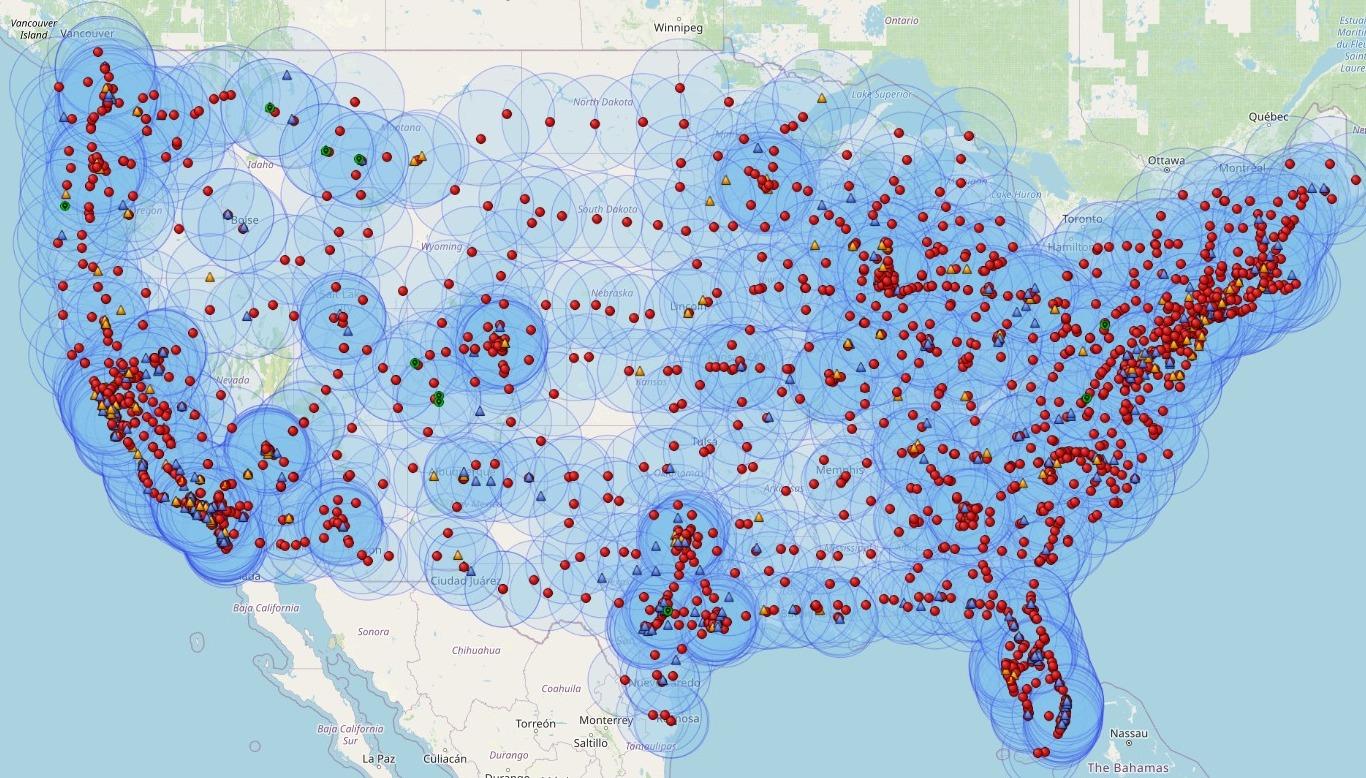
Can’t believe supercharge.info site - never seen it before. They are installing chargers in tiny towns with less than 1000 people; why would Tesla be wasting their money on these locations? It’s like they are rubbing it in our face that we can’t get anyone to save CCS.

1686603790299.png
You have to take into the operation status of the installed fast chargers. If there are 12,000 CCS fast charger and 12,000 Tesla fast chargers, it's really more like 8,0000 CCS since about 4,000 are always busted. In addition CCS fast chargers include 50kW which barely counts as fast charging....so really 4-5000 CCS real fast chargers that actually work.
Sponsored


sub

Well-Known Member
Joined
Jul 23, 2021
Threads
34
Messages
1,873
Reaction score
3,307
Location
USA
Vehicles
Rivian R1S, Tesla Model 3
The idea that NACS means “you can charge wherever you want” isn’t a certainty until the supercharger network is manufacturer agnostic, like the CCS network is, and doesn’t require ongoing agreement with manufacturers to maintain access.
All of the other charging networks are free to add NACS cables if they want to. And even if they don't add NACS cables, a NACS car can charge at a CCS charger.

Switching to NACS does not mean that Tesla Superchargers are your only choice. If Rivian switched to NACS and then got cut off from Tesla's Superchargers you would be no worse off than you are today.
 
Last edited:

bd5400

Well-Known Member
Joined
Oct 1, 2021
Threads
14
Messages
885
Reaction score
1,721
Location
Milwaukee
Vehicles
R1T, SL500
Clubs
 
All of the other charging networks are free to add NACS cables if they want to. And even if they don't add NACS cables, a NACS car can charge at a CCS chargers.

Switching to NACS does not mean that Tesla Superchargers are your only choice. If Rivian switched to NACS and then got cut off from Tesla's Superchargers you would be no worse off than you are today.
The CCS connector sucks, but the real advantage of NACS for the consumer, at least now, is access to the supercharger network. I’m almost certain that the average EV customer, assuming they have an opinion on NACS at all, is thinking about it in the context of being able to use superchargers.

Otherwise, any discussion of the size of the supercharger network or it’s reliability is completely pointless.
 

scottf200

Well-Known Member
First Name
Scott
Joined
Nov 25, 2019
Threads
6
Messages
433
Reaction score
297
Location
WNC
Vehicles
Past Ford Exped; curr TMX 100D; future BEV truck/SUV
Occupation
sw engineer
Can’t believe supercharge.info site - never seen it before. They are installing chargers in tiny towns with less than 1000 people; why would Tesla be wasting their money on these locations?
Because they are good waypoint charging locations along routes.

For each of those entries you can go a forum thread where people show the permits and construction pictures.

Circle radiuses are set to 100 miles in this picture ... ala waypoints.

Rivian R1T R1S CCS is Dead Man Walkin’ 4it70e6
 

Autolycus

Well-Known Member
Joined
May 2, 2021
Threads
15
Messages
2,234
Reaction score
3,431
Location
ATL
Vehicles
ICE only :(
There’s a lot of posts talking about CCS is Europe. The Europe CCS2 is completely different from CCS1 in NA.
I’m largely trying to step out of these discussions because they’ve gotten insanely circular, but I’m going to step in to correct clear factual errors. CCS Type 1 and CCS Type 2 use identical communications protocols and are functionally identical for DC charging. They difference in connector is because of the AC side of the port only. Car side, the design of a car for CCS1 vs CCS2 is nearly identical aside from the port itself. Manufacturers can use essentially identical designs for both CCS1 and CCS2 markets.
 

Sponsored

Longreach

Well-Known Member
Joined
May 1, 2022
Threads
0
Messages
149
Reaction score
299
Location
Texas
Vehicles
Miata
Except the largest EV market by market share worldwide (Europe) has banned NACS and their entire infrastructure can only be CCS.

Ooops.
Such a disingenuous comment…

Europe implements 3 phase power at the local level, therefore AC charging needs a 3 phase capable connector. Only the Mennekes connector has offered 3 phase capability, hence it had to be adopted as part of CCS-2. Everyone, including Tesla, agreed to use it because there was no other choice. NACS was never an option for Europe in the first place.

The comments from the small and highly vocal anti-NACS people here have become more and more extreme and irrational. History has spoken, the clock is not going backwards to CCS-1 in North America at this point.
 

Cosmacelf

Well-Known Member
Joined
Nov 11, 2020
Threads
20
Messages
442
Reaction score
530
Location
San Diego, CA
Vehicles
Rivian R1S, Tesla Model X
Occupation
Software
I’m largely trying to step out of these discussions because they’ve gotten insanely circular, but I’m going to step in to correct clear factual errors. CCS Type 1 and CCS Type 2 use identical communications protocols and are functionally identical for DC charging. They difference in connector is because of the AC side of the port only. Car side, the design of a car for CCS1 vs CCS2 is nearly identical aside from the port itself. Manufacturers can use essentially identical designs for both CCS1 and CCS2 markets.
Um, except that CCS2 is a three phase standard and CCS1 is single phase, so the wiring harness and on board chargers are different? Oh, and CC2 has a car side mechanical interlock while CCS1 does not? So, yeah, the same, except where they are quite different.
 

SASSquatch

Well-Known Member
Joined
Feb 3, 2022
Threads
36
Messages
2,303
Reaction score
4,471
Location
Washington DC
Vehicles
BMW i3s Ford C-Max Hybrid
Occupation
Semi-Autonomous Yeti
Clubs
 
Such a disingenuous comment…

Europe implements 3 phase power at the local level, therefore AC charging needs a 3 phase capable connector. Only the Mennekes connector has offered 3 phase capability, hence it had to be adopted as part of CCS-2. Everyone, including Tesla, agreed to use it because there was no other choice. NACS was never an option for Europe in the first place.

The comments from the small and highly vocal anti-NACS people here have become more and more extreme and irrational. History has spoken, the clock is not going backwards to CCS-1 in North America at this point.
I'm sorry - the legislation is very clear that a CCS connector must be made available for level 3 charging in Europe. That is not disingenuous at all.

Meanwhile, if you had taken the time to read anything else in the thread you will have seen that it has been made crystal clear the opposition is not with the NACS port but the monopoly it would afford to Tesla who has controlled the port and the charging standard for well over a decade and currently controls 100% of NACS infrastructure in the US.

Those new laws must, as a minimum:
  1. Require all providers of public chargers to include a Mennekes type 2 connector where Level 2 or fast AC charging is made available, and a CCS connector where Level 3 charging is provided. That will only apply to equipment installed or upgraded on or after 18th November 2017. Providers may additionally make any other kinds of connector available. In the UK this is already happening, as most of the Ecotricity rapid-chargers I have used have CCS, CHAdeMO, and fast AC. The Mennekes connector is the universal standard for Level 2 already. CCS is now likely to become the standard in the EU as a result of this legislation, especially as EU manufacturers favor it.
 

NineElectrics

Well-Known Member
Joined
Aug 7, 2022
Threads
49
Messages
915
Reaction score
1,126
Location
US
Vehicles
R1S
Europe implements 3 phase power at the local level, therefore AC charging needs a 3 phase capable connector. Only the Mennekes connector has offered 3 phase capability, hence it had to be adopted as part of CCS-2. Everyone, including Tesla, agreed to use it because there was no other choice. NACS was never an option for Europe in the first place.

The comments from the small and highly vocal anti-NACS people here have become more and more extreme and irrational. History has spoken, the clock is not going backwards to CCS-1 in North America at this point.
I don’t know. Tesla was incapable of modifying their own connector to support three phase power? I don’t think so. There’s always a choice. At the very least, they could have offered something very similar, with the purported ergonomic advantages of NACS. They ignored the CCS standard which was developed almost a year before the Model S shipped, they could have done their own thing here too.

Also, it’s been what, a week, and the “clock of history has already spoken?” Pretty grandiose talk; I don’t buy it. If Ford can switch charger standards once already, they can do so again. Elon Musk need only go all pedo sub on Ford after some alleged slight, for example. Or Tesla decides to screw over non-Tesla users of the Supercharger network because sales have slowed, or who knows what. Or manufacturers decide they’re unwilling to support a competitor. Or the federal government pumps massive subsidies into CCS. Or the superchargers end up having widespread compatibility issues with non-Tesla vehicles. Nothing has shipped and Tesla has a history of overpromising.
 

Longreach

Well-Known Member
Joined
May 1, 2022
Threads
0
Messages
149
Reaction score
299
Location
Texas
Vehicles
Miata
I'm sorry - the legislation is very clear that a CCS connector must be made available for level 3 charging in Europe. That is not disingenuous at all.

Meanwhile, if you had taken the time to read anything else in the thread you will have seen that it has been made crystal clear the opposition is not with the NACS port but the monopoly it would afford to Tesla who has controlled the port and the charging standard for well over a decade and currently controls 100% of NACS infrastructure in the US.

Those new laws must, as a minimum:
  1. Require all providers of public chargers to include a Mennekes type 2 connector where Level 2 or fast AC charging is made available, and a CCS connector where Level 3 charging is provided. That will only apply to equipment installed or upgraded on or after 18th November 2017. Providers may additionally make any other kinds of connector available. In the UK this is already happening, as most of the Ecotricity rapid-chargers I have used have CCS, CHAdeMO, and fast AC. The Mennekes connector is the universal standard for Level 2 already. CCS is now likely to become the standard in the EU as a result of this legislation, especially as EU manufacturers favor it.
Now you are commingling the European situation with the suggestion of North American “monopolies”. No “monopolies” are going to happen here, US network operators have already embraced the NACS connector with several deployment announcements made.

Your only suggestion seems to be mandating bad charging networks by government edict because you fear they can’t complete with good charging networks in an open market. How can that be good for anyone?
 

Sponsored

Longreach

Well-Known Member
Joined
May 1, 2022
Threads
0
Messages
149
Reaction score
299
Location
Texas
Vehicles
Miata
I don’t know. Tesla was incapable of modifying their own connector to support three phase power? I don’t think so. There’s always a choice. At the very least, they could have offered something very similar, with the purported ergonomic advantages of NACS. They ignored the CCS standard which was developed almost a year before the Model S shipped, they could have done their own thing here too.

Also, it’s been what, a week, and the “clock of history has already spoken?” Pretty grandiose talk; I don’t buy it. If Ford can switch charger standards once already, they can do so again. Elon Musk need only go all pedo sub on Ford after some alleged slight, for example. Or Tesla decides to screw over non-Tesla users of the Supercharger network because sales have slowed, or who knows what. Or manufacturers decide they’re unwilling to support a competitor. Or the federal government pumps massive subsidies into CCS. Or the superchargers end up having widespread compatibility issues with non-Tesla vehicles. Nothing has shipped and Tesla has a history of overpromising.
The Tesla connector only has 2 high power pins, it cannot support 3-phase AC. But it was never intended to do so, therefore it was never a contender for European standardization.

Interestingly, the Tesla connector was proposed to the J1772 committee as a North American standard a decade ago. But it was voted down by the legacy companies at the time because they somewhat short sightedly thought the AC only Yazaki plug was sufficient. When DC came along, they were forced to add DC pins which resulted in the cumbersome and unloved franken plug, the worst physical implementation in the world. Now the biggest legacy companies are all in on EVs and have realized their mistake. Timing and market momentum are everything, so the only rational choice was to move forward with the renamed NACS plug. But have no doubt, embracing the NACS connector will include publication by an accredited standards committee as a condition of acceptance.
 

Acoustic71

Well-Known Member
First Name
Bob
Joined
Sep 26, 2021
Threads
21
Messages
955
Reaction score
1,434
Location
Oregon
Vehicles
Volvo XC70; 2022 Rivian R1T
Occupation
Program Analyst
And yet, here you are. Not only reading it but commenting twice. I bet you even comment a third time after reading this. If not, well that’s Missing accomplished fit both of us. ?
On this case I “Missing accomplished” may be more accurate than you think.
 

RexRemus

Well-Known Member
First Name
Chuck
Joined
Sep 27, 2021
Threads
42
Messages
759
Reaction score
1,345
Location
Chicago, IL
Vehicles
2023 R1S
Clubs
 
I mean NACS chargers faster than 100kW are being installed at a pace that is 4x+ greater than CCS.

When I say CCS is behind NACS; what I really mean is no one has stepped up to support it in a big way. If it weren’t for EA, there would be hardly any CCS1 stations in USA.


I wish I could bet money on you mentioning standards board ;)

Still haven’t taken the L on this one?
Can you read? What part about me being EXPLICITLY humble and expressing pure curiosity to understand the differences between these two standards (sorry if that word is a trigger for you but that's what they are) did you miss? You managed to pretend you dunked on me, while still managing to provide no actual information relevant to my question, which wasn't a challenge or even pushing one side or the other. I specifically tried to DEFUSE asinine replies like this one, but the internet never disappoints...

:rolleyes:
 

RexRemus

Well-Known Member
First Name
Chuck
Joined
Sep 27, 2021
Threads
42
Messages
759
Reaction score
1,345
Location
Chicago, IL
Vehicles
2023 R1S
Clubs
 
According to the cpec for CCS, the Maximum current is 500 amps. According to the spec for NACS, it can handle at least 900 amps. So that is nearly 2x the current - I would say that would qualify as "greatly exceeds".

Note that NACS does not have a specific max current - the spec says watch the temperature and turn it down as-needed, and that it has confirmed that 900A did not overheat.

So the max power for a CCS1 port on a 400V vehicle (like a Rivian) is 400V*500A=200kw while a NACS port could handle 400V*900A=360kw.
Thanks for the info!
 

docwhiz

Well-Known Member
First Name
Mark
Joined
May 22, 2023
Threads
5
Messages
670
Reaction score
619
Location
Lake Tahoe, California
Vehicles
Tesla Model S LR (2022), Land Rover Discovery 2
Occupation
Retired
Such a disingenuous comment…

Europe implements 3 phase power at the local level, therefore AC charging needs a 3 phase capable connector. Only the Mennekes connector has offered 3 phase capability, hence it had to be adopted as part of CCS-2. Everyone, including Tesla, agreed to use it because there was no other choice. NACS was never an option for Europe in the first place.

The comments from the small and highly vocal anti-NACS people here have become more and more extreme and irrational. History has spoken, the clock is not going backwards to CCS-1 in North America at this point.
I think we're conflating AC charging and DC charging.

DC Charging - It doesn't matter if it's three phase or not since the conversion to DC takes place before the charging cable and plug so the CCS and NACS are equivalent in terms of complexity and connectors. Only two connectors are required.

AC Charging - The CCS has the three wires required by three phase whereas the NACS only has two. However, I doubt that this makes a difference. I have charged my Tesla at lots of Level2 J1772 public chargers connected to a three phase grid. It charges at 208 volts and usually 30 amps. This is just one phase of the grid and it works fine. Usually multiple stations are connected to different phases so it evens out.
Having three phase inverters in the car is more expensive in Europe than the US which only has a single phase inverter. Three phase inverters in the car require more wiring and a more complicated inverter. For Level 2 charging I don't think it makes any difference. It might be a bit faster in some cases but for daily home overnight charging it doesn't matter.
Sponsored


Top