Sponsored

Do motors actually heat the battery?

tjsainsb

Member
First Name
TJ
Joined
Jun 16, 2024
Threads
1
Messages
23
Reaction score
7
Location
Madison, WI
Vehicles
R1S
Occupation
M&A Broker
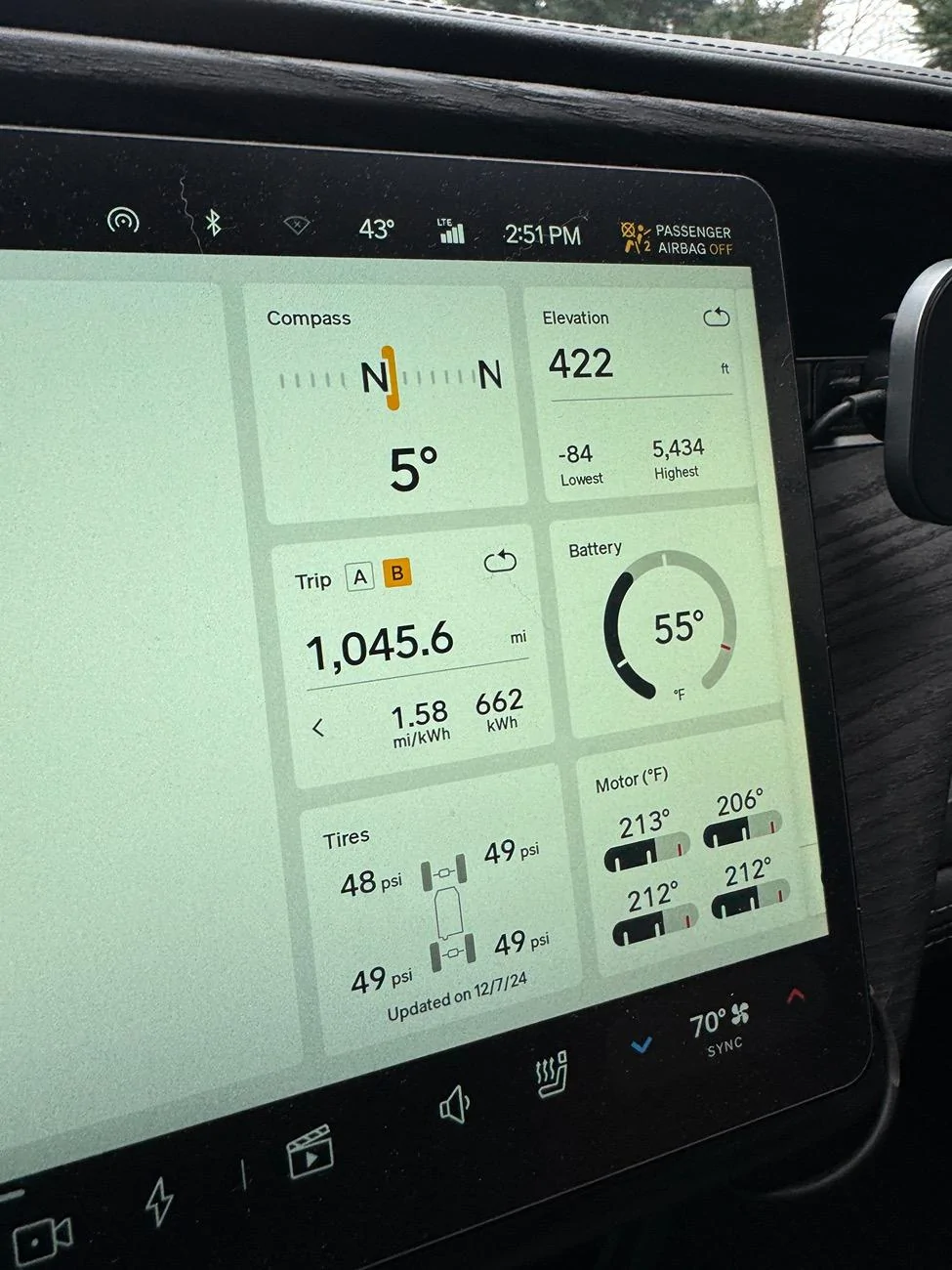
I've read in a couple threads preference to the motor cooling fluid being used to warm the battery. Has anyone spoken with a Tech to confirm if this true? My 2024 R1S Dual Perf+ Large has just terrible efficiency once the battery temp falls below 60° or so. I was averaging 2.7mi/kwh April - Oct in WI, and then the cold hit. Today I drove 2 hours at what is usually optimal speed for efficiency of 45-55mph, but with the motors at 102° (front) and 67° (rear), my battery temp never got above 48° with about 2.0 mi/kwh efficiency. This would have been 3.0+ when temps were 60-85 most the time. No heat turned on for the drive just to watch. Efficiency is of course worse when I have the cabin heat on, and that doesn't seem to warm the battery anyway. Most anything to do with "preconditioning", or warming the battery by setting a charging destination, keeping it plugged in overnight to maintain 70% charge....are all a myth as far as affecting battery temp and efficiency. Sorry for the long ramble, but I'm beginning to wonder if I have a fluid pump not functioning properly or something.
Sponsored

 
OP
OP

tjsainsb

Member
First Name
TJ
Joined
Jun 16, 2024
Threads
1
Messages
23
Reaction score
7
Location
Madison, WI
Vehicles
R1S
Occupation
M&A Broker
This past weekend on a trip stopping at multiple Tesla DC chargers, I noticed a quick popup I hadn't seen before (software update?) that said "preconditioning battery" before the charging stops, but the temp remained well below 60 degrees and efficiency never increased. That was higher speeds though with the heat on (the way normal people drive!), so I expected the low efficiency around 1.8 m/kwh. Actually DC fast charging it was the only thing that increased the battery temp. Also, now that I'm on that subject, the Tesla wasn't very fast even at 50% SOC until the battery temp got above 70 degrees. Then it picked up over 200kw charging speed. I'm sure that's to be expected --slower charging with a colder battery. It's cold here in WI, but not sub-zero. It's been in say the 20's to 40's most of the days lately.
 

Polar

Well-Known Member
First Name
Scott
Joined
Feb 16, 2022
Threads
33
Messages
1,098
Reaction score
2,039
Location
WA
Vehicles
C40, LE CY R1S
Occupation
IT
Clubs
 
If you are warming the battery with the motors, your efficiency will decrease because it’s running the motors incredibly inefficient

Rivian R1T R1S Do motors actually heat the battery? IMG_1474
 

Foobar

Well-Known Member
Joined
Jun 5, 2022
Threads
8
Messages
441
Reaction score
510
Location
Out and about
Vehicles
R1T, Model 3P, Eva Ribelle
Occupation
IT Exec
When mine preconditions in the cold the battery temp gets up past 80 by the time I pull into the charging station. The motor temps go up as well, so it’s not a perfect energy transfer.
 

Sponsored

Osyras

Well-Known Member
First Name
Danny
Joined
Aug 3, 2023
Threads
29
Messages
340
Reaction score
323
Location
Ontario, Canada
Vehicles
Gen 2 R1S Large pack.
Clubs
 
IIRC this is only the case with Gen 1 as Gen 2 has a heat pump.
 

Alanparkcity

Well-Known Member
First Name
Alan
Joined
May 26, 2024
Threads
6
Messages
123
Reaction score
162
Location
Park City, Ut
Vehicles
Rivian T1T
Occupation
Retired
Clubs
 
The best tactic to increase battery temp at home is to charge the battery for an hour or so before you leave. This might mean moving your charge % to 5-10% higher. This will be using the residual heat from charging to increase battery temp so no negative range.
 

Zoidz

Well-Known Member
First Name
Gil
Joined
Feb 28, 2021
Threads
226
Messages
5,199
Reaction score
11,701
Location
PA
Vehicles
23 R1S Adv, Avalanche, BMWs-X3,330cic,K1200RS bike
Occupation
Engineer
IIRC this is only the case with Gen 1 as Gen 2 has a heat pump.
Does not matter. Gen1 PTC or Gen2 Heat Pump - the motors are still used to generate heat when necessary.
 

Riviaenz

Well-Known Member
Joined
Jul 27, 2023
Threads
3
Messages
313
Reaction score
156
Location
US
Vehicles
Boxster, XC90 R-Design, XC90 T8, R1T Adventure
They do but they primarily function as heaters to precondition in advance of fast charging. The cooling system otherwise doesn’t actively cool or heat the batteries. It’s likely the system is split except for when pre-conditioning when it does send extra energy to the motors to warm them up and intern warm the batteries. When preconditioning motor temp is raised to around 200 don’t recall but it’s near the upper end of the acceptable limits and the motors light up orange on the Driver Mode App on your center display.

As far as during normal driving (not heading towards a fast charger that’s programmed into navigation), it doesn’t seem to use motor heat to maintain battery temp. If ambient is significantly colder than the battery it may cool slowly although under some conditions the battery will start warming up. For example as battery SoC decreases it will start warming itself up from sheer fact that to maintain power levels it needs to « output » more current o make up for the decreasing voltage.

Power = Voltage * Current

SoC is a measure of Voltage (battery potential, and is analogous to water pressure as an example and current is analogous to water flow). As the voltage decreases the amount of current must be higher to sustain power and also accelerates SoC/Voltage decrease but the increase in amperage flow warms the battery. You may have noticed this with handheld battery powered devices. Same principles (like an smartphone warming up more readily as it’s SoC gets low - that’s it’s battery getting warm from usage).
 
Last edited:

MountainBikeDude

Well-Known Member
First Name
Adam
Joined
Jun 20, 2019
Threads
54
Messages
3,334
Reaction score
7,088
Location
Vancouver
Vehicles
2023 El Cap Quad Motor R1T (Selling the Xterra)
Clubs
 
@tjsainsb Gen 1 Quad motors heated the battery using waste heat from the motors. The motors would typically run in a inefficient state to produce excees heat, which would increase the temperature of the coolant which would then make its way through the battery pack. So on Gen 1 Quad, the motors would typically "orange line" and get quite hot to warm the battery quickly.

Dual motor variants both Gen 1 and 2 use the same strategy, but because the motors are cooled by an oil bath within the motor (rather than jacket cooling the exterior on Gen 1 Quad) they are able to transfer that waste heat more efficiently, without heating the motors as much as the quad.

If you navigate to a charger, and it's at least 5 minutes away, your R1 will start to precondition the battery. Typically on longer trips, it will precondition up to around 45 minutes prior. Your efficiency will go down while it's preconditioning, but that minimal energy hit, saves you minutes at the charger overall. Even more so if the battery is below 12-16c
 

Sponsored

MountainBikeDude

Well-Known Member
First Name
Adam
Joined
Jun 20, 2019
Threads
54
Messages
3,334
Reaction score
7,088
Location
Vancouver
Vehicles
2023 El Cap Quad Motor R1T (Selling the Xterra)
Clubs
 
IIRC this is only the case with Gen 1 as Gen 2 has a heat pump.
Heat pump is more for HVAC efficiency. The Gen 1 used a PTC heater which is effective, but not very efficient.

Motors are still the main battery precon source
 

greyboundary

Well-Known Member
Joined
Oct 27, 2024
Threads
2
Messages
84
Reaction score
123
Location
MI
Vehicles
Gen2 R1T dual max, Lotus Evora GT, Polestar 2 DMLR
I’m guessing that the original post was not at all about preconditioning, but scavenging motor heat from regular driving (that would otherwise be wasted) to keep the battery in the more efficient temperature zone.

I’ve been wondering this myself while driving around with a 35F battery and 90F motor. Now, I’m sure the motor has an ideal operating temp and batteries like to be cooler than we think, but even 50 for the battery seems to do quite a bit.
 

Brian-MS90D

Well-Known Member
First Name
Brian
Joined
Mar 19, 2024
Threads
3
Messages
130
Reaction score
141
Location
Cincinnati, OH
Vehicles
Rivian R1S (Dual Motor, Max pack, LA Silver)
Remember that your efficiency will suffer simply from the cold (even with an already warmed battery) because of the significantly increased wind resistance (air is denser when colder). This is of course more impactful the higher your speed and the increased resistance to speed is exponential.

The same thing happens in ICE vehicles, but we don't notice as much because ICE is ~ 2x to 15x less efficient than BEV (depending on the vehicles being compared) (i.e., ICE is incredibly inefficient already which dwarfs the decreased efficiency in cold temps). BEV is incredibly efficient and therefore external factors are more impactful.
 

PVguy

Well-Known Member
First Name
Tom
Joined
Jul 20, 2022
Threads
20
Messages
199
Reaction score
162
Location
Illinois
Vehicles
2012 Transit Connect, 2000 VW Golf TDI
Occupation
Retired
I’m guessing that the original post was not at all about preconditioning, but scavenging motor heat from regular driving (that would otherwise be wasted) to keep the battery in the more efficient temperature zone.

I’ve been wondering this myself while driving around with a 35F battery and 90F motor. Now, I’m sure the motor has an ideal operating temp and batteries like to be cooler than we think, but even 50 for the battery seems to do quite a bit.
That was my take. I have wondered about this since I purchased my R1T, about a year and a half ago. I am a visual person and thought that it would be nice to have a flow chart as to how thermal energy is regulated throughout the system. On a “normal “ cold day it seems to me that there is excessive heat in the motors that could heat the battery pack but i see no indication of that happening. I no longer “allow “ preconditioning prior to a DC Level3 charger since my motors reached ~260F one time.
Also “SoC is a measure of Voltage”, may be true but typically may not be telling me what i want to know. Battey voltage may be a way of indicating SOC but iis actually a poor indicator of battery health. You can have a battery that is at the end of its lifespan and if you fully charge it, it will indicate 100% SOC or close to it. The only way that I know of to check battery health is to discharge it and then see how many amp-hours it will accept to fully charge. Perhaps there is another way to do this. I sometimes think of the “size of your gas tank” analogy.
 

PVguy

Well-Known Member
First Name
Tom
Joined
Jul 20, 2022
Threads
20
Messages
199
Reaction score
162
Location
Illinois
Vehicles
2012 Transit Connect, 2000 VW Golf TDI
Occupation
Retired
That was my take. I have wondered about this since I purchased my R1T, about a year and a half ago. I am a visual person and thought that it would be nice to have a flow chart as to how thermal energy is regulated throughout the system. On a “normal “ cold day it seems to me that there is excessive heat in the motors that could heat the battery pack but i see no indication of that happening. I no longer “allow “ preconditioning prior to a DC Level3 charger since my motors reached ~260F one time.
Also “SoC is a measure of Voltage”, may be true but typically may not be telling me what i want to know. Battey voltage may be a way of indicating SOC but iis actually a poor indicator of battery health. You can have a battery that is at the end of its lifespan and if you fully charge it, it will indicate 100% SOC or close to it. The only way that I know of to check battery health is to discharge it and then see how many amp-hours it will accept to fully charge. Perhaps there is another way to do this. I sometimes think of the “size of your gas tank” analogy.
The term I could not think of at the time was “battery capacity “, which is better than “battery health “. looks like I can reply to my own post .
Sponsored


Top