Sponsored

Is there a charging tutorial including APPS

wsaHarem

Active Member
First Name
Bill
Joined
Jul 2, 2024
Threads
4
Messages
27
Reaction score
20
Location
Texas
Vehicles
2023 R1S
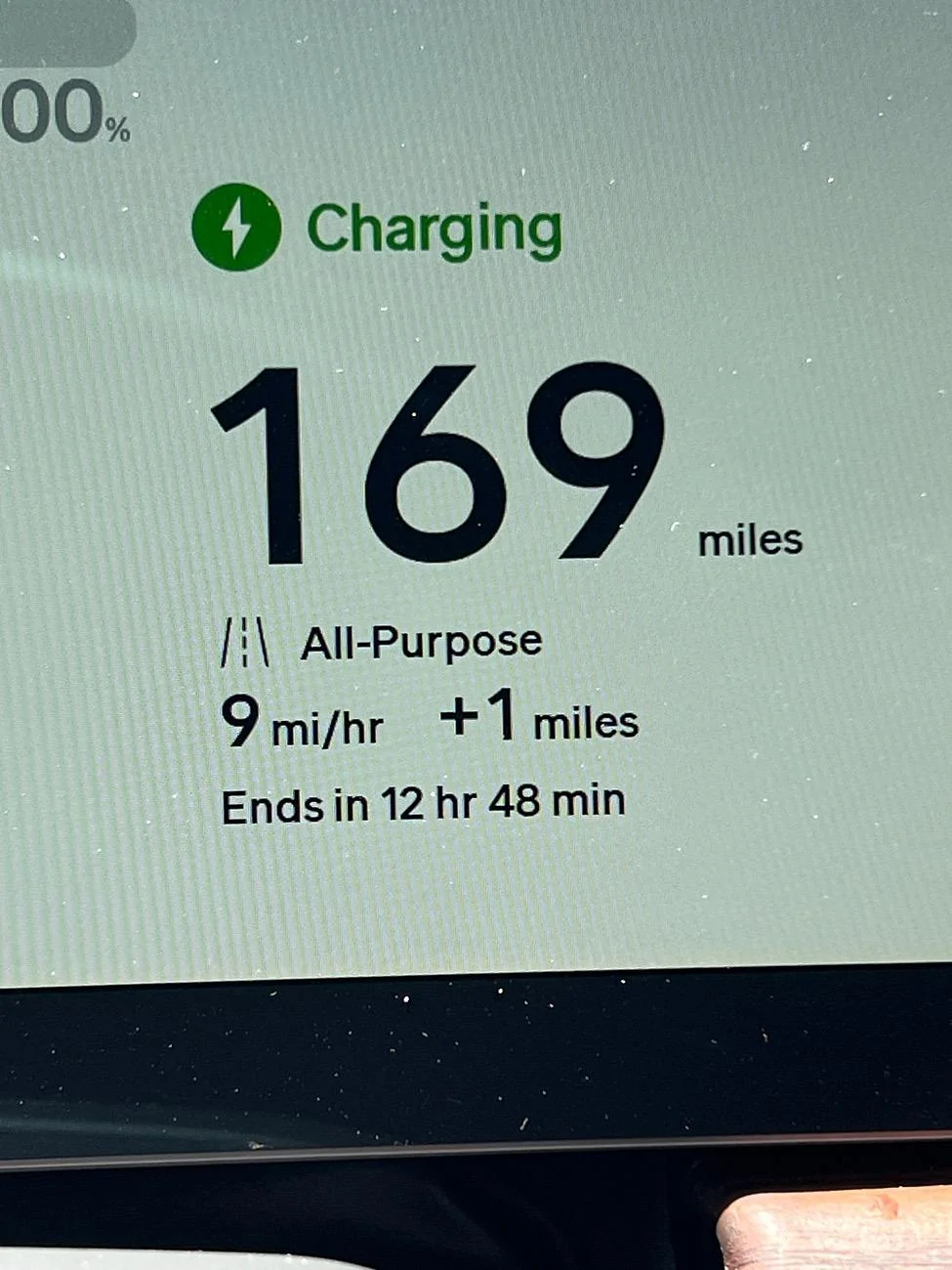
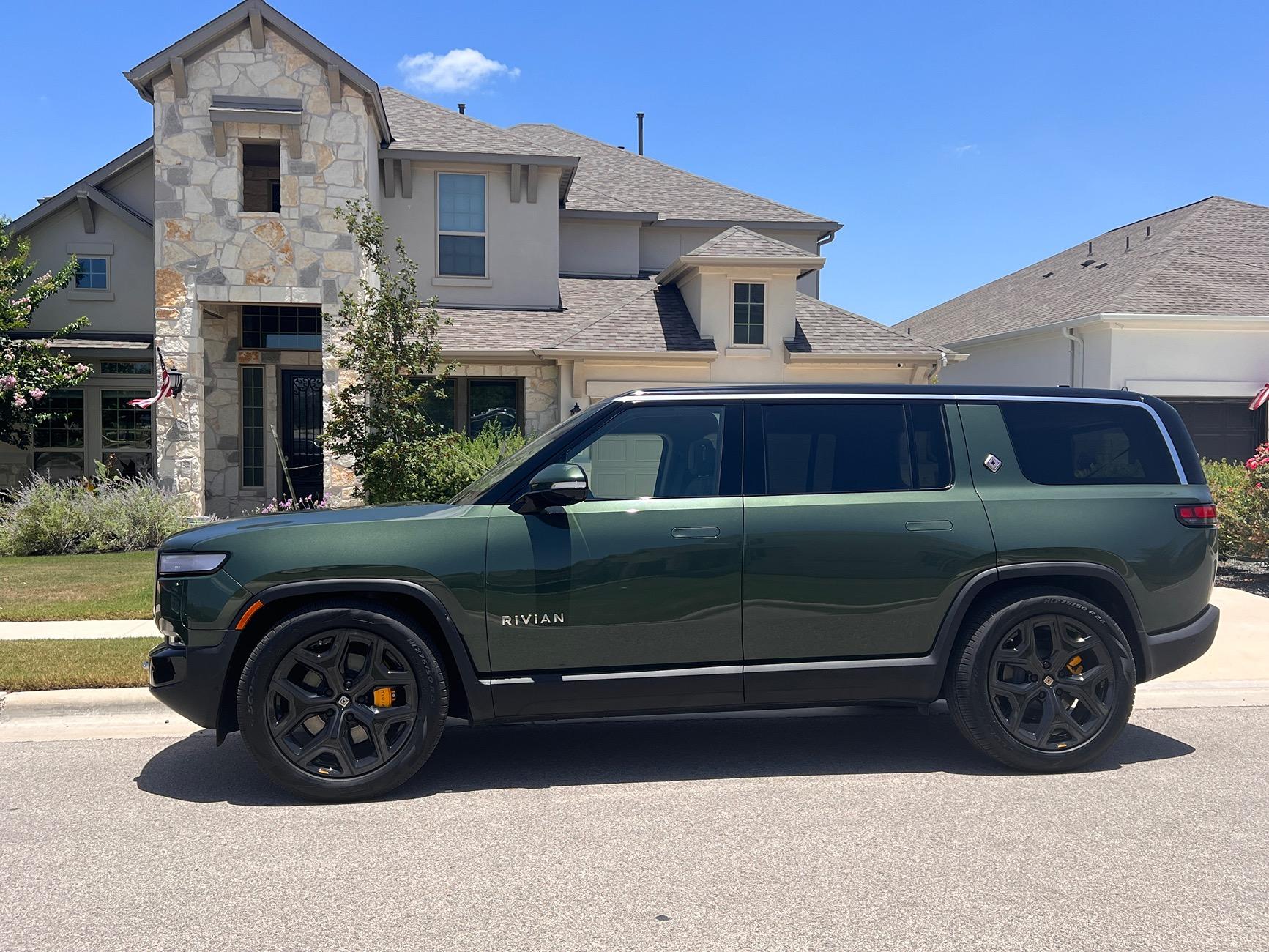
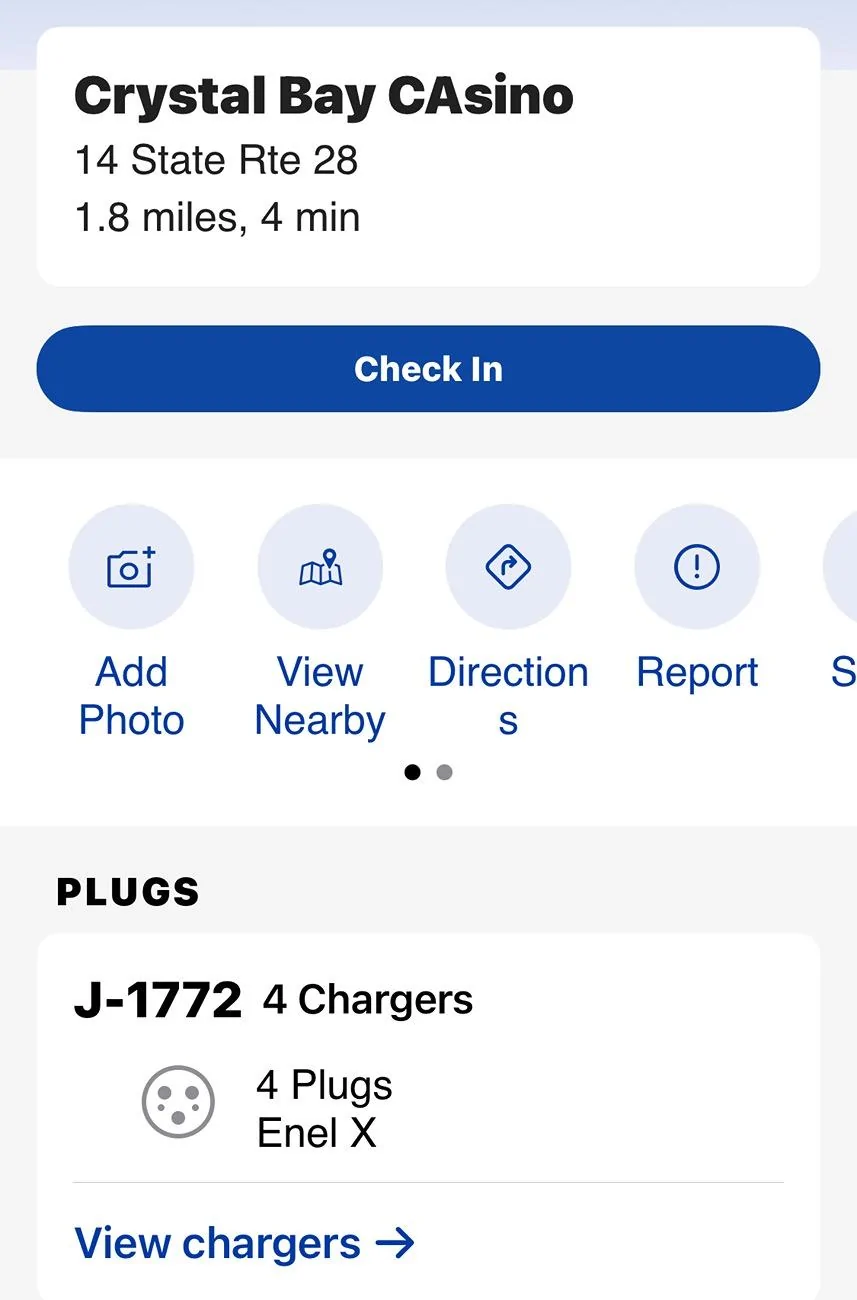
New R1S owner here. I’ve installed my Wall Charger, but wanted to experience the consumer / traveling experience. It wasn’t pretty. First Chargepoint station I went to was empty, so felt like I hit the jackpot. But their screens were so bad from sun damage I could barely read them, but scanned my card and was told this station currently could not auth my card. Went to the next station 10 miles away, both busy. Finally went to a 3rd station and started charging. Woohoo. Until I saw that I was getting 9 miles per hour. Gave up after 1 hour. I have the Rivian, Tesla and PlugShare app, but when playing with PlugShare location (see picture), it doesn’t tell me anything about the charging capabilities.

Is there something that tells me about V1,V2 or V3 in the apps or stations? Or best way to plan a trip?

Thanks!
Loving my R1S, but there is definitely a learning curve :)
Rivian R1T R1S Is there a charging tutorial including APPS IMG_9325
Rivian R1T R1S Is there a charging tutorial including APPS IMG_9313
Rivian R1T R1S Is there a charging tutorial including APPS IMG_9419
Sponsored


Ngkgb

Well-Known Member
Joined
Feb 7, 2022
Threads
82
Messages
830
Reaction score
770
Location
United States
Vehicles
Rivian R1T
Looks like you were at a level 2 charger, not a fast charger. Do you have a charger installed at home? That should be priority 1. If youre trying to charge up quickly, you will need to find fast charger. You can filter most apps to show you only chargers that are 150kwh or more. Level 2 chargers are good if you need a top off or if youre out and about for an hour or two and want to gain some extra juice.
 

racekarl

Well-Known Member
Joined
Jan 5, 2023
Threads
9
Messages
561
Reaction score
845
Location
MA
Vehicles
2023 R1T
PlugShare lets you filter by "kilowatt range" (charger power) as well as plug type. It also color codes the results, with Level 3 (fast DC chargers) in orange and Level 2 (slow, AC chargers) in green.

It sounds like you have your filter set to include Level 2 chargers, as that is what you are showing in your screenshot, based on the plug type of J-1772. These chargers are slow, as you experienced, and they don't typically include as much data (such as power) since they are often installed by local businesses, etc. as opposed to large charging network operators.

As a primer, chargers come in 3 levels:

Level 1: 1-2 kW AC (these run off 120v power found in a typical US outlet)
Level 2: 4-24 kW AC (these typically run off of 240v power and are what many people install at home, and these are what you used and show in your screenshot)
Level 3: 25-350+ kW DC (these are dedicated commercial installations)

If you were planning a trip, you would want to filter your app(s) to show only Level 3 chargers, and probably even limit those to ones with 150 kW or more. For the time being you would also want to limit your filter to only show CCS plugs, since that is the DC connector your Rivian has.
 

SPITmadFIRE

Well-Known Member
Joined
Jul 27, 2021
Threads
10
Messages
842
Reaction score
1,388
Location
CA
Vehicles
2024 R1S PDM Max Pack 20" AT
Welcome to the club! What type of charger were you using when you were getting 9 mi/hr? It's usually easier to talk in kilowatts and kilowatt-hours when discussing charging and battery capacity. The miles-per-hour charging unit is different for every vehicle because of efficiency, whereas kilowatt is a measure of just how much power the charger is putting out.

EVs are still in a phase where there's a big knowledge gap and confusing terms to relearn compared to gas vehicles. I think over time we'll all slowly standardize on easier to understand terms and this will all get much easier.

In the meantime, Here's the crash course I give friends when they ask about EVs:
  • Kilowatt (kW) is how much power a charger is putting out (current, instantaneous power). Think of this as how quickly a gas pump spits out gas. When you're trying to charge fast, higher is better. R1S and R1T max out at 216 kW charge rates under ideal conditions.
  • Kilowatt-hour (kWh) -- I'll simplify this one a lot, but you can think of it as a measure of how much power you've either gained or lost over time, or how much power your battery holds. Think of this like how many gallons of gas are in the tank, or how many gallons you've used to go X miles.
  • There are slow chargers and fast chargers, by design. This is where L1, L2, and L3 charging comes into play.
  • L1 and L2 charging is what you can achieve at home with your portable charger or home charger install. These chargers run on AC power, and are meant mostly for overnight charging, or charging at a destination (parking garages, work, etc.)
  • L3 charging uses DC power, which can charge your vehicle much faster. This is why they're called DCFCs (DC fast chargers). These chargers range from around 50kW (somewhat slow, from 20-80% in over an hour) to upwards of 350kW (very fast).
  • Your vehicle's battery charges differently depending on how much charge it currently holds, the temperature of the battery, etc. You will see peak charging speeds (above 200kw) only when your battery is the ideal temperature (65-90F) and your state of charge is low (<40% or so).
This is a lot of information right up front, but please ask us lots of questions and we'll do our best to make you an EV pro in no time!
 

Kidentist

Well-Known Member
First Name
Carlitos way
Joined
Oct 28, 2021
Threads
2
Messages
271
Reaction score
324
Location
PNW
Vehicles
Audi A3, Cayenne E-Hybrid, R1T DM Std.+
Occupation
Mouth Janitor
From what I've read, Chargepoint is one of the worst for EVs.....please correct me if I'm wrong. I've only used RAN, and was quite pleased.
 

Sponsored

SPITmadFIRE

Well-Known Member
Joined
Jul 27, 2021
Threads
10
Messages
842
Reaction score
1,388
Location
CA
Vehicles
2024 R1S PDM Max Pack 20" AT
From what I've read, Chargepoint is one of the worst for EVs.....please correct me if I'm wrong. I've only used RAN, and was quite pleased.
ChargePoint is great at what they do, which is mostly destination chargers at apartment buildings, parking garages, and office buildings. They have some DCFCs but they're usually on the slower end from my experience. This doesn't make them bad, they're just for a much different use case than something like RAN which is a dedicated fast charging network. If I'm going out to dinner before a long drive the next day, I want a 50kW ChargePoint so I can leave my vehicle plugged in while I eat instead of a 300kW RAN charger that will interrupt my meal when it finishes in 30 min
 
OP
OP

wsaHarem

Active Member
First Name
Bill
Joined
Jul 2, 2024
Threads
4
Messages
27
Reaction score
20
Location
Texas
Vehicles
2023 R1S
Looks like you were at a level 2 charger, not a fast charger. Do you have a charger installed at home? That should be priority 1. If youre trying to charge up quickly, you will need to find fast charger. You can filter most apps to show you only chargers that are 150kwh or more. Level 2 chargers are good if you need a top off or if youre out and about for an hour or two and want to gain some extra juice.
Yep, first thing I did was install the Rivian charger.
 
OP
OP

wsaHarem

Active Member
First Name
Bill
Joined
Jul 2, 2024
Threads
4
Messages
27
Reaction score
20
Location
Texas
Vehicles
2023 R1S
PlugShare lets you filter by "kilowatt range" (charger power) as well as plug type. It also color codes the results, with Level 3 (fast DC chargers) in orange and Level 2 (slow, AC chargers) in green.

It sounds like you have your filter set to include Level 2 chargers, as that is what you are showing in your screenshot, based on the plug type of J-1772. These chargers are slow, as you experienced, and they don't typically include as much data (such as power) since they are often installed by local businesses, etc. as opposed to large charging network operators.

As a primer, chargers come in 3 levels:

Level 1: 1-2 kW AC (these run off 120v power found in a typical US outlet)
Level 2: 4-24 kW AC (these typically run off of 240v power and are what many people install at home, and these are what you used and show in your screenshot)
Level 3: 25-350+ kW DC (these are dedicated commercial installations)

If you were planning a trip, you would want to filter your app(s) to show only Level 3 chargers, and probably even limit those to ones with 150 kW or more. For the time being you would also want to limit your filter to only show CCS plugs, since that is the DC connector your Rivian has.
Thank you. 150kW it is then :)
 
OP
OP

wsaHarem

Active Member
First Name
Bill
Joined
Jul 2, 2024
Threads
4
Messages
27
Reaction score
20
Location
Texas
Vehicles
2023 R1S
Welcome to the club! What type of charger were you using when you were getting 9 mi/hr? It's usually easier to talk in kilowatts and kilowatt-hours when discussing charging and battery capacity. The miles-per-hour charging unit is different for every vehicle because of efficiency, whereas kilowatt is a measure of just how much power the charger is putting out.

EVs are still in a phase where there's a big knowledge gap and confusing terms to relearn compared to gas vehicles. I think over time we'll all slowly standardize on easier to understand terms and this will all get much easier.

In the meantime, Here's the crash course I give friends when they ask about EVs:
  • Kilowatt (kW) is how much power a charger is putting out (current, instantaneous power). Think of this as how quickly a gas pump spits out gas. When you're trying to charge fast, higher is better. R1S and R1T max out at 216 kW charge rates under ideal conditions.
  • Kilowatt-hour (kWh) -- I'll simplify this one a lot, but you can think of it as a measure of how much power you've either gained or lost over time, or how much power your battery holds. Think of this like how many gallons of gas are in the tank, or how many gallons you've used to go X miles.
  • There are slow chargers and fast chargers, by design. This is where L1, L2, and L3 charging comes into play.
  • L1 and L2 charging is what you can achieve at home with your portable charger or home charger install. These chargers run on AC power, and are meant mostly for overnight charging, or charging at a destination (parking garages, work, etc.)
  • L3 charging uses DC power, which can charge your vehicle much faster. This is why they're called DCFCs (DC fast chargers). These chargers range from around 50kW (somewhat slow, from 20-80% in over an hour) to upwards of 350kW (very fast).
  • Your vehicle's battery charges differently depending on how much charge it currently holds, the temperature of the battery, etc. You will see peak charging speeds (above 200kw) only when your battery is the ideal temperature (65-90F) and your state of charge is low (<40% or so).
This is a lot of information right up front, but please ask us lots of questions and we'll do our best to make you an EV pro in no time!
Wow, thanks so much for all the info. Very helpful.!
 

SPITmadFIRE

Well-Known Member
Joined
Jul 27, 2021
Threads
10
Messages
842
Reaction score
1,388
Location
CA
Vehicles
2024 R1S PDM Max Pack 20" AT
Thank you. 150kW it is then :)
To be clear, your vehicle is capable of *more than 150kW charging*. All Rivians currently available are capable of 216kW charging. This means you should definitely choose a faster charger when you need it (below 40% battery, for example). If your battery is above 50% you're not going to benefit from a 200kW+ charger, because the car will never accept that much power. Unfortunately, there's also a limitation with how much power a charging station can handle at any given moment. If you're at a 350kW charger, for example, and someone is already charging at 200kW, you and this other person will share the 350kW capacity evenly if you plug in regardless of how low your battery is.

It's all a bit overwhelming at first, but don't worry! You'll get used to it really quick. Generally you want to charge often (at home whenever you need it), only charge to whatever percent you will need until your next charge (70% is a safe day-to-day limit, only go up to 100% for roadtrips as needed), and do not overcharge! Leaving your battery fully charged for a long time is the fastest way to reduce its life.
 

Sponsored

SPITmadFIRE

Well-Known Member
Joined
Jul 27, 2021
Threads
10
Messages
842
Reaction score
1,388
Location
CA
Vehicles
2024 R1S PDM Max Pack 20" AT
Also, be polite at fast chargers whenever you use them! Imagine a long line of cars waiting for a gas pump for the person at the front to finish filling up dozens of 1 gallon gas containers. That's what it feels like when the person in front of you is charging to 100% for no reason, or hogging the 350kW charger for a car that can't physically charge faster than 100kW like a Nissan Leaf. If you don't need the fastest charger available, don't hog it!


Top