Sponsored

Stupid previous owner = $$$ L2 installation

mkhuffman

Well-Known Member
First Name
Mike
Joined
Nov 9, 2020
Threads
14
Messages
3,021
Reaction score
3,434
Location
Virginia
Vehicles
2025 R1T Tri-Max, Jeep GC-L, VW Jetta
I have seen some discussion that Leviton revised their 14-50 plug in 2024 and made it more heavy duty, or at least made a different kind for EV charging. Looking at home depot this has replaced the type you can see in the picture I posted.

It also costs $50 vs the $15-20 for the typical big box special. I think conventional wisdom holds true, the cheap ones are cheap for a reason. That said if you want the exact same thing to compare without the Hubbell brand premium, look for the Bryant one. It's a Hubbell-owned brand but it's cheaper and seems to be exactly identical.
The one I have is made for EV charging, which I think is what you are referring to, but it was available prior to 2024. Home Depot still sells the cheap ones that should not be used for EV charging.
Sponsored


CrazyOne

Well-Known Member
Joined
Oct 30, 2021
Threads
3
Messages
1,414
Reaction score
1,197
Location
WA
Vehicles
R1T
Almost the story of my house, except I have a 200a panel. But yea, my microwave, all main floor lights, and half the sockets in my living room and dining room, are all on one circuit.

I kept blowing the fuse when I had a 60inch plasma TV, and would start the microwave.

This is how the house was wired when built new in the 70's.

I still dont know how it passed.. But it did.

I ran a 8g wire to a jacuzzi by my garage years ago. When I got my R1, I sold the jacuzzi, and m yourepurposed the line to charge my R1 with a Rivian branded charger. It was bumpy at start, as I think I had the charger set to 48a and had a small electrical fire, when I should have been at 40a, or lower. Got that figured out the hard way, and now have my charger set at 32a, with no problems since.
I kind of know why, assuming it's a over three range microwave. My previous house was wired the same way, with TV, microwave and few other outlets on same breaker. It was supposed to be an exhaust hood, but someone renovated it to have a microwave.
 

Zoidz

Well-Known Member
First Name
Gil
Joined
Feb 28, 2021
Threads
227
Messages
5,229
Reaction score
11,751
Location
PA
Vehicles
23 R1S Adv, Avalanche, BMWs-X3,330cic,K1200RS bike
Occupation
Engineer
Your advice is good, as definitely industrial outlets like the one made by Hubbell are more robust than the cheap 14-50 outlets sold at Home Depot. But discounting problems due to installation is a mistake. And discounting the risk of connections that loosen over time is also a mistake. A Hubbell with loose wires can overheat and melt, just like a cheap one can.

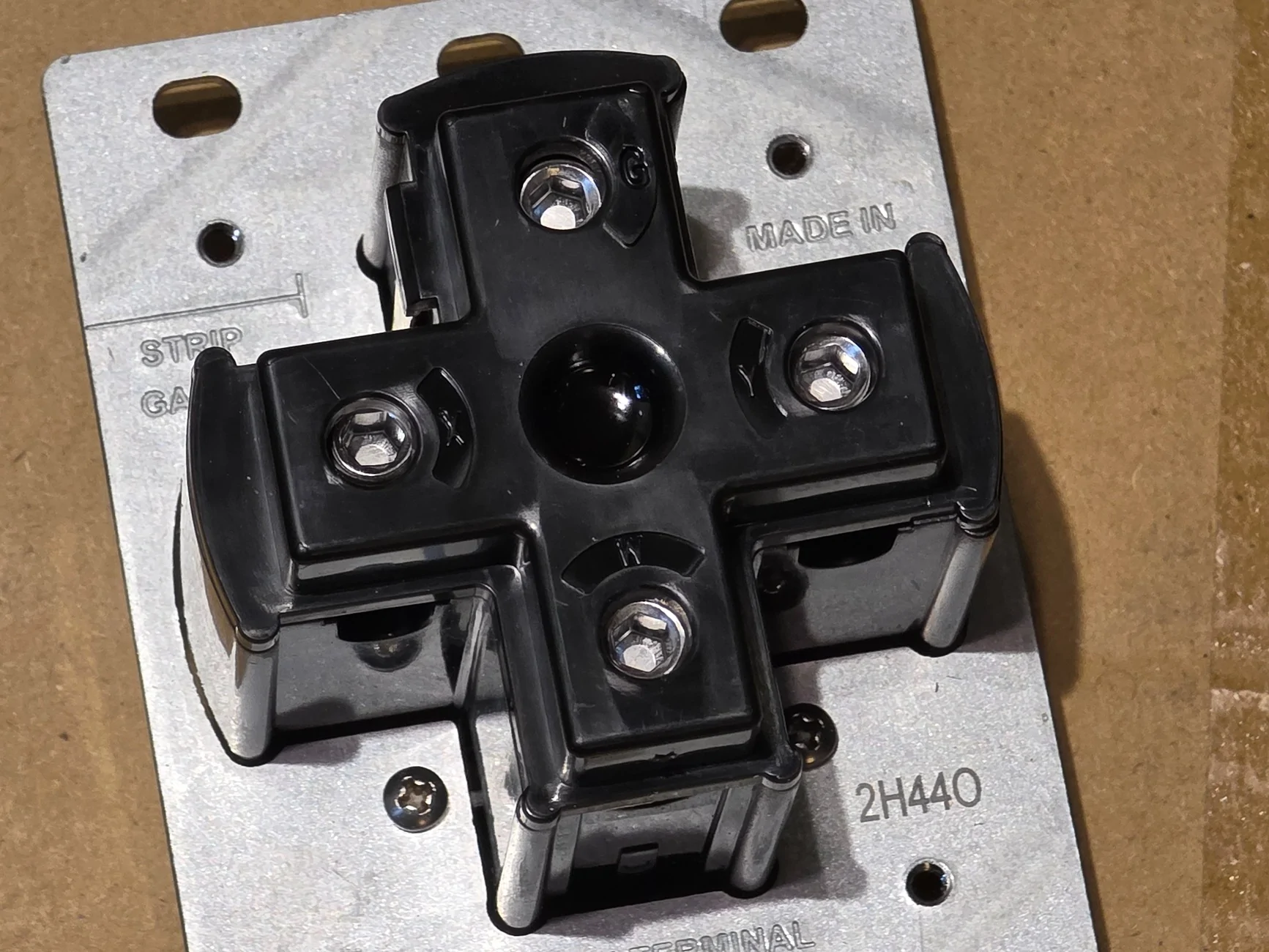
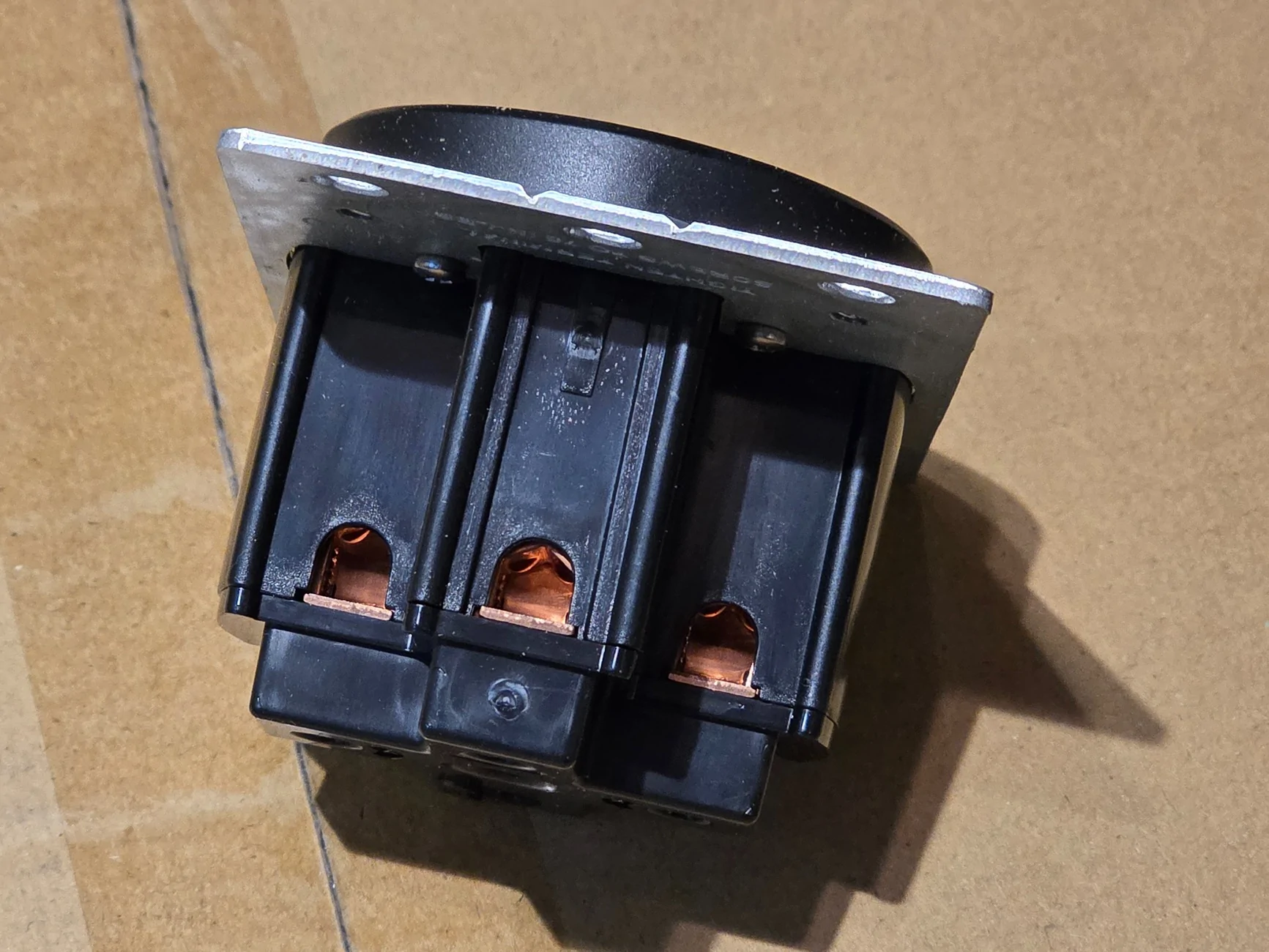
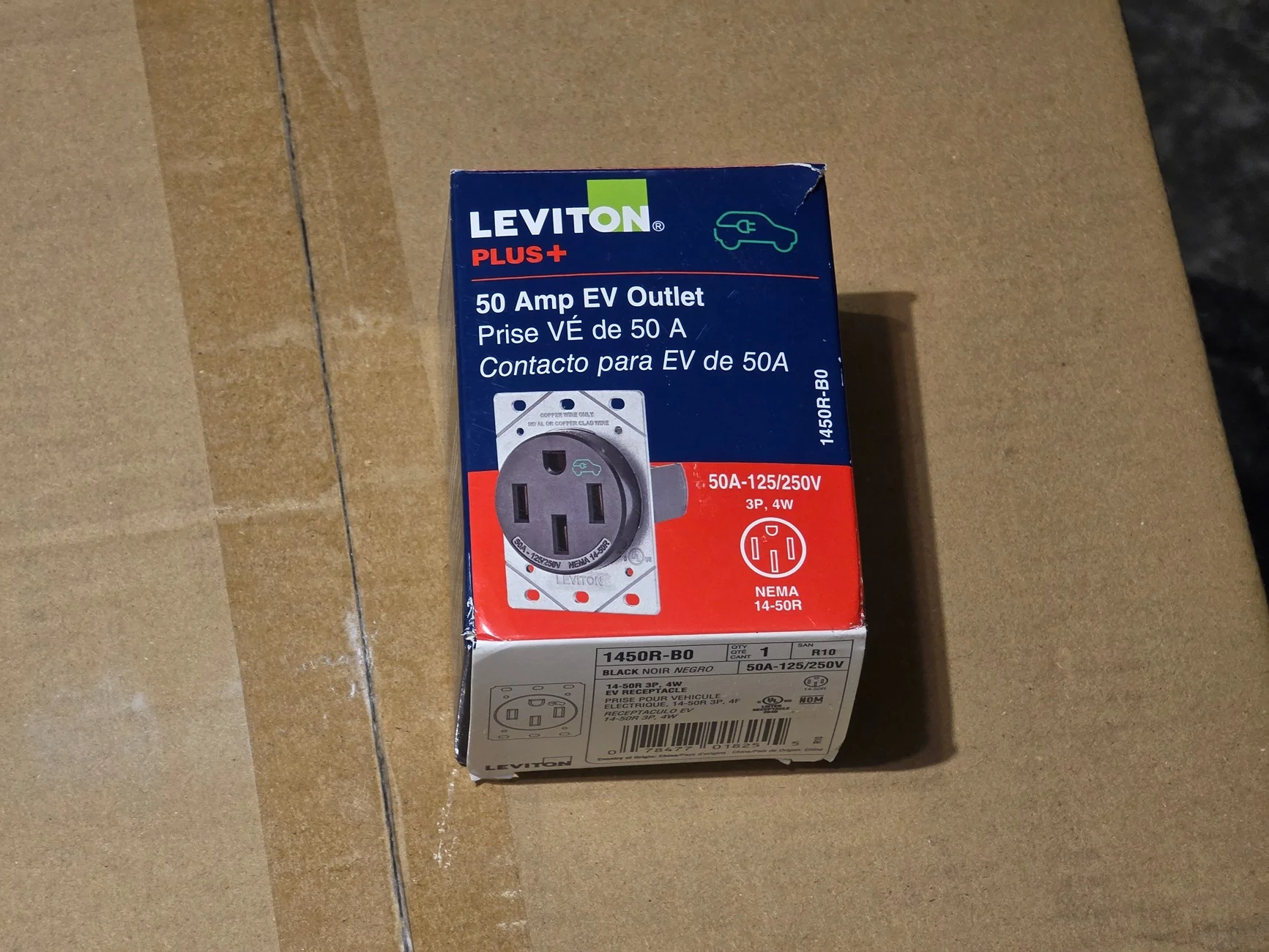
I purchased a Leviton 14-50 EV outlet from Home Depot to replace the cheap Home Depot one I installed before I knew better. It is built almost identically like the more expensive Hubbell outlet and it is very robust. It is not "junk", IMO. What evidence do you have that makes you think it is junk?

Here are a few pictures of the outlet I have yet to install. (I am not using the 14-50 outlet so I have not prioritized installing it over other house projects.)

1000004637.webp

1000004636.webp

1000004635.webp


You can plainly see it has very robust connections for the wires, and it is just as substantial at the Hubbell outlet. If you have some evidence it isn't, maybe you can share what you know. I can trash it and get a Hubbell if you are convincing, but evidence instead of opinion is what is needed.
The Hubbell is made out of polyester which has better overall thermal performance compared nylon. Depending on formulation (which explans variations in the data below) nylon can start to melt at 210 C, Polyester is 250 C. Since these devices are subject to repeated thermal cycling in an uncontrolled environment, and our #1 concern is overheating failures, it's a factor.

From the manufacturers specs:
Leviton Operating Temperature: -40°C to 60°C
Hubbell Operating Temperature: 75°C, minimum -40°C (w/o impact)
Leviton Contact Material: Copper
Hubbell Contact Material: Brass

If ambient temperature is 38 C (100 F) on a hot day, we start there and add heat from charging. That 15 C difference could matter after 6 hours of additional heat from charging.

Brass is more durable than copper and does not oxidize as readily as copper. When thinking about a plug contact, IMO durability and no oxidation (resistance which creates heat) is preferable.

I have held both the Leviton EV and the Hubbell 9450 in my hand and inspected them. Unless Leviton has changed the design recently, the brass mating connectors used inside the front of the Hubbell receptacle are visually much more robust compared to the Leviton. Leviton is made in China for the mass market at Lowe's, Home Cheapo, etc. Hubbell is made in the US for the industrial market. I've done controls and automation engineering projects in dozens of customer factories in my career. I've seen Leviton devices fail electrically in homes. I've never seen a Hubbell device fail electrically in a factory (where continuous duty is common), but I've seen burnt wiring connected to Hubbell devices.

Is my standard of expectation and performance high for electrical components? Yes, so to me lots of stuff is junk.

Will the Leviton work? Yes.

Will most people never have an issue with the Leviton? Probably.

Do I think saving $25 is worth the potential risk? No. Food for two people at Chik-fil-A costs more than $25.


"Melting Point and Thermal Stability
Nylon generally has a higher melting point than polyester, with common grades melting in the range of approximately 210–265 °C, depending on type (e.g., Nylon 6 vs Nylon 6,6). This higher melting point supports use in moderately elevated-temperature applications. However, nylon’s thermal performance is strongly affected by moisture. Absorbed water acts as a plasticizer, lowering stiffness and heat resistance under load, particularly near the glass transition region.
Polyester (PET) has a slightly lower melting point, typically around 250–260 °C, but offers more consistent thermal behavior in real environments. Because it absorbs very little moisture, its mechanical properties remain stable across temperature and humidity changes. For applications involving repeated thermal cycling or combined heat–humidity exposure, polyester often delivers more predictable performance."


"Nylon vs. Polyester: Physical Properties
Table 1 lists important properties of nylon and polyester:
Table 1: Properties Comparison of Nylon (PE6 as the example) vs polyester (PET as the example)
PropertyNylon 6 PA Value (metric)Polyester PET Value (metric)
Optical transmissionOnly when based on cycloaliphatic monomersExcellent
Density1.1-1.17 g/cm30.7-1.45 g/cm3
Hardness, Shore D70-8571-87
Tensile strength, ultimate50-90 MPa22-95 MPa
Tensile strength, yield 40-100 MPa55-260 MPa
Elongation at break5-120%40-600%
Modulus of elasticity1.3-4.2 GPa1.57-5.2 GPa
Flexural yield strength20-150 MPa55-135 MPa
Flexural modulus 1.3-3.7 GPa1.38-3.5 GPa
Dielectric constant3.1-122.4-3.7
Melting point190-238 °C200-260 °C
Max service temperature60-180 °C60-225 °C
Sponsored


Top