Sponsored

The Next Challenge for Software Defined Vehicles:Hardware Generations

IPTV65

Well-Known Member
Joined
May 19, 2020
Threads
11
Messages
261
Reaction score
391
Location
Mount Pleasant SC
Vehicles
Jeep JLU Sahara,Jeep JKU, Infiniti G37X, R1S
Occupation
Engineering Exec
Clubs
 
I’m an early Rivian R1S owner(VIN 17XX) so about as “Gen 1” as it gets. Just 12 volt batteries, windshield, tires, and some early fitment issues so far in case anyone is wondering.

One thing Rivian has done exceptionally well is OTA updates. The vehicle I drive today is meaningfully better than when I took delivery, which is still very rare in automotive.

But with Gen 2 now out, something interesting is becoming clear.

Even with strong software execution, there are features and capabilities that Gen 1 vehicles like mine won’t be able to access, not because of prioritization, but because of underlying compute differences.

That feels like the next big challenge for software-defined vehicles:

How do you keep a unified experience across cars that may be 5–10+ years apart in hardware capability?

Historically, automotive has solved this with platform resets. But that seems at odds with the idea of a continuously evolving product.

Curious how others are thinking about this. Especially as vehicles start to incorporate more AI-driven and compute-heavy features.

Feels like this gap between hardware lifecycle and software expectations is only going to get more visible over time.
Sponsored

 

electruck

Well-Known Member
Joined
Oct 6, 2019
Threads
74
Messages
4,155
Reaction score
7,728
Location
Dallas, TX
Vehicles
2023 Rivian R1S
"a continuously evolving product..." within the limits of the existing hardware. The need for additional sensors, compute capacity, interconnect bandwidth, etc is fundamentally going to require a hardware upgrade (ie, a new vehicle) at some point.
 

TexasBob

Well-Known Member
First Name
Bob
Joined
Jan 15, 2022
Threads
49
Messages
1,190
Reaction score
2,635
Location
Houston
Vehicles
2024 R1T DM LRG, 2025 R1S Dune
I think this is a much bigger deal than people realize. The average age of a vehicle on the road today is 13 years old. That is average on the road. If you do some math and look at some data, you will rightly conclude that an average new vehicle, if it is not lost to accident, will stay on the road over 20 years. The tail cost of keeping fully functional software and connectivity hardware is not small. OEMs have no plan. The new car buyer does not care yet because it is not impacting resale values but...

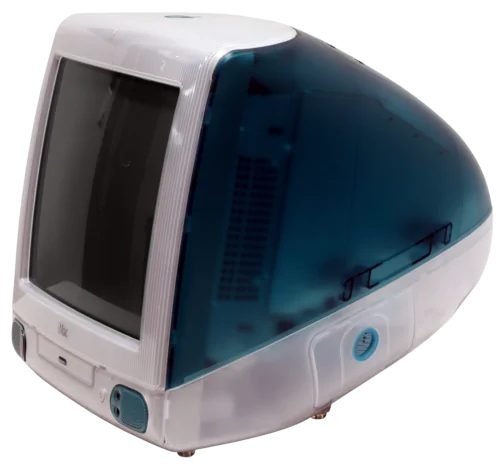
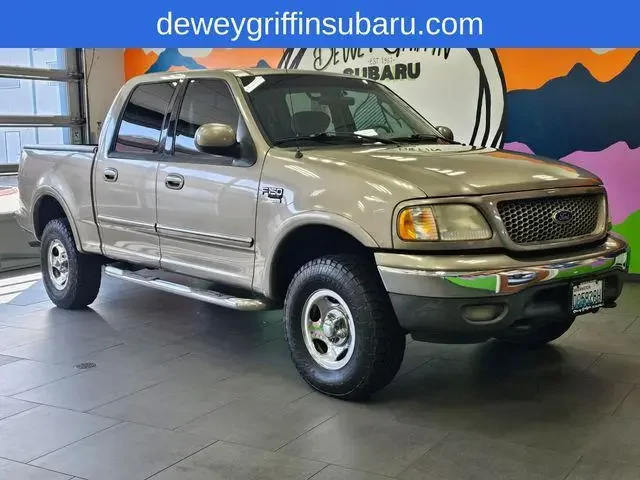
Compare the 2002 Mac which stopped working more than a decade ago (I actually have one of these in my attic lol) and the 2002 F150 which is still totally fine. Something has to be done or we are going to return to the 1980s when the average car lasted less than 100k miles (~12-15 years) and the average age on the road was 7 years old.

Rivian R1T R1S The Next Challenge for Software Defined Vehicles:Hardware Generations 1775142669073-65

Rivian R1T R1S The Next Challenge for Software Defined Vehicles:Hardware Generations 1775143084220-20
 

UnsungZero_OldTimeAdMan

Well-Known Member
First Name
Barnum
Joined
Mar 20, 2023
Threads
66
Messages
8,546
Reaction score
11,730
Location
SoCal
Vehicles
'23 GW Quad-Large R1T "Ghost"
Occupation
Advertising Circus
Not exactly uncharted territory. Just like OS development and updates for computers, tablets and smartphones (and Rivian is doing it already)—different release builds of OS for different generations of hardware. And just like computers, planned obsolescence is an eventuality for all existing and future generations of R1s. It’s coming. We’re just not there yet, as some features that are expected to be standard at purchase (like text messaging) has not been delivered yet. Since gen2 deliveries, there hasn’t been just one “file” for each OTA. Look closer, you’ll notice there are additional naming nomenclature for different builds. Pure EVs are just computer platforms that are also cars.
 
Last edited:

electruck

Well-Known Member
Joined
Oct 6, 2019
Threads
74
Messages
4,155
Reaction score
7,728
Location
Dallas, TX
Vehicles
2023 Rivian R1S
let's not conflate concepts here. maintaining existing functionality over the expected lifetime of the vehicle is a completely different problem than retrofitting new capabilities into older models to "keep a unified experience" over time. there should be no expectation that a 2023 model will support all the same features as a 2033 or 2043 model.
 

Sponsored

Doggman

Member
First Name
Shawn
Joined
Feb 25, 2026
Threads
0
Messages
7
Reaction score
26
Location
Colorado
Vehicles
2026 R1S, 2024 BMW iX, 2008 FJ Cruiser
Occupation
Medical
This is why it's best to stick to the philosophy of buy the vehicle for what it can do for you now and not for you hope (or what someone promises) it might do in the future (well, maybe a little 'cause it's fun to dream). Designed obsolescence is foundational to the consumer economy since, well pretty much forever and will continue to be so, probably forever, at least as long as there are people with money to spend.

Sure, it would be nice if there was consideration to building an architecture that could accommodate upgrades to the sensor suite and processors but unfortunately the CEO's have long figured out that's not as sustainable a corporate business model as is appealing to my lizard brain with novel sparklies and FOMO.

It's why I can't swap the RAM or the CPU in my laptop anymore these days. It's why I cave and get a new phone every two years and the last 10 I paid $$$ for are now floating around somewhere in the 3rd world being used by Nigerian princes to send emails and texts to my grandmother to bilk her out of her retirement. Yeah, it's wasteful and frustrating and mostly our own fault.
 

UnsungZero_OldTimeAdMan

Well-Known Member
First Name
Barnum
Joined
Mar 20, 2023
Threads
66
Messages
8,546
Reaction score
11,730
Location
SoCal
Vehicles
'23 GW Quad-Large R1T "Ghost"
Occupation
Advertising Circus
This is why it's best to stick to the philosophy of buy the vehicle for what it can do for you now and not for you hope (or what someone promises) it might do in the future (well, maybe a little 'cause it's fun to dream). Designed obsolescence is foundational to the consumer economy since, well pretty much forever and will continue to be so, probably forever, at least as long as there are people with money to spend.

Sure, it would be nice if there was consideration to building an architecture that could accommodate upgrades to the sensor suite and processors but unfortunately the CEO's have long figured out that's not as sustainable a corporate business model as is appealing to my lizard brain with novel sparklies and FOMO.

It's why I can't swap the RAM or the CPU in my laptop anymore these days. It's why I cave and get a new phone every two years and the last 10 I paid $$$ for are now floating around somewhere in the 3rd world being used by Nigerian princes to send emails and texts to my grandmother to bilk her out of her retirement. Yeah, it's wasteful and frustrating and mostly our own fault.
100%. No different from deciding when or whether to buy a computer. If you need it, there’s no better or worst time to buy. You buy the level of capability you need and can afford. Approaching the decision with emotions and FOMO is foolish and analysis paralysis is guaranteed. And these folks are neglecting this fact: Even if development stops for R1 today, you can still go on doing all of the things that you’ve been doing… until the eventual catastrophic hardware failure (just like any car). Same goes for resale value concerns. It’s a depreciating asset. Not an investment. Accept it and worry about things that are more worthwhile.
 

RivianRiverRat

Well-Known Member
First Name
Greg
Joined
Mar 9, 2022
Threads
12
Messages
657
Reaction score
862
Location
Chattanooga TN
Vehicles
2022 Rivian R1T
Occupation
Civil Engineer
While I agree that car manufacturers will have to evolve (and this might be an issue for legacy manufacturers)
It is the hardware that is the bottle neck mostly with manufacturer capping support second
My 2012 IMac is still chugging along though I can no longer update the OS any further (capped at 10.15 with current at 26.4)
I can’t load apps but must go to the websites thru the net but as is everything works fine
You just hope it lasts as long as you need/want and then you trade it in on a newer one
 
OP
OP

IPTV65

Well-Known Member
Joined
May 19, 2020
Threads
11
Messages
261
Reaction score
391
Location
Mount Pleasant SC
Vehicles
Jeep JLU Sahara,Jeep JKU, Infiniti G37X, R1S
Occupation
Engineering Exec
Clubs
 
That's fair, and I generally agree you can't expect full feature parity across generations.

But I think about this slightly differently.

What feels off, compared to phones or laptops, is the lifecycle and cost mismatch:

Hardware: 10–20 years and $50K–$120K. Software expectations: evolving continuously, because both buyers and manufacturers want increasingly software-defined vehicles.

In most industries, the answer has been "just upgrade the hardware." Easy, normal, expected. But with vehicles, that's a fundamentally different calculus than replacing a phone or laptop.

So the question I keep coming back to: do all of those new capabilities really need to run fully on the vehicle? Is there a model where safety-critical systems stay local and hardened, while other parts of the experience evolve independently of the hardware generation?

That's not a complete answer, but it feels like there's real middle ground between "full hardware dependency" and "full feature parity expectations." Why does it have to be one or the other?

I'm not a "that's just how it works" kind of guy, and anything this status quo is eventually ripe for disruption. We're clearly partway there. OTA updates exist, connected services exist, but the experience still hits a hardware wall well before the midpoint of a vehicle's useful life.

The goal shouldn't be calling out status quo. It should be figuring out how to push that wall as far out as possible and not just based on how it’s done today.

Curious whether anyone has seen this done well in other long-lifecycle industries like aerospace, industrial equipment, or infrastructure.
 

impulsoren

Well-Known Member
First Name
Soren
Joined
Jun 19, 2025
Threads
3
Messages
129
Reaction score
106
Location
Oregon
Vehicles
r1t, tiguan, volt, toyotapickup, extreme history
Occupation
retired
1st gen were released with hardware capable of specific planned features for which software was not yet ready. We have become used to feature-packed software updates.
R2 will be released with hardware incapable of specific planned features.

maybe make the car buying process much more simple for current owners so trading in for the next generation is super easy? Or factory upgrades where you swap out a vehicle for a refurbished one with all the new tech?
Hardware gets obsolete so quickly that would require people getting used to a super-short life cycle.
 

Sponsored

R1SNRGY

Member
First Name
Greg
Joined
Aug 13, 2025
Threads
1
Messages
23
Reaction score
18
Location
Florida
Vehicles
2025 R1S Tri
100%. No different from deciding when or whether to buy a computer. If you need it, there’s no better or worst time to buy. You buy the level of capability you need and can afford. Approaching the decision with emotions and FOMO is foolish and analysis paralysis is guaranteed. And these folks are neglecting this fact: Even if development stops for R1 today, you can still go on doing all of the things that you’ve been doing… until the eventual catastrophic hardware failure (just like any car). Same goes for resale value concerns. It’s a depreciating asset. Not an investment. Accept it and worry about things that are more worthwhile.
Exactly. But it makes me wonder if this might highlight an evolving shift in car purchase behavior into a model where the norm is leasing and an outright purchase is an outlier. I have traditionally hung on to cars for hundreds of thousands of miles and 15 + years. However, they were hardware based, with somewhat minimal computation when compared to what the Rivian presents. If properly viewed as a computer on wheels, the ability to stay "current" will significantly diminish on an accelerating timeline as technology ramps up in a decidedly non linear fashion. This is not to say that vehicles won't be functional for many years, but EOL support will limit said function at a certain point (beyond owner input, strictly up to the manufacturer road map). All of which may make a 3 year lease much more attractive to those who want to be able to enjoy future advances in hardware and software...
 

BigSkies

Well-Known Member
First Name
Brian
Joined
Sep 4, 2021
Threads
17
Messages
1,231
Reaction score
2,647
Location
Denver
Vehicles
R1T, Model Y
Clubs
 
There's a couple components of this that will be interesting to see how they evolve.

At some point software updates will stop for each generation of vehicle. I forgot what point it was that Tesla stopped updating early Model S cars, but I feel like it was in the 5-8 year range. I don't think that's unreasonable, and things should continue working for a decent length of time without issues.

Where it gets tricky is these cars being interconnected with multiple other services and standards.

At some point the various 4G/Wifi/bluetooth standards change and don't get backwards compatibility. It's a safe assumption that a phone purchased 15 years from now won't fully work with a Gen 1 Rivian or the related app hasn't been updated. How's that work when the phone app is central to a lot of functionality?

Then there's the interconnected services. It's also a safe assumption that Alexa/Apple Music/Spotify/etc won't maintain backwards compatibility indefinitely. Some of those services may stop disappearing.
 

GeorgeHudetz

Active Member
First Name
George
Joined
Mar 8, 2024
Threads
0
Messages
27
Reaction score
41
Location
Erie, CO, USA
Vehicles
2025 R1T Dual Max A/T Performance
Occupation
UX
There's a couple components of this that will be interesting to see how they evolve.

At some point software updates will stop for each generation of vehicle. I forgot what point it was that Tesla stopped updating early Model S cars, but I feel like it was in the 5-8 year range. I don't think that's unreasonable, and things should continue working for a decent length of time without issues.

Where it gets tricky is these cars being interconnected with multiple other services and standards.

At some point the various 4G/Wifi/bluetooth standards change and don't get backwards compatibility. It's a safe assumption that a phone purchased 15 years from now won't fully work with a Gen 1 Rivian or the related app hasn't been updated. How's that work when the phone app is central to a lot of functionality?

Then there's the interconnected services. It's also a safe assumption that Alexa/Apple Music/Spotify/etc won't maintain backwards compatibility indefinitely. Some of those services may stop disappearing.
Yes, this is the interesting question. Will google maps still work with a first-gen R1 15 years from now? If so will it still get map updates? I do think there are going to be costs associated with keeping all these things working together in a cohesive manner that are difficult to predict right now. I suppose in the end you could use a 15-years-in-the-future mini tablet or phone or whatever to stay connected. But if the main displays are lobotomized and do little more than let you drive the car - that's going to be a tough pill to swallow.

It will be interesting to see how this all falls out. It does seem to be unchartered territory, at least in some ways.
 

1stPlace

Well-Known Member
Joined
Oct 9, 2023
Threads
9
Messages
257
Reaction score
462
Location
SE MI
Vehicles
Rivian R1S
Clubs
 
I hope there is a Pioneer or Kenwood unit that will allow my Rivian to play future CDs.

I think 4G cellular might be the first thing to go that has a significant impact on all modern vehicles, and I hope Rivian has a plan to retrofit, because 3G was discontinued within ~20 years start to finish, and my R1S only has 4G LTE when 5G was already out. 4G came out ~2010.

One argument for software defined vehicles is that they can be updated so they do not appear "outdated". So clearly, the functions of the software still "date" the vehicle, but some limitations of those functions are in the hardware. So in the end, people are still upgrading the hardware like they always were. It gets fuzzy when companies start selling on future software capability, which is a new and risky proposition.
 

Time2Roll

Well-Known Member
Joined
Jul 10, 2025
Threads
2
Messages
770
Reaction score
659
Location
SoCal
Vehicles
2026 R1S Quad - 2001 F150
The updates will trail off and be less meaningful over time. Eventually they will stop unless a safety issue that needs corrected. Once the vehicle gets to be its best self the updates will stop. Any additional functionality will be the latest newest vehicle at that point. Or just enjoy for what it is.

Eventually most of the updates we see today will already be baked into the new models and fewer updates needed on the newest vehicles.

That is how I see it. :cool:
Sponsored


Top