
Qamera
Active Member
with that
I took my ID4 off-roading in Death Valley in June. Charging is easy, and nice roads nothing too rad. There are some tough roads just outside of the park.I hope it's you, let us know before you go.
Sponsored
with that
I took my ID4 off-roading in Death Valley in June. Charging is easy, and nice roads nothing too rad. There are some tough roads just outside of the park.I hope it's you, let us know before you go.
I wonder if they could minimize the battery headroom a bit? I also wonder if the vehicles rolling off the assembly line are below engineering expectations compared to prototypes and EPA testers. Perhaps there are parts/manufacturing tweaks that can be made. As you said, there likely are also software tweaks that could help. Big problems are often solved with multiple small fixes. I think Kyle said that charging speed was a relative strength, at least compared to R1 and MY.It's looking like the numbers are the numbers regarding highway range. I'm not sure how much Rivian will be able to squeeze with the current hardware and battery size (though I think aspects of the R1S/R1T charging did improve with some later updates).
I don't think the range numbers will result in a huge hit to orders (so 0 to 5% would be my vote). Rivian already knows (and has stated often) the average amount of DC charging stops per car they have sold (though I don't remember the number they quote). Most drivers are charging at home. So if they lose out, I think it will be to those mighty few that rack up tons of highway miles.
If you read this Jose, could you chime in on how the R2's performance in charging speed compares to the Model Y? (granted, both are 400V architecture and both slower than 800V EVs)
I thought Kyle mentioned some numbers in the R2 charging speed video of how much more kWh were gained compared to the MY over the same amount of time (and I thought it was maybe overall faster (but maybe I'm mistaking that for just more kWh / minute (since the R2 has a bigger battery to charge)).
Because if R2 gets worse range but charges faster, how would that compare to the potential longer range and slower charging of the Model Y? Has anyone seen (or could generate) those type of numbers, on say a 400 mile trip, Model Y vs. R2 where each would have to stop at least once to charge up enough to make it to the destination?
Range certainly still makes a difference though (if your destination is 300 miles away by highway, you can make it without a charging stop in a Model Y, and not going to be possible in an R2). In a 400 mile trip everyone is stopping at least once though, so then the charging speed makes a difference.
I believe it was 48kWh for the R2 vs. 33kWh for the MY.I thought Kyle mentioned some numbers in the R2 charging speed video of how much more kWh were gained compared to the MY over the same amount of time (and I thought it was maybe overall faster (but maybe I'm mistaking that for just more kWh / minute (since the R2 has a bigger battery to charge)).
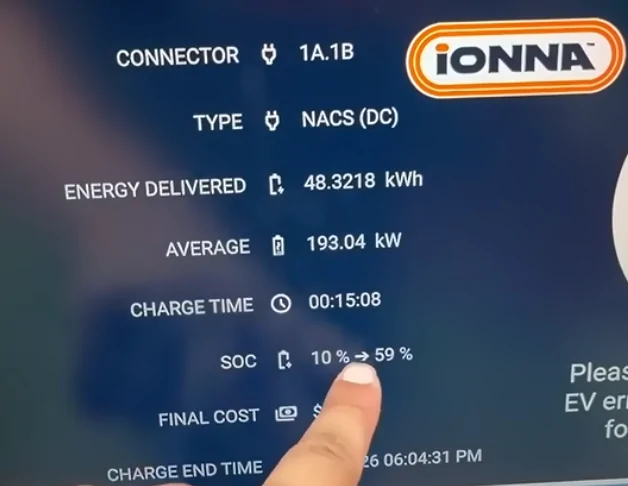
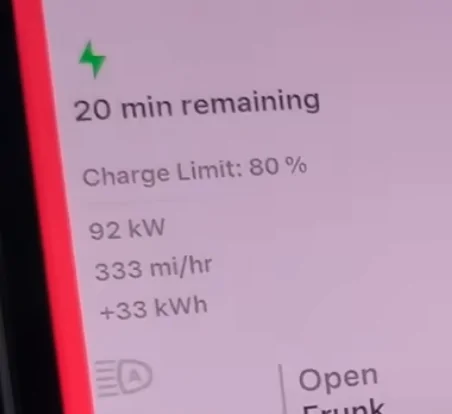
Grand Gulch Mine is 86 miles, should be fineThat's actually one of the places we go with our vehicle (means we will be going there with the R2 if we ever get the invite to order). I also plan to go deep into the Grand Canyon Parashant area... where the closest chargers are in St George, UT. So I will definitely be testing the potential limits of off-the-beaten-path areas with the R2. We carry extra gas cans with the Forester in these places...
However, I am sure others will have done the same and posted about it by the time we get the chance to do so.


The EPA/Rivian range issue is easiest to see by comparing the ratings with real-world highway results.There are numerous tests now that show the R2 has somewhere between less and a lot less range than Rivian's marketing department and EPA testing suggested. I wonder if something changed between the EPA test mules and production? I wonder if this has actually caught Rivian management by surprise--were they anticipating more range off the production line? I further wonder what Rivian's response will be if the tested 250-mile range provides real sales headwinds and RIVN is also affected.
In the short term, is there a software update or a manufacturing tweak that can bring the range closer to 300 miles? Longer term, is there space for extra cells, or could more energy-dense cells be used? If so, could this be done before the Lidar/CPU update? If battery/range improvements add cost, could the Lidar/CPU update provide cover for a small price increase? If better cells were used in the near future, perhaps the old cells could be used up in the $45k R2?
Sorry. Quite a few questions. Not many answers.

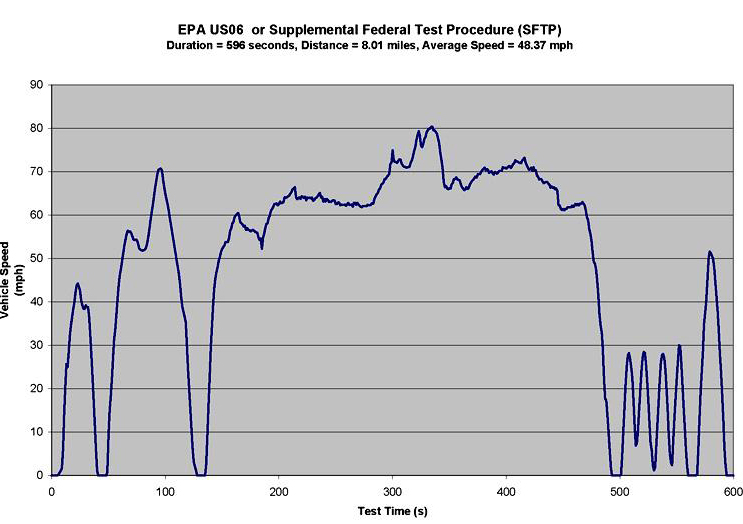
Your data on EPA cycle is not correct. Rivian uses the 5 cycle test which runs up to 80 mph.The R2’s calculated EPA highway range is about 303 miles, but that is on the EPA highway cycle, which averages only about 48 mph and peaks around 60 mph, in controlled laboratory conditions with no wind, weather, traffic or elevation changes. So Rivian did not “lie” about the EPA rating. The number is valid for the test it passed.
The more questionable marketing came from RJ comparing the R2’s efficiency to the Model Y. The two can look similar under the EPA’s adjusted and rounded ratings, especially at EPA test speeds, but that does not mean the R2 actually uses the same amount of energy per mile. In the real side-by-side tests we have seen, the R2 consistently used noticeably more energy, especially at normal freeway speeds.
Another important detail is that almost every R2 highway range test on YouTube so far has been done in Conserve mode (I stop watching review if see conserve mode mentioned). That is the most efficient setting, but it is not necessarily how everyone will drive the vehicle every day, especially people buying the Performance version. In All-Purpose mode, with both motors available more often, real highway range may be somewhat lower.
Wail until the iX3 gets here. That could really throw a wrench in the subset of potential R2 buyers who are no off road enthusiasts. .I do not intend to insinuate wrongdoing or even typical business fibbing. But clearly, the 300lb gorilla is Model Y, and most believe that Rivian wants R2 to win some of these sales. It now appears that Model Y offers significantly more range in spite of nearly identical EPA range ratings. Did Rivian anticipate that the range delta would be this large?
I think there is a significant chance that a real-world 250ish-mile range may create sales headwinds. Maybe it won't matter much, maybe it will. What will Rivian's response be? This will certainly come up at the next investor meeting. Will Rivian give a rhetorical response or an updated product strategy? I am hoping for the latter. I was hoping to generate some speculation on Rivian's range of options.
Even with 5% battery degradation, which would be unusually high, the Model Y Premium AWD would still likely have more real highway range than a brand-new R2.One final consideration for Tesla is the high initial battery degradation. It does level off after 2 years, especially if you take care to avoid keeping the car at high, >55% SOC, for long periods of time. It's still unknown how the R2 battery will hold up, but NMC batteries may do better over time.
Runs up to 80 mph for a brief second. But it still averages 48 mphYour data on EPA cycle is not correct. Rivian uses the 5 cycle test which runs up to 80 mph.

I suspect the just-announced Volvo EX50 will be the bigger challenger seeing as they're targeting the mid-40's price point. We'll see.Wail until the iX3 gets here. That could really throw a wrench in the subset of potential R2 buyers who are no off road enthusiasts. .
The R2 was tested over variable-speed highway cycles averaging roughly 48–61 mph, with brief peaks around 80 mph. It was not tested at a steady 70 or 80 mph...Your data on EPA cycle is not correct. Rivian uses the 5 cycle test which runs up to 80 mph.


