
edman007
Well-Known Member
I keep mine in the drivers side door, inside the case for my A2Z. The A2Z is currently rolling around the frunk while I wait for it's replacement (which I hope comes with a second case)
Sponsored

The Typhoon Pro ships with its own case. And because of the form-fitted lining, you can't really use it for anything else.I keep mine in the drivers side door, inside the case for my A2Z. The A2Z is currently rolling around the frunk while I wait for it's replacement (which I hope comes with a second case)



Not to derail this thread but...Since the Tesla charging station is a couple miles from my home, and for the winter months I am using that, I keep the NACS adapter in the drivers door pocket.
I've realized that charging at home when solar is not robustly generating is just not economical (32 amps for 3-6 hours). Getting into the habit of running over to the Tesla location once a week for an hour.


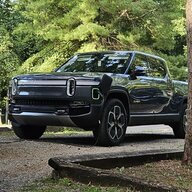
Same!Under rear seat, I use the box of my "old" A2Z adapter.

Rhode Island Energy is currently charging $0.16387 per kW.Not to derail this thread but...
HOW MUCH DOES YOUR POWER COST??? Superchargers are 4-5x the cost of home charging for me
That sounds great! I definitely would love to transition more and more of my life to electric at some point! Out of curiosity what solar company did you use? Is Rhode Island one of those states where DC fast Chargers charge by time, rather than energy delivered?Rhode Island Energy is currently charging $0.16387 per kW.
Now, let me tell you how this clock was built.
For the past two years, our home is all-electric with a solar architecture that, during 9 months of the year, give us net credits on power each month. We accept that getting off of fossil fuels was our choice; not to be smug or self-righteous, but out of economics over the increasing cost of heating oil (for home heating and hot water). The solar net credit offsets last year netted us an annual average electric bill of about $40 a month. As opposed to and average of $280 a month for electric + $120 a month for oil (Natural Gas is no available where we live, and we will not have propane) without solar. As I've mentioned before, I am a retiree - living on, more or less, a fixed income, $40 a month for energy is GREAT!
We have taught ourselves things over the course of the past two years on being frugal with the electricity - how to use a clothes line to dry heavy clothing, bedding, etc. when the weather cooperates. How to efficiently use an electric clothes dryer otherwise. Same goes for cooking - planning oven meals that will use no more than an hour of an electric oven (or using the toaster oven for smaller meals). Our home heat and hot water is through heat-pump technology. The home heating is set to 64 degrees.
And we got our first (of a planned two) EV - the Rivian R1T-Large. We had a 50amp circuit installed in the garage and I have a dedicated L2 charger. The charger (even the Rivian L2 charger) will pull no more than 32amps from the panel. Through the charging settings in the R1T, I have it set to pull the MINIMUM of 8amps (sometimes I kick that up to 12 or 16 depending on expected driving needs) during set times of the day to charge (generally late morning to early afternoon when the solar is strongest). But when I look at the solar utilization app. Our home, during charging, is pulling a LOT more power off the grid. Stop the charging through the Rivian app - grid pull goes down. Turn it back on. Grid pull shoots back up. In December, we blew through our entire bank of net-credits and then some.
So... until we get to a positive solar production season (early March), I will drive my R1T over to the Tesla charging station and plug it in, and accept the (so far) $12-$23 a week to bring the battery up to 85% from the 50-64% range. Oh, and the RAN station... THAT was a small fortune to use - $41.60 for an hour of power! The Tesla charging stations have been much cheaper! The last time I used the Tesla station, I was hitting 70kWh of power. The RAN was barely 40. So much for brand loyalty.
We live in Southern New England. DEEP Winter is here - more days under freezing than above. I fully appreciate that I am driving a state-of-the-art computer. Being retired from 36 years in the IT business, I know that large computers , and in the case of the R1T, the batteries, need specific temperature-controlled environments to function, and I am not grousing that the battery range on the R1T, even while garage parked, is impact by the sub-freezing temps. That, too, will change once the temperatures begin to moderate. I kind like that "727 preparing to leave the gate" heater powering up sound it makes when I go to get moving.
So that is how I built my clock.
That is a very good question, but I do not know how RI handles DCFC infrastructure. We are, however, well aware that charging infrastructure is limited in these parts. On the Rivian map, if not Tesla, most are lower power (two lightning bolts).That sounds great! I definitely would love to transition more and more of my life to electric at some point! Out of curiosity what solar company did you use? Is Rhode Island one of those states where DC fast Chargers charge by time, rather than energy delivered?