Sponsored

Ralph

Well-Known Member
First Name
Ralph
Joined
Jun 14, 2021
Threads
1
Messages
907
Reaction score
993
Location
Arkansas
Vehicles
R1T, Outback
Thank you!

Several videos and whitepaper available here. Not only regarding bidirectional but a cost effective solution (without solar) to use your EV as power in an outage. This uses their charge and a simple device which would be installed behind your meter to manage directional flow to/from the grid.

Looking forward to adding a full solar/back-up solution. Two EVs and there should be few cases requiring the purchase of anything like a Powerwall.

No prices as yet.
Sponsored
 

Just Passing By

Well-Known Member
First Name
John
Joined
Jan 18, 2025
Threads
1
Messages
203
Reaction score
276
Location
Bay Area
Vehicles
(Ancient Audi A6 gone) - 2 wheels-only for now Honda CB500X
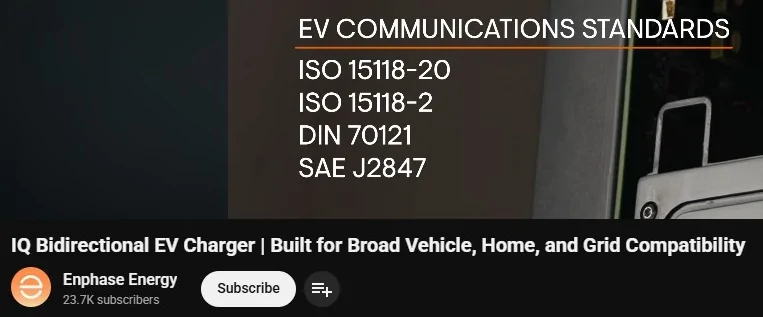
New video from 3 days ago.

IQ Bidirectional EV Charger | Built for Broad Vehicle, Home, and Grid Compatibility
via: Enphase Energy
And datasheet.
 

Attachments

scottf200

Well-Known Member
First Name
Scott
Joined
Nov 25, 2019
Threads
6
Messages
432
Reaction score
296
Location
WNC
Vehicles
Past Ford Exped; curr TMX 100D; future BEV truck/SUV
Occupation
sw engineer
Still seems they have the requirement for their darn meter collar.
They have to have some form of isolation from the grid if the grid goes down. Otherwise they would back feed the grid which is dangerous to line workers.
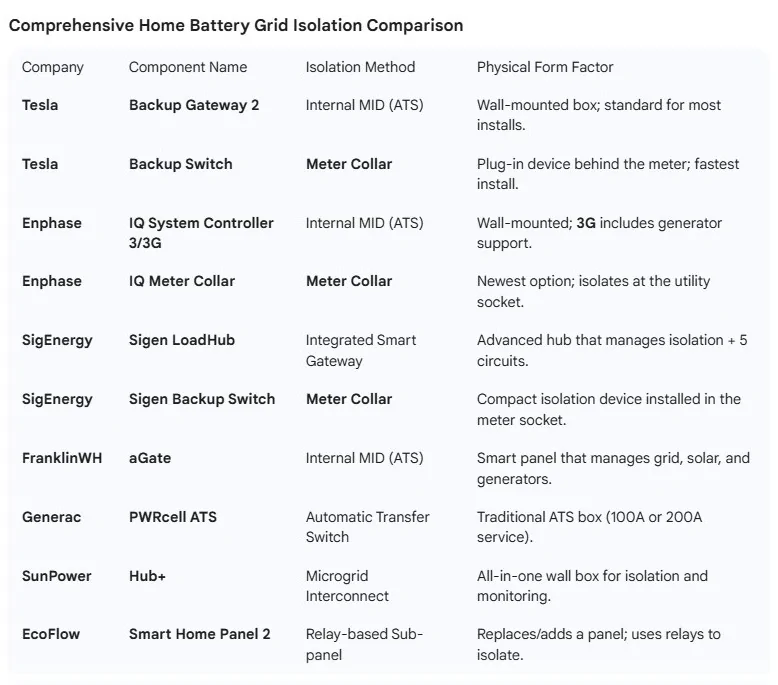
I had AI help with the list below. Personally I'm looking at SigEnergy w/Sigen LoadHub that can take two SigenStor battery stacks at 11.5 kW each into the LoadHub to pass on to the house electrical panel. Winter and worse case is heatpumps defrost cycle and the hot water tank.
Rivian R1T R1S Rivian V2X V2H Solution available now using PointGuard/Sigenergy BiDirectional? Automatic Transfer Switch or Meter Collar
 

Polar

Well-Known Member
First Name
Scott
Joined
Feb 16, 2022
Threads
33
Messages
1,098
Reaction score
2,039
Location
WA
Vehicles
C40, LE CY R1S
Occupation
IT
Clubs
 
They have to have some form of isolation from the grid if the grid goes down. Otherwise they would back feed the grid which is dangerous to line workers.
Yes. Anything to help others learn about interlocks and lineman protection. I worked for a utility for a decade well aware of the dangers.

For those of us with transfers switches already though if they need the meter collar it’s unwelcome.
 

Just Passing By

Well-Known Member
First Name
John
Joined
Jan 18, 2025
Threads
1
Messages
203
Reaction score
276
Location
Bay Area
Vehicles
(Ancient Audi A6 gone) - 2 wheels-only for now Honda CB500X
I had AI help with the list below. Personally I'm looking at SigEnergy w/Sigen LoadHub that can take two SigenStor battery stacks at 11.5 kW each into the LoadHub to pass on to the house electrical panel. Winter and worse case is heatpumps defrost cycle and the hot water tank.
Automatic Transfer Switch or Meter Collar.webp
It seems Tesla pioneered the use of the meter collar. Enphase now have theirs approved for use by PG&E in my neck of the woods. I assume every supplier will offer this as a solution eventually, since it seems to help with a lower system cost on smaller systems and can help avoid having a separate critical loads panel installed.

I'm also planning a solar+battery+heat pump heating+electric water heater solution but I have the benefit of the more temperate Bay Area, which avoids the extremes of heat and cold experienced elsewhere. We were up at 77 deg F today, although that's a bit of an outlier for this time of year. In any event because of the climate I can probably get by with just a single home battery system, say something like the Enphase 10C with 10kWh/7kVA storage/power delivery, plus an R2 if I exhaust the home battery or need more instantaneous power delivery from the overall system.
 

Sponsored

itiming

Member
First Name
Chuck
Joined
Jan 13, 2024
Threads
3
Messages
23
Reaction score
34
Location
Wisconsin
Vehicles
Rivian R1T, Tesla Model Y
Occupation
Retired
New video from 3 days ago.

IQ Bidirectional EV Charger | Built for Broad Vehicle, Home, and Grid Compatibility
via: Enphase Energy
Thanks for posting.

Our existing system is grid-forming with switching for grid isolation. Not sure if Enphase requires the newer controller (6 vs the 3 we have) and/or an Enphase battery (10 vs 5) for full integration. The Green EV charging is welcome, to pace solar production to the EV.

Rivian R1T R1S Rivian V2X V2H Solution available now using PointGuard/Sigenergy BiDirectional? Bi-EV-Charger
 
Last edited:

bfilippo

Well-Known Member
First Name
Benjamin
Joined
Sep 16, 2024
Threads
39
Messages
682
Reaction score
694
Location
Downeast Maine
Vehicles
2022 Launch Edition R1S Limestone, 2026 Gen2 R1T Tri Max AT, Storm Blue
Occupation
Consultant
Exciting! I just had a powerwall installed with our large solar array because of winter outages. We have 2 Rivian’s with Large and Max batteries so I’m very excited about this, BUT I’m not an engineer. Would this possibly work with my Tesla Inverter/Powerwall 3/Solar setup?
 

scottf200

Well-Known Member
First Name
Scott
Joined
Nov 25, 2019
Threads
6
Messages
432
Reaction score
296
Location
WNC
Vehicles
Past Ford Exped; curr TMX 100D; future BEV truck/SUV
Occupation
sw engineer
Our existing system is grid-forming with switching for grid isolation. ... The Green EV charging is welcome, to pace solar production to the EV.
Ha, switching makes more sense than swathing as I thought you were using some new term I didn't know (happens a lot!).

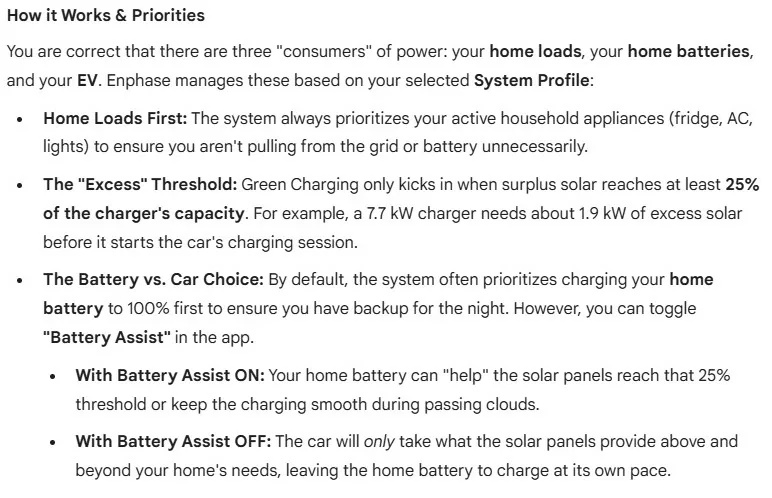
The Green EV charging thing is more complex than it sounds. I was going back and forth a little with one of my AI LLM friends :)

Rivian R1T R1S Rivian V2X V2H Solution available now using PointGuard/Sigenergy BiDirectional? 3 kW sources Screenshot of Google Gemini
 

kanundrum

Well-Known Member
Joined
May 2, 2020
Threads
273
Messages
4,702
Reaction score
13,684
Location
Washington, DC
Vehicles
Giulia QV, R1S (Sept 22 Delivery)
Occupation
IT
Clubs
 
Ha, switching makes more sense than swathing as I thought you were using some new term I didn't know (happens a lot!).

The Green EV charging thing is more complex than it sounds. I was going back and forth a little with one of my AI LLM friends :)

3 kW sources Screenshot of Google Gemini.webp
You start getting into warranty concerns with discharging the battery, will affect its lifecycle from a third party on battery, health etc. Only one reason to go with a "Rivian" based solution.
 

scottf200

Well-Known Member
First Name
Scott
Joined
Nov 25, 2019
Threads
6
Messages
432
Reaction score
296
Location
WNC
Vehicles
Past Ford Exped; curr TMX 100D; future BEV truck/SUV
Occupation
sw engineer
You start getting into warranty concerns with discharging the battery, will affect its lifecycle from a third party on battery, health etc. Only one reason to go with a "Rivian" based solution.
I keep reading that there has been some official interaction between Rivian and SigEnergy (was Pointguard in USA) but I have not found anything official.

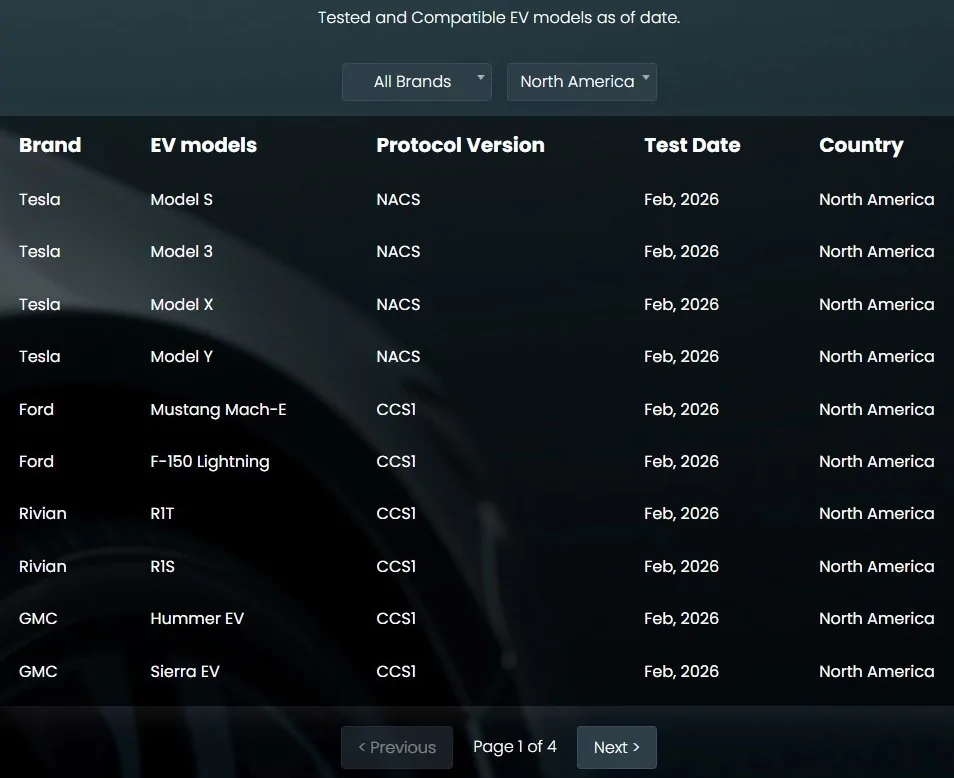
There are standards for all this (see second image of one example) so as long as both parties follow the standards it is OK. The common thought is as long as it follows the existing capacity warranty, then all is OK. A non-issue for me since it is for outages and not for daily TOU rate arbitrage.

https://www.sigenergy.com/en/index/v2x_compatibility

Rivian R1T R1S Rivian V2X V2H Solution available now using PointGuard/Sigenergy BiDirectional? V2X Compatibility _ Sigenergy


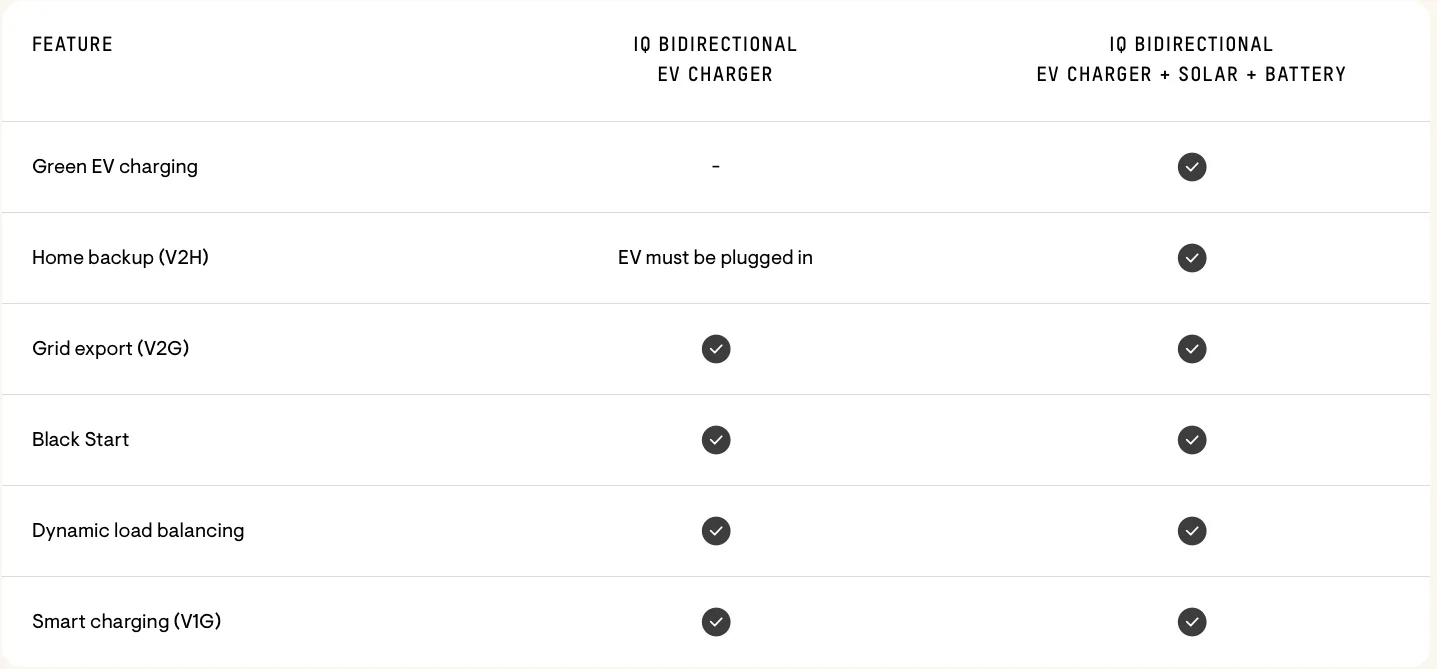
Rivian R1T R1S Rivian V2X V2H Solution available now using PointGuard/Sigenergy BiDirectional? Enphase IQ Bidirectional EV Charger _ Built for Broad Vehicle, Home, and Grid Com
 

Sponsored

tpepper

Member
Joined
Jun 2, 2024
Threads
1
Messages
24
Reaction score
21
Location
Oregon
Vehicles
R1T
Clubs
 
You start getting into warranty concerns with discharging the battery, will affect its lifecycle from a third party on battery, health etc. Only one reason to go with a "Rivian" based solution.
This is certainly a big open question for the whole industry.

What happens if you move? Do you need to take your bidi DCFC with you? And replace it every time you get a new car? Or have multiple if you have two manufacturers' (or generations of same manufacturer) car? Given the house-side equipment isn't cheap and electricians and permitting, this would be more than most are willing to do. Already just getting an inverter, small house battery, and DCFC is more than most are willing to do.

At this point for me specifically I feel like it "should be" moot. I'm using the R1's battery to discharge into my house at a lower wattage than driving would require, and with a cumulative monthly output equivalent to maybe 1-200 miles of driving. I'm well below average miles per year on the vehicle. Net effect should be nearly indistinguishable from just normal driving of the vehicle. But that's not going to be the case for everybody.

With bidi DCFC at home it becomes possible to take the battery from 0% to 100% to 0% daily, every week of every year, and that's more than "typical driving" for sure. Power prices and net metering regimes might give people incentive. I can imagine people buying the cheapest used EV they could find with a beefy, working battery and charger and leaving it connected to the bidi DCFC for peak shaving all the time, if they physically have the parking space for that. Not much more crazy than the things bitcoin farmers have done.

The future might look something like warranties that cover charge cycle counts, or cumulative kW in/out, or more complicated math depending on battery chemistry?

I genuinely wonder if Rivian is getting and interpreting telemetry from my vehicle relative to my V2H DC export. Would be fascinating to chat with them or run experiments with them.
 

HaveBlue

Well-Known Member
Joined
Nov 22, 2022
Threads
41
Messages
2,928
Reaction score
2,237
Location
91107
Vehicles
R1S DMP Max, Lifted GX470, APR Audi A7, BMW 325Ci
Clubs
 
This came at a good time for me. Where I live the City is releasing new rate structure for a zero carbon footprint by 2030. Previously a flat rate all in comes out to $.30/KWH. Next month comes their new structure. If you go over 750KWH/mo the total rate roughly doubles. So having an EV will put most people over in the summer and maybe even winter. Additionally they are going to TOU rates and the peak rate is also punitive. Their zero carbon plan will literally drive people back to ICE due to the cost of home charging. I could probably go to another place and DC charge for less. It's insane.

I'll need to find a way to drop my usage out of these crazy tiers. I'm sure their NEM sucks too.

I'm all ears on those of you who have gone solar, battery, NEM or off grid. California sucks. Pasadena is worse and I'm not looking at replacing ICE with EV for our other family cars now.
 

docwhiz

Well-Known Member
First Name
Mark
Joined
May 22, 2023
Threads
5
Messages
668
Reaction score
618
Location
Lake Tahoe, California
Vehicles
Tesla Model S LR (2022), Land Rover Discovery 2
Occupation
Retired
This came at a good time for me. Where I live the City is releasing new rate structure for a zero carbon footprint by 2030. Previously a flat rate all in comes out to $.30/KWH. Next month comes their new structure. If you go over 750KWH/mo the total rate roughly doubles. So having an EV will put most people over in the summer and maybe even winter. Additionally they are going to TOU rates and the peak rate is also punitive. Their zero carbon plan will literally drive people back to ICE due to the cost of home charging. I could probably go to another place and DC charge for less. It's insane.

I'll need to find a way to drop my usage out of these crazy tiers. I'm sure their NEM sucks too.

I'm all ears on those of you who have gone solar, battery, NEM or off grid. California sucks. Pasadena is worse and I'm not looking at replacing ICE with EV for our other family cars now.
  • Key 2025-2026 Pasadena Residential Rate Details:
    • Average Bill: Residents often pay around $240/month, with average costs averaging 21 cents/kWh to over 25 cents/kWh depending on usage.
RESIDENTIAL Monthly Customer Charge…………………........................................................ $8.96 Monthly Grid Access Fee…………………………………………………………….. $4.50 Distribution ……………………………………..First 350 kWh per month………. $0.01889 Next 400 kWh per month……..... $0.14673 All Additional kWh per month… $0.10706 Transmission Charge- All kWh per month…………………………………………. $0.01609 Flat Rate: Energy Charge - All kWh per month………………………………….. $0.12977 Time of Use Rate: On Peak kWh per month…………………………………........ $0.17980 Off Peak kWh per month ……………………………………… $0.11930
 

Rivian Owner

Well-Known Member
First Name
Mark
Joined
Sep 15, 2024
Threads
1
Messages
229
Reaction score
293
Location
Pacific North West
Vehicles
1971 GTO, 2019 F150,
Clubs
 
A couple of thoughts here. I recently put in an inverter and batteries. After going through this adventure my perspective on V2H has changed.

I didn't go with the SigEnergy solution as their inverter only works with their proprietary batteries, so if they go belly up or they decide to gouge for their batteries you are stuck with them. Other solutions on the market will work with any current 48V battery so you aren't locked into a single vendor for your batteries. I've learned over time that single vendor solutions can be very painful.

I don't currently have V2H bidi charging with the inverter I selected but I'm hopeful that solutions will become available down the road, maybe. I have had a solar array on the roof for over 10 years with micro-inverters so the inverter I went with had to be able to accept the AC from the panels and be able to do the frequency shifting necessary to keep the panels producing in a grid down situation.

I added batteries (32kwh storage at this time) mostly for grid down situations. I had an e-panel installed to automatically reduce my loads if the grid fails, and I do some load shedding through home automation to further reduce loads. I bring this up because the installer of the inverter didn't have a clue about home automation and how to manage loads (if you are looking, consider your installer's technical expertise on controlling the whole house, not just slapping an inverter and some batteries on the wall).

Because I had the foresight to put in solar panels when the power company was offering 1 to 1 net metering I get a KWh back for each KWh I send to them, which reduces my incentives to use the batteries for Time of Use (TOU) to reduce my power bills. I have however learned a lot about the flexibility of modern inverters and how to configure them.

My inverter is fully capable of setting all sorts of parameters for how TOU would work if I were to go that direction, whether I were able to use V2H or not. One mention, you'd never run your batteries to 0% and through the Battery Management System (BMS) you can adjust things like the charge curve so once you get to a certain level the BMS will slow the charge so as you approach 100% you aren't cooking the batteries being charged. Another thing to keep in mind is your loads in your house rarely run at peak demand all day long, so even if you can put say, 200 amps through your electrical panel most of the day your load is much less.

Even if I had a financial incentive to use TOU and I had V2H bidi abilities, I'm not sure I'd use my batteries and drain them to the max to help the power company handle peak loads. Because the grid can fail, my primary goal is to keep the house running without the maintenance costs and headaches of a generator, so there is some incentive to not sell all my stored power to the power company, whether that power comes from my on-site batteries or from my vehicle. Additionally, if the TOU incentives were lucrative enough, I'd probably just go with more batteries and a bigger solar array rather than using my EV as the batteries are less costly to replace if one goes bad, they are warranted for over 8000 charge discharge cycles which is about 21 years of charge/discharge cycles if you were to have one cycle every day, and I can more closely monitor their parameters through the BMS software on the inverter and the battery packs. The batteries are always at the house whereas I drive my Rivian, so the vehicle wouldn't always be available to cover my house loads or fill in when TOU rates are the highest.

It would be nice to have the Rivian able to send juice back to my house in grid down situations when my fixed batteries are discharged and the sky is cloudy but I'm not about to drain the Rivian's battery to the point where I have to seek out a DCFC before I can drive anywhere as there is a chance the DCFC would be down as well, just to make some bucks on sellig power back to the power company. Stand alone batteries continue to get less expensive and more durable. A couple of years ago I would have told you the solution is V2H, now with some experience with a stand alone solution I'm less concerned with V2H solutions.
 

HaveBlue

Well-Known Member
Joined
Nov 22, 2022
Threads
41
Messages
2,928
Reaction score
2,237
Location
91107
Vehicles
R1S DMP Max, Lifted GX470, APR Audi A7, BMW 325Ci
Clubs
 
  • Key 2025-2026 Pasadena Residential Rate Details:
    • Average Bill: Residents often pay around $240/month, with average costs averaging 21 cents/kWh to over 25 cents/kWh depending on usage.
RESIDENTIAL Monthly Customer Charge…………………........................................................ $8.96 Monthly Grid Access Fee…………………………………………………………….. $4.50 Distribution ……………………………………..First 350 kWh per month………. $0.01889 Next 400 kWh per month……..... $0.14673 All Additional kWh per month… $0.10706 Transmission Charge- All kWh per month…………………………………………. $0.01609 Flat Rate: Energy Charge - All kWh per month………………………………….. $0.12977 Time of Use Rate: On Peak kWh per month…………………………………........ $0.17980 Off Peak kWh per month ……………………………………… $0.11930
Those are the current rates which are great especially for California. The motion that gets passed tomorrow is a nightmare.
Sponsored


Top