Sponsored

Speaking of diffs

PBRAZ

Well-Known Member
First Name
Mike
Joined
Aug 11, 2022
Threads
21
Messages
234
Reaction score
257
Location
Orange County, CA
Vehicles
GMC Denali, Range Rover
No. To be locked, there must be a physical connection between the wheels. A brilliant device was invented to do this in a way that automatically vectors torque to give the vehicle inherent stability in low traction situations, and a solid connection between the two when needed. It is called a differential. If there is no connection, like in the QM, there can not be any "locking".

The QM tries to simulate locking buy guessing with a computer. It does a poor job. To be fair, so does the Hummer EV, which is a pity as well, because otherwise it would be a monster.
The original differential was invented to aid in steering, not traction control. You are referring to a "limited slip" differential which was a more modern invention.

It does sound like the computer is not doing a good job. Hopefully they can fix it.
Sponsored
 

PBRAZ

Well-Known Member
First Name
Mike
Joined
Aug 11, 2022
Threads
21
Messages
234
Reaction score
257
Location
Orange County, CA
Vehicles
GMC Denali, Range Rover
While no one asked, I personally do believe that the Quad Motor solutions have the potential to be superios to lockers in all* circumstances.

However, in it's current implementation the solutions falls short on performance relative to classic locker [and even advanced traction control] solutions that are out there.

In my mind, a quad motor with sufficiently powerful motors and/or gearing (basically getting to the same place) will allow for software based implementation that will beat out lockers and other brake based traction control devices in all* cases.

*[one should be careful when speaking in absolutes, as they are seldom correct: I'm guessing there is some scenario in which lockers, or other traction control systems, would still be better than the ideal quad motor solutions, even if I can not think of them at the moment.]
Agree here, potential being the key here. Maybe a good term would be a "smart locker." Think of all the variables that could be communicated to the motors. Wheel spin of all 4 wheels, terrain ahead and behind from the cameras, pitch and roll angles, location from the GPS, historical data from you and other vehicles. Could be a game changer.
 
OP
OP
R.I.P.

R.I.P.

Well-Known Member
First Name
Sean
Joined
Jan 2, 2023
Threads
13
Messages
1,217
Reaction score
1,681
Location
San Carlos, Mexico
Vehicles
Tesla Y, Cadillac ELR, Rivian R1T, Jeep TJ, F250
Occupation
Electrical Engineer
While no one asked, I personally do believe that the Quad Motor solutions have the potential to be superios to lockers in all* circumstances.

However, in it's current implementation the solutions falls short on performance relative to classic locker [and even advanced traction control] solutions that are out there.

In my mind, a quad motor with sufficiently powerful motors and/or gearing (basically getting to the same place) will allow for software based implementation that will beat out lockers and other brake based traction control devices in all* cases.

*[one should be careful when speaking in absolutes, as they are seldom correct: I'm guessing there is some scenario in which lockers, or other traction control systems, would still be better than the ideal quad motor solutions, even if I can not think of them at the moment.]
A diff has two polar conditions, locked and open. There is infinite room in-between for vectoring. In my TJ, I can select open, locked, or anything in-between using magnetic clutches in the Auburn ECTED differentials. It is simply the most capable setup I have found.

When we started testing the QMs, we found that it performed very much like an ECTED set to 50%, it performs like traction control on a standard diff. Nice, no issues there. The problem is that you can never select fully locked, but much more importantly, you can never select fully open.

The engineers at Rivian and GM have thrown the book at the fully locked problem, and are nowhere near a solution. Can you ever really get seperate motors to slow turn exactly like a locked diff? Given big enough motors, low enough gears and enough money, probably. Um... here is a question... why put all the weight, money and complexity into something to make it just like an inexpensive differential? It makes little sense. Especially when you factor in:

There is no way a QM can ever completely mimic an open diff. This is the QM's achilles heel. While an open diff has physical contact with both wheels and the power source at all times, the QM has been "blindfolded" by removing this physical connection; it has no way of knowing what is under it or what it will be subjected to in the next seconds. The problems this causes in low traction conditions are endless. On ice while decelerating down a mountain, a differential will physically slip the wheel with the least traction, telling the computer "we just hit ice" while automatically (no intervention needed) allowing the wheel with the most traction to continue rolling, keeping the truck from sliding sideways. A QM has no way of doing this, there is no connection between the wheels, and it is left to blindly test each wheel repeatedly to try to figure out what is under it. I have described this feeling before like "Bambi on ice".

Going up the same hill, the DM will start to spin the tires with the least traction, holding the truck laterally stable with the wheels with the most traction. With no connection between the wheels, the QM keeps blindly trying to drive the truck forward with both wheels on the axle, quickly causing slippage that yaws the vehicle sideways; into a tree, into the ditch, or worse.

Software has a chance to keep up with physics only if it has enough data. With no differential connecting the axles, there is no real world way to monitor the comparative traction without constantly, and repeatedly testing those limits. That constant "testing" involves slipping the wheel. It is akin to trying to parallel park blindfolded; you know when you are "there" by hitting the cars in front and behind you.

Finally, you need to understand that electric motors, like all kinetic devices have an inherent weakness at and near stall speeds. Because very technical obstacles require very low speeds, this is where the QM is weakest. It comes up against rocks and ledges, stalls out briefly and has to try to turn from "zero" to get going again. Those that have truly rock-crawled the QM can attest that it is not much fun because of this. Again, refer to the super simple "trail boss" test above.

Putting the diff back in the truck fixed this as well. The Enduro motors are more powerful than the single QM motor trying to get started again, but more importantly, they don't stop and get stalled in the first place. The wheel in the air is still spinning, and so is the motor, no stall, no stall problems. As the truck senses that the right wheel has lost traction, it mechanically transfers torque to the wheel that is still on the ground, using the already spinning inertia to pull the truck over the obstacle that stopped the QM with little fuss.

Rivian absolutely knows this. There is a certain amount of propaganda that all vehicle manufactures use to drum up interest, and the QM has done that well with Rivian; I do not see them abandoning it. It is great for what most people do with it, and it is of course the fastest on high traction surfaces. Happily, the DM with lockers is coming for those of us that rely on differentials for the real technical stuff.
 

R1Tom

Well-Known Member
First Name
Tom
Joined
May 19, 2022
Threads
37
Messages
3,621
Reaction score
4,862
Location
Wisc
Vehicles
Riv R1T
Occupation
Sales
A diff has two polar conditions, locked and open. There is infinite room in-between for vectoring. In my TJ, I can select open, locked, or anything in-between using magnetic clutches in the Auburn ECTED differentials. It is simply the most capable setup I have found.

When we started testing the QMs, we found that it performed very much like an ECTED set to 50%, it performs like traction control on a standard diff. Nice, no issues there. The problem is that you can never select fully locked, but much more importantly, you can never select fully open.

The engineers at Rivian and GM have thrown the book at the fully locked problem, and are nowhere near a solution. Can you ever really get seperate motors to slow turn exactly like a locked diff? Given big enough motors, low enough gears and enough money, probably. Um... here is a question... why put all the weight, money and complexity into something to make it just like an inexpensive differential? It makes little sense. Especially when you factor in:

There is no way a QM can ever completely mimic an open diff. This is the QM's achilles heel. While an open diff has physical contact with both wheels and the power source at all times, the QM has been "blindfolded" by removing this physical connection; it has no way of knowing what is under it or what it will be subjected to in the next seconds. The problems this causes in low traction conditions are endless. On ice while decelerating down a mountain, a differential will physically slip the wheel with the least traction, telling the computer "we just hit ice" while automatically (no intervention needed) allowing the wheel with the most traction to continue rolling, keeping the truck from sliding sideways. A QM has no way of doing this, there is no connection between the wheels, and it is left to blindly test each wheel repeatedly to try to figure out what is under it. I have described this feeling before like "Bambi on ice".

Going up the same hill, the DM will start to spin the tires with the least traction, holding the truck laterally stable with the wheels with the most traction. With no connection between the wheels, the QM keeps blindly trying to drive the truck forward with both wheels on the axle, quickly causing slippage that yaws the vehicle sideways; into a tree, into the ditch, or worse.

Software has a chance to keep up with physics only if it has enough data. With no differential connecting the axles, there is no real world way to monitor the comparative traction without constantly, and repeatedly testing those limits. That constant "testing" involves slipping the wheel. It is akin to trying to parallel park blindfolded; you know when you are "there" by hitting the cars in front and behind you.

Finally, you need to understand that electric motors, like all kinetic devices have an inherent weakness at and near stall speeds. Because very technical obstacles require very low speeds, this is where the QM is weakest. It comes up against rocks and ledges, stalls out briefly and has to try to turn from "zero" to get going again. Those that have truly rock-crawled the QM can attest that it is not much fun because of this. Again, refer to the super simple "trail boss" test above.

Putting the diff back in the truck fixed this as well. The Enduro motors are more powerful than the single QM motor trying to get started again, but more importantly, they don't stop and get stalled in the first place. The wheel in the air is still spinning, and so is the motor, no stall, no stall problems. As the truck senses that the right wheel has lost traction, it mechanically transfers torque to the wheel that is still on the ground, using the already spinning inertia to pull the truck over the obstacle that stopped the QM with little fuss.

Rivian absolutely knows this. There is a certain amount of propaganda that all vehicle manufactures use to drum up interest, and the QM has done that well with Rivian; I do not see them abandoning it. It is great for what most people do with it, and it is of course the fastest on high traction surfaces. Happily, the DM with lockers is coming for those of us that rely on differentials for the real technical stuff.
This is what a Jeep Wrangler Rubicon with a tradional drive train, but the ICE engine, replaced with a single electric motor, would be an awesome machine. Our Rubincon, locked at all locations, in low range, can crawl over anything. Throw in the disconnected sway bar....and that thing is ultra fun.
 
OP
OP
R.I.P.

R.I.P.

Well-Known Member
First Name
Sean
Joined
Jan 2, 2023
Threads
13
Messages
1,217
Reaction score
1,681
Location
San Carlos, Mexico
Vehicles
Tesla Y, Cadillac ELR, Rivian R1T, Jeep TJ, F250
Occupation
Electrical Engineer
The original differential was invented to aid in steering, not traction control. You are referring to a "limited slip" differential which was a more modern invention.

It does sound like the computer is not doing a good job. Hopefully they can fix it.
Oh boy.

ok......

First, I am not trying to argue, but lets take the statement above, "the original differential was invented to aid in steering, not traction control".

Ok.... they connected two wheels with a bar, and it did not steer well. Why? No differentiation in traction (power to the ground) from left to right. A way to automatically control the power to the ground (another way to say traction control) was needed... and the differential became the standard power vectoring, or "traction control" device in automobiles.

Do you think we have maybe descended too far into the semantics of the basics...?
:cool:
 

Sponsored

OP
OP
R.I.P.

R.I.P.

Well-Known Member
First Name
Sean
Joined
Jan 2, 2023
Threads
13
Messages
1,217
Reaction score
1,681
Location
San Carlos, Mexico
Vehicles
Tesla Y, Cadillac ELR, Rivian R1T, Jeep TJ, F250
Occupation
Electrical Engineer
This is what a Jeep Wrangler Rubicon with a tradional drive train, but the ICE engine, replaced with a single electric motor, would be an awesome machine. Our Rubincon, locked at all locations, in low range, can crawl over anything. Throw in the disconnected sway bar....and that thing is ultra fun.
Well.... yep. Kinda my point lol. In our case, I am ok putting two motors in instead of one, but leave me that physical, solid, mechanical diff to keep the monkey business under control.
:cool:
 

Stepan

Member
Joined
Aug 30, 2022
Threads
1
Messages
17
Reaction score
17
Location
Boulder, CO
Vehicles
R1T
I imagine power cut to a specific wheel is due to Rivian not wanting to break anything. Given no restrictions, each motor can break its drive components from 0 RPM if stuck in an unmovable situation.
 

HaveBlue

Well-Known Member
Joined
Nov 22, 2022
Threads
41
Messages
2,928
Reaction score
2,235
Location
91107
Vehicles
R1S DMP Max, Lifted GX470, APR Audi A7, BMW 325Ci
Clubs
 
The "power cut" is because at zero rpm the motors are in a dead short stall condition and overheat the MOSFETS. The electric motors will always be reactive to traction issues, the same as ABS traction control and have to vector torque. ABS systems actually have an advantage as they use braking instead of power to torque vector. This reacts faster without launching the vehicle after it gets unstuck. A locking dif is proactive preventing the issue before it happens. The dual motor as built, at least helps minimize motor stall. The original Rivian patents included a case design that implemented the disconnects for efficiency savings as well as a design that implemented a locking dif. Unfortunately the lock function didn't make it into our vehicles. They also recently were granted a patent for a planetary low range transfer case design at the output CVs. This would also decrease stall issues and multiple torque vectoring. It could even engage low range on just the wheel that has traction.

https://patents.justia.com/patent/11616418 original images not present
 
Last edited:
OP
OP
R.I.P.

R.I.P.

Well-Known Member
First Name
Sean
Joined
Jan 2, 2023
Threads
13
Messages
1,217
Reaction score
1,681
Location
San Carlos, Mexico
Vehicles
Tesla Y, Cadillac ELR, Rivian R1T, Jeep TJ, F250
Occupation
Electrical Engineer
The "power cut" is because at zero rpm the motors are in a dead short stall condition and overheat the MOSFETS. The electric motors will always be reactive to traction issues, the same as ABS traction control and have to vector torque. ABS systems actually have an advantage as they use braking instead of power to torque vector. This reacts faster without launching the vehicle after it gets unstuck. A locking dif is proactive preventing the issue before it happens. The dual motor as built, at least helps minimize motor stall. The original Rivian patents included a case design that implemented the disconnects for efficiency savings as well as a design that implemented a locking dif. Unfortunately the lock function didn't make it into our vehicles. They also recently were granted a patent for a planetary low range transfer case design at the output CVs. This would also decrease stall issues and multiple torque vectoring. It could even engage low range on just the wheel that has traction.
Spot on.
 

MountainBikeDude

Well-Known Member
First Name
Adam
Joined
Jun 20, 2019
Threads
54
Messages
3,334
Reaction score
7,088
Location
Vancouver
Vehicles
2023 El Cap Quad Motor R1T (Selling the Xterra)
Clubs
 
Just popping in to get my head chewed off.

I drove my Nissan Xterra to work the other week (wife wanted the Rivian for some odd reason) and it was raining for several days.

First day, I get to an intersection on a decent incline and come to a stop. As the light went green, I started to accelerate, and the ABS kept skipping trying to send power between the rear wheels, back end slipping a few inches one direction, then a few inches the other direction as it tries to sort traction. It took about 100 ft for it to finally gain enough forward momentum to stop breaking traction in the rear and get beyond 20 kph.

Next day, same intersection, same conditions. This time I decided to put it into 4H and see how it reacted. sure the vehicle was more bogged down by driving all 4 wheels, but it was a similar result, front wheels grappling to control slippage, rear wheels doing the same. It was able to get up to speed faster in this instance, but was still ABS chattering away, wheels breaking traction, finding it, then losing it, then finding it.

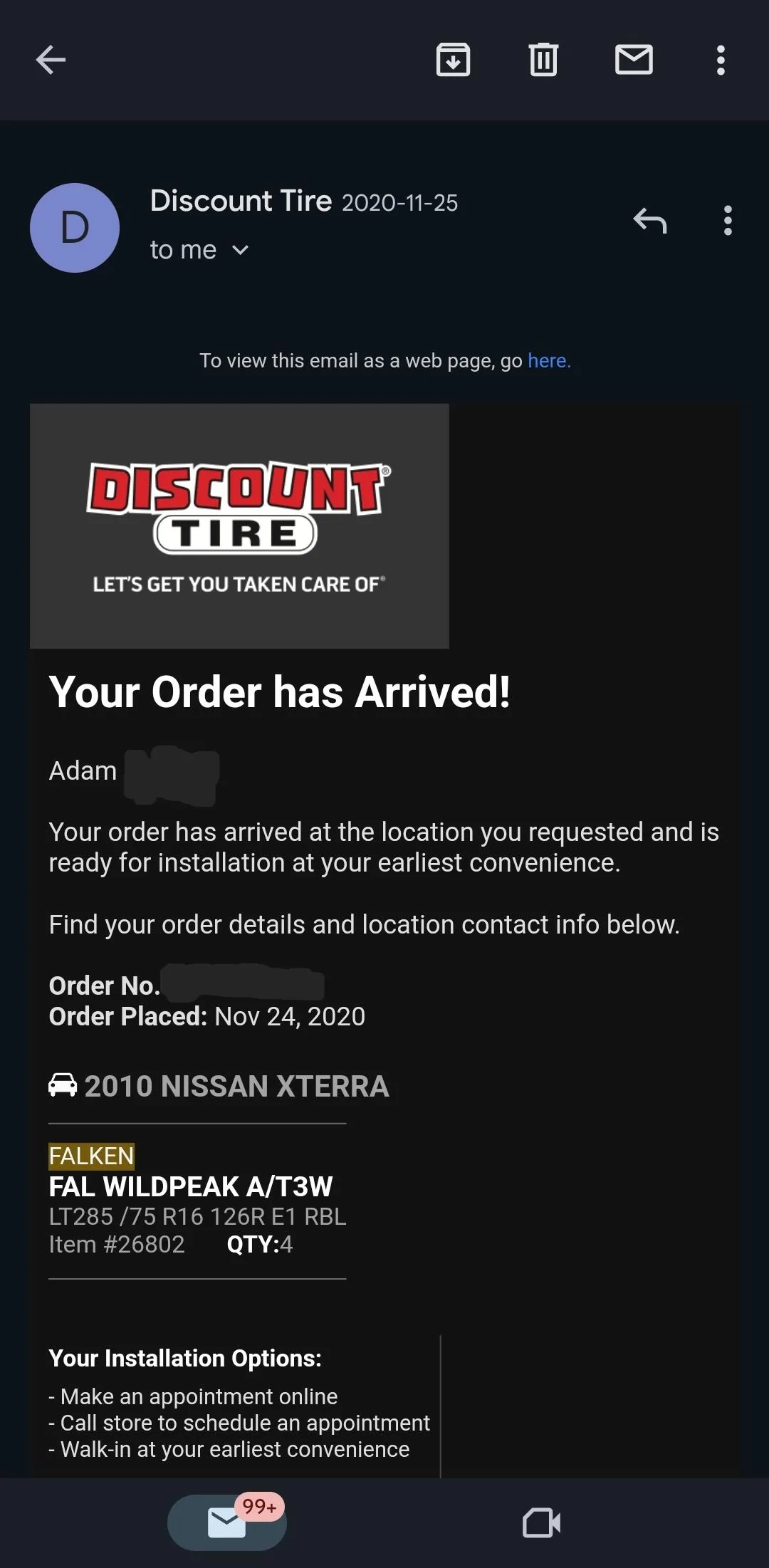
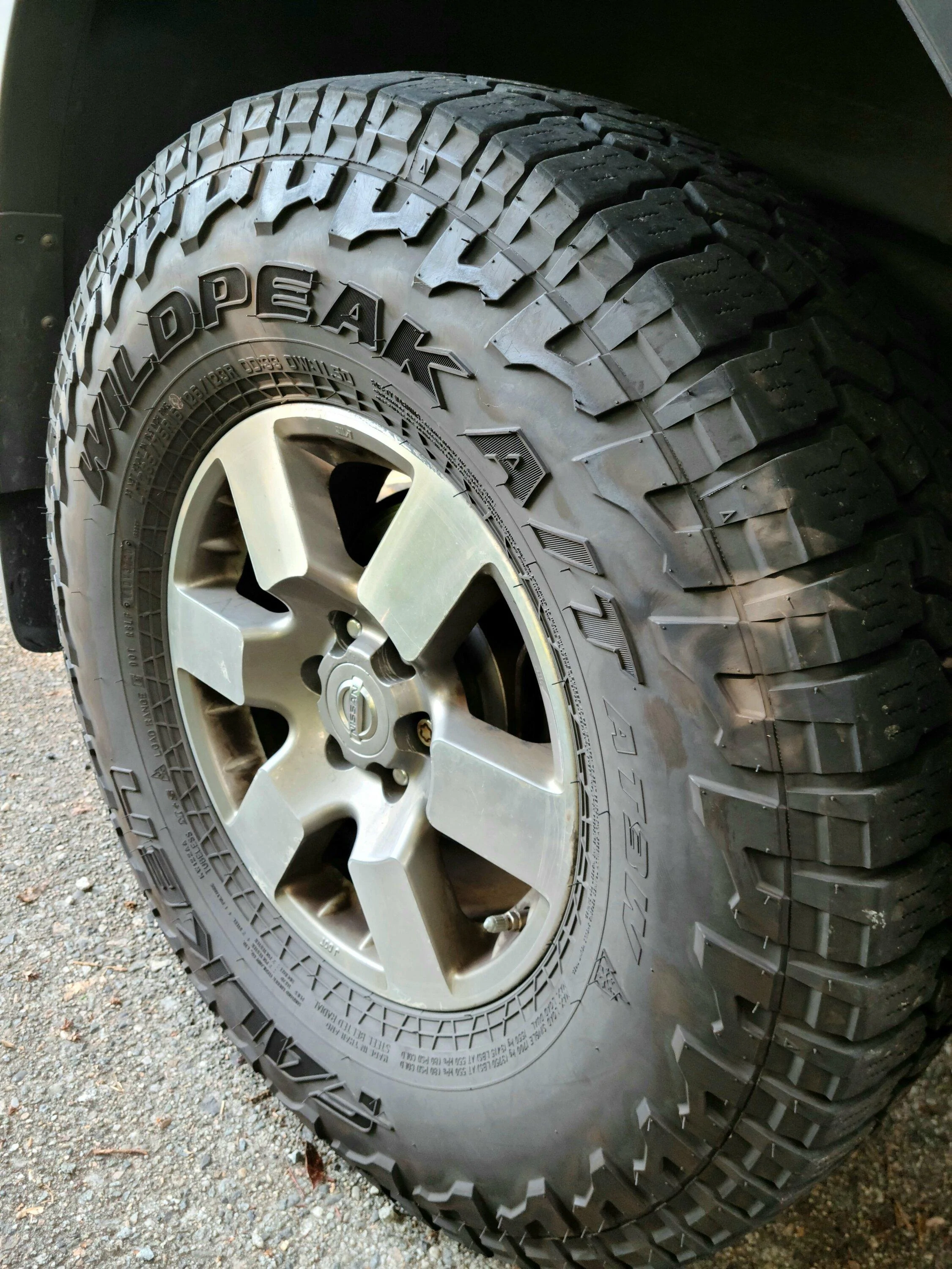
The Xterra has Flaken Whildpeak AT3's and no, I wasn't gunning it from a standing start, even if I had it's throttle by wire, so limits engine output when slipping is detected. VDC obviously engaged both times.

Quad motor R1T does it the 3rd day. All purpose, 20" tires, same torrential rains, same intersection, front of the pack. Rivian effortlessly got up to speed, no slipping, no lateral movement like the xterra in both drive modes, just straight up the hill.

Couple days later, co worker that drives a Ram 1500 Limited comes with me to check out an upcoming project. Heavy rains (6.5mm/hour) roads obviously wet with heavy puddling. Vancouver streets can be quite hilly, similar to areas of Seattle for anyone unfamiliar. Drive about 10km to the other project, and on the way back, he turns to me "does this thing ever slip????" I ask him why? "Well for fuck sakes, this thing feels like it's glued to the roads, hills, corners, rain be damned. This thing is nuts!"

So while I agree, Rivian could use some physical connections for the technical overlanding croud, and while my comparisson was limited to an ICE 4x4 and a QM Rivian (not a Dual to Quad) in my experience, in this situation, the quad blew the differential out of the water (pun intended) with it's ability to seamlessly adapt to the slippery roads. Even if the motor reacts in 20ms increments, and the ABS is 60ms, that already amounts to a 3x reaction rate in favor of a quad powertrain.

Not perfect in all situations, but hardly the death dealer being described.

Also, is this you and your crew @R.I.P.
 

Sponsored

OP
OP
R.I.P.

R.I.P.

Well-Known Member
First Name
Sean
Joined
Jan 2, 2023
Threads
13
Messages
1,217
Reaction score
1,681
Location
San Carlos, Mexico
Vehicles
Tesla Y, Cadillac ELR, Rivian R1T, Jeep TJ, F250
Occupation
Electrical Engineer
Just popping in to get my head chewed off.

I drove my Nissan Xterra to work the other week (wife wanted the Rivian for some odd reason) and it was raining for several days.

First day, I get to an intersection on a decent incline and come to a stop. As the light went green, I started to accelerate, and the ABS kept skipping trying to send power between the rear wheels, back end slipping a few inches one direction, then a few inches the other direction as it tries to sort traction. It took about 100 ft for it to finally gain enough forward momentum to stop breaking traction in the rear and get beyond 20 kph.

Next day, same intersection, same conditions. This time I decided to put it into 4H and see how it reacted. sure the vehicle was more bogged down by driving all 4 wheels, but it was a similar result, front wheels grappling to control slippage, rear wheels doing the same. It was able to get up to speed faster in this instance, but was still ABS chattering away, wheels breaking traction, finding it, then losing it, then finding it.

The Xterra has Flaken Whildpeak AT3's and no, I wasn't gunning it from a standing start, even if I had it's throttle by wire, so limits engine output when slipping is detected. VDC obviously engaged both times.

Quad motor R1T does it the 3rd day. All purpose, 20" tires, same torrential rains, same intersection, front of the pack. Rivian effortlessly got up to speed, no slipping, no lateral movement like the xterra in both drive modes, just straight up the hill.

Couple days later, co worker that drives a Ram 1500 Limited comes with me to check out an upcoming project. Heavy rains (6.5mm/hour) roads obviously wet with heavy puddling. Vancouver streets can be quite hilly, similar to areas of Seattle for anyone unfamiliar. Drive about 10km to the other project, and on the way back, he turns to me "does this thing ever slip????" I ask him why? "Well for fuck sakes, this thing feels like it's glued to the roads, hills, corners, rain be damned. This thing is nuts!"

So while I agree, Rivian could use some physical connections for the technical overlanding croud, and while my comparisson was limited to an ICE 4x4 and a QM Rivian (not a Dual to Quad) in my experience, in this situation, the quad blew the differential out of the water (pun intended) with it's ability to seamlessly adapt to the slippery roads. Even if the motor reacts in 20ms increments, and the ABS is 60ms, that already amounts to a 3x reaction rate in favor of a quad powertrain.

Not perfect in all situations, but hardly the death dealer being described.

Also, is this you and your crew @R.I.P.
You are not all that far from us, come wheeling with us!
?
 

SeaGeo

Well-Known Member
First Name
Brice
Joined
Jan 12, 2021
Threads
50
Messages
5,673
Reaction score
10,212
Location
Seattle
Vehicles
Xc60 T8
Occupation
Engineer
Watch this:


It is a decent depiction of what happens when theory comes up against physics. Keep in mind, that is _not_ much of obstacle, and the truck that "beats" it is a pretty lame off-roader. In our experience it does not take much of an obstacle to get the QM in over it's capabilities. Here is the kicker; the DM crawls right over and through obstacles like that. Why? It's motors never stop and stall like the QM's do, why? It has differentials.

Rapters, TRX, Rovers, Jeeps, Broncos, name a capable off-roader, every one of them has differentials in them. This is no accident.

When we started talking to Rivian about our findings in February, one of the things we were told is that a DM would be coming, with differentials to address the problem. Yea Rivian!

They know.

Again, the people that love their QMs are going to howle, because they get they get their feelings hurt. So for the 100th time, I am not saying there is not place for the QM. In situations where traction is decent and there are at least 3 wheels on the ground, they perform well. Get two wheels off the ground or put them on very slippery surfaces and they suffer.
While I generally don't disagree with you on the subject, it does take a bit of a different mindset to get the quad motor to do what you want (which you hinted at above). The TFL guys did not do the truck any favors there. I've seen the truck handle similar (and worse) situations with less difficulty. Just pointing out their test results speak as much about how they drove the vehicle and their understanding of it as the vehicle itself.

And yes, I agree, a locker would help.
 
Last edited:

MountainBikeDude

Well-Known Member
First Name
Adam
Joined
Jun 20, 2019
Threads
54
Messages
3,334
Reaction score
7,088
Location
Vancouver
Vehicles
2023 El Cap Quad Motor R1T (Selling the Xterra)
Clubs
 
You are not all that far from us, come wheeling with us!
?
I'd love to to be honest. Checking out FSR roads summer/winter is my jam. There are a couple guys on YouTube that explore some of sothern BC's backcountry roads. it's worth checking out their channel, good production value, and some neat stories behind some of them.
https://www.youtube.com/@TheStoryTillNow

Unfortunately... 5 month old baby life doesn't afford much free time for half/full day jaunts into the wilderness, at least not if I want to come home to a happy wife ?
 

zefram47

Well-Known Member
First Name
Aaron
Joined
Feb 6, 2022
Threads
18
Messages
2,751
Reaction score
4,515
Location
Denver, CO
Vehicles
Rivian R1T, Alfa Romeo 4C
Occupation
Software Engineer
The Xterra has Flaken Whildpeak AT3's and no, I wasn't gunning it from a standing start, even if I had it's throttle by wire, so limits engine output when slipping is detected. VDC obviously engaged both times.
How old are the Falkens? I had them on my 4Runner for 6 years and only around 40k miles since it wasn't a daily driver. By the time I replaced them they still had plenty of tread depth, but they'd turned into hockey pucks. It was actually on just wet roads at any temperature I decided they needed to go because they just had no traction in the wet. Brand new AT3Ws had plenty of wet grip, as evidenced by replacing like for like.

Now, tire age aside, you can floor the Rivian off the line on a wet road and it'll just go straight as an arrow and barely slip a tire in the process. It's truly impressive. But as R.I.P. has mentioned, the R1 doesn't really have a big problem when the mu (coefficient of friction) is more or less identical on all 4 corners (or even 3) and at least 3 tires are in contact with the ground (could just consider this as similar mu since a wheel flying as a mu of zero).

While I generally don't disagree with you on the subject, it does take a bit of a different mindset to get the quad motor to do what you want (which you hinted at above). The TFL guys did not do the truck any favors there. I've seen the truck handle similar (and worse) situations with less difficulty. Just pointing out their test results speak as much about how they drove the vehicle and their understanding of it as the vehicle itself.

And yes, I agree, a locker would help.
100% this. While there are major deficiencies in the QM calibration for rock crawling, TFL just tried to drive it over the obstacle as if it were an ICE vehicle with a torque converter. In the ICE, differentials aside, you build up inertia in the drivetrain through the torque converter, which the R1 obviously doesn't have...again leading to motor stall at low speeds. Maintain momentum and the R1 generally figures things out. Demand a lot of torque quickly rather than slowly feeding in throttle and it can get moving...but then it's not well-controlled and could risk bad things happening in a precarious situation.
 

MountainBikeDude

Well-Known Member
First Name
Adam
Joined
Jun 20, 2019
Threads
54
Messages
3,334
Reaction score
7,088
Location
Vancouver
Vehicles
2023 El Cap Quad Motor R1T (Selling the Xterra)
Clubs
 
How old are the Falkens? I had them on my 4Runner for 6 years and only around 40k miles since it wasn't a daily driver. By the time I replaced them they still had plenty of tread depth, but they'd turned into hockey pucks. It was actually on just wet roads at any temperature I decided they needed to go because they just had no traction in the wet. Brand new AT3Ws had plenty of wet grip, as evidenced by replacing like for like.

Now, tire age aside, you can floor the Rivian off the line on a wet road and it'll just go straight as an arrow and barely slip a tire in the process. It's truly impressive. But as R.I.P. has mentioned, the R1 doesn't really have a big problem when the mu (coefficient of friction) is more or less identical on all 4 corners (or even 3) and at least 3 tires are in contact with the ground (could just consider this as similar mu since a wheel flying as a mu of zero).


100% this. While there are major deficiencies in the QM calibration for rock crawling, TFL just tried to drive it over the obstacle as if it were an ICE vehicle with a torque converter. In the ICE, differentials aside, you build up inertia in the drivetrain through the torque converter, which the R1 obviously doesn't have...again leading to motor stall at low speeds. Maintain momentum and the R1 generally figures things out. Demand a lot of torque quickly rather than slowly feeding in throttle and it can get moving...but then it's not well-controlled and could risk bad things happening in a precarious situation.
3 years, around 15-20,000 km's

Rivian R1T R1S Speaking of diffs Screenshot_20231027_084123_Gmail


Rivian R1T R1S Speaking of diffs 20230902_154103
Sponsored


Top